目次
セキュリティ情報およびイベント管理システムは、現在、中規模、さらには小規模の組織で使用されている。オープンソース SIEM は、ライセンスコストが低く、機能セットも充実しているため、新規採用者にとって魅力的です。どのようなオープンソース SIEM があり、従来の企業向け製品と比較してどうなのでしょうか?
SIEMセキュリティシステムは、かつては大規模な組織だけのものでしたが、中規模、さらには小規模な組織でも採用されるようになってきています。オープンソースのSIEMは、ライセンスコストが低く、機能セットも充実しているため、新規採用者にとって魅力的です。世の中にはどのようなオープンソース SIEM があり、従来の企業向け製品と比較してどうなのでしょうか?
このコンテンツは、SIEMツールに関するシリーズの一部です。
SIEMとは何か?
SIEM(Security Information and Event Management)は、セキュリティおよび監査システムである。単一のツールではなく、複数の監視・分析コンポーネントからなる「ツールボックス」である。
SIEMは、組織全体の何百ものセキュリティ・ツールとITツールからデータを集約し、統計的相関関係とルールを使用してイベントとログ・エントリを変換し、使用可能な情報に変換します。セキュリティ・チームはこの情報を使用して、脅威をリアルタイムで検出し、セキュリティ・インシデントのフォレンジック調査を管理し、インシデント対応を整理し、コンプライアンス監査を準備します。
SIEMは今や標準的なセキュリティ・アプローチである。サイバー攻撃の継続的な増加やセキュリティ規制の強化により、SIEMを採用する組織が増加しています。PCI DSSやEUのGDPRのような規制の変更により、システムやアプリケーションのログイベントを個々のサーバーから削除し、調査や対策のために安全に保存することが必須となっている。
Editor’s note: Updated the article to cover recent market trends, updated product information to reflect features and capabilities in 2026, and added 6 new tools.
SIEM Market Trends
Market Growth and Adoption
The SIEM market is valued at USD 10.67 billion and is expected to reach USD 20.78 billion by 2031, with a CAGR of 11.5%. This growth reflects the rising need to handle large-scale security telemetry and improve threat detection.
Deployment Models and Architecture Trends
A clear shift is happening from on-premises systems to cloud-based SIEM. On-premises deployments still held 55.27% of the market, but cloud solutions are growing at a faster rate due to flexible pricing and scalability.
At the architecture level, cloud-native platforms are gaining traction. These systems separate storage from compute, allowing organizations to store large volumes of logs cheaply and run analytics only when needed. Hybrid setups are also common, especially in regions with strict data residency rules.
Technology Advancements
Vendors are improving SIEM platforms with AI and machine learning capabilities. These features help reduce alert noise by filtering out low-priority events and highlighting real threats.
AI-driven tools also assist analysts by summarizing incidents and suggesting response actions. This reduces investigation time and helps teams handle higher alert volumes without increasing staff.
Rise of Managed Services
To address resource constraints, many organizations are turning to managed SIEM services. These services provide external monitoring, threat analysis, and incident response support.
Managed providers operate at scale and offer 24/7 coverage, helping organizations reduce internal workload. This trend is growing quickly, especially among companies that lack dedicated security teams.
オープンソースSIEMとエンタープライズグレードSIEMの比較
セキュリティ情報とイベント管理は、現代のサイバーセキュリティにおける基礎的なシステムである。他のセキュリティ・ツールは情報の流れを表し、SIEM はそれを処理して価値を引き出します。すべてのSIEMが同じ機能を持っているわけではありません。組織のニーズに合ったSIEMを選択することが、致命的なセキュリティ侵害を防ぐか見逃すかの分かれ目になります。
オープンソースSIEM
組織は、オープンソースの SIEM ツールを使用することで、ソフトウェア・ライセンスのコストを削減し、製品への投資を拡大する前に特定の機能を評価することができます。オープンソースの SIEM ソリューションは、セキュリティ・イベント情報のログと分析を始めている小規模な組織のニーズに合った基本的な機能を提供します。
オープンソースSIEMの限界
- 組織が大きくなると、オープンソースのSIEMソフトウェアは手間がかかるようになる。
- 組織は、ライセンス費用は節約できても、継続的なメンテナンスに費用がかかる。
- 多くのオープンソースSIEMソリューションには、レポート、イベント相関、ログコレクターのリモート管理など、SIEMの主要な機能が欠けている。
- 組織は、オープンソースのSIEMを他のツールと組み合わせる必要があるかもしれない。
- オープンソースのSIEMを効果的に導入するには、通常、高度な専門知識と時間が必要だ。
- オープンソースのSIEMは通常、ストレージを提供したり管理したりしないが、これは膨大なデータのため、デリケートな問題である。
エンタープライズグレードのSIEM
エンタープライズSIEMソリューションは、最も一般的なユースケース向けに、構成とインストール、相関設定、フィルタ、および事前に構築された可視化の管理を改善します。これにより、企業は大規模なデータセンターのアクティビティを監視し、セキュリティ関連のアプリケーションを一元的に管理および構成することができます。
おそらく最も重要なことは、現在、エンタープライズSIEMプラットフォームのみが次世代SIEMの機能を提供しているということです。次世代エンタープライズSIEMには、セキュリティ・チームの時間を節約し、インシデントの検出と対応を劇的に改善できる2つの新技術が搭載されています:
- ユーザーとエンティティの行動分析(UEBA) - AIと機械学習を活用して、ユーザーとITシステムの行動パターンを調べ、脅威を示す可能性のあるリスクの高い異常を見つける。
- セキュリティ・オーケストレーション、自動化、レスポンス(SOAR)- 企業システムと統合し、マルウェアやデータ流出攻撃の緩和など、インシデントレスポンス・プロセスを自動化するためにオーケストレーションします。
トップ・オープンソースSIEMツール
Wazuh

Wazuh is an open source security platform that combines SIEM and XDR capabilities in a unified architecture. It collects and analyzes log data from endpoints and cloud workloads while providing real-time detection and response. The platform integrates multiple security functions into a single agent-based system, allowing organizations to monitor infrastructure, detect threats, and automate responses across different environments.
Limitations as reported by users on G2:
- Complex initial setup: Users report that setup and configuration can be difficult and time-consuming.
- Steep learning curve: New users often struggle due to the level of expertise required.
- Challenging interface: The interface can feel complex, especially during early use.
- Difficult on-prem deployment: Implementing the on-prem console can add additional complexity.
主な特徴は以下の通り:
- Unified SIEM and XDR capabilities: Combines log analysis, threat detection, and response within a single platform.
- Endpoint and workload protection: Monitors endpoints, containers, and cloud environments for security events.
- File integrity monitoring: Detects unauthorized changes to files and system configurations.
- Vulnerability detection: Identifies weaknesses across systems to support risk management.
- Threat intelligence and hunting: Uses external data and analytics to identify and investigate threats.
- Active response automation: Executes remediation actions directly on affected systems.

Source: Wazuh
Security Onion

Security Onion is a Linux-based open source platform for threat hunting, network security monitoring, and log management. It combines multiple open source tools into a single distribution, giving organizations a pre-integrated environment for collecting and analyzing network and host-based data. This approach reduces the need to assemble individual components while still providing flexibility for advanced users.
Limitations as reported by users on G2:
- Difficult setup for beginners: Initial deployment can be challenging without prior experience.
- High expertise requirements: Effective use requires strong networking and security knowledge.
- Complex configuration: Users report difficulties configuring and tuning the platform.
- Operational challenges: Managing the system can be demanding for less experienced teams.
主な特徴は以下の通り:
- Integrated toolset: Combines tools like Suricata, Zeek, and the Elastic Stack for comprehensive monitoring.
- Network security monitoring: Captures and analyzes network traffic to detect suspicious activity.
- Log management and analysis: Aggregates logs from multiple sources for centralized visibility.
- Threat hunting capabilities: Enables analysts to investigate and explore security data interactively.
- Prebuilt detection rules: Includes a large set of rules to identify common attack patterns.
- AI-assisted analysis: Provides an integrated assistant to support detection tuning and analysis tasks.

Source: Security Onion
AlienVault OSSIM

AlienVault OSSIM is an open source SIEM platform that integrates multiple security tools to provide centralized visibility and event correlation. It is designed to combine data from network and host-based systems and transform it into actionable security insights. By aggregating different layers of information, it supports detection, analysis, and decision-making across the security stack.
Limitations as reported by users on PeerSpot:
- Slow response under load: Performance can degrade with high traffic volumes.
- Complex initial setup: Deployment requires significant configuration effort and is not intuitive.
- Limited integrations: Users report gaps in integration with some security tools.
- Frequent false positives: Detection accuracy can require tuning to reduce noise.
- Pricing concerns: Some users find costs high relative to alternatives.
主な特徴は以下の通り:
- Multi-layer event correlation: Combines low-level logs, anomaly data, and high-level risk insights.
- Integrated security tools: Includes components such as Snort, OpenVAS, and Nmap for detection and assessment.
- Network and host visibility: Provides insight into infrastructure through logs, alerts, and monitoring data.
- Intrusion detection capabilities: Uses signature-based and anomaly-based detection methods.
- Vulnerability assessment integration: Identifies system weaknesses alongside event monitoring.
- Centralized data storage: Uses databases and data aggregation tools to manage security information.
グレイログ

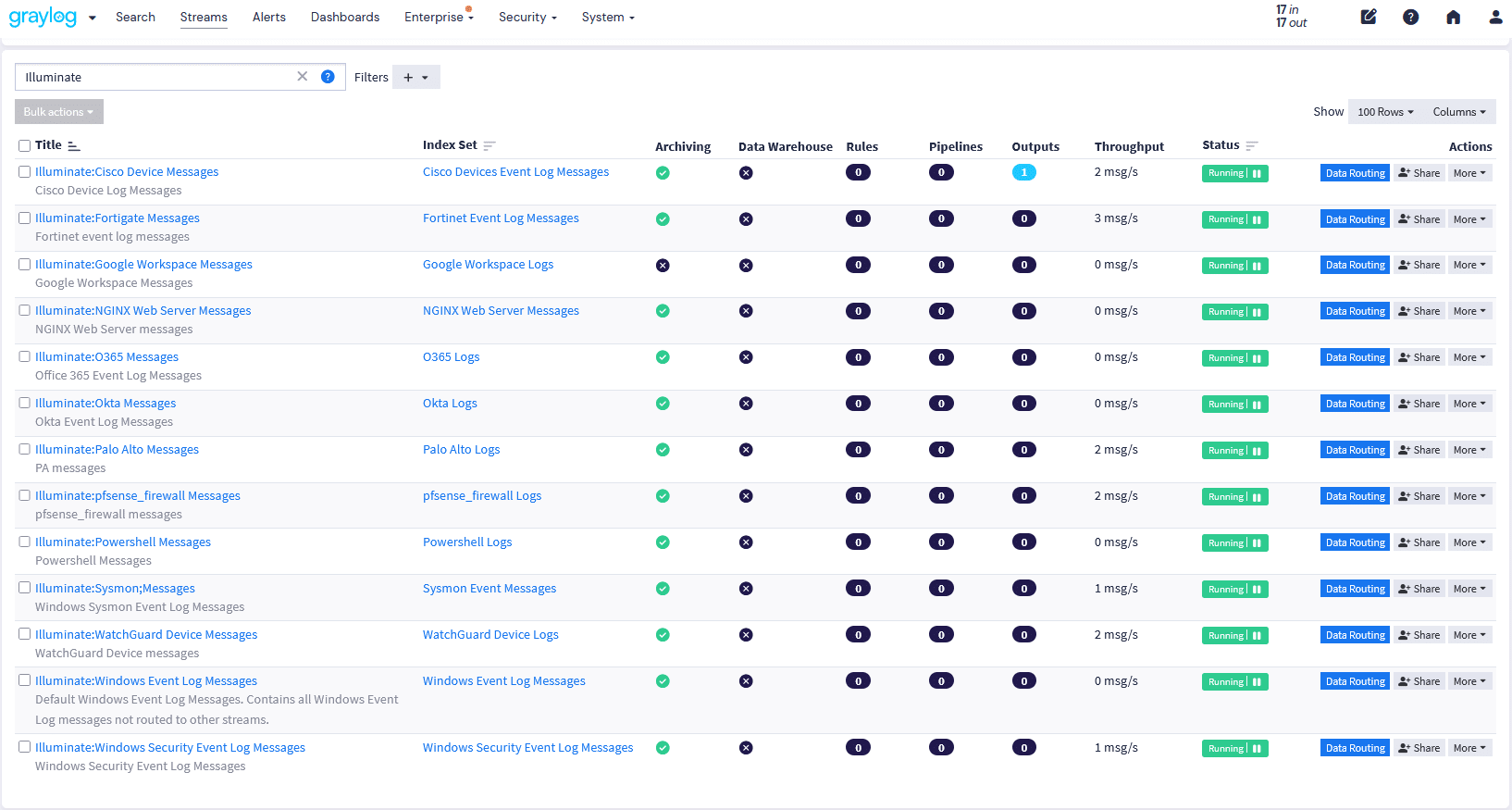
Graylog is an open source log management platform that can function as a SIEM foundation by collecting, storing, and analyzing large volumes of log data. It emphasizes flexibility and scalability, allowing organizations to deploy it in on-premises, cloud, or hybrid environments. With search and visualization capabilities, it helps teams investigate events and monitor systems in real time.
Limitations as reported by users on G2:
- Platform complexity: Users report that the system can be difficult to manage and navigate.
- Steep learning curve: Time is required to become proficient with logs, APIs, and workflows.
- Debugging challenges: Troubleshooting issues can be time-consuming and inefficient.
- Integration limitations: Connecting external systems can be difficult in some cases.
- Time-consuming operations: Tasks like debugging and analysis can slow down workflows.
主な特徴は以下の通り:
- Centralized log ingestion and storage: Collects data from diverse sources with configurable retention.
- High-speed search and analytics: Enables fast querying across large datasets for investigation.
- Dashboards and visualization: Provides real-time insights through customizable dashboards.
- Alerting and event management: Triggers notifications based on defined conditions.
- Extensible architecture: Supports plugins, APIs, and integrations with external tools.
- Flexible deployment models: Runs on-premises, in the cloud, or in hybrid environments.

Source: Graylog
ELKスタック

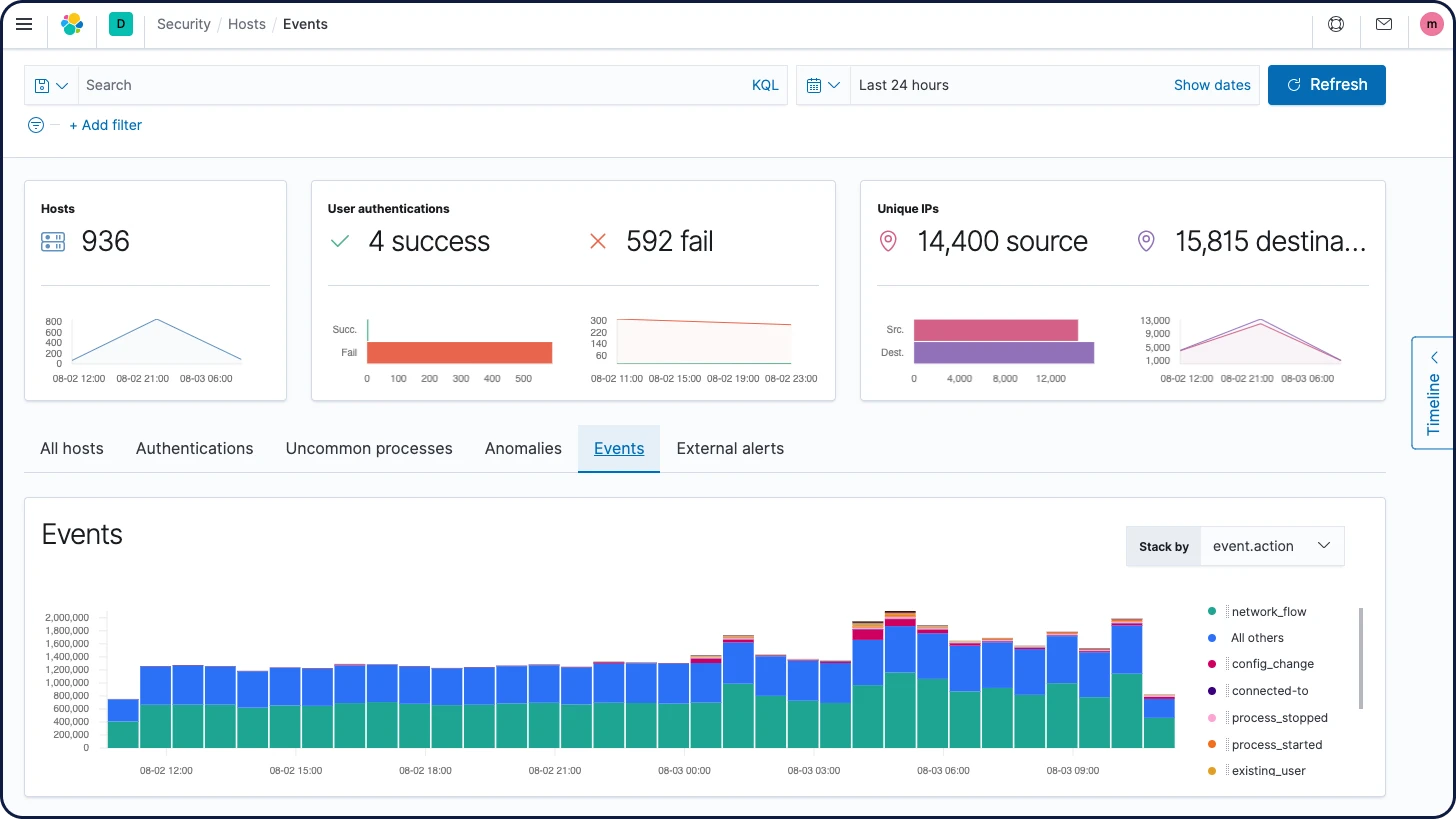
The ELK Stack (Elasticsearch, Logstash, and Kibana) is a widely used open source framework for log collection, search, and analytics that can be adapted for SIEM use cases. It allows organizations to ingest data from many sources, process it, and visualize it through interactive dashboards. Its modular architecture makes it flexible, but it often requires additional configuration to function as a full SIEM.
Limitations as reported by users on G2:
- High resource usage: Requires significant memory and infrastructure, especially at scale.
- Complex management: Operating and tuning clusters demands strong expertise.
- Expensive scaling: Costs increase due to infrastructure and licensing considerations.
- Steep learning curve: Users need deep knowledge to manage performance effectively.
- Operational overhead: Ongoing maintenance and optimization require continuous effort.
主な特徴は以下の通り:
- Distributed search and analytics engine: Elasticsearch enables fast querying and analysis of large datasets.
- Data ingestion and processing: Logstash and Beats collect and transform data from multiple sources.
- Visualization and dashboards: Kibana provides interactive views and reporting capabilities.
- Broad integration ecosystem: Supports hundreds of integrations for ingesting diverse data types.
- Scalable architecture: Handles large volumes of data with distributed storage and processing.
- Flexible deployment options: Can be deployed on-premises or across major cloud platforms.

Source: Elastic
OSSEC

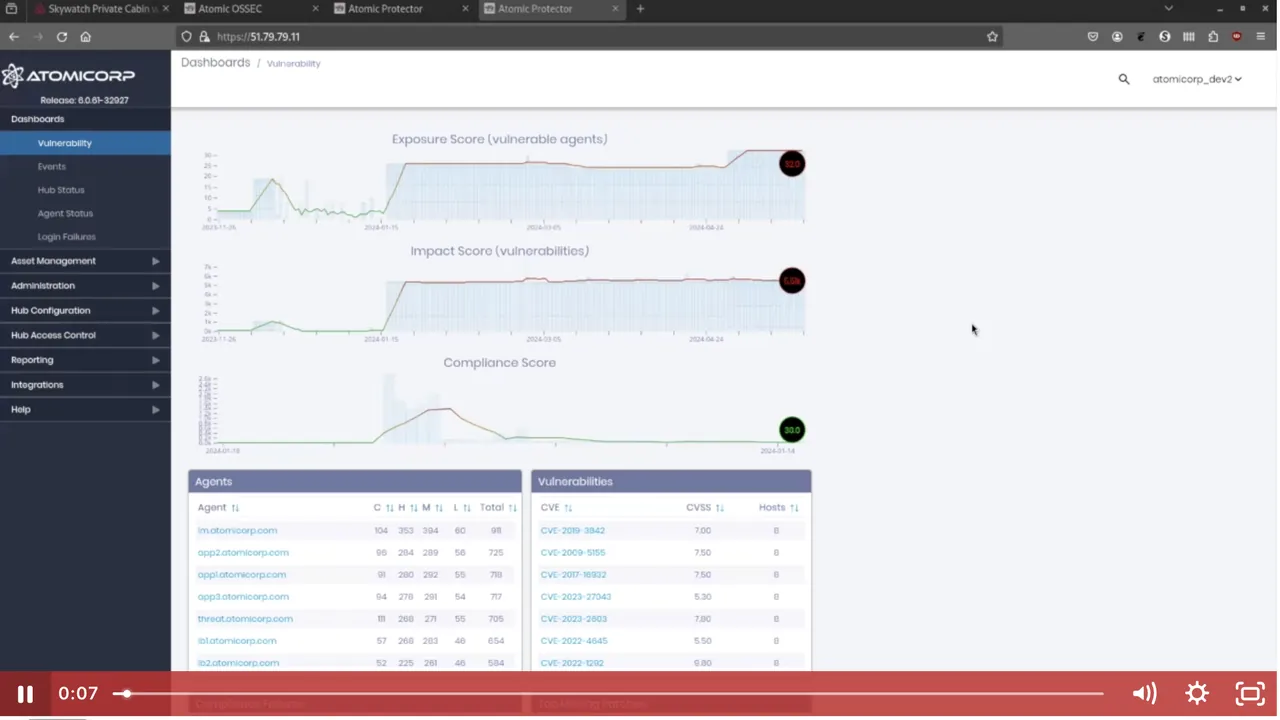
OSSEC is an open source host-based intrusion detection system (HIDS) that provides log analysis, integrity monitoring, and active response capabilities. It focuses on endpoint-level visibility, analyzing system logs and file changes to detect suspicious behavior. While not a full SIEM on its own, it is often used as a core component within larger SIEM architectures.
Limitations as reported by users on G2:
- Limited visualization capabilities: Lacks a built-in dashboard for analyzing and visualizing data.
- No modern web interface: Users rely on logs and external tools for visibility.
- High configuration overhead: Requires significant effort to configure and maintain.
- Command-line management: Administration is largely CLI-based, which can be challenging.
- Upgrade challenges: Updating the system can be difficult and disruptive.
主な特徴は以下の通り:
- Host-based intrusion detection: Monitors system activity and logs across multiple operating systems.
- File integrity monitoring: Tracks changes to critical files and configurations in real time.
- Malware and anomaly detection: Identifies suspicious behavior using rules and pattern matching.
- Active response capabilities: Automatically triggers actions to mitigate detected threats.
- Compliance auditing support: Helps meet regulatory requirements through monitoring and reporting.
- Cross-platform support: Runs on major operating systems including Linux, Windows, and macOS.
Source: OSSEC
SIEM システムの選択に関わる側面や、オープンソース SIEM とエンタープライズ SIEM のどちらが自社のシナリオに最適かを十分に理解するには、SIEMツールのバイヤーズガイドをお読みください。
エキスパートからのアドバイス

スティーブ・ムーアは、Exabeamのバイスプレジデント兼チーフ・セキュリティ・ストラテジストで、脅威検知のためのソリューションの推進を支援し、セキュリティ・プログラムの推進や侵害対応について顧客にアドバイスを行っています。The New CISO Podcast」のホストであり、Forbes Tech Councilのメンバー、ExabeamのTEN18の共同創設者でもあります。
私の経験から、企業がオープンソースのSIEMソリューションを効果的に評価・導入し、エンタープライズグレードのシステムに移行するタイミングを理解するためのヒントを紹介する:
オープンソースSIEMと補完ツールの組み合わせ
侵入検知(Suricataなど)や行動分析(オープンソースのUEBAフレームワークなど)のスタンドアロンツールと統合することで、オープンソースSIEMの機能を強化する。これにより、高度な機能を構築するためのモジュール式アプローチが提供されます。
スモールスタートで、リスクの低い環境でオープンソースSIEMをテストする
ELK や OSSIM のようなオープンソースの SIEM ツールを、まずはクリティカルでない環境に導入しましょう。これにより、重要な業務システムを危険にさらすことなく、セットアップ、カスタマイズ、パフォーマンスに慣れることができます。
コミュニティ主導のプラグインを活用して機能を拡張する
オープンソースのツールには、コミュニティが構築したプラグインのエコシステムが充実していることが多い。例えば、アラートや異常検知のためのセキュリティに特化したプラグインを統合することで、ELKの機能を拡張することができます。これにより、オープンソースとエンタープライズグレードのツールのギャップを埋めることができます。
厳格なロギングとストレージのポリシーを早期に導入する
Apache MetronのようなオープンソースのSIEMは大量のデータを生成します。明確なデータ保持ポリシーを確立し、ストレージ形式を最適化することで、パフォーマンスのボトルネックや管理不能なコストを回避する。
オープンソースSIEMのマネージドバージョンをハイブリッドに活用する
SIEMonsterのプレミアムバージョンのようなマネージドサービスは、オープンソースのコスト削減と、ユーザー行動分析や脅威インテリジェンスなどのエンタープライズグレードの機能を兼ね備え、導入の複雑さを軽減します。
オープンソースの利点とコスト
オープンソース SIEM は過去数十年の間にかなり成熟し、多くの組織で導入に成功している。しかし、採用の主な原動力はライセンスコストの削減だが、ライセンスコストはSIEMシステムの総所有コストのほんの一部に過ぎないことはよく知られている。追加的な、そしておそらくより大きなコンポーネントには、次のようなものがあります:
- ハードウェアとストレージは、特に中規模から大規模の企業にとって、膨大なコストと管理の複雑さをもたらしています。
- アナリストの時間は、ほとんどのセキュリティチームにとって最も貴重なリソースであり、SIEMアラートを活用するためにはアナリストの存在が不可欠です。
Exabeamは、ElasticSearchの上にエンタープライズグレードのプラットフォームとして構築された次世代SIEMプラットフォームで、この2つのペインポイントとコストセンターに対応しています:
- 固定コストで無制限のクラウドベースのストレージを提供
- UEBAやSOARのような次世代SIEM機能を使用し、アナリストの作業時間を劇的に短縮。