目次
SIEMプロバイダーとは?
SIEM プロバイダは、セキュリティ情報およびイベント管理(SIEM)ソリューションを提供する企業またはプラットフォームです。これらのソリューションは、組織内のさまざまなソースからのセキュリティ・データを集約、分析、管理します。SIEM プラットフォームは、セキュリティ・チームの一元的な可視化を可能にし、脅威の検出、調査、対応を可能にします。
ログ、アラート、コンテキスト情報を統合することで、SIEM ソリューションはセキュリティ運用の中枢として機能します。この一元化されたアプローチは、継続的な監視とPCI DSS、HIPAA、GDPRなどの基準への準拠を維持しようとする組織にとって不可欠です。
SIEMプロバイダーは、使用する技術スタック、展開へのアプローチ、提供する機能によって異なる。カスタマイズ可能な検知とレスポンスに重点を置き、アナリティクスや機械学習を組み込んでいるところもある。また、サードパーティツールとの統合を重視したり、社内のリソース要件を減らすためにマネージドサービスを提供したりするところもある。
適切なSIEMプロバイダーを選択するには、拡張性、導入モデル、コンプライアンス機能、組織が直面する特定のセキュリティ課題を評価する必要がある。
これは、SIEM Toolsに関する一連の記事の一部です。
Editor’s note: Updated the article to cover recent market trends, updated product information to reflect features and capabilities in 2026, and added 2 new tools.
The SIEM Market and Trends
市場規模と成長見通し
The SIEM market is expanding steadily. It is valued at USD 10.67 billion and is projected to reach USD 20.78 billion by 2031, growing at a CAGR of 11.5%. This growth reflects increasing demand for centralized security monitoring as organizations handle more data and face stricter regulations.
主な成長要因
Several forces are pushing adoption forward. Organizations are generating massive volumes of security telemetry, often exceeding terabytes of log data per day. At the same time, regulations such as NIS2 in Europe and SEC disclosure rules in the United States require faster detection and reporting of incidents.
Cloud adoption is another major factor. As workloads move across public and hybrid environments, SIEM platforms must ingest and correlate data from multiple sources. In parallel, AI and machine learning are improving detection accuracy by reducing false positives and helping analysts focus on real threats.
Rising Demand for Managed Services
A shortage of skilled cybersecurity professionals is driving demand for managed SIEM services. With an estimated global gap of millions of security workers, many organizations rely on external providers to monitor and respond to threats.
Managed services are growing at over 12% CAGR, as they help reduce operational burden and provide access to expertise that may not exist in-house. This trend is especially strong among mid-sized organizations with limited security teams.
SIEMプロバイダーの種類
従来のオンプレミスSIEM
従来のオンプレミス型SIEMソリューションは、組織のインフラストラクチャ内に導入され、社内のITチームやセキュリティチームが直接管理します。このモデルでは、SIEM データの管理、アーキテクチャのカスタマイズ、レガシーシステムとの統合が可能です。
このようなセットアップは、厳しい規制要件やデータ主権を必要とする部門に好まれることが多い。すべてのデータは内部サーバーに保存されるため、組織は外部のインフラに依存することなく、セキュリティとプライバシーポリシーを実施することができる。
しかし、オンプレミスのSIEMシステムは、ハードウェア、ソフトウェア、継続的なメンテナンスとチューニングのための熟練した人材に多大な投資を必要とする。特にデータ量の増加や新しいソースの統合に伴い、実装が複雑になる可能性がある。規模を拡大するにはインフラを追加する必要があり、更新やアップグレードが面倒になることもある。
クラウドネイティブSIEM (SaaS)
クラウドネイティブSIEMプロバイダーは、クラウド上でホストおよび管理されるSaaS(Software-as-a-Service)モデルを通じてサービスを提供します。このアーキテクチャにより、専用のオンプレミスインフラが不要になるため、企業はセキュリティ監視機能を迅速に導入し、拡張することができます。
クラウドSIEMは、クラウドワークロード、リモートオフィス、モバイルエンドポイントなどの分散環境からデータを集約することができる。アップデート、パッチ、機能拡張はプロバイダーが行うため、社内チームの負担は軽減される。
クラウドネイティブの SIEM は管理が容易でスケーラビリティがある一方で、データレジデンシーやコンプライアンスに関する考慮事項も生じます。組織は、SIEM ベンダーのホスティング地域と認証が規制要件を満たしているかどうかを評価する必要がある。さらに、サードパーティプロバイダに機密性の高いログデータを預けることに懸念を抱く組織もあるだろう。
詳しくはSaaS SIEM
マネージドSIEMサービス
マネージド SIEM サービス・プロバイダーは、専門家による管理、監視、対応をアウトソーシング・サービスとして提供することで、従来の SIEM プラットフォームやクラウド SIEM プラットフォームを拡張します。これらのプロバイダは、SIEM テクノロジと、ログを監視し、アラートをトリアージし、検証された脅威を顧客にエスカレーションするセキュリティ・アナリスト・チームの両方を提供します。
このアプローチは、社内のセキュリティ・リソースや専門知識が限られている企業にとって価値があり、専門スタッフの雇用やトレーニングにかかる経費を削減できます。マネージド SIEM サービスは、継続的な監視、迅速なインシデント対応、進化する脅威に対応した検知ルールの定期的なチューニングを提供します。また、監査やコンプライアンスのためのレポート作成も支援します。
しかし、成功の鍵は、効果的なコミュニケーションと、双方の責任を詳細に定めた明確な契約にある。また、組織によっては、機密データを第三者と共有することに懸念を持つ場合もあり、強力なガバナンスとデータ保護契約が必要となる。
エキスパートからのアドバイス

スティーブ・ムーアは、Exabeamのバイスプレジデント兼チーフ・セキュリティ・ストラテジストで、脅威検知のためのソリューションの推進を支援し、セキュリティ・プログラムの推進や侵害対応について顧客にアドバイスを行っています。The New CISO Podcast」のホストであり、Forbes Tech Councilのメンバー、ExabeamのTEN18の共同創設者でもあります。
私の経験から、SIEMプロバイダーをよりよく評価し、上手に付き合うためのヒントを紹介しよう:
レッドチーム対SIEMの評価:お客様の環境に対して標的型攻撃のシミュレーション(レッドチーム演習)を行い、各SIEMプロバイダーがどのように攻撃を検知し、レポートするかを評価します。これは、標準的な機能比較よりも現実的なベンチマークを提供します。
基本的な検索機能だけでなく、ピボット機能、高度なフィルタリング、脅威コンテキストのエンリッチ化など、仮説に基づいた脅威の探索をどのようにサポートしているかを確認する。
MITRE ATT&CK mappingのネイティブ・サポートを求める:SIEM プロバイダーが検出とアラートを ATT&CK TTP に直接マッピングでき、キル・チェーン全体のカバレッジ・ギャップを可視化できることを確認する。
多くのSIEMは費用対効果の高いストレージを謳うが、コールドストレージからの高速な検索と分析を可能にするものは限られている。レイテンシーベンチマークとデータ再加湿オプションについて尋ねてみよう。
アラートコンテキストの忠実度を評価する:すべての相関アラートが同じように作成されるわけではありません。平均解決時間(MTTR)を短縮するために、SIEMがコンテキストの詳細(身元、行動履歴、資産の重要度など)をどの程度提供しているかを評価します。
注目のSIEMツール
Cloud-Native SIEM Platforms
1.エクサビーム

Exabeamは、分析主導の検知とAI支援によるセキュリティ運用に特化したSIEMプロバイダーである。同社のNew-Scale SIEMプラットフォームは、ログ管理、高度な行動分析、自動調査を統合し、SOC チームの効率向上と平均対応時間の短縮を支援します。
デプロイメント・モデル:
Exabeamは、主にアクラウドネイティブのSaaSプラットフォームとして提供され、規制や運用上の要件に対応するためのハイブリッド・サポートのオプションも用意されている。
主な特徴は以下の通り:
- 無制限のデータ取り込みモデル:データ量に縛られないライセンスにより、企業は予測不可能なコストをかけずにログ収集の規模を拡大できます。
- ユーザーとエンティティの行動分析(UEBA):行動モデルを適用して、異常、特権の不正使用、インサイダーの脅威をコンテキストに応じたリスクスコアリングで検出します。
- Agentic AI (Exabeam Nova):相関、エンリッチメント、調査を自動化し、アナリストが脅威のトリアージを加速できるよう支援する専門AIエージェントのセット。
- Threat Center Outcomes Navigator:警告、調査、プログラムの有効性を追跡するための統一された作業画面で、同業組織とのベンチマークも可能。
- 自動化された検出と対応:相関性、リスクベースの優先順位付け、およびプレイブックにより、アラートの疲労を軽減し、迅速な意思決定をサポートします。
2.マイクロソフトセンチネル

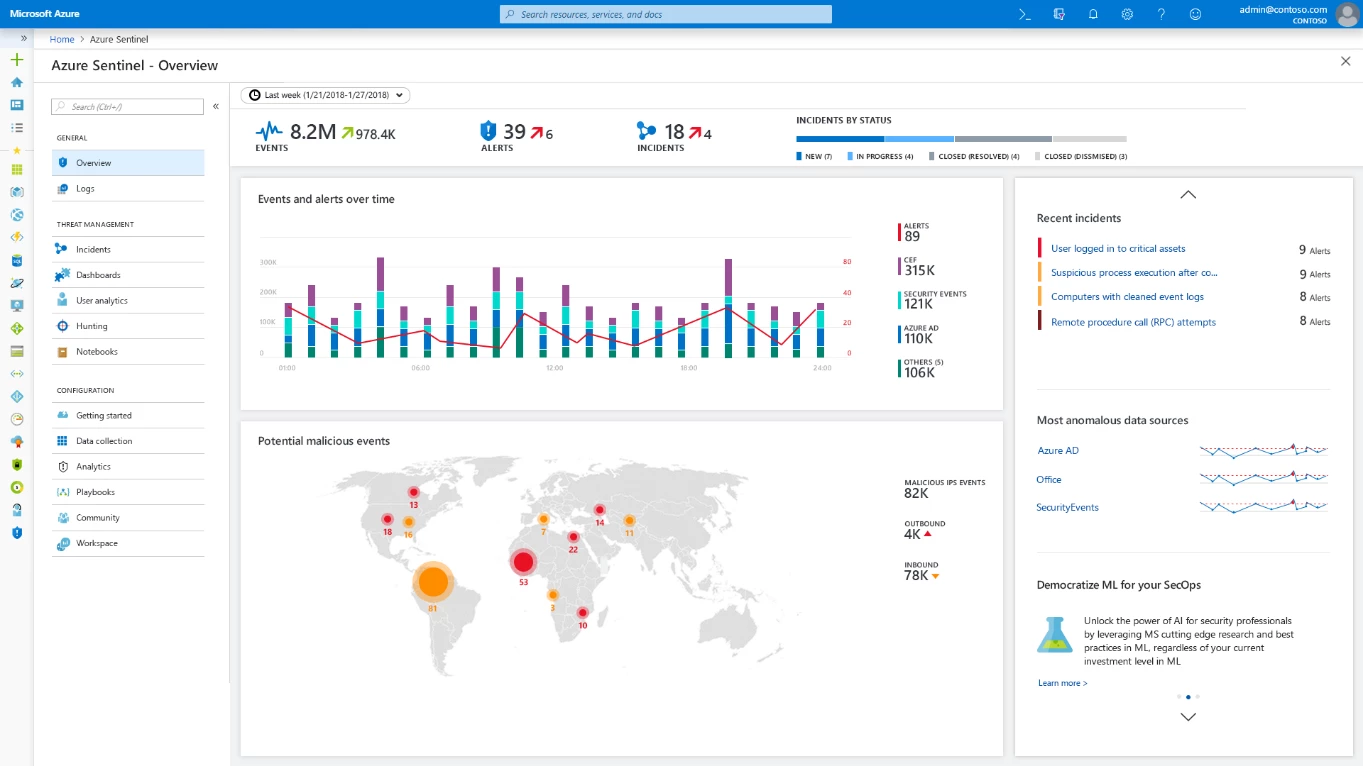
Microsoft Sentinel is a cloud-native SIEM platform that centralizes security data and combines analytics, automation, and AI to support detection and response. It can ingest telemetry from multiple environments and correlate signals using built-in analytics, threat intelligence, and machine learning. The platform also integrates SIEM with SOAR, enabling automated workflows and investigation support within a unified system.
配備モデル:
Delivered as a cloud-native SaaS solution running on Microsoft Azure. Supports multicloud and hybrid environments through native connectors and integrations.
主な特徴は以下の通り:
- Centralized data lake: Aggregates and stores large volumes of security data for analytics and threat detection.
- Built-in SIEM and SOAR: Combines detection, investigation, and automated response in a single platform.
- Graph-powered context: Uses a security graph to enrich alerts with relationships and context across entities.
- Native XDR integration: Integrates with extended detection and response tools for unified visibility and control.
- Extensive data connectors: Supports ingestion from hundreds of sources across cloud, on-prem, and third-party tools.
- AI-assisted investigation: Uses generative AI to summarize incidents, generate queries, and recommend response actions.
- Integrated threat intelligence: Enriches detections with external threat data and standardized formats like STIX/TAXII.

Source: Microsoft
3. Elastic Security

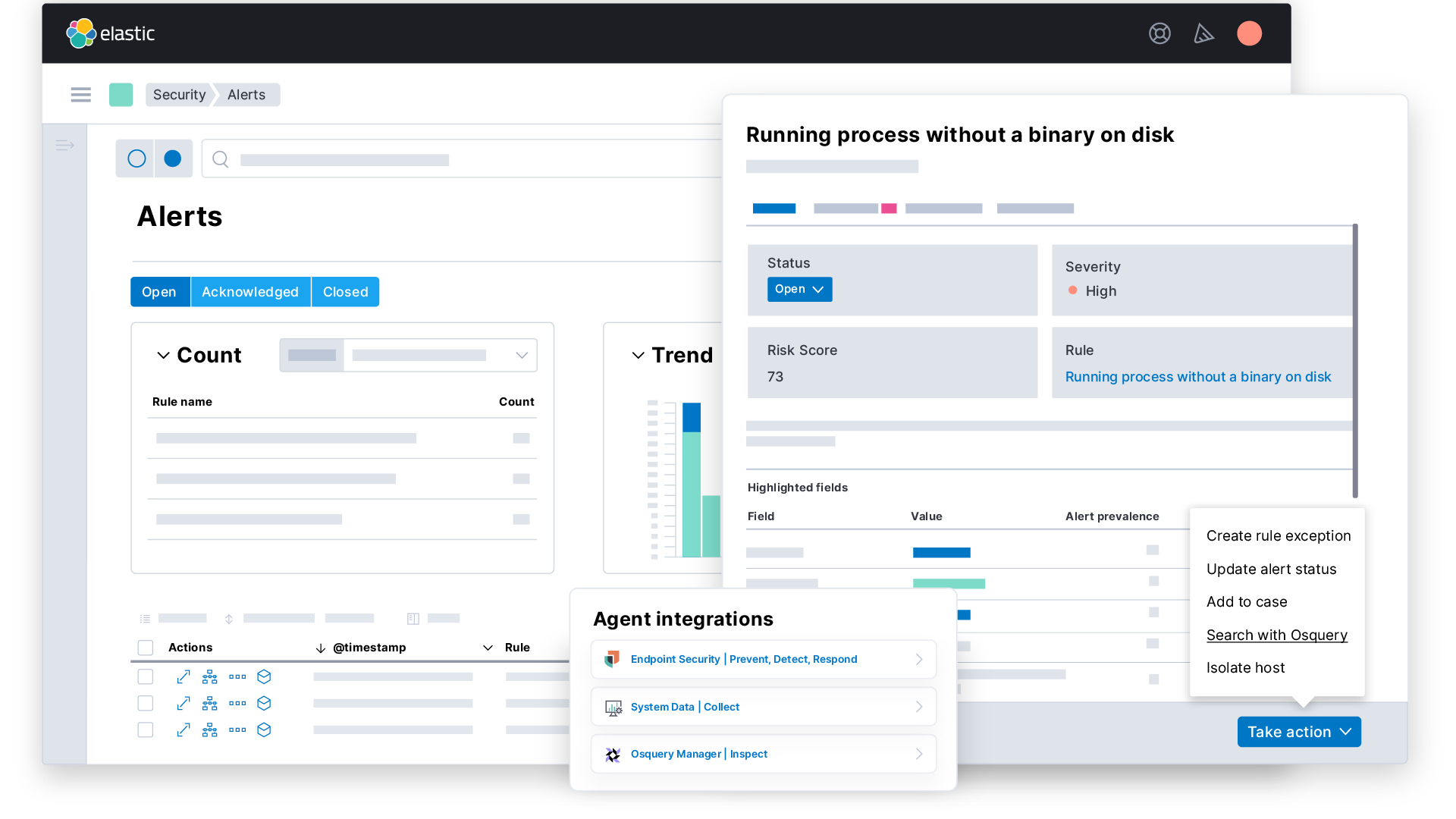
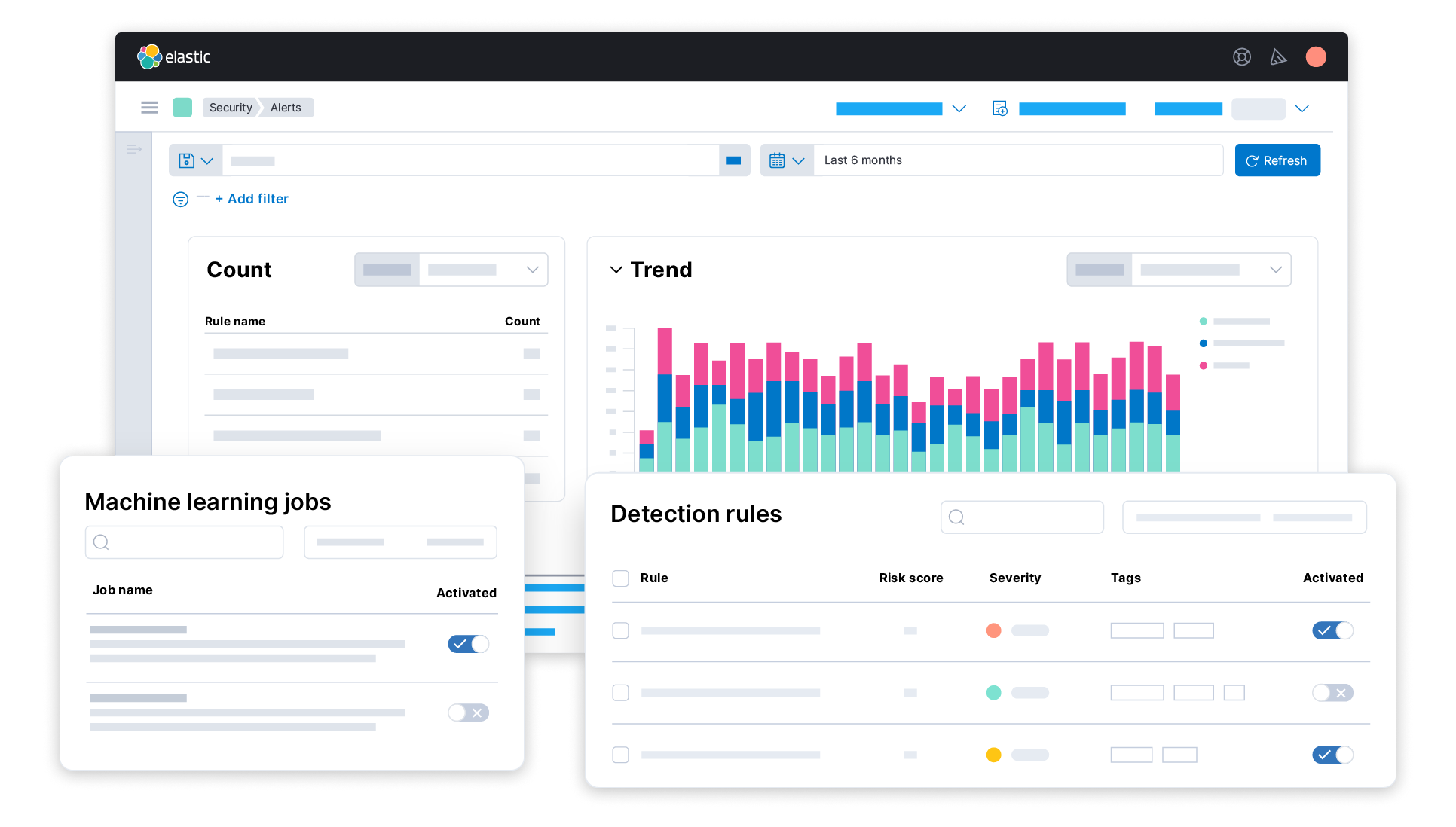
Elastic Security is an open and extensible SIEM platform that combines analytics, search, and AI to detect and respond to threats across distributed environments. It is built on Elasticsearch and can handle large-scale data ingestion and analysis without requiring data movement or duplication. The platform integrates SIEM, XDR, and automation into a single system.
配備モデル:
Can be deployed in cloud, on-premises, or hybrid environments. Supports major cloud providers and self-managed infrastructure.
主な特徴は以下の通り:
- Unified SIEM and XDR: Combines endpoint, cloud, and SIEM capabilities in a single platform.
- Open architecture: Allows ingestion of any data source and integration with existing tools and pipelines.
- AI and machine learning: Supports detection, triage, and investigation with contextual and explainable AI.
- Open detection rules: Provides transparent, customizable rules maintained by an active community.
- Federated search: Enables querying across distributed data sources without centralizing all data.
- Built-in automation: Includes native workflows and playbooks without requiring separate SOAR tools.
- Scalable analytics: Processes large volumes of structured and unstructured data in real time.
Source: Elastic
4. Google Chronicle

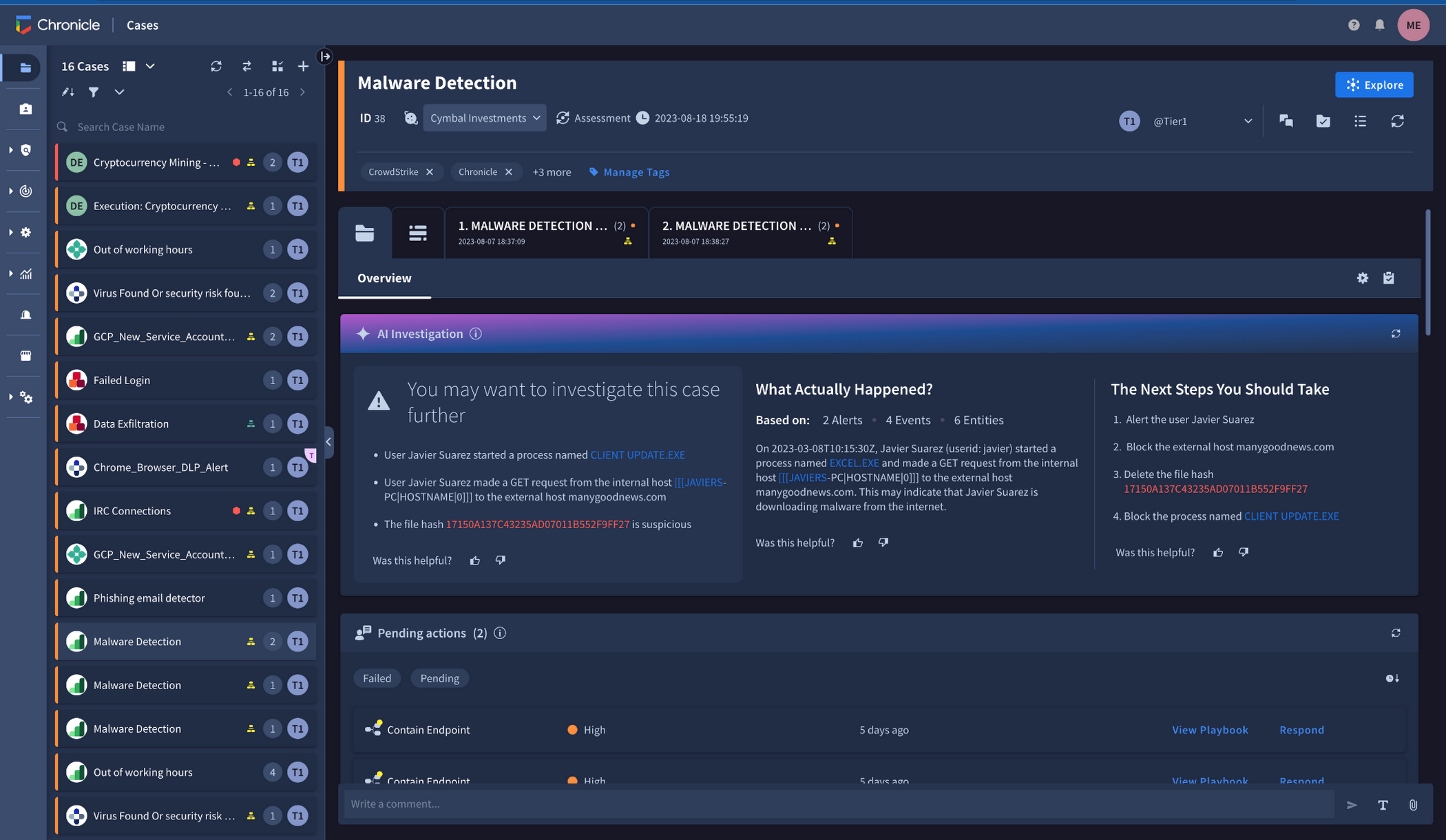
Google Chronicle (part of Google Security Operations) is a cloud-native SIEM platform focused on large-scale data analysis and intelligence-driven detection. It leverages Google infrastructure to ingest, store, and analyze security telemetry at high speed while integrating threat intelligence and AI into investigation and response workflows.
配備モデル:
Delivered as a cloud-native platform on Google Cloud. Supports ingestion from multicloud and on-premises environments.
主な特徴は以下の通り:
- High-scale data ingestion: Processes large volumes of telemetry with fast search and analysis capabilities.
- Curated detections: Provides built-in detection rules maintained by security researchers.
- Custom detection language: Enables rule creation using YARA-L for flexible detection engineering.
- Integrated threat intelligence: Enriches detections with Google and third-party threat data.
- AI-assisted investigation: Uses generative AI for natural language queries, summaries, and response guidance.
- Unified SIEM and SOAR: Combines detection, investigation, and automated response in one platform.
- Case management and context graphing: Links entities and events to provide a structured investigation workflow.
Source: ManageEngine
Hybrid / On-Premise SIEM Platforms
5.マネージエンジン Log360

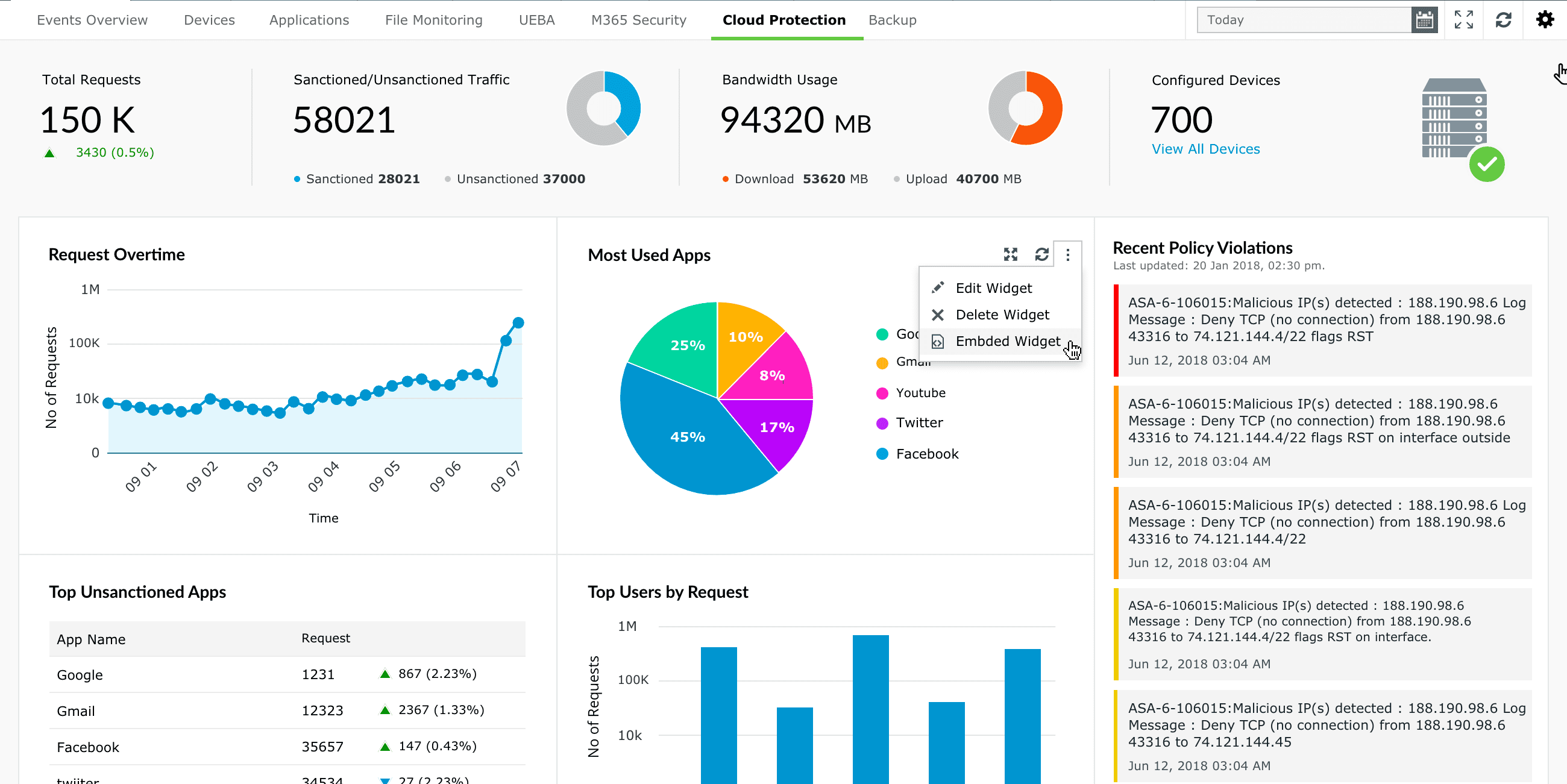
ManageEngine Log360 is a SIEM platform focused on threat detection, log management, and compliance, with strong emphasis on threat intelligence integration. It aggregates logs from multiple sources and enriches alerts with external intelligence to improve detection accuracy and prioritization.
配備モデル:
Primarily deployed on-premises with support for hybrid environments. Integrates with cloud services and external threat intelligence feeds.
主な特徴は以下の通り:
- Threat intelligence integration: Ingests and normalizes multiple threat feeds for enriched detection.
- Alert enrichment: Adds context such as IP reputation, geolocation, and known indicators of compromise.
- Event correlation: Matches internal activity with external threat data to detect attack patterns.
- Risk-based prioritization: Scores and categorizes alerts to focus on high-risk incidents.
- MITRE ATT&CK mapping: Maps detections to known tactics and techniques for better analysis.
- Dark web monitoring: Identifies exposed credentials and data leaks with the organization.
- Automated response workflows: Triggers actions like blocking IPs or disabling accounts based on detections.

Source: ManageEngine
6. Splunk Enterprise Security

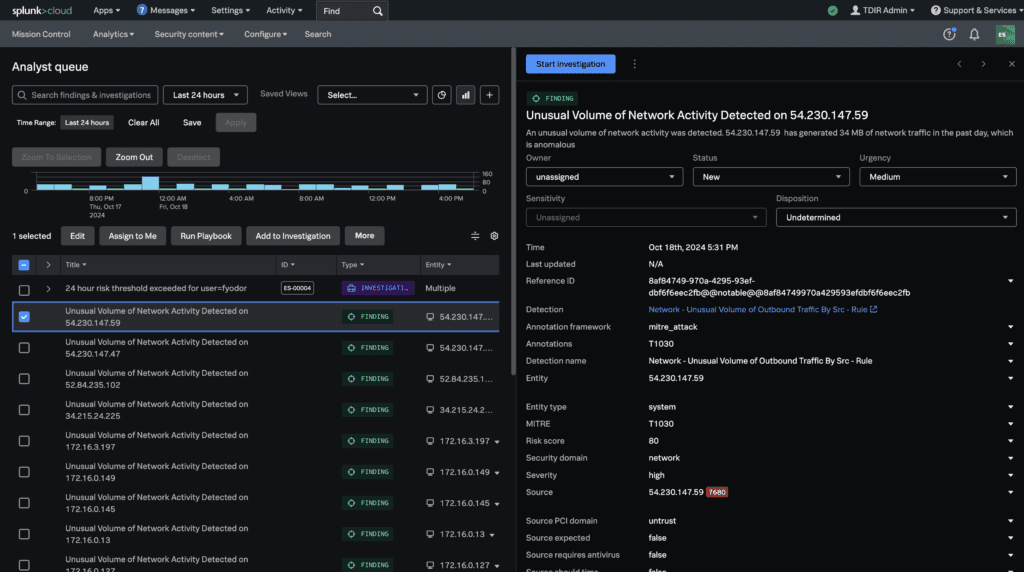
Splunk Enterprise Security is a SIEM platform that provides centralized visibility, analytics, and automation for security operations. It integrates detection, investigation, and response workflows while using machine learning and behavioral analytics to identify threats across diverse data sources.
配備モデル:
Available as on-premises, cloud-hosted, or hybrid deployment. Supports distributed data ingestion across cloud and on-prem environments.
主な特徴は以下の通り:
- Unified TDIR platform: Combines threat detection, investigation, and response in one system.
- Full-spectrum visibility: Collects and analyzes data across endpoints, networks, and cloud environments.
- User and entity behavior analytics: Detects anomalies and insider threats using machine learning.
- Risk-based alerting: Prioritizes alerts based on risk to reduce noise and improve accuracy.
- Integrated SOAR: Automates workflows and standardizes incident response processes.
- AI-driven workflows: Supports natural language queries, summaries, and guided investigations.
- Detection lifecycle management: Provides tools to create, test, and monitor detection rules.
Source: Splunk
7. IBM QRadar

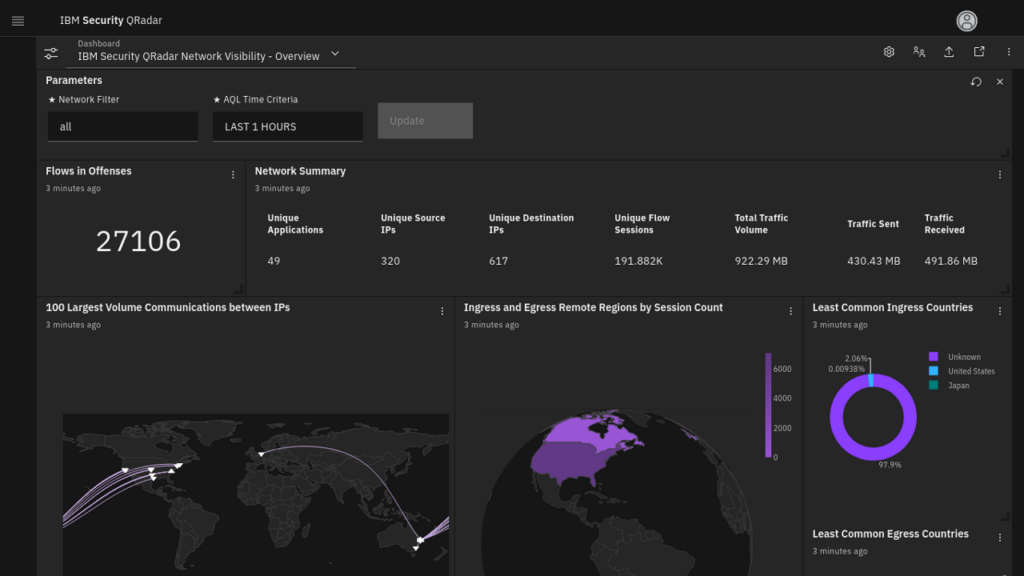
IBM QRadar is a SIEM platform that focuses on centralized visibility, real-time threat detection, and compliance management. It correlates data from across the IT environment to identify suspicious activity and supports analysts with tools for investigation and response.
Deployment models:
Available as on-premises software, cloud-hosted, or hybrid deployment. Integrates with a range of security tools and data sources.
主な特徴は以下の通り:
- Centralized log and event management: Aggregates and correlates data from multiple sources.
- Real-time threat detection: Identifies threats using analytics across the full attack chain.
- User behavior analytics: Detects anomalous user activity and insider threats.
- Threat hunting capabilities: Enables near real-time analysis of large datasets.
- Built-in integrations: Connects with numerous security tools for unified visibility.
- Compliance support: Provides reporting and auditing capabilities for regulatory requirements.
- Operational efficiency: Reduces manual tasks in investigation and prioritization.
Source: IBM
結論
SIEM プロバイダーの選択には、技術的能力、導入モデル、組織のニーズのバランスを取ることが必要です。適切な SIEM プラットフォームは、リアルタイムの脅威検知を提供し、効率的な調査をサポートし、既存のセキュリティ・インフラストラクチャと統合する必要があります。組織は、パフォーマンス、拡張性、コスト、進化する脅威やコンプライアンス要求への適応能力に基づいてSIEMプロバイダーを評価する必要があります。
Exabeamについてもっと知る
ホワイトペーパー、ポッドキャスト、ウェビナーなどのリソースで、Exabeamについて学び、情報セキュリティに関する知識を深めてください。