


FortiSIEM: Hauptfunktionen, Preise, Einschränkungen und Alternativen
- 9 minutes to read
Inhaltsverzeichnis
Was ist FortiSIEM?
FortiSIEM ist eine SIEM-Lösung (Security Information and Event Management), die die Übersicht über IT-Umgebungen ermöglicht. Sie bietet Funktionen für Sicherheitsüberwachung, Vorfallerkennung und Compliance-Reporting. Mit Echtzeitkorrelationen und Analysefunktionen ermöglicht FortiSIEM Unternehmen, auf potenzielle Bedrohungen und Schwachstellen zu reagieren.
Durch die Zusammenführung von Protokollen, Ereignissen und anderen relevanten Daten bietet es eine zentrale Überwachungslösung und gewährleistet, dass Sicherheitsteams volle Transparenz und Kontrolle über die Netzwerkaktivitäten haben. Die Plattform berücksichtigt die Komplexität moderner IT-Umgebungen, indem sie Sicherheitsmanagement mit Leistungsmanagement kombiniert.
ForitSIEM unterstützt verschiedene Bereitstellungsoptionen, darunter Cloud und On-Premises. Die Fähigkeit, Prozesse wie Netzwerkerkennung und Konfigurationsmanagement zu automatisieren, reduziert den manuellen Aufwand und trägt zur Verbesserung der Genauigkeit bei.
Dies ist Teil einer umfangreichen Reihe von Leitfäden zum Thema Informationssicherheit.
Editor’s note: Updated the article to cover recent market trends, updated product information to reflect features and capabilities in 2026, and added 1 new tool.
Hauptfunktionen von FortiSIEM
Einheitliches Sicherheits- und Leistungsmanagement
FortiSIEM bietet eine Plattform, die Sicherheitsinformationsmanagement mit Leistungsüberwachung kombiniert. Unternehmen profitieren von der Möglichkeit, Sicherheitsbedrohungen und Systemleistungskennzahlen zentral zu analysieren. Dieser einheitliche Ansatz ermöglicht Erkenntnisse, die isolierte Überwachungssysteme nicht bieten.
Ereigniskorrelation und -analyse in Echtzeit
FortiSIEM bietet Ereigniskorrelation und -analyse in Echtzeit und ermöglicht so eine schnelle Erkennung und Reaktion auf Bedrohungen. Durch die kontinuierliche Überwachung der Netzwerkaktivität und die Korrelation von Ereignissen aus verschiedenen Quellen kann FortiSIEM Muster erkennen, die auf potenzielle Sicherheitsvorfälle hinweisen. Diese Funktion ist nützlich, um Bedrohungen zu identifizieren, die mehrere Vektoren und Phasen umfassen.
Die Analyse-Engine von FortiSIEM verarbeitet riesige Datenmengen, um schnell umsetzbare Erkenntnisse zu liefern. Mit automatisierten Korrelationsregeln und Warnmechanismen können Sicherheitsteams Vorfälle priorisieren und sich auf die kritischsten Bedrohungen konzentrieren.
Automatisierte Netzwerkerkennung und CMDB
FortiSIEM bietet automatisierte Netzwerkerkennung und CMDB-Funktionen (Configuration Management Database), die ein umfassendes Verständnis der IT-Umgebung ermöglichen. Automatisierte Erkennungsprozesse inventarisieren kontinuierlich alle Geräte, Anwendungen und Dienste im Netzwerk und stellen sicher, dass alle Assets erfasst und überwacht werden.
Die integrierte CMDB verwaltet ein detailliertes Inventar der IT-Assets und ihrer Konfigurationen. Dies ist hilfreich, um Infrastrukturänderungen zu verwalten und Abhängigkeiten zu verstehen. Dadurch werden Lücken geschlossen, die oft durch manuelles Asset-Management entstehen, und alle Ergänzungen oder Änderungen am Netzwerk werden sofort erkannt und bewertet.
Skalierbarkeit und Mandantenfähigkeit
FortiSIEM ist skalierbar und eignet sich für alle Umgebungen – von kleinen Netzwerken bis hin zu großen Unternehmensumgebungen. Es unterstützt außerdem Multi-Tenancy, sodass Managed Service Provider und große Unternehmen FortiSIEM effizient für mehrere Kunden oder Abteilungen einsetzen können. So kann jeder Mandant über isolierte Daten und Konfigurationen verfügen und gleichzeitig von zentraler Verwaltung und Analyse profitieren.
FortiSIEM-Preismodell
Die Preise für FortiSIEM variieren je nach Lizenzmodell, Bereitstellungstyp und Funktionsumfang und ermöglichen so die flexible Anpassung an unterschiedliche Unternehmensanforderungen. Die Plattform bietet verschiedene Lizenzmodelle:
- FortiSIEM Cloud-Lizenzierung: Die Cloud-Version wird auf Basis von FortiSIEM-Recheneinheiten (FCUs) lizenziert, die Ereignisse pro Sekunde (EPS) und Speicheranforderungen abdecken. Dieses Modell vereinfacht die Bereitstellung und Verwaltung und ermöglicht isolierte Instanzen mit integriertem Support. FCUs können je nach Nutzung angepasst werden.
- Abonnement-/OPEX-Lizenzierung: FortiSIEM bietet Optionen basierend auf der Datenaufnahme in Gigabyte pro Tag oder Geräten/Ereignissen pro Sekunde (EPS). Diese Modelle eignen sich für Unternehmen, die skalierbare Bereitstellungen virtueller Maschinen (VM) benötigen oder abonnementbasierte Preise für vorhersehbare Kosten bevorzugen.
- Unbefristete/CAPEX-Lizenzierung: Für Unternehmen mit speziellem Hardwarebedarf bietet FortiSIEM eine einmalige Lizenz für Geräte, EPS und verschiedene Überwachungsagenten an. Support und erweiterte Funktionen wie IOC-Dienste (Indicators of Compromise) sind über zusätzliche Abonnementlizenzen verfügbar.
- MSSP PAYG (Pay-As-You-Go): Managed Security Service Provider (MSSPs) können ein flexibles, nutzungsbasiertes Modell nutzen, dessen Kosten an die Nutzung von Geräten, Agenten und UEBA (User and Entity Behavior Analytics) gebunden sind. Diese Option umfasst Support und IOC-Dienste in einer jährlichen Gebühr.
Andere bemerkenswerte Fortinet-Produkte
FortiGate
FortiGate ist die führende Firewall-Lösung von Fortinet und bietet Sicherheitsfunktionen wie Intrusion Prevention, Webfilterung, VPN und Anwendungskontrolle. Basierend auf den maßgeschneiderten Sicherheitsprozessoren von Fortinet bietet FortiGate schnellen Bedrohungsschutz für kleine und große Unternehmen. Die Plattform nutzt KI-basierte Bedrohungsinformationen von FortiGuard Labs.
Der Unified Threat Management (UTM)-Ansatz von FortiGate ermöglicht die Konsolidierung mehrerer Sicherheitsfunktionen, vereinfacht die Verwaltung und reduziert den Bedarf an mehreren Geräten. Dank der Unterstützung der SD-WAN-Integration unterstützt FortiGate Unternehmen bei der Optimierung der Netzwerkleistung und der sicheren Anbindung von Zweigstellen.

Source: Fortinet

FortiWeb
FortiWeb ist die Web Application Firewall (WAF)-Lösung von Fortinet und schützt Webanwendungen vor Bedrohungen wie SQL-Injection, Cross-Site-Scripting (XSS) und DDoS-Angriffen. Mithilfe von maschinellem Lernen erkennt FortiWeb anomales Verhalten und passt sich so an die Nutzungsmuster der Anwendung an.
FortiWeb lässt sich in andere Fortinet-Produkte integrieren und bietet so eine einheitliche Sicherheitsarchitektur. Es ist in verschiedenen Bereitstellungsmodi verfügbar, darunter vor Ort, virtuell und in der Cloud. Die Plattform bietet API-Schutz, Bot-Minderung und integrierte Schwachstellen-Scans.

Source: Fortinet

Fortinet SOAR
Fortinet SOAR (Security Orchestration, Automation, and Response) optimiert den Sicherheitsbetrieb durch die Automatisierung wiederkehrender Aufgaben und die Orchestrierung von Arbeitsabläufen zur Reaktion auf Sicherheitsvorfälle. Dank der Integration mit einer Vielzahl von Sicherheitstools vereinfacht es die Untersuchung von Sicherheitsvorfällen und ermöglicht eine schnellere Reaktion. Es bietet anpassbare Playbooks für häufige Sicherheitsereignisse.
Fortinet SOAR eignet sich besonders für große Organisationen mit komplexen Sicherheitsumgebungen, da es Warnmeldungen aus verschiedenen Quellen zentralisiert und die Warnmeldungsflut reduziert. Die Lösung unterstützt Analysten durch die Automatisierung von Priorisierung und Reaktion.

Source: Fortinet

FortiXDR
FortiXDR (Extended Detection and Response) ist Fortinets Plattform für schichtübergreifende Erkennung und automatisierte Reaktion. FortiXDR vereint Daten von Endpunkten, Netzwerkgeräten und der Cloud und bietet so einen ganzheitlichen Überblick über die Sicherheitslandschaft. Mithilfe KI-gestützter Analysen erkennt es komplexe Angriffsmuster, die durch isolierte Überwachungssysteme möglicherweise nicht sichtbar sind.
Die Lösung automatisiert die Erkennung und Reaktion auf Bedrohungen und verkürzt so die durchschnittliche Zeit bis zur Erkennung und Behebung. Mit FortiXDR profitieren Sicherheitsteams von korrelierten Erkenntnissen und koordinierten Reaktionsmöglichkeiten.

Source: Fortinet

FortiGuard MDR
FortiGuard MDR (Managed Detection and Response) ist ein verwalteter Sicherheitsdienst, der menschliches Fachwissen mit Fortinets Technologie kombiniert, um rund um die Uhr Bedrohungsüberwachung, -erkennung und -reaktion zu gewährleisten. Dieser Service eignet sich für Unternehmen, die Sicherheitsabdeckung benötigen, aber nicht über die internen Ressourcen für ein dediziertes Security Operations Center (SOC) verfügen.
FortiGuard MDR nutzt die Bedrohungsinformationen von FortiGuard Labs und die Sicherheitsprodukte von Fortinet, um Bedrohungen in Echtzeit zu erkennen und zu entschärfen. Der Service umfasst proaktive Bedrohungssuche, Vorfalluntersuchung und Expertenberatung zur Problembehebung.

Source: Fortinet
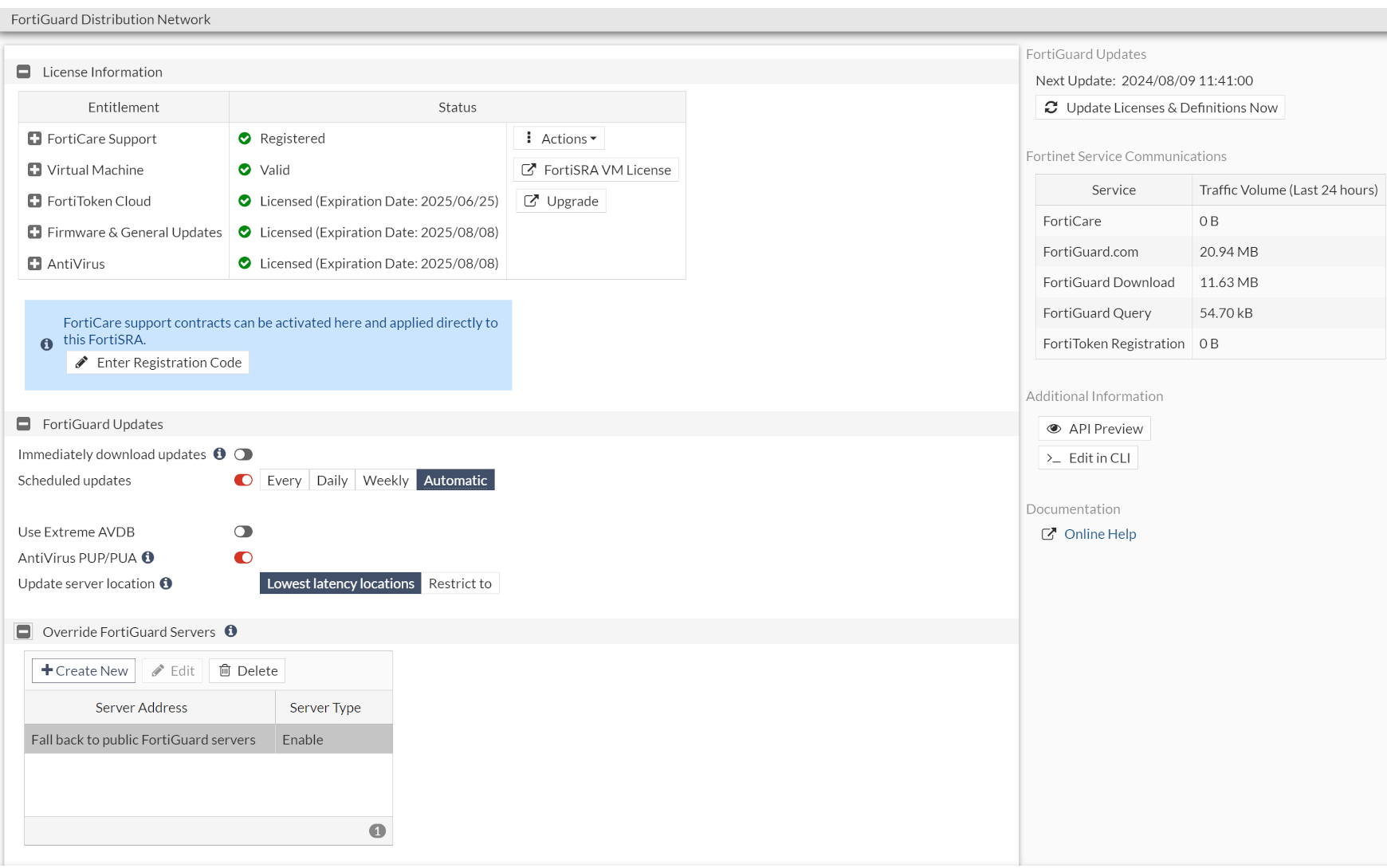
FortiGuard SOC als Service
FortiGuard SOC as a Service (SOCaaS) ist eine cloudbasierte Security Operations Center-Lösung mit Fokus auf kontinuierlicher Überwachung, Bedrohungserkennung und Incident Response. Sie ist als schlüsselfertiger Service konzipiert, der Unternehmen Transparenz und Verwaltung ihrer Sicherheitsinfrastruktur ohne ein eigenes SOC-Team bietet.
Der Dienst ist in Fortinets Security Fabric integriert, um die Überwachung von Sicherheitsereignissen über Netzwerk-, Endpunkt- und Anwendungsebenen hinweg zu vereinheitlichen. Er nutzt FortiGuard Bedrohungsintelligenz Services und KI-basierte Analysen, um Bedrohungen zu erkennen und darauf zu reagieren. FortiGuard SOCaaS-Analysten bieten Überwachung, Vorfall-Triage und Eskalation zur Bewältigung von Bedrohungen.
FortiAnalyzer
FortiAnalyzer ist die Log-Management- und Sicherheitsanalyseplattform von Fortinet. Sie bietet Unternehmen Bedrohungserkennung, Ereigniskorrelation und automatisierte Reaktion auf Vorfälle. Integriert in die Fortinet Security Fabric bietet sie eine Konsole zur Überwachung von Sicherheitsereignissen im gesamten Netzwerk.
Die Plattform soll die Netzwerktransparenz verbessern, indem sie Protokolle von Fortinet-Produkten wie FortiGate, FortiClient, FortiWeb und FortiEDR aggregiert und analysiert. Sicherheitsteams können vordefinierte Ereignishandler und Korrelationsregeln verwenden, um Advanced Persistent Threats (APTs) und Indicators of Compromise (IOCs) zu erkennen. FortiAnalyzer unterstützt außerdem automatisierte Workflows und Playbooks.
FortiAnalyzer ist als Hardware-Appliance, virtuelle Maschine (VM) oder Cloud-basierter Dienst verfügbar. Es unterstützt auch die Weiterleitung und Integration von Protokollen von Drittanbietern.
FortiSIEM-Einschränkungen
Trotz seines umfassenden Funktionsumfangs weist FortiSIEM gewisse Einschränkungen auf, die seine Benutzerfreundlichkeit und Effektivität beeinträchtigen können. Diese Einschränkungen wurden von Benutzern der G2-Plattform gemeldet:
- Complex setup and configuration: Users report that initial deployment and customization can be difficult, requiring significant time and expertise to configure properly.
- Steep learning curve: The platform can be hard to learn, especially for advanced use cases, with users needing time to understand reporting and operational workflows.
- Outdated and unintuitive interface: Some reviewers note that the web UI feels legacy and not aligned with modern design, making navigation and usage less efficient.
- Limited dashboard and search capabilities: Dashboards and search functionality are seen as areas needing improvement, particularly for deeper analysis and usability.
- Performance issues in reporting: Generating reports can cause the system to hang or slow down, and the console may take time to refresh.
- High noise and false positives: Users mention excessive alerts and false positives, which require careful tuning of rules and policies to manage effectively.
- Support responsiveness concerns: Some users report delays in vendor support when resolving issues, impacting operational efficiency.
- Compatibility limitations: The platform may not integrate smoothly with all network devices or architectures, limiting flexibility in some environments.
- Cost considerations for smaller organizations: Pricing can be a barrier, particularly for small and mid-sized businesses with limited budgets.
- Insufficient training and documentation for beginners: While documentation exists, some users feel that more structured onboarding and training resources are needed.
Bemerkenswerte FortiSIEM-Konkurrenten und Alternativen
1. Exabeam

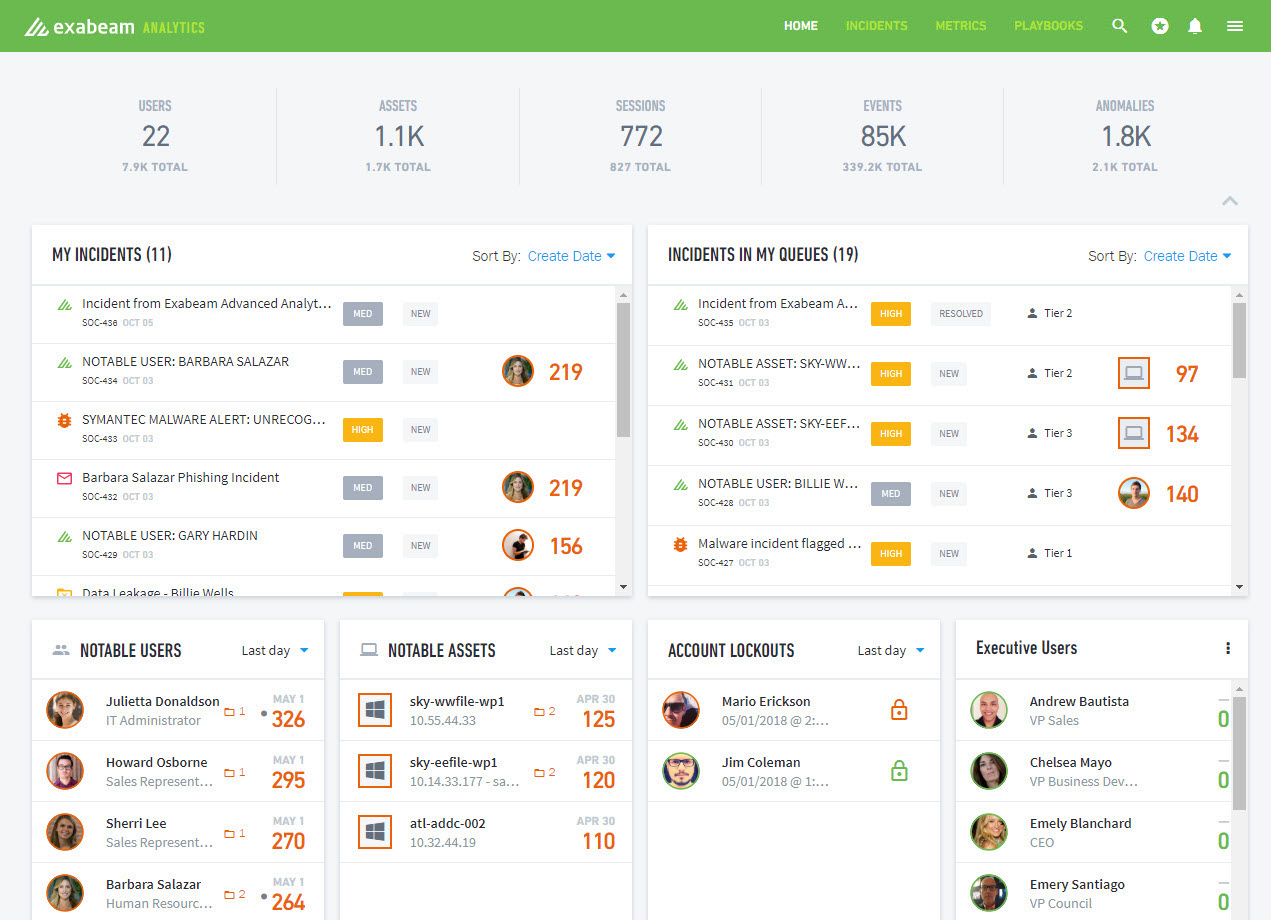
Die Security Operations Platform von Exabeam bietet eine Cloud-native Lösung mit Fokus auf Bedrohungserkennung, -untersuchung und -reaktion (TDIR). Sie nutzt Verhaltensanalysen und Automatisierung, um Sicherheitsbedrohungen in verschiedenen Umgebungen zu identifizieren und zu bekämpfen.
Hauptmerkmale:
- Verhaltensanalyse: Nutzt User and Entity Behavior Analytics (UEBA), um normale Aktivitätsmuster zu ermitteln und Abweichungen wie Insider-Bedrohungen oder kompromittierte Konten zu erkennen.
- Automatisierte TDIR-Workflows: Automatisiert die Erstellung von Vorfallzeitleisten und korreliert Sicherheitsereignisse, um den manuellen Untersuchungsaufwand zu reduzieren.
- Cloud-native Skalierbarkeit: Entwickelt für die Verarbeitung großer Mengen an Sicherheitsdaten und unterstützt die schnelle Aufnahme und effiziente Abfrage bei groß angelegten Bereitstellungen.
- Umfangreiche Integrationen: Verbindung mit zahlreichen Sicherheitstools und Datenquellen von Drittanbietern und ermöglicht so die Datenerfassung aus unterschiedlichen Umgebungen.
- Generative KI-Unterstützung: Integriert generative KI-Funktionen, um Sicherheitsanalysten bei Abfragen in natürlicher Sprache und der Zusammenfassung von Untersuchungsdaten zu unterstützen.

Source: Exabeam
2. Splunk Enterprise

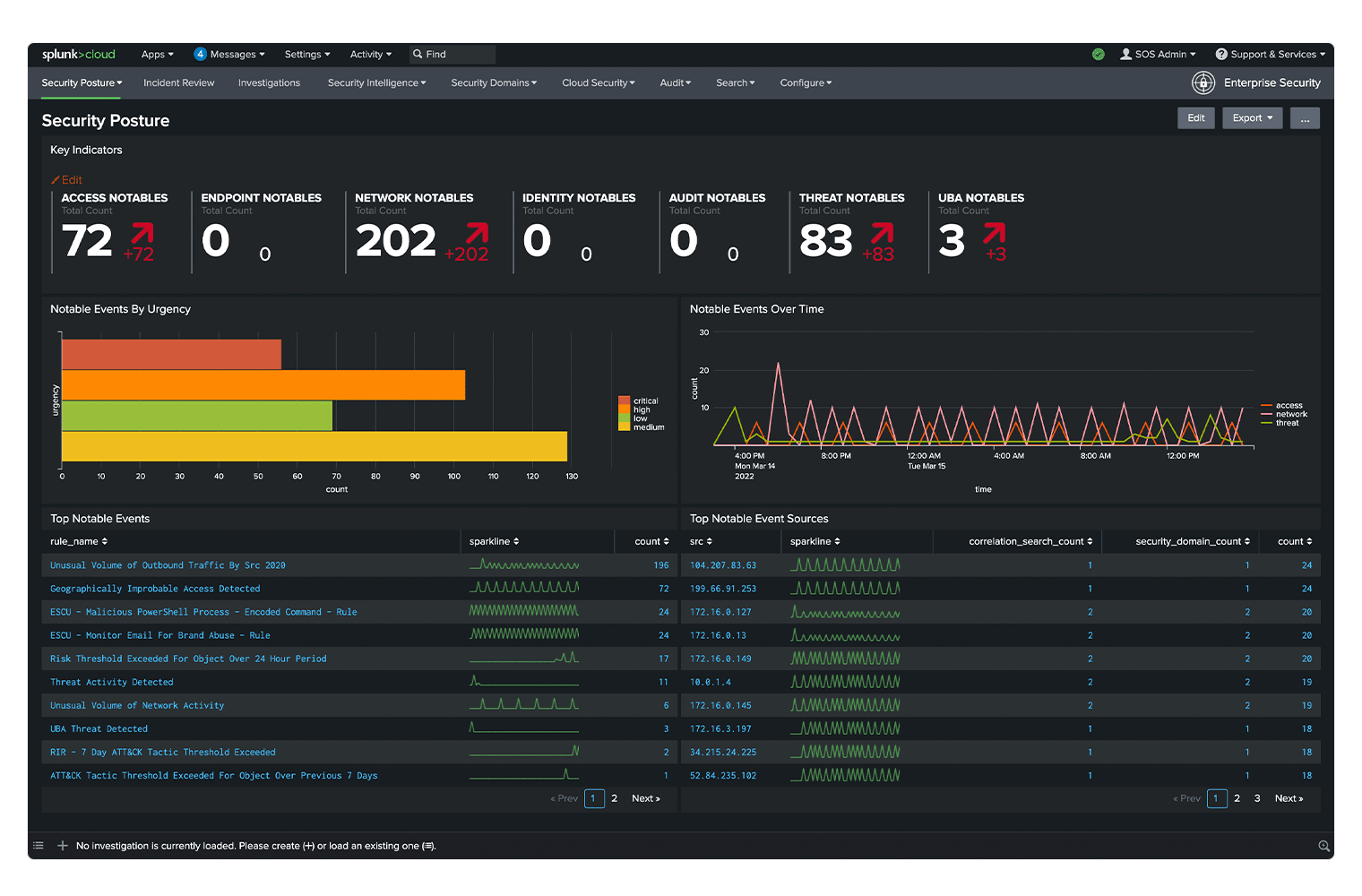
Splunk Enterprise Security is a SIEM and TDIR platform that centralizes security operations, combining detection, investigation, and response workflows in a single system. It focuses on analyzing large volumes of machine data from across environments, using analytics, automation, and AI to help security teams identify and prioritize threats.
Hauptfunktionen von Splunk Enterprise:
- Unified TDIR platform: Combines detection, investigation, and response workflows into a single environment, reducing the need for multiple tools.
- Full-spectrum data visibility: Collects and analyzes data across cloud, on-premises systems, and devices, enabling broad monitoring coverage.
- Behavior analytics with UEBA: Uses machine learning to detect anomalies in user and entity behavior, helping identify insider threats and compromised accounts.
- Risk-based alerting: Prioritizes alerts based on risk, reducing noise and helping teams focus on high-confidence threats.
- SOAR-driven automation: Automates investigation and response processes, minimizing manual effort and improving consistency.
- AI-assisted workflows: Supports natural language queries, automated summaries, and guided investigations to accelerate analyst tasks.

Source: Splunk
3. IBM Security QRadar SIEM

IBM QRadar SIEM is a platform focused on centralized visibility, real-time threat detection, and compliance management. It aggregates and analyzes security data from across the environment, helping organizations identify threats and simplify incident response while reducing manual effort.
Hauptfunktionen von IBM Security QRadar SIEM:
- Centralized visibility and correlation: Aggregates data from multiple sources to provide a unified view of security events and enable event correlation.
- Real-time threat detection: Continuously monitors activity to detect threats as they occur, supporting faster response times.
- User behavior analytics (UBA): Identifies anomalous user activity to detect insider threats and risky behavior.
- Integrated threat intelligence and analytics: Uses threat data and analytics to support threat hunting and detection of advanced attacks.
- Automation of investigation tasks: Reduces manual work by automating processes such as case creation and prioritization.
- Compliance reporting support: Helps organizations generate evidence for audits and regulatory requirements.

Source: IBM
4. Securonix Unified Defense SIEM

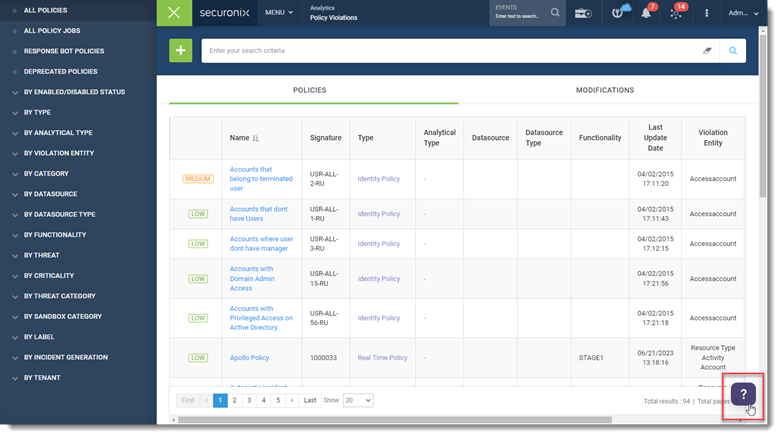
Securonix Unified Defense SIEM is a cloud-native platform that combines SIEM, UEBA, SOAR, and threat intelligence into a single system. It emphasizes reducing tool fragmentation and using AI-driven analytics and automation to improve detection and response efficiency.
Hauptfunktionen von Securonix Unified Defense SIEM:
- Unified security platform: Integrates SIEM, UEBA, SOAR, and threat intelligence into one architecture to reduce tool sprawl.
- Agentic AI-driven analytics: Uses AI to detect threats, guide investigations, and automate response actions.
- Noise reduction and false positive filtering: Applies analytics to reduce alert noise and help analysts focus on meaningful threats.
- Cloud-native architecture: Designed for scalability and performance with a single-tier data architecture.
- Automated triage and response: Automates enrichment, investigation, and response workflows to speed up incident handling.
- Built-in compliance reporting: Maps activity to regulatory frameworks and generates audit-ready reports.

Source: Securonix
5. Rapid7 InsightIDR

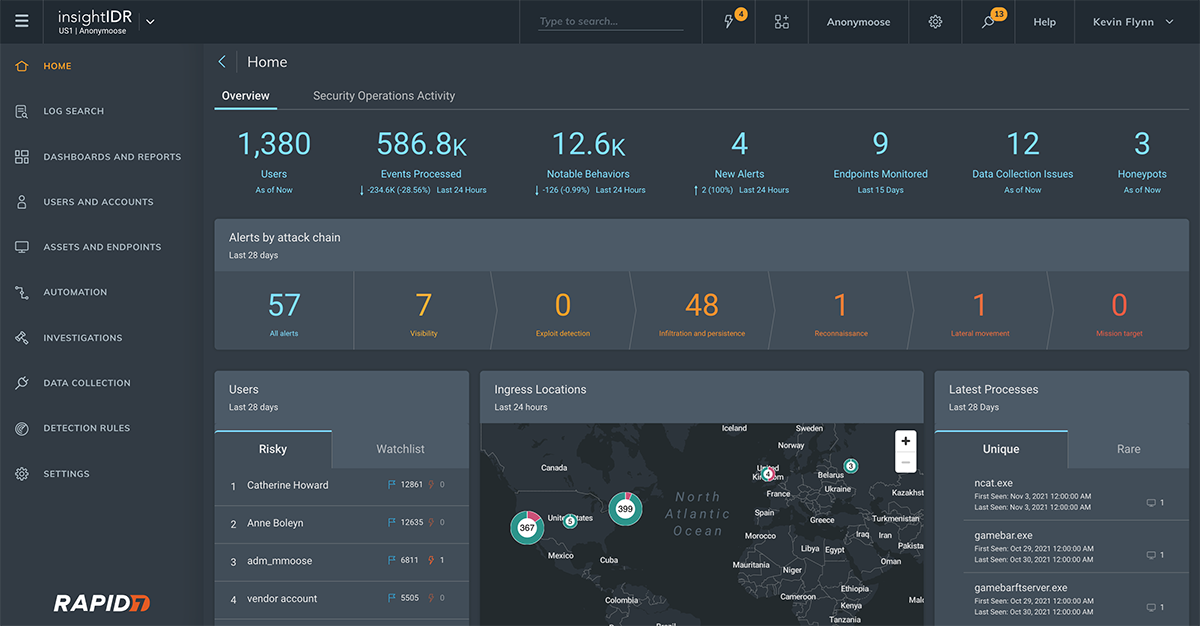
Rapid7 InsightIDR is a cloud-native SIEM and XDR solution that focuses on incident detection, user behavior monitoring, and centralized visibility. It aggregates data from multiple sources and applies analytics to detect suspicious activity and support investigation and response.
Hauptfunktionen von Rapid7 InsightIDR:
- Cloud-native SIEM and XDR: Combines SIEM with extended detection and response capabilities for broader threat coverage.
- Centralized data collection and analysis: Aggregates logs, endpoint data, and network traffic into a unified view.
- User and attacker behavior analytics: Analyzes user activity to identify suspicious behavior and potential compromises.
- Built-in detection and alerting: Uses predefined detections and threat intelligence to identify suspicious activity.
- Automated event prioritization: Highlights critical events and filters out less relevant data to reduce noise.
- Investigation and response tools: Provides context-rich investigations with data on users, assets, and attack timelines.

Source: Rapid7
6. Microsoft Sentinel

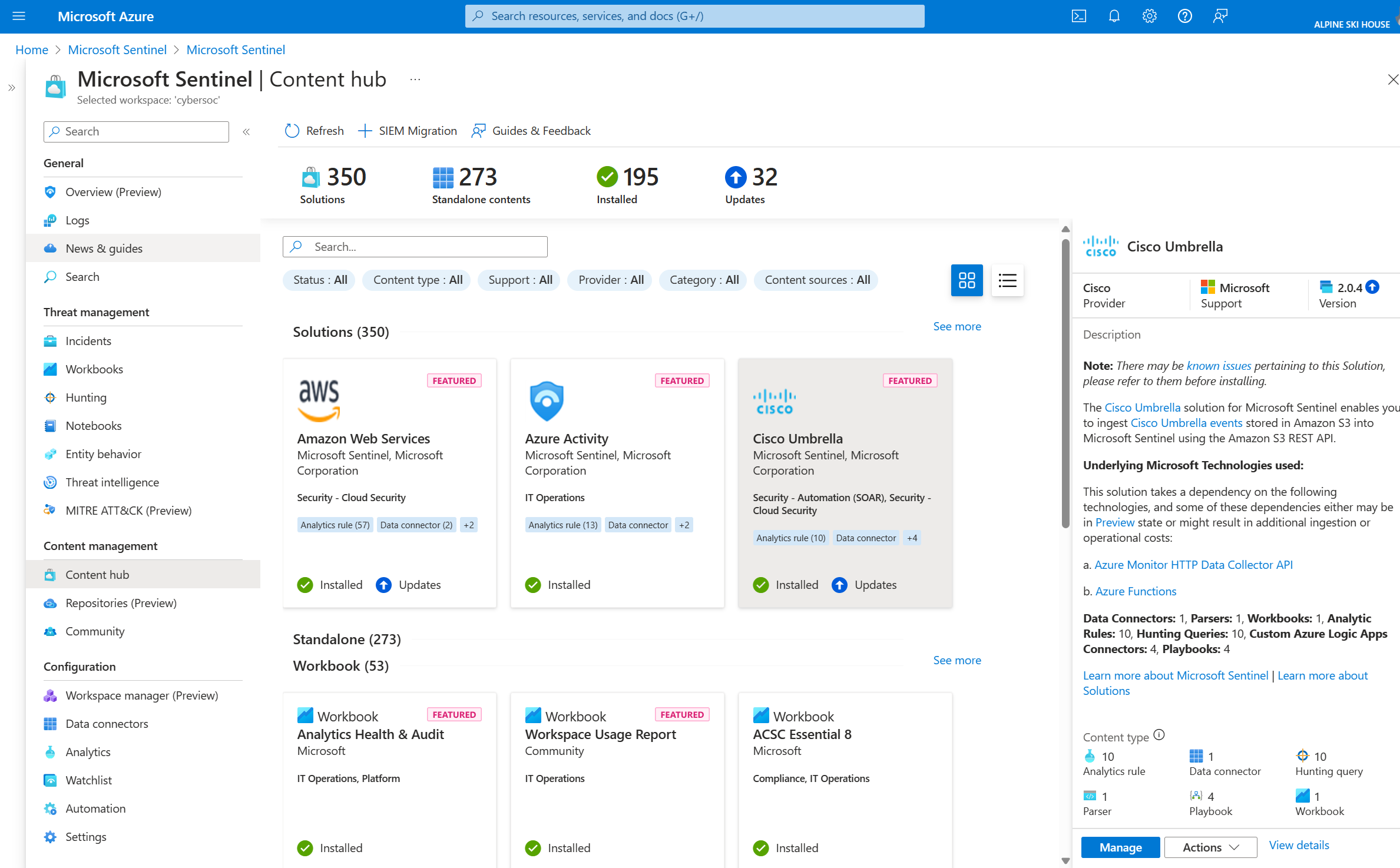
Microsoft Sentinel is a cloud-native SIEM platform that integrates AI, analytics, and automation to provide centralized security operations across multi-cloud and hybrid environments. It combines data collection, threat detection, and response capabilities into a unified system.
Hauptmerkmale:
- Cloud-native SIEM architecture: Built on a scalable data lake to support large-scale data ingestion and analysis.
- AI-powered detection and investigation: Uses machine learning and generative AI to detect threats and assist in investigations.
- Unified SIEM and XDR capabilities: Integrates SIEM with XDR for end-to-end visibility and response across environments.
- Extensive data integration: Supports hundreds of connectors for collecting data from cloud services, on-prem systems, and third-party tools.
- Security graph and contextual visibility: Provides enriched context through graph-based analysis of security data.
- Automated response and optimization: Uses automation and AI-driven recommendations to streamline SOC operations and reduce response time.

Source: Microsoft
Erfahren Sie mehr in unserem ausführlichen Leitfaden zuFortinet-Konkurrenten
Abschluss
FortiSIEM ist eine umfassende SIEM-Lösung, die Sicherheitsüberwachung, Vorfallerkennung und Compliance-Management bietet. Die integrierte Plattform vereint Sicherheits- und Leistungsüberwachung und bietet eine vielseitige Option für verschiedene Organisationen. FortiSIEM bietet Echtzeitanalysen, automatisierte Netzwerkerkennung und Skalierbarkeit. Potenzielle Nutzer sollten jedoch Faktoren wie Einrichtungskomplexität und Ressourcenbedarf berücksichtigen. In manchen Fällen kann es sinnvoll sein, alternative SIEM-Lösungen in Betracht zu ziehen.
Weitere Leitfäden zu wichtigen Themen der Informationssicherheit finden Sie hier.
Gemeinsam mit unseren Content-Partnern haben wir ausführliche Leitfäden zu verschiedenen anderen Themen verfasst, die Ihnen bei der Erkundung der Welt der Informationssicherheit ebenfalls nützlich sein können.
Cyber-Bedrohungsintelligenz
Autor: Exabeam
- [Leitfaden] Die beste Software für das Management von Insiderbedrohungen: Die 9 besten Lösungen im Jahr 2025
- [Leitfaden] Die besten Tools Bedrohungsintelligenz: Die 8 führenden Anbieter im Jahr 2025
- [Whitepaper] Stand der Sicherheitsteamforschung 2024
- [Produkt] Exabeam | KI-gesteuerte Sicherheitsoperationen
Securonix
Autor: Exabeam
- [Leitfaden] Securonix: Lösungsübersicht, Einschränkungen & Top 5 Alternativen
- [Whitepaper] Gartner ® Magic Quadrant™ für SIEM
- [Produkt] New-Scale SIEM | Sicherheitsbetriebsplattform
Sicherheit der Software-Lieferkette
Autor: Oligo
- [Produkt] Oligo ADR | Sofortige Angriffserkennung & Lieferkettensicherheit
- [Leitfaden] Der ultimative Leitfaden zur Sicherheit der Software-Lieferkette im Jahr 2025
- [Leitfaden] Lieferkettenangriffe: Funktionsweise und 5 aktuelle Beispiele
- [Blog] ShellTorch: Mehrere kritische Sicherheitslücken in PyTorch TorchServe bedrohen unzählige KI-Nutzer
Mehr über Exabeam erfahren
Vertiefen Sie Ihr Wissen mit Webinaren, Leitfäden und Analystenberichten.
-
 Der Blog
 Exabeam vs. Splunk: Welcher Ansatz verbessert die Ergebnisse im Bereich der Sicherheitsoperationen?
- Mehr anzeigen