


فهرس المحتويات
تُستخدم أنظمة إدارة معلومات الأمان والأحداث الآن من قبل المنظمات المتوسطة وحتى الصغيرة. تعتبر أنظمة SIEM مفتوحة المصدر جذابة للمستخدمين الجدد بسبب انخفاض تكاليف الترخيص ومجموعة الميزات المتزايدة. ما هي أنظمة SIEM مفتوحة المصدر المتاحة، وكيف تقارن بالعروض التقليدية في المؤسسات؟
أنظمة أمان SIEM كانت تستخدم فقط من قبل المنظمات الكبيرة، ولكنها تُعتمد بشكل متزايد من قبل المنظمات المتوسطة وحتى الصغيرة. أنظمة SIEM مفتوحة المصدر جذابة للمستخدمين الجدد بسبب تكاليف الترخيص المنخفضة ومجموعة الميزات المتزايدة. ما هي أنظمة SIEM مفتوحة المصدر المتاحة، وكيف تقارن بالعروض التقليدية للشركات؟
هذا المحتوى هو جزء من سلسلة حول أدوات SIEM.
ما هو SIEM؟
SIEM (إدارة معلومات وأحداث الأمان) هو نظام للأمان والتدقيق. إنه ليس أداة واحدة، بل هو "صندوق أدوات" يتكون من مكونات متعددة للمراقبة والتحليل.
تجمع أنظمة إدارة معلومات الأمن (SIEM) البيانات من مئات أدوات الأمان وتكنولوجيا المعلومات عبر المؤسسة، وتستخدم الارتباطات الإحصائية والقواعد لتحويل الأحداث ومدخلات السجلات إلى معلومات قابلة للاستخدام. تستخدم فرق الأمان هذه المعلومات لاكتشاف التهديدات في الوقت الحقيقي، وإدارة التحقيقات الجنائية حول الحوادث الأمنية، وتنظيم استجابة الحوادث، وإعداد تدقيقات الامتثال.
أصبح نظام SIEM الآن نهجًا أمنيًا قياسيًا. عدد متزايد من المؤسسات تعتمد نظام SIEM بسبب الزيادة المستمرة في الهجمات الإلكترونية واللوائح الأمنية الأكثر صرامة. التغييرات في اللوائح مثل PCI DSS وGDPR للاتحاد الأوروبي جعلت من الضروري إزالة سجلات أحداث النظام والتطبيقات من الخوادم الفردية وتخزينها بشكل آمن للتحقيق واتخاذ الإجراءات.
Editor’s note: Updated the article to cover recent market trends, updated product information to reflect features and capabilities in 2026, and added 6 new tools.
SIEM Market Trends
Market Growth and Adoption
The SIEM market is valued at USD 10.67 billion and is expected to reach USD 20.78 billion by 2031, with a CAGR of 11.5%. This growth reflects the rising need to handle large-scale security telemetry and improve threat detection.
Deployment Models and Architecture Trends
A clear shift is happening from on-premises systems to cloud-based SIEM. On-premises deployments still held 55.27% of the market, but cloud solutions are growing at a faster rate due to flexible pricing and scalability.
At the architecture level, cloud-native platforms are gaining traction. These systems separate storage from compute, allowing organizations to store large volumes of logs cheaply and run analytics only when needed. Hybrid setups are also common, especially in regions with strict data residency rules.
Technology Advancements
Vendors are improving SIEM platforms with AI and machine learning capabilities. These features help reduce alert noise by filtering out low-priority events and highlighting real threats.
AI-driven tools also assist analysts by summarizing incidents and suggesting response actions. This reduces investigation time and helps teams handle higher alert volumes without increasing staff.
Rise of Managed Services
To address resource constraints, many organizations are turning to managed SIEM services. These services provide external monitoring, threat analysis, and incident response support.
Managed providers operate at scale and offer 24/7 coverage, helping organizations reduce internal workload. This trend is growing quickly, especially among companies that lack dedicated security teams.
أنظمة إدارة معلومات الأمان مفتوحة المصدر مقابل أنظمة إدارة معلومات الأمان ذات الجودة المؤسسية
إدارة معلومات الأمن والأحداث هي نظام أساسي في الأمن السيبراني الحديث. تمثل أدوات الأمان الأخرى تدفقات المعلومات، التي يمكن لنظام SIEM معالجتها واستخراج القيمة منها. ليس جميع أنظمة SIEM لديها نفس القدرات؛ اختيار نظام SIEM الذي يناسب احتياجات مؤسستك يمكن أن يعني الفرق بين منع خرق أمني كارثي أو تفويته.
نظام إدارة معلومات الأمان مفتوح المصدر
يمكن للمنظمات استخدام أدوات SIEM مفتوحة المصدر لتقليل تكاليف ترخيص البرمجيات وتقييم بعض القدرات قبل توسيع استثماراتهم في المنتجات. توفر حلول SIEM مفتوحة المصدر قدرات أساسية يمكن أن تناسب احتياجات المنظمات الصغيرة التي بدأت في تسجيل وتحليل معلومات أحداث الأمان الخاصة بها.
قيود أنظمة إدارة معلومات الأمان مفتوحة المصدر
- مع نمو المنظمة، يمكن أن تصبح برمجيات SIEM مفتوحة المصدر كثيفة العمل.
- قد توفر المنظمة المال على تكاليف الترخيص، لكنها قد تنفق المال على الصيانة المستمرة.
- تفتقر العديد من حلول نظم إدارة معلومات الأمان مفتوحة المصدر إلى قدرات رئيسية، مثل التقارير، وتوافق الأحداث، وإدارة عن بُعد لجمع السجلات.
- قد تضطر المنظمة إلى دمج نظام إدارة معلومات الأمان مفتوح المصدر مع أدوات أخرى.
- عادةً ما يتطلب نظام إدارة معلومات الأمان مفتوح المصدر مستوى عالٍ من الخبرة والوقت للتنفيذ بشكل فعال.
- عادةً لا توفر أنظمة إدارة معلومات الأمان مفتوحة المصدر (SIEM) أو تدير التخزين، وهو موضوع حساس بسبب الكميات الضخمة من البيانات.
نظام إدارة معلومات الأمان بمستوى المؤسسات
تقدم حلول SIEM المؤسسية إدارة محسّنة للتكوين والتركيب، وتكوينات الترابط، والفلاتر، والتصورات الجاهزة لأكثر حالات الاستخدام شيوعًا. وتمكّن هذه الحلول المؤسسات من مراقبة أنشطة مراكز البيانات الكبيرة وإدارة وتكوين التطبيقات ذات الصلة بالأمان بشكل مركزي.
ربما الأهم من ذلك، أن منصات SIEM المؤسسية فقط هي التي توفر حالياً قدرات SIEM من الجيل التالي. تأتي SIEMs المؤسسية من الجيل التالي مع تقنيتين جديدتين يمكن أن توفر الوقت لفرق الأمان وتحسن بشكل كبير من اكتشاف الحوادث والاستجابة:
- تحليل سلوك المستخدمين والكيانات (UEBA) – يتجاوز القواعد والارتباطات، مستفيدًا من الذكاء الاصطناعي وتعلم الآلة للنظر في الأنماط السلوكية للمستخدمين وأنظمة تكنولوجيا المعلومات والعثور على الشذوذات عالية المخاطر التي قد تشير إلى تهديدات.
- تنسيق الأمان والأتمتة والاستجابة (SOAR)– يدمج مع أنظمة المؤسسات وينسقها لأتمتة عمليات الاستجابة للحوادث، مثل التخفيف من هجوم البرمجيات الخبيثة أو تسرب البيانات.
اقرأ المزيد عن منصة إدارة الأمن الخاصة بشركة Exabeam.
أفضل أدوات SIEM مفتوحة المصدر
Wazuh

Wazuh is an open source security platform that combines SIEM and XDR capabilities in a unified architecture. It collects and analyzes log data from endpoints and cloud workloads while providing real-time detection and response. The platform integrates multiple security functions into a single agent-based system, allowing organizations to monitor infrastructure, detect threats, and automate responses across different environments.
Limitations as reported by users on G2:
- Complex initial setup: Users report that setup and configuration can be difficult and time-consuming.
- Steep learning curve: New users often struggle due to the level of expertise required.
- Challenging interface: The interface can feel complex, especially during early use.
- Difficult on-prem deployment: Implementing the on-prem console can add additional complexity.
تشمل الميزات الرئيسية:
- Unified SIEM and XDR capabilities: Combines log analysis, threat detection, and response within a single platform.
- Endpoint and workload protection: Monitors endpoints, containers, and cloud environments for security events.
- File integrity monitoring: Detects unauthorized changes to files and system configurations.
- Vulnerability detection: Identifies weaknesses across systems to support risk management.
- Threat intelligence and hunting: Uses external data and analytics to identify and investigate threats.
- Active response automation: Executes remediation actions directly on affected systems.
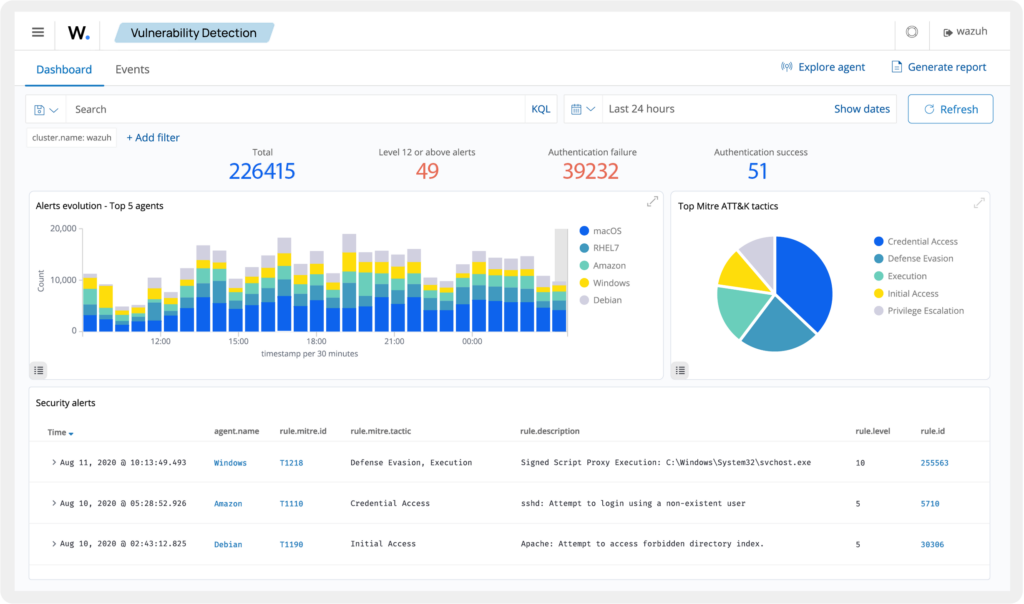
Source: Wazuh

Security Onion

Security Onion is a Linux-based open source platform for threat hunting, network security monitoring, and log management. It combines multiple open source tools into a single distribution, giving organizations a pre-integrated environment for collecting and analyzing network and host-based data. This approach reduces the need to assemble individual components while still providing flexibility for advanced users.
Limitations as reported by users on G2:
- Difficult setup for beginners: Initial deployment can be challenging without prior experience.
- High expertise requirements: Effective use requires strong networking and security knowledge.
- Complex configuration: Users report difficulties configuring and tuning the platform.
- Operational challenges: Managing the system can be demanding for less experienced teams.
تشمل الميزات الرئيسية:
- Integrated toolset: Combines tools like Suricata, Zeek, and the Elastic Stack for comprehensive monitoring.
- Network security monitoring: Captures and analyzes network traffic to detect suspicious activity.
- Log management and analysis: Aggregates logs from multiple sources for centralized visibility.
- Threat hunting capabilities: Enables analysts to investigate and explore security data interactively.
- Prebuilt detection rules: Includes a large set of rules to identify common attack patterns.
- AI-assisted analysis: Provides an integrated assistant to support detection tuning and analysis tasks.
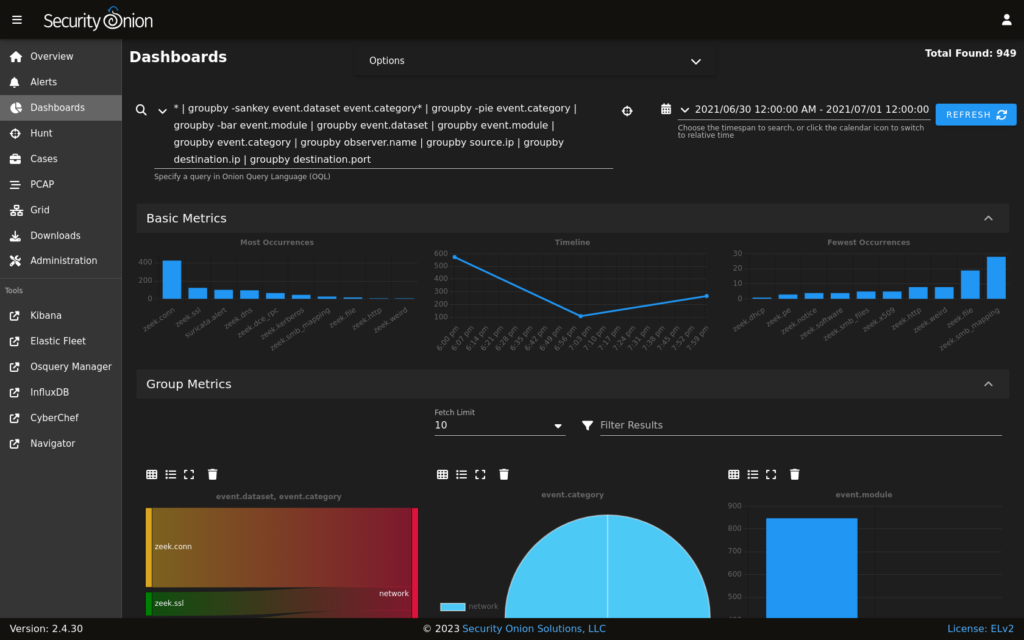
Source: Security Onion

AlienVault OSSIM

AlienVault OSSIM is an open source SIEM platform that integrates multiple security tools to provide centralized visibility and event correlation. It is designed to combine data from network and host-based systems and transform it into actionable security insights. By aggregating different layers of information, it supports detection, analysis, and decision-making across the security stack.
Limitations as reported by users on PeerSpot:
- Slow response under load: Performance can degrade with high traffic volumes.
- Complex initial setup: Deployment requires significant configuration effort and is not intuitive.
- Limited integrations: Users report gaps in integration with some security tools.
- Frequent false positives: Detection accuracy can require tuning to reduce noise.
- Pricing concerns: Some users find costs high relative to alternatives.
تشمل الميزات الرئيسية:
- Multi-layer event correlation: Combines low-level logs, anomaly data, and high-level risk insights.
- Integrated security tools: Includes components such as Snort, OpenVAS, and Nmap for detection and assessment.
- Network and host visibility: Provides insight into infrastructure through logs, alerts, and monitoring data.
- Intrusion detection capabilities: Uses signature-based and anomaly-based detection methods.
- Vulnerability assessment integration: Identifies system weaknesses alongside event monitoring.
- Centralized data storage: Uses databases and data aggregation tools to manage security information.
جرايلوج

Graylog is an open source log management platform that can function as a SIEM foundation by collecting, storing, and analyzing large volumes of log data. It emphasizes flexibility and scalability, allowing organizations to deploy it in on-premises, cloud, or hybrid environments. With search and visualization capabilities, it helps teams investigate events and monitor systems in real time.
Limitations as reported by users on G2:
- Platform complexity: Users report that the system can be difficult to manage and navigate.
- Steep learning curve: Time is required to become proficient with logs, APIs, and workflows.
- Debugging challenges: Troubleshooting issues can be time-consuming and inefficient.
- Integration limitations: Connecting external systems can be difficult in some cases.
- Time-consuming operations: Tasks like debugging and analysis can slow down workflows.
تشمل الميزات الرئيسية:
- Centralized log ingestion and storage: Collects data from diverse sources with configurable retention.
- High-speed search and analytics: Enables fast querying across large datasets for investigation.
- Dashboards and visualization: Provides real-time insights through customizable dashboards.
- Alerting and event management: Triggers notifications based on defined conditions.
- Extensible architecture: Supports plugins, APIs, and integrations with external tools.
- Flexible deployment models: Runs on-premises, in the cloud, or in hybrid environments.
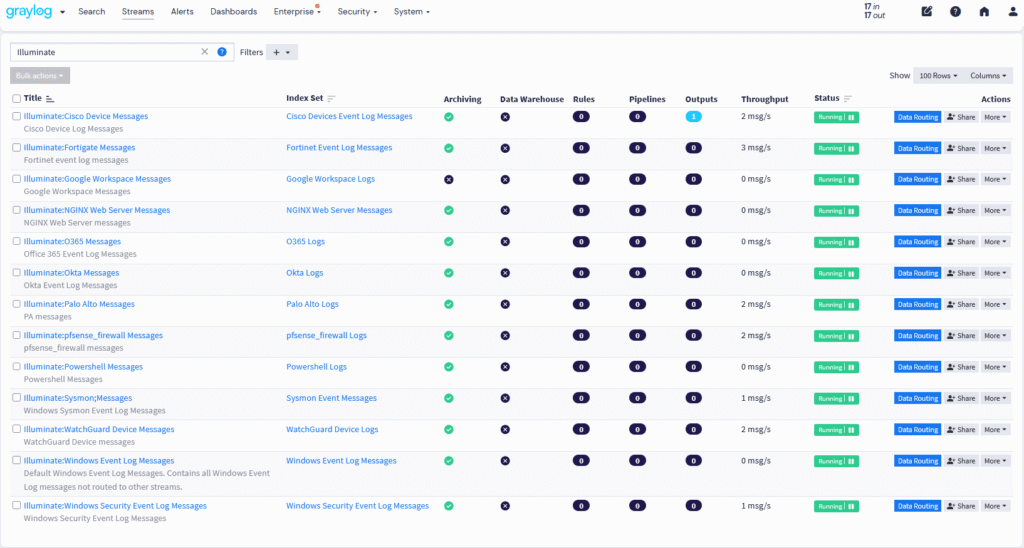
Source: Graylog
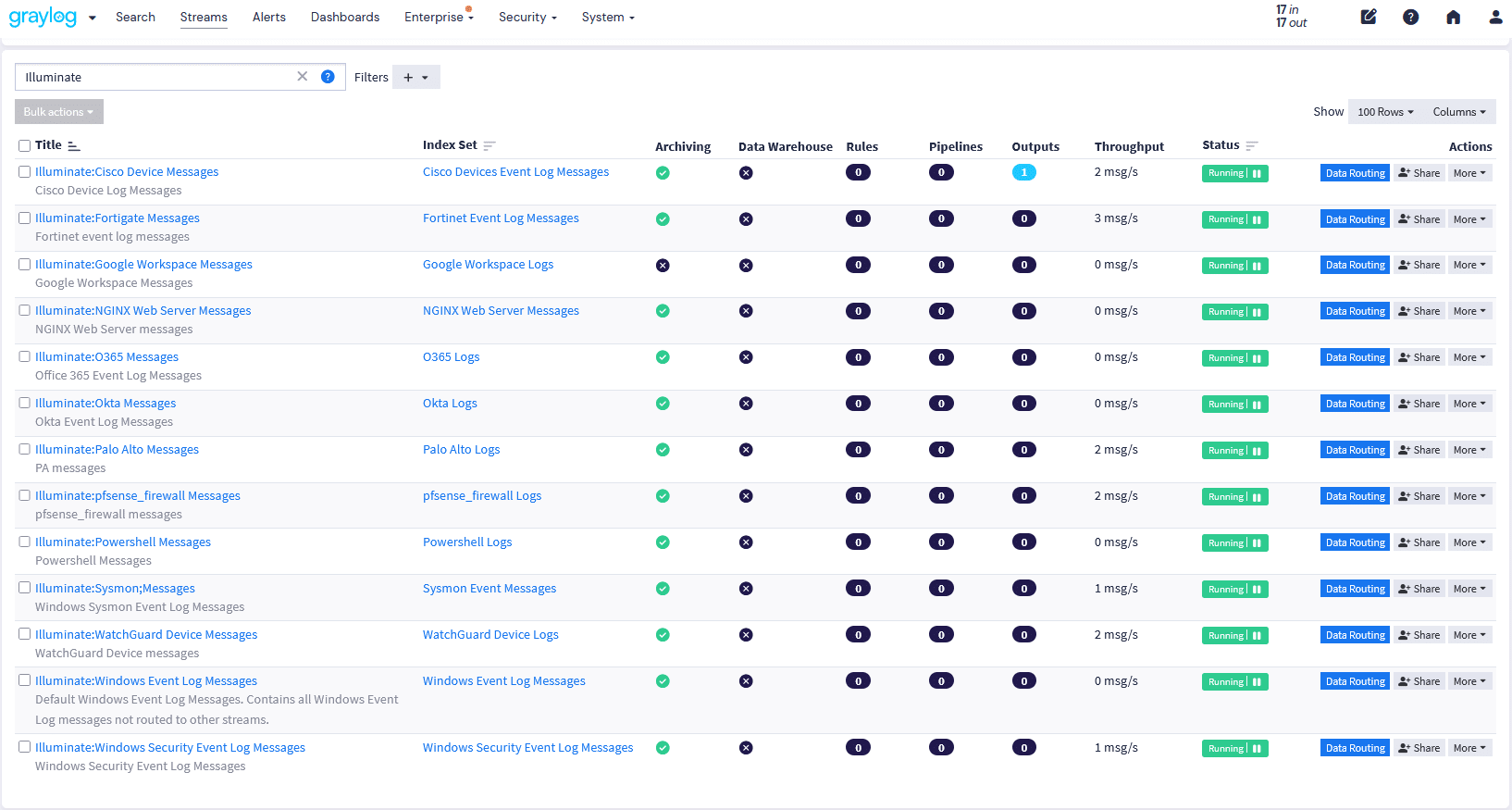
مجموعة أدوات ELK

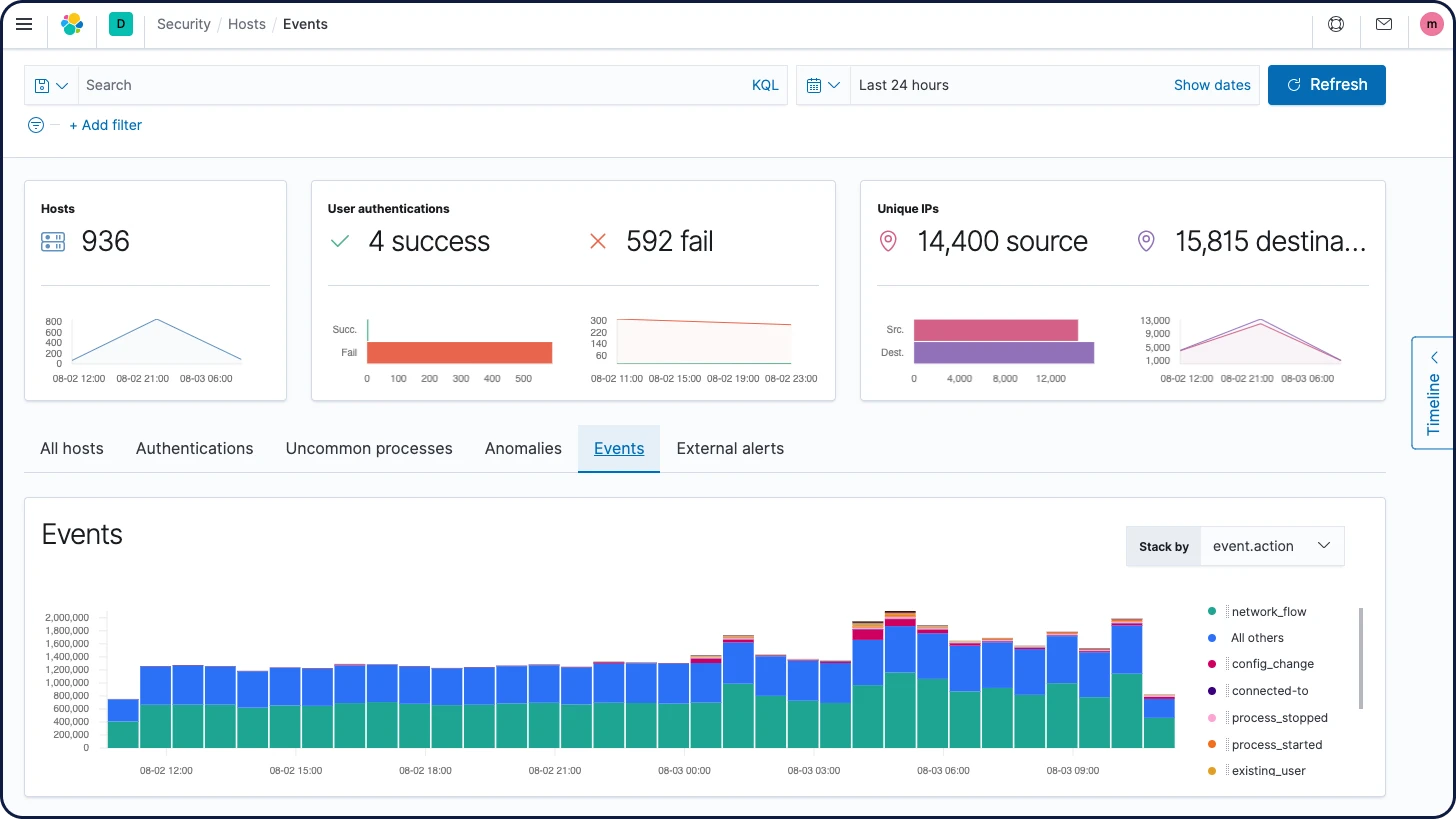
The ELK Stack (Elasticsearch, Logstash, and Kibana) is a widely used open source framework for log collection, search, and analytics that can be adapted for SIEM use cases. It allows organizations to ingest data from many sources, process it, and visualize it through interactive dashboards. Its modular architecture makes it flexible, but it often requires additional configuration to function as a full SIEM.
Limitations as reported by users on G2:
- High resource usage: Requires significant memory and infrastructure, especially at scale.
- Complex management: Operating and tuning clusters demands strong expertise.
- Expensive scaling: Costs increase due to infrastructure and licensing considerations.
- Steep learning curve: Users need deep knowledge to manage performance effectively.
- Operational overhead: Ongoing maintenance and optimization require continuous effort.
تشمل الميزات الرئيسية:
- Distributed search and analytics engine: Elasticsearch enables fast querying and analysis of large datasets.
- Data ingestion and processing: Logstash and Beats collect and transform data from multiple sources.
- Visualization and dashboards: Kibana provides interactive views and reporting capabilities.
- Broad integration ecosystem: Supports hundreds of integrations for ingesting diverse data types.
- Scalable architecture: Handles large volumes of data with distributed storage and processing.
- Flexible deployment options: Can be deployed on-premises or across major cloud platforms.
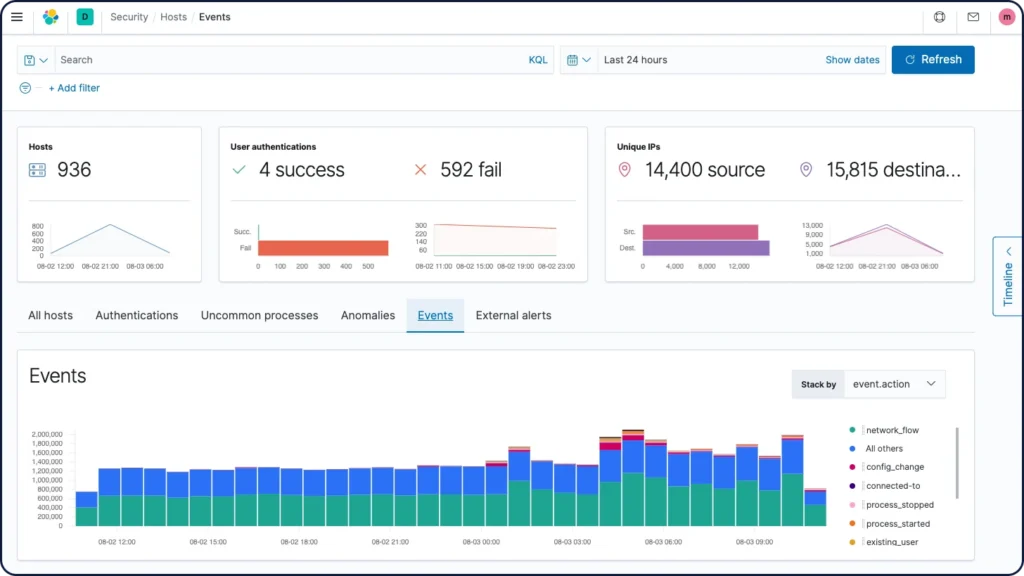
Source: Elastic
OSSEC

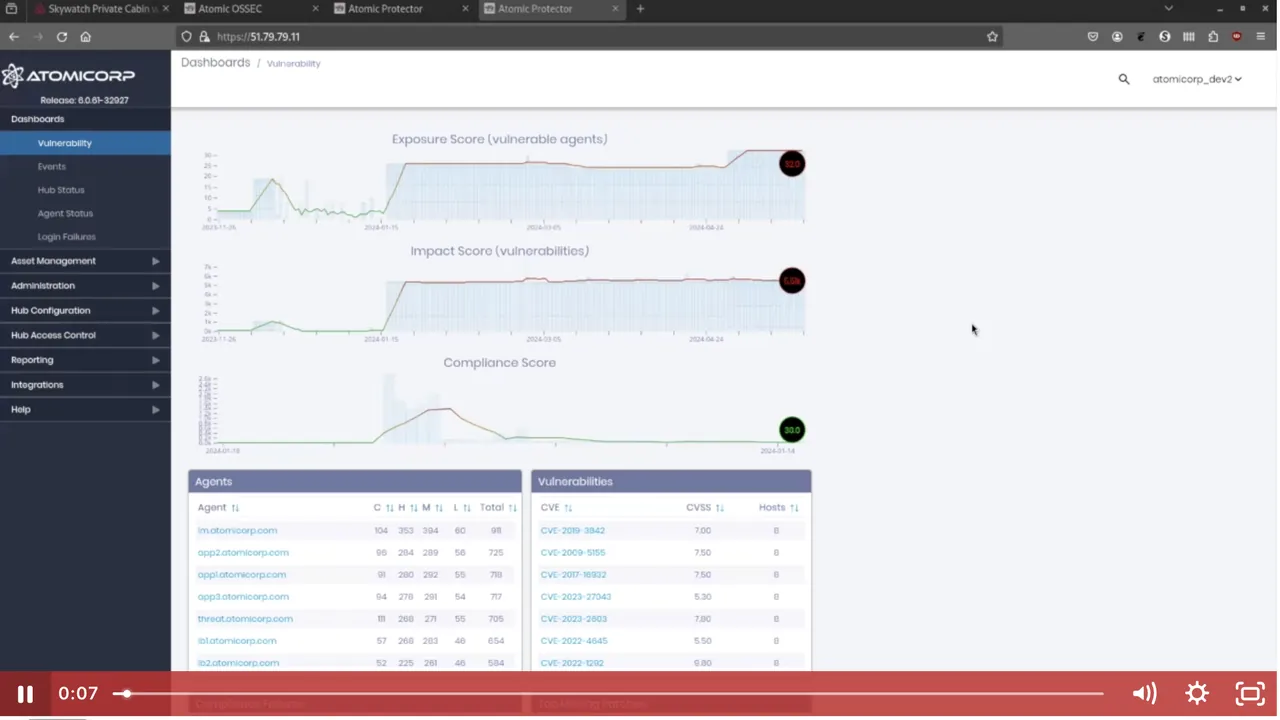
OSSEC is an open source host-based intrusion detection system (HIDS) that provides log analysis, integrity monitoring, and active response capabilities. It focuses on endpoint-level visibility, analyzing system logs and file changes to detect suspicious behavior. While not a full SIEM on its own, it is often used as a core component within larger SIEM architectures.
Limitations as reported by users on G2:
- Limited visualization capabilities: Lacks a built-in dashboard for analyzing and visualizing data.
- No modern web interface: Users rely on logs and external tools for visibility.
- High configuration overhead: Requires significant effort to configure and maintain.
- Command-line management: Administration is largely CLI-based, which can be challenging.
- Upgrade challenges: Updating the system can be difficult and disruptive.
تشمل الميزات الرئيسية:
- Host-based intrusion detection: Monitors system activity and logs across multiple operating systems.
- File integrity monitoring: Tracks changes to critical files and configurations in real time.
- Malware and anomaly detection: Identifies suspicious behavior using rules and pattern matching.
- Active response capabilities: Automatically triggers actions to mitigate detected threats.
- Compliance auditing support: Helps meet regulatory requirements through monitoring and reporting.
- Cross-platform support: Runs on major operating systems including Linux, Windows, and macOS.
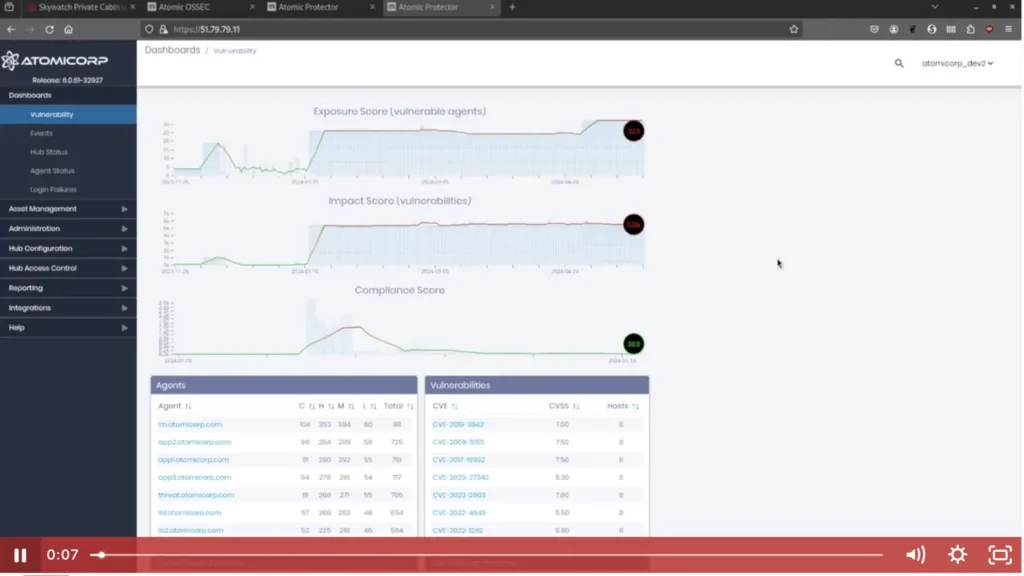
Source: OSSEC
لفهم الجوانب المتعلقة باختيار نظام SIEM بشكل كامل، وما إذا كان SIEM مفتوح المصدر أو SIEM مؤسسي هو الخيار الأفضل لسيناريوك، اقرأ دليل شراء أدوات SIEM.
نصائح من الخبير

ستيف مور هو نائب الرئيس ورئيس استراتيجيات الأمن في إكزبيم، يساعد في تقديم الحلول لاكتشاف التهديدات وتقديم المشورة للعملاء بشأن برامج الأمن والاستجابة للاختراقات. وهو مضيف بودكاست "The New CISO Podcast"، و عضو في Forbes Tech Council، ومؤسس مشارك لـ TEN18 at Exabeam.
من خلال تجربتي، إليكم نصائح لمساعدة المنظمات على تقييم ونشر حلول SIEM مفتوحة المصدر بفعالية، مع فهم متى يجب الانتقال إلى أنظمة ذات مستوى مؤسسي.
دمج أدوات SIEM مفتوحة المصدر مع أدوات مكملة
تعزيز وظائف SIEM مفتوحة المصدر من خلال دمجها مع أدوات مستقلة للكشف عن التسلل (مثل، Suricata) أو تحليلات سلوكية (مثل، أطر UEBA مفتوحة المصدر). يوفر هذا نهجًا معياريًا لبناء قدرات متقدمة.
ابدأ صغيرًا واختبر باستخدام أدوات SIEM مفتوحة المصدر في بيئات منخفضة المخاطر
قم بنشر أدوات SIEM مفتوحة المصدر مثل ELK أو OSSIM في بيئة غير حرجة أولاً. هذا يسمح لفريقك بالتعرف على الإعداد والتخصيص والأداء دون المخاطرة بالأنظمة الحيوية.
استخدم الإضافات المدفوعة من المجتمع لتوسيع الوظائف
غالبًا ما تحتوي الأدوات مفتوحة المصدر على نظام بيئي غني من الإضافات التي بناها المجتمع. على سبيل المثال، قم بتوسيع قدرات ELK من خلال دمج الإضافات التي تركز على الأمان للتنبيه أو اكتشاف الشذوذ. هذا يسد بعض الفجوات بين الأدوات مفتوحة المصدر وأدوات المؤسسات.
تنفيذ سياسات تسجيل وتخزين صارمة في وقت مبكر
يمكن أن تولد أنظمة SIEM مفتوحة المصدر مثل Apache Metron كميات كبيرة من البيانات. أنشئ سياسات واضحة للاحتفاظ بالبيانات وحسن تنسيقات التخزين لتجنب اختناقات الأداء والتكاليف غير القابلة للإدارة.
استخدم إصدارات مدارة من أنظمة SIEM مفتوحة المصدر لتحقيق فوائد هجينة
تجمع العروض المدارة مثل النسخة المميزة من SIEMonster بين توفير التكاليف من المصادر المفتوحة وميزات على مستوى المؤسسات، مثل تحليلات سلوك المستخدم وذكاء التهديدات، مع تقليل تعقيد النشر.
فوائد المصادر المفتوحة مقابل تكاليفها
لقد نضجت أنظمة SIEM مفتوحة المصدر بشكل كبير على مدى العقود الماضية وتم نشرها بنجاح في العديد من المنظمات. ومع ذلك، بينما يعتبر تقليل تكاليف الترخيص هو الدافع الرئيسي للاعتماد، فمن المعروف أن تكاليف الترخيص تمثل فقط جزءًا من التكلفة الإجمالية لامتلاك أنظمة SIEM. تشمل المكونات الإضافية، والتي قد تكون أكبر، ما يلي:
- الأجهزة والتخزين، خاصة بالنسبة للمؤسسات المتوسطة إلى الكبيرة، تمثل تكلفة ضخمة وتعقيدًا في الإدارة
- وقت المحللين هو المورد الأكثر قيمة في معظم فرق الأمن، والمحللون ضروريون للاستفادة من تنبيهات SIEM.
Exabeam هي منصة SIEM من الجيل التالي مبنية كمنصة على مستوى المؤسسات على ElasticSearch، والتي تعالج هذين نقطتي الألم ومراكز التكلفة:
- يوفر تخزين سحابي غير محدود بتكلفة ثابتة
- يستخدم قدرات SIEM من الجيل التالي مثل UEBA و SOAR لتقليل الوقت الذي يقضيه المحللون بشكل كبير
تعرف على المزيد حول أمن المعلومات:
- مقدمة حول أمان نظام إدارة معلومات الأمان (SIEM)
- حلول إدارة معلومات الأمان والأحداث
- مكافحة الهجمات الإلكترونية باستخدام SOAR
- استخبارات التهديد
- مواجهة التهديدات السيبرانية باستخدام نظم إدارة معلومات الأمان من الجيل التالي واستخبارات التهديد.
- تدفقات استخبارات التهديد
- هوكيف يمكن أن تساعدك منصة استخبارات التهديد
تعلم المزيد عن إكزابييم
تعرف على منصة Exabeam ووسع معرفتك في أمن المعلومات من خلال مجموعتنا من الأوراق البيضاء، البودكاست، الندوات، والمزيد.