Best Insider Threat Prevention Tools: Top 5 Options in 2026
- 7 minutes to read
Table of Contents
What Are Insider Threat Prevention Tools?
Insider threat prevention tools are security solutions that detect, prevent, and respond to risks from within an organization. These tools monitor the activities of employees, contractors, and third-party partners who have legitimate access to an organization’s systems and data.
Unlike traditional cybersecurity tools that focus on external threats, these platforms provide visibility into actions that could lead to data breaches, espionage, sabotage, or unintentional data leaks due to carelessness or compromised credentials. The primary objective is to identify anomalous behaviors and patterns before they cause harm.
Modern insider threat prevention tools combine behavioral analytics, monitoring, alerting, and investigative workflows to create a defense against both malicious and accidental threats. By collecting and analyzing telemetry from endpoints, applications, and networks, they provide context-rich insights that allow organizations to act on early warning signals.
Additionally, these tools help security teams prioritize incidents based on risk scores, reducing the dwell time of potential threats within the environment.
Core Capabilities of Insider Threat Prevention Platforms
User and Entity Behavior Analytics (UEBA)
UEBA systems use machine learning and statistical analysis to establish a baseline of normal behavior for each user and entity, such as login times, file accesses, and application usage. When deviations occur, such as accessing sensitive data outside of business hours or unusual use of administrative privileges, the system flags these as potential risks.
UEBA reduces false positives by comparing activity to peer groups and user history rather than relying solely on predefined rules. Insider threat tools can detect both subtle and overt indicators of compromise. For example, a compromised account may display minor changes in file access patterns, while a disgruntled insider might exfiltrate large volumes of data in a short period.
Activity Monitoring and Telemetry Collection
Activity monitoring involves capturing granular detail on user and system behaviors across endpoints, networks, and cloud services. Insider threat prevention platforms deploy sensors or agents to log file transfers, application usage, network connections, and clipboard activities. This monitoring extends to email, instant messaging, printing, and browser actions to ensure broad visibility across business workflows.
Telemetry collection consolidates these logs and activities into centralized repositories for analysis. The data is enriched with contextual information, such as user identity, device metadata, and location, which assists in replicating incidents for investigation.
Risk Scoring and Prioritization
Risk scoring helps simplify the workload of security teams, assigning quantitative values to user activities based on their deviation from baselines, data sensitivity, and organizational context. A single anomalous action may have a low risk score, but repeated or correlated behaviors, such as accessing restricted files and downloading data to external media, can result in a higher cumulative risk level.
This prioritization helps incident responders focus on activities most likely to pose significant threats, reducing alert fatigue. The risk scoring system continuously recalibrates to identify emerging insider threats and changing business needs.
Alerting and Incident Investigation Workflows
Prevention platforms generate contextual alerts based on detected anomalous or risky activity, often integrating with security information and event management (SIEM) systems or ticketing tools. Alerts typically include supporting evidence, such as screenshots, file transfer logs, or session recordings, to provide responders with immediate context, minimizing the effort required to triage incidents.
Incident investigation workflows guide security analysts through the evidence-gathering and decision-making process. Customized playbooks, built into many prevention platforms, standardize workflows for common insider threat scenarios like data exfiltration or privilege escalation.
Related content: Read our guide to insider threat indicators
How to Select and Successfully Deploy Insider Threat Prevention Tools
Organizations should consider the following factors when using insider threat prevention tools.
1. Align Tools to Insider Threat Use Cases and Risk Appetite
When selecting insider threat prevention tools, it is critical to match platform features to specific organizational use cases and tolerance for risk. For instance, organizations focused on protecting intellectual property may require deep monitoring and strict controls, while those in regulated industries will prioritize compliance and privacy protections.
A thorough risk assessment should identify high-value assets and the typical insider threat scenarios they are exposed to, which guides functional requirements and evaluation criteria. Different platforms excel in different capabilities, so it is important to focus on features that address truly valuable risks.
2. Start with High-Risk Roles and Data Sets
Initial deployment of insider threat prevention tools should prioritize coverage of high-risk roles and the most sensitive data sets. Employees with privileged access, system administrators, executives, and individuals handling proprietary or regulated information tend to present the greatest potential for insider incidents.
By focusing early monitoring and controls on these groups, organizations maximize the value of their investment while minimizing complexity at rollout. Data classification is an essential preparatory step to understand where critical or sensitive assets reside and who has access to them. Once high-risk users and sensitive data flows are mapped, insider threat tools can be configured for targeted monitoring, providing actionable insights with minimal noise.
3. Balance Monitoring Depth with Privacy Requirements
Finding the right balance between thorough monitoring and respecting user privacy is both a legal obligation and an organizational imperative. Overly intrusive monitoring can erode trust, impact workforce morale, and even run afoul of privacy regulations like GDPR or CCPA. Insider threat programs should document the minimum level of monitoring necessary to manage risks and justify collected data based on business needs and regulatory requirements.
Privacy-by-design principles, such as data minimization, pseudonymization, and clear separation between security analytics and personal information, help mitigate privacy risks. Transparent policies informing employees about monitoring activities and periodic reviews with privacy experts are essential.
4. Integrate HR, Legal, and Security Stakeholders Early
No insider threat prevention program can succeed in a silo. Security teams must build strong relationships with HR, legal, and compliance departments from the outset to ensure monitoring practices are fair, lawful, and supportive of organizational culture. HR provides context around disciplinary history and employee engagement, legal teams validate the scope of monitoring against laws and contracts, and security ensures technical execution.
Early cross-functional engagement expedites incident response, particularly when employee investigations or terminations are required. HR and legal can guide appropriate evidence gathering and communication to protect both organizational and employee rights.
5. Plan for Phased Rollout and Continuous Improvement
Rolling out insider threat prevention tools should be structured as a phased process, with pilots or proof-of-concepts executed in controlled environments before organization-wide deployment. Early phases should test detection accuracy, workflow integration, and operational scalability, incorporating feedback to adapt configurations and controls as needed. This minimizes disruptions and builds support among technical and business stakeholders.
Continuous improvement is crucial given the evolving nature of insider risks and business environments. Regular reviews of detection efficacy, false positive rates, and response workflows enable ongoing tuning and capability upgrades. Engaging with external threat intelligence and user feedback ensures prevention tools remain relevant.
Notable Insider Threat Prevention Tools
1. Exabeam

Exabeam delivers threat detection, investigation, and response (TDIR) capabilities designed to prevent data exfiltration, system compromise, and policy violations from internal actors. By baselining user and device behaviors, the platform distinguishes normal daily activity from anomalous actions that indicate credential abuse, malicious intent, or negligent behavior. This focus on behavior-based risk allows security teams to identify and neutralize insider threats before they result in data loss.
Key features include:
- Agent Behavior Analytics: Extends behavior monitoring to digital assistants and autonomous agents to spot unauthorized queries and data retrieval
- Stateful user timelines: Reconstructs complete multi-step threat timelines automatically, eliminating manual log stitching during an investigation
- Dynamic risk scoring: Ranks alerts based on cumulative behavioral anomalies, focusing analyst attention on high-risk insider actions
- Credential abuse detection: Flags when valid credentials are used in unusual ways, helping expose account takeover attempts
- Data exfiltration detection: Monitors transfers across endpoints, cloud systems, and networks to flag unusual copying or downloading patterns
2. Proofpoint Insider Threat Management

Proofpoint Insider Threat Management (ITM) detects and responds to insider threats by delivering visibility into user actions that could lead to data loss or business disruption. It monitors behavior across endpoints and data movement channels to identify activity from careless, malicious, or compromised users.
Key features include:
- User activity timeline: Visualizes detailed user actions, including file changes, app usage, and attempts to bypass controls
- Data movement monitoring: Tracks exfiltration attempts via USB, cloud sync, print, web uploads, and network shares
- Evidence collection: Captures contextual data and optional screenshots to support rapid investigations
- Privacy-by-design controls: Balances monitoring with compliance and user transparency
- Endpoint risk controls: Dynamically enforces controls like blocking or pop-up coaching based on user risk profile
3. Forcepoint Insider Risk Protection

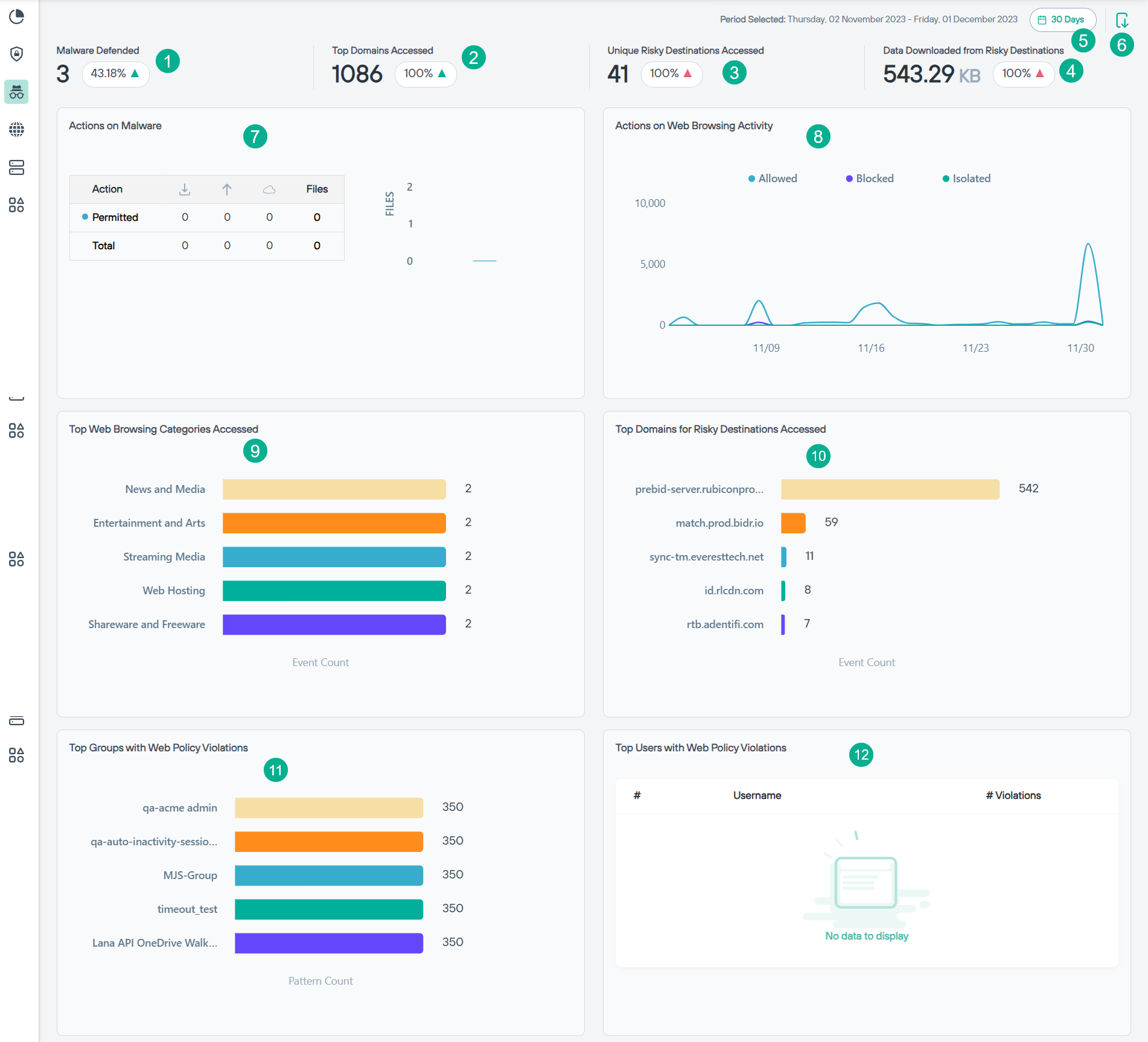
Forcepoint Insider Risk Protection uses real-time behavioral analysis to detect insider threats and automatically adjust data loss prevention (DLP) controls based on user risk. Instead of relying on static rules, Forcepoint evaluates user intent through behavioral indicators, creating a dynamic risk score that evolves with ongoing activity.
Key features include:
- Behavior monitoring: Tracks user activity across applications and communication channels, updating risk scores continuously
- Over 150 behavioral indicators: Detects anomalies in context, including time of day, data volume, or unusual file locations
- Dynamic risk scoring: Calculates and updates individual user risk in real time to reflect changes in behavior or policy violations
- Risk-adaptive DLP controls: Automatically adjusts enforcement, blocking, limiting, or simply logging actions based on user risk level
- Contextual investigations: Provides visibility into behavioral patterns and triggers behind policy violations to support rapid response
Source: ForcePoint
4. Microsoft Purview Insider Threat Management

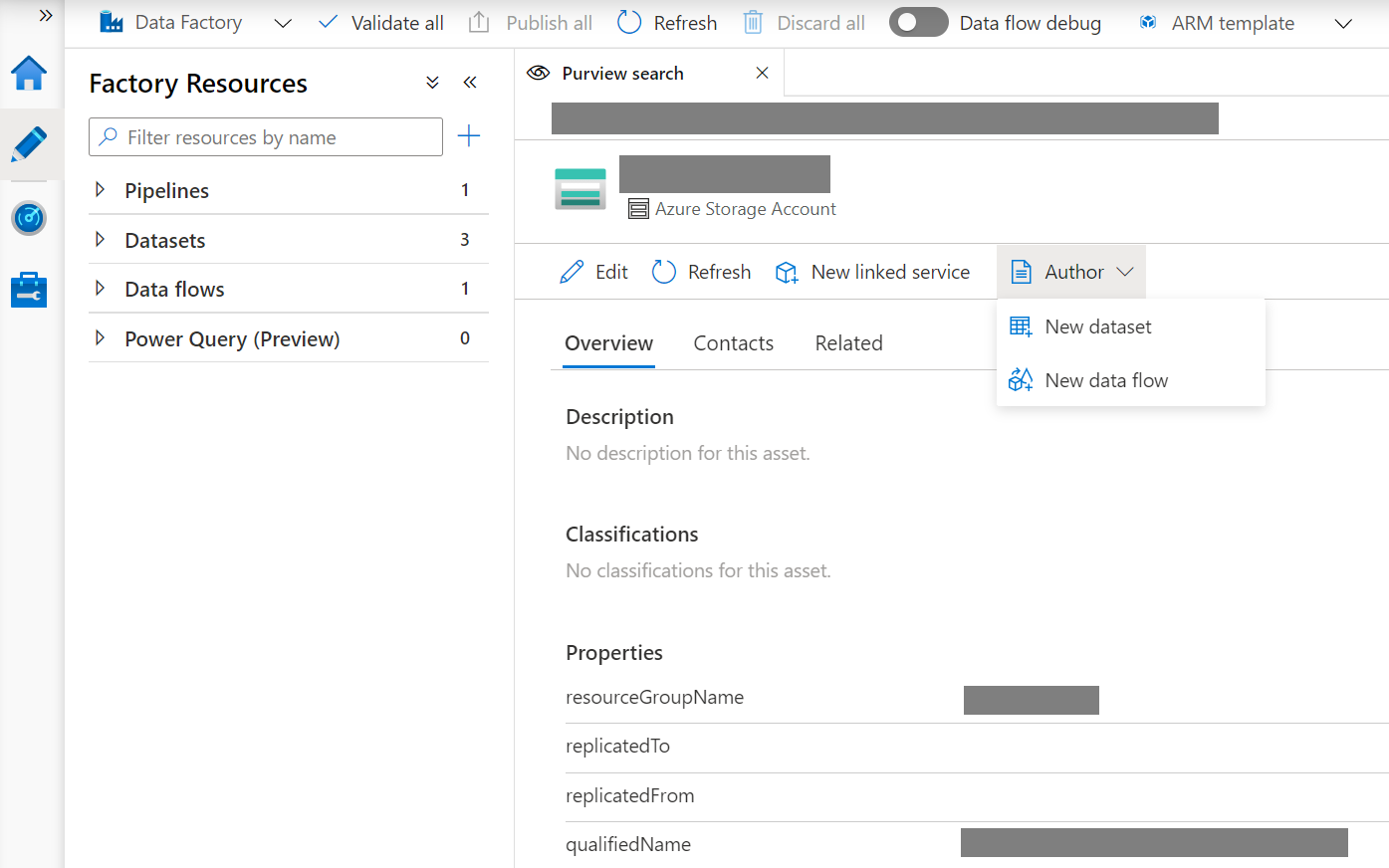
Microsoft Purview Insider Risk Management helps organizations detect, investigate, and respond to internal risks such as data leaks, IP theft, policy violations, and other forms of risky user behavior. It leverages native Microsoft 365 signals and contextual analytics to surface potential threats while balancing privacy through a privacy-by-design architecture.
Key features include:
- Customizable risk policies: Create tailored policies using templates for scenarios like data leaks, departing users, and regulatory violations
- Behavioral risk analytics: Evaluate potential insider risks without configuring policies using built-in analytics to identify high-risk areas
- Automated alerts: Trigger alerts based on policy conditions and risk indicators, with dashboards for triage and review
- Integrated investigation workflow: Use built-in tools for triage, case creation, and escalation to Microsoft eDiscovery (Premium)
- Microsoft 365 integration: Leverages Microsoft Graph and Microsoft 365 logs to correlate user activity with policy violations
Source: Microsoft Purview
5. DTEX Insider Risk Management
DTEX Insider Risk Management (IRM) delivers behavior-driven protection against insider threats by focusing on user intent and early-stage warning signs. Rather than reacting to outcomes, DTEX emphasizes continuous observation of human behavior, fatigue, negligence, and other contextual indicators that precede security incidents.
Key features include:
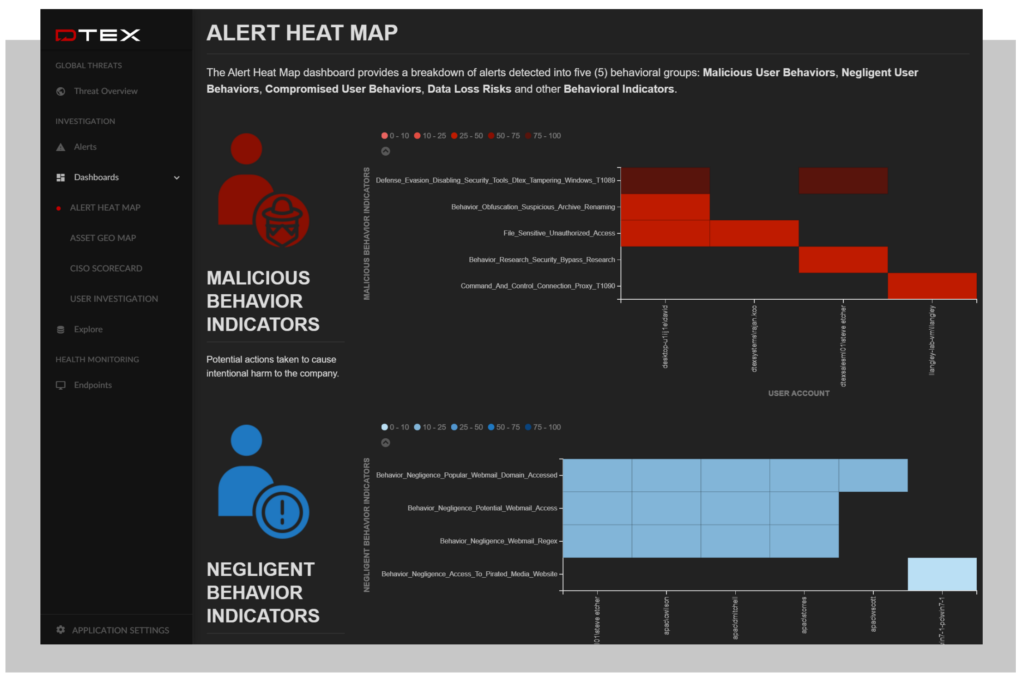
- Behavioral risk indicators: Detects early warning signs such as burnout, flight risk, or system misuse that precede malicious or negligent activity
- Insider threat kill chain visibility: Tracks the lifecycle of insider threats, from initial behaviors to potential data exfiltration attempts
- Threat hunting: Helps analysts to investigate complex threats using a rich insider risk dataset and open source query tools
- Context-driven insights: Focuses on human-centric analysis rather than technical anomalies alone, helping teams understand user intent
- AI-guided investigations: DTEX Ai3 accelerates decision-making by summarizing user activity into actionable, contextual insights
Source: DTEX
Related content: Read our guide to insider threat detection tools
Conclusion
Insider threat prevention tools are essential for protecting organizational assets from risks that originate within. By combining behavioral analytics, risk-based monitoring, and integrated response workflows, these platforms enable security teams to detect early warning signs and act before incidents escalate. Effective deployment requires alignment with business priorities, stakeholder collaboration, and a focus on balancing security with privacy. As insider threats continue to evolve in both form and frequency, proactive prevention strategies supported by the right tools are critical to maintaining operational resilience and data integrity.
Learn More About Exabeam
Learn about the Exabeam platform and expand your knowledge of information security with our collection of white papers, podcasts, webinars, and more.
-
 Blog
Blog
What Is the Difference Between Exabeam and CrowdStrike for SIEM and Security Operations?
-
 Blog
Blog
Access Isn’t Trust: A Behavioral Risk Framework for People, Service Accounts, and AI Agents
- Show More