Best Insider Threat Solutions: Top 5 Options and How to Choose
- 9 minutes to read
Table of Contents
What Are Insider Threat Solutions?
Insider threat solutions combine software, policies, and training to detect and prevent security risks from within an organization. Key components include user and entity behavior analytics (UEBA) to baseline normal activity and detect anomalies, data loss prevention (DLP) to monitor sensitive data, policy enforcement, access controls, and comprehensive employee education on security best practices.
Key components of insider threat solutions include:
- User and entity behavior analytics (UEBA): Uses AI and machine learning to analyze user activity, establish normal behavioral baselines, and identify deviations that may indicate malicious or risky activity.
- Data loss prevention (DLP): Implements policies and monitoring to prevent sensitive data from being exfiltrated, shared inappropriately, or moved to unsanctioned locations.
- Real-time monitoring & alerting: Continuous monitoring of user activity across endpoints and networks to detect suspicious actions or policy violations as they happen.
- Access control management: Enforcing principle of least privilege by granting users only the access necessary for their roles, limiting potential damage.
- Policy and procedure enforcement: Clear communication of security policies, with systems designed to automatically enforce them and prevent breaches.
- Incident response & investigation tools: Features like user activity replays, detailed timelines, and forensic capabilities to help investigate events and determine intent.
- Security awareness training: Educating employees on potential threats, how to recognize suspicious activity, and their role in protecting organizational data.
To choose an insider threat solution:
- Assess your needs: Identify your organization’s most valuable data, potential risks, and current security posture.
- Look for integrated platforms: Solutions that combine behavioral analytics, DLP, and monitoring offer a more comprehensive view and faster response.
- Consider AI and automation: AI/ML capabilities are crucial for analyzing vast amounts of data, establishing baselines, and automating responses.
- Verify vendor expertise: Work with vendors known for robust insider risk management platforms and a focus on data security.
Key Components of Insider Threat Solutions
User and Entity Behavior Analytics (UEBA)
User and entity behavior analytics (UEBA) uses machine learning and statistical methods to assess the normal behavior of users, applications, and devices in an organization. It establishes baselines for activities such as logins, data access, and network usage, then identifies anomalies or deviations that may indicate insider threats. By focusing on behavior rather than just static rules, UEBA can detect sophisticated or subtle malicious actions that bypass traditional security controls.
With UEBA solutions, organizations can spot risky activities like unusual data transfers, access pattern changes, or attempts to escalate privileges. Such systems generate alerts when behavior falls outside established norms, enabling rapid investigation and a timely response.
Data Loss Prevention (DLP)
Data loss prevention (DLP) solutions monitor, control, and protect sensitive information as it moves within and outside an organization. DLP tools inspect data in use, data in motion, and data at rest, using content inspection and contextual analysis to prevent unauthorized sharing, downloading, or transmission of critical assets. The goal is to block or flag risky actions before confidential information is exposed, intentionally or accidentally, by insiders.
DLP policies can be customized to handle regulatory requirements, intellectual property protection, or internal compliance mandates. They offer granular controls, such as watermarking, encryption, and blocking specific file transfers, to reduce data exfiltration risks. Integration with email, endpoints, cloud services, and network gateways broadens coverage.
Real-Time Monitoring and Alerting
Real-time monitoring and alerting systems continuously observe user actions, system events, and application access across the enterprise. They analyze logs and telemetry data to provide immediate visibility into potentially risky behaviors or policy violations as they occur. This capability is vital for detecting and responding to threats before they escalate into significant security incidents.
By correlating events from multiple sources and applying analytics, these systems can surface actionable alerts when suspicious actions are detected, such as mass file downloads, unauthorized account access, or atypical remote connections.
Access Control Management
Access control management ensures that users, applications, and devices can only access the data and systems necessary for their role. Solutions in this category enforce the principles of least privilege and segregation of duties by provisioning and de-provisioning access rights dynamically. Automated workflows help organizations reduce manual errors and maintain tight control over sensitive assets.
Regular review and adjustment of permissions, combined with identity and access management (IAM) tools, can detect and eliminate excessive or outdated privileges, a common vector for insider threats. By limiting access scope and enforcing strong authentication, access control management narrows the attack surface and restricts insider movement within critical systems.
Policy and Procedure Enforcement
Policy and procedure enforcement involves translating security policies and regulatory requirements into technical controls that are automatically applied throughout an organization’s IT environment. This includes defining acceptable use, data handling, remote work guidelines, and other rules relevant to insider risk mitigation. Automated enforcement reduces reliance on manual oversight, making adherence consistent and traceable.
Monitoring and ensuring compliance with these policies helps organizations quickly identify deviations or violations indicative of insider threats. Audit trails, policy-based alerts, and remediation workflows enable swift investigation and correction, supporting both proactive risk management and regulatory audit requirements.
Incident Response and Investigation Tools
Incident response and investigation tools help security teams efficiently address insider threats once they’re detected. These solutions guide analysts through investigation steps, evidence collection, forensic analysis, and containment actions to stop further harm. Automation can trigger workflows for account lockouts, session terminations, or escalations to incident response teams.
Comprehensive incident response platforms also support detailed case management and reporting to ensure all steps taken are documented for compliance and post-incident review. Their integration with monitoring and analytics systems accelerates the feedback loop, reducing dwell time and helping organizations learn from each incident.
Security Awareness Training
Security awareness training is a foundational element of a successful insider threat program. It educates employees, contractors, and partners about the risks posed by insider threats and how to recognize early warning signs. Training programs use practical scenarios, real-life examples, and ongoing simulations to improve vigilance and reduce the likelihood of accidental or intentional breaches.
Ongoing reinforcement through regular sessions, phishing tests, and awareness campaigns ensures that security behaviors become ingrained in organizational culture. An informed workforce can act as the first line of defense by identifying and reporting suspicious activities, making training as vital as technical controls in reducing overall insider risk.
A New Type of Insider Threats: AI Agents
As organizations increasingly deploy AI agents to automate business processes and system operations, they introduce a new type of insider: the non-human, autonomous agent. These AI systems often have privileged access, including credentials to sensitive applications, the ability to execute tasks, and integration across core infrastructure. Like any insider, they operate with legitimacy, except at machine speed and scale. This elevates their potential impact, especially if they are misused, misconfigured, or compromised.
AI agents introduce threat vectors that traditional insider threat tools may not fully address. A compromised agent, controlled by an external actor, can act faster and with broader access than a human. Alternatively, a malicious actor inside the organization could intentionally design an agent to perform subtle, long-term malicious tasks that evade detection, such as slow data exfiltration.
Even without malicious intent, misconfigured or hallucinating agents can unintentionally breach data policies, trigger outages, or violate compliance rules. Conventional detection methods, such as alerting on access volume or frequency, often fail because high-volume actions may be normal for an AI agent’s role. As such, securing AI agents requires new detection strategies that account for both behavioral context and operational intent.
Notable Insider Threat Solutions
1. Exabeam

Exabeam delivers a cloud-native platform focused on threat detection, investigation, and response (TDIR) to identify and mitigate insider threats across hybrid environments. By centering its security model on User and Entity Behavior Analytics (UEBA), the platform creates normal activity profiles for all digital actors, including employees, shared accounts, and autonomous AI agents. This behavioral intelligence enables security teams to expose subtle anomalies that indicate credential abuse, compromised identities, data exfiltration, or negligent insider activity.
Key features include:
- Behavioral threat baselining: Establishes comprehensive activity profiles for human and machine entities to spot deviations without relying on static rules
- Agent Behavior Analytics: Extends behavior monitoring to autonomous AI agents and service accounts to track queries, tool calls, and data access
- Credential misuse detection: Analyzes credential behavior to identify signs of compromise, lateral movement, and account takeover
- Stateful threat timelines: Stitches fragmented event logs into cohesive chronological timelines of user activity to reduce investigation time
- Dynamic risk scoring: Ranks and prioritizes security alerts based on behavioral anomalies, peer group comparison, and asset value
- Guided incident response: Offers structured playbooks and automated case creation to accelerate containment and remediation workflows
2. Varonis Insider Risk Management

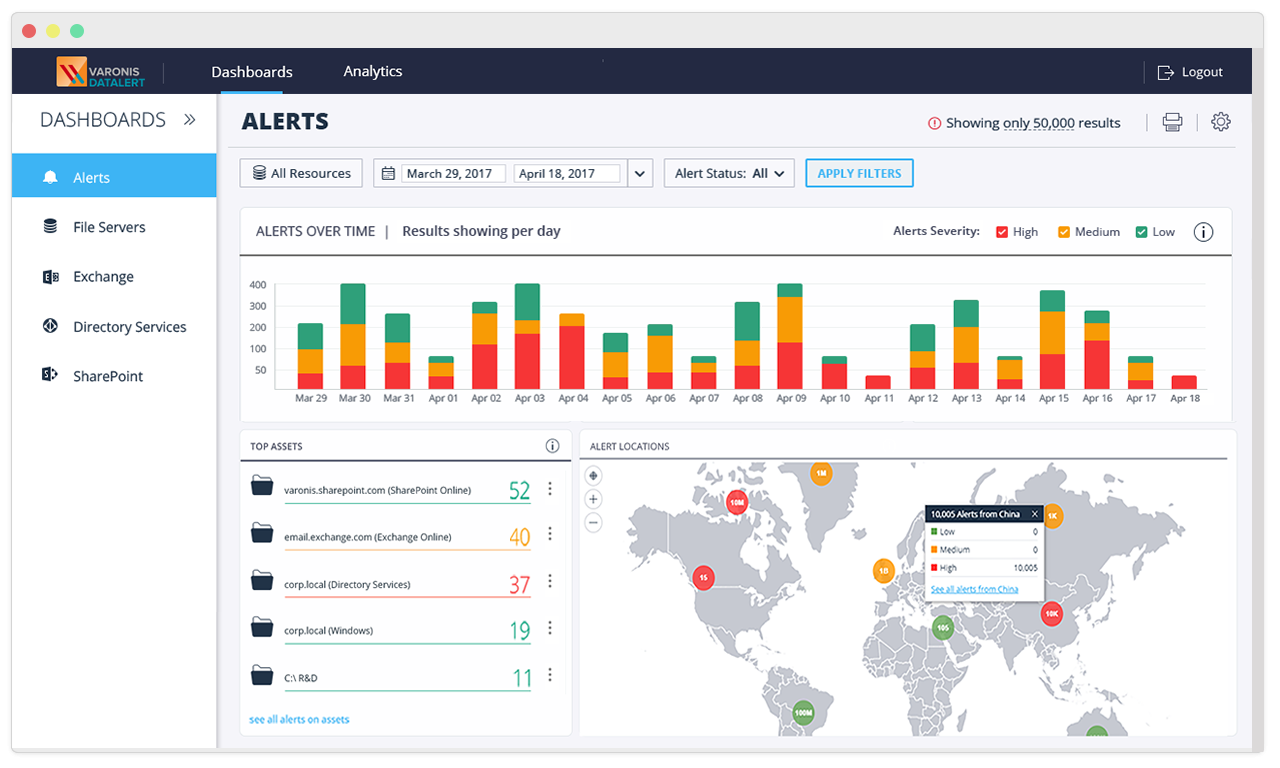
Varonis provides insider threat protection by continuously monitoring data activity and permissions across cloud and on-premises environments. Its platform combines UEBA, data classification, and automated remediation to detect abnormal behavior and limit over-permissioned access.
Key features include:
- Proactive monitoring and alerting: Detects suspicious file access, privilege changes, and risky user behavior in real time
- Least privilege automation: Identifies and revokes excessive permissions across large user populations without manual effort
- Searchable forensic data: Enables investigation into data access patterns, privilege escalation, and policy violations
- Automated remediation: Responds to threats with policy-based actions such as entitlement removal or activity restrictions
- Continuous risk assessment: Combines file sensitivity, access rights, and user activity to provide a dynamic view of insider risk across the data estate
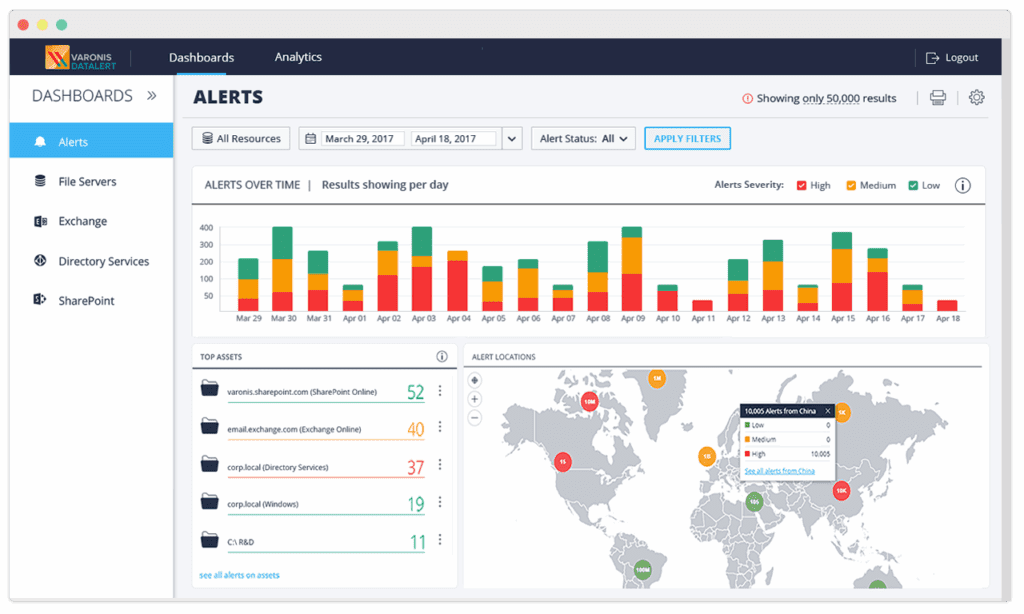
Source: Varonis
3. Microsoft Purview Insider Risk Management

Microsoft Purview Insider Risk Management is a data risk solution built into the Microsoft 365 E5 Compliance suite. It helps organizations detect and manage insider threats by providing an end-to-end approach for identifying, investigating, and responding to risky user activity. It requires no endpoint agents and leverages privacy protections such as pseudonymization.
Key features include:
- Machine learning playbooks: Uses customizable machine learning templates to detect risky behavior without needing agent-based data collection.
- Built-in privacy controls: Pseudonymizes user data during investigation to ensure privacy is preserved until action is required.
- Integrated case management: Offers workflows that support collaboration between security, HR, and legal teams throughout investigations.
- Analytics and guided onboarding: Provides an initial risk evaluation without the need to configure policies, helping teams identify problem areas faster.
- Contextual alert review: Surfaces alerts with contextual user activity to reduce noise and help prioritize high-risk incidents.
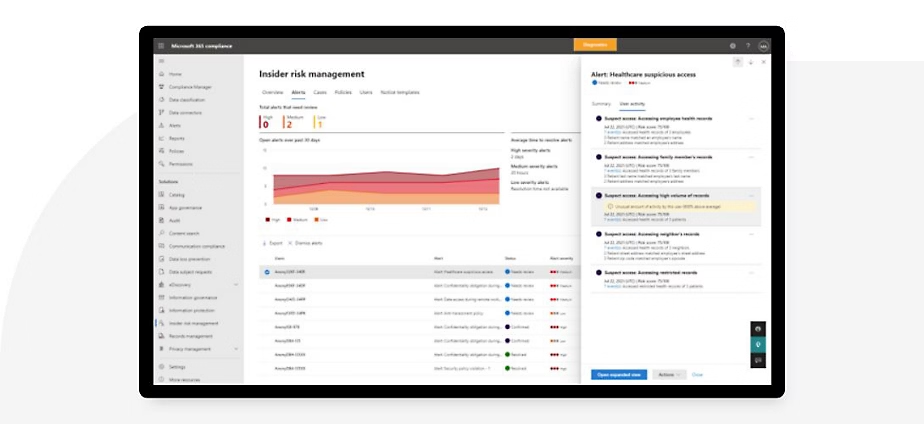
Source: Microsoft
4. Securonix Insider Threat Detection Software

Securonix provides insider threat detection through behavior analytics and unified security monitoring, focusing on detecting data misuse, privilege abuse, and subtle anomalies in user behavior. Its solution helps organizations identify threats across hybrid cloud environments by correlating user activity, access patterns, and contextual data to expose risks that traditional tools might miss.
Key features include:
- User behavior analytics: Detects high-risk or anomalous activity by comparing user behavior against baselines and peer group norms
- Privileged access monitoring: Tracks access to critical applications and infrastructure to identify potential misuse or credential compromise
- Data exfiltration detection: Identifies attempts to move or copy sensitive data outside approved channels
- Integrated visibility and investigation: Correlates signals across systems, supports deep investigations, and provides context for faster response
- False positive reduction: Uses analytics to minimize alert fatigue and highlight meaningful security incidents
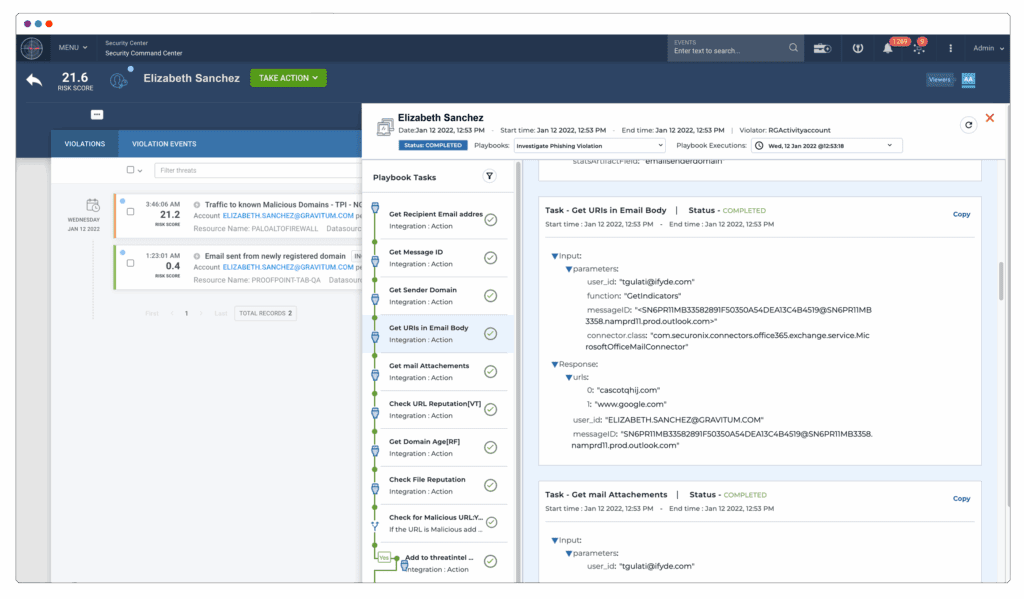
Source: Securonix
5. DTEX
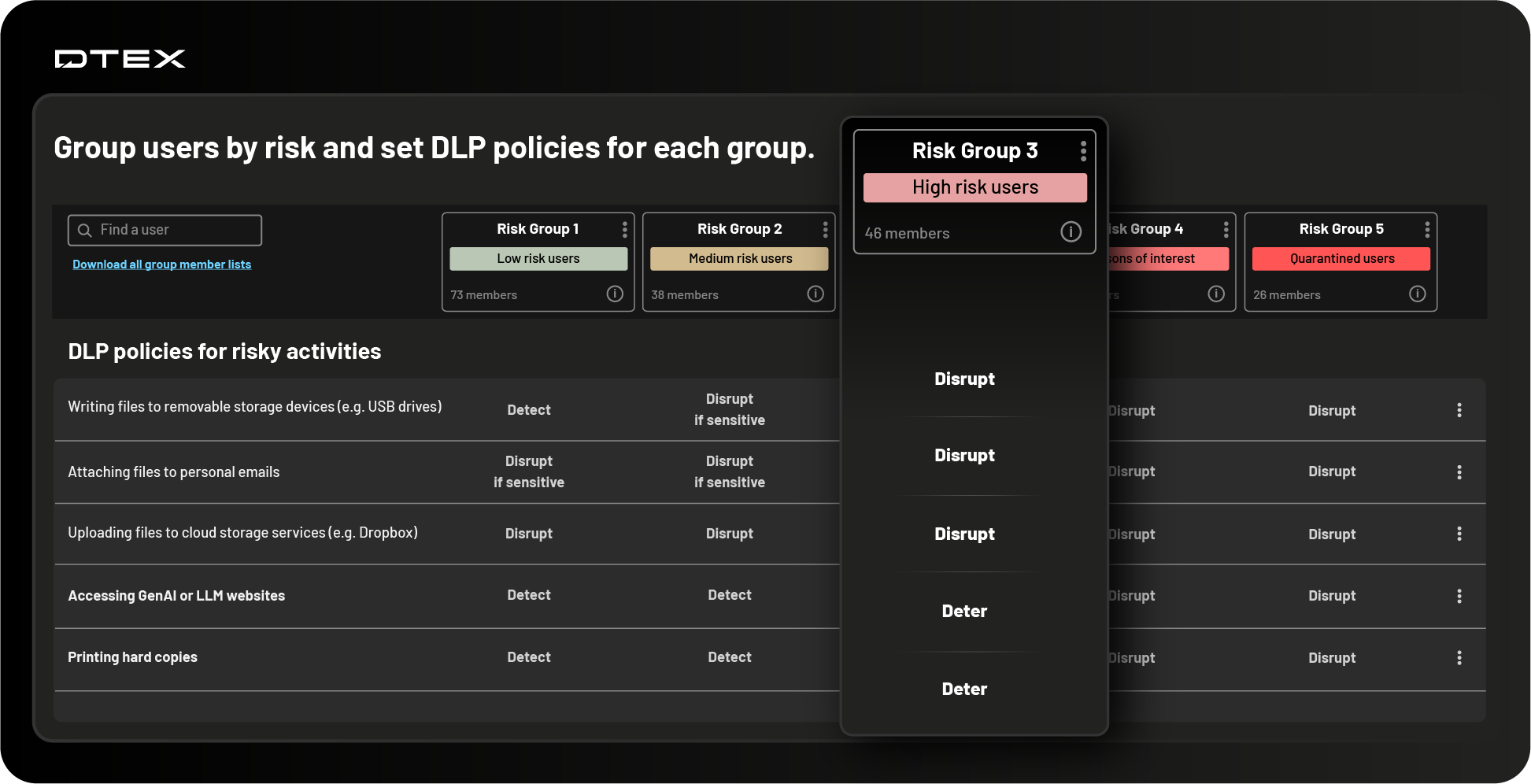
DTEX is an AI-powered insider risk management platform that combines data loss prevention, behavioral analytics, and user activity monitoring into a unified solution. The platform captures lightweight telemetry across the enterprise and applies behavioral context to surface only meaningful alerts, allowing security teams to act before incidents escalate.
Key features include:
- Behavioral risk indicators and contextual scoring: Uses proven behavioral signals and context-aware analytics to reduce false positives and highlight genuine insider threats.
- Lightweight, scalable telemetry: Collects less than 5MB of data per endpoint per day with zero performance impact, enabling deployment across hundreds of thousands of devices.
- Early detection of suspicious activity: Identifies elevated indicators of intent, such as unusual file access or data movement, before a breach occurs.
- AI-guided investigations: Helps security teams ask targeted questions about data access and user behavior, accelerating the investigation process.
- Expert incident response support: Offers access to DTEX’s i3 team of insider threat specialists for guidance and support during active investigations.
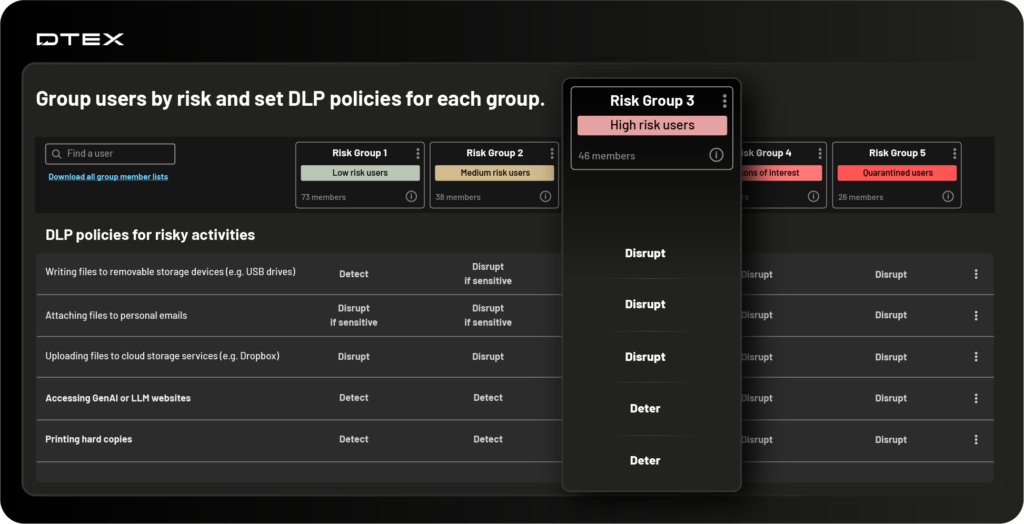
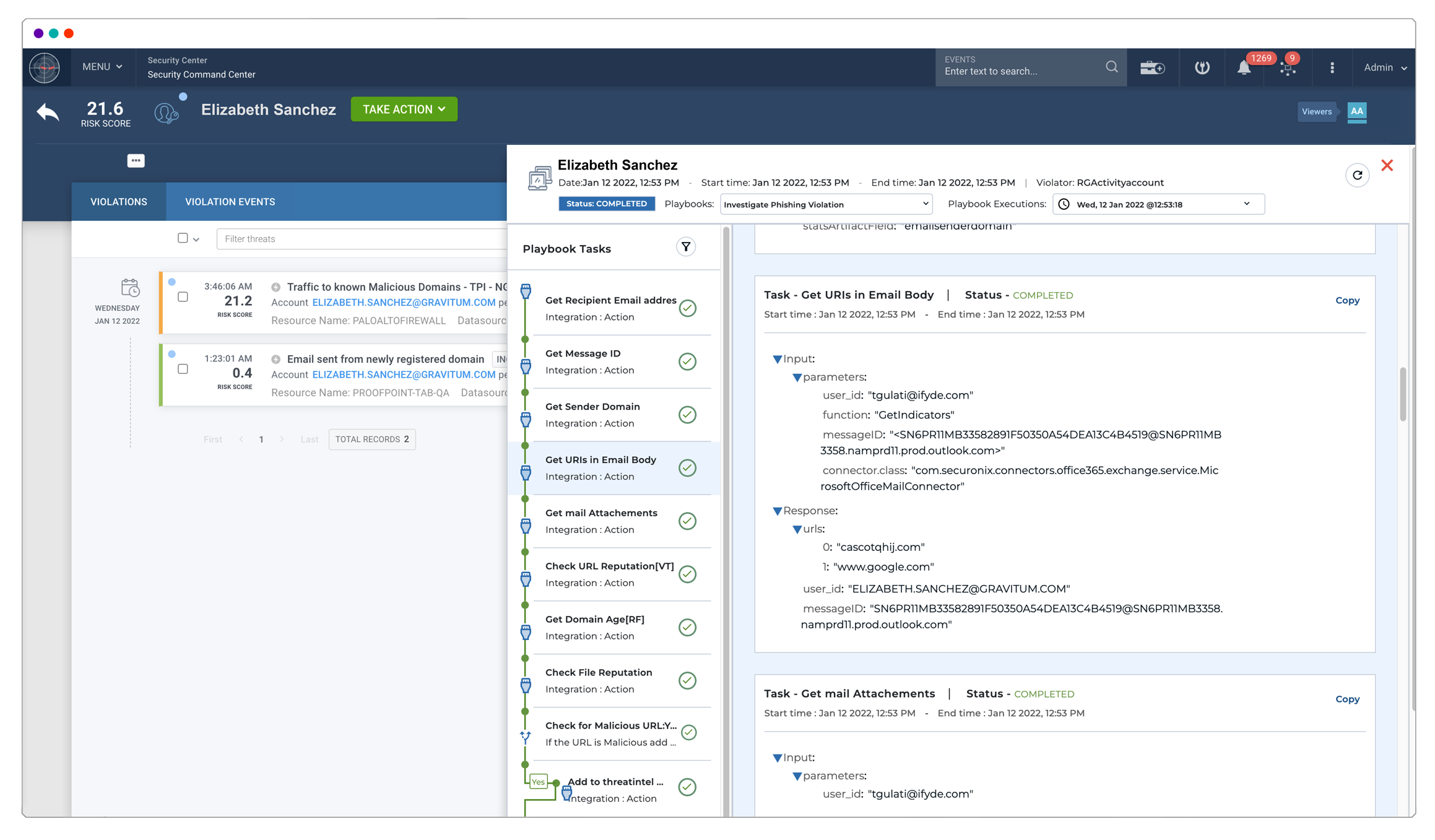
Source: DTEX
How to Choose an Insider Threat Solution
Selecting the right insider threat solution depends on your organization’s size, risk profile, infrastructure, and operational goals. While many platforms offer overlapping capabilities, critical distinctions in architecture, focus, and scalability can significantly impact effectiveness. Below are key and often overlooked considerations to guide your evaluation:
- Deployment architecture compatibility: Ensure the solution aligns with your infrastructure (cloud-native, hybrid, or on-prem). Some tools require endpoint agents or tight integrations with identity providers and SIEM systems, which may not be feasible in all environments.
- Data coverage and visibility gaps: Evaluate what types of data the tool monitors (structured vs. unstructured, endpoint vs. cloud) and whether it offers visibility into high-risk zones like file shares, collaboration platforms, or unmanaged devices.
- User privacy and legal constraints: Consider how the solution handles user data, including anonymization or pseudonymization features. Privacy-preserving architectures are essential for compliance with regional data protection laws and maintaining employee trust.
- Customizability of detection logic: Some solutions rely heavily on static models or predefined rules. If your environment is unique or fast-changing, prioritize tools that support custom behavior models, flexible policies, or scripting for detection logic.
- Insider threat vs. general threat detection: Distinguish between platforms designed specifically for insider risk and those that offer insider detection as a sub-feature of broader threat monitoring. Specialized tools typically provide deeper context and better fidelity.
- Integration with HR and legal workflows: Insider incidents often involve cross-functional teams. Solutions that support role-based access controls, legal hold processes, and HR-integrated investigation workflows can reduce friction and ensure proper handling.
- Operational scalability: Consider how the solution performs across a large or distributed workforce. Lightweight data collection, low-latency analytics, and automation are crucial for high-scale environments without degrading performance.
- Response automation and playbook support: Look for platforms that include predefined or customizable response playbooks to guide remediation. Automation capabilities such as auto-escalation, user lockouts, or policy enforcement reduce response time.
- Support for insider risk maturity models: Some tools align with industry frameworks (e.g., NIST, CERT Insider Threat Program) and provide features that support progressive insider risk maturity, such as program assessments and risk scoring over time.
- Total cost of ownership (TCO): Beyond licensing, factor in costs for deployment, maintenance, training, and integration. Tools with high operational overhead or opaque pricing can become burdensome over time.
Conclusion
Effective insider threat solutions are essential for protecting sensitive data and maintaining trust in complex organizational environments. By combining advanced analytics, proactive monitoring, policy enforcement, and user education, these solutions enable organizations to detect and respond to internal risks before they escalate. The most successful implementations strike a balance between technical capability and organizational readiness, integrating with existing workflows while respecting user privacy and regulatory requirements.
Learn More About Exabeam
Learn about the Exabeam platform and expand your knowledge of information security with our collection of white papers, podcasts, webinars, and more.