目次
SIEMシステムとは何か?
SIEMシステム(Security Information and Event Management)は、さまざまなITおよび運用技術(OT)ソースからのログおよびイベントデータを一元化して分析し、セキュリティ脅威をリアルタイムで検出、調査、対応するサイバーセキュリティツールである。
SIEMシステムは、セキュリティ情報管理(SIM)とセキュリティイベント管理(SEM)を組み合わせて統合的なセキュリティ可視性を提供し、組織が脅威を特定し、インシデントを管理し、コンプライアンス要件を満たすことを可能にします。最新のSIEMソリューションには、高度な分析、人工知能(AI)、機械学習が組み込まれており、脅威の検出を改善し、対応を自動化します。
SIEMシステムの仕組み
- データ収集:SIEM システムは、ファイアウォール、ネットワーク・デバイス、サーバー、アプリケーションなど、組織の IT インフラ全体のさまざまなソースから、ログ、セキュリティ・アラート、イベントなどのセキュリティ関連データを収集します。
- データの集計と正規化:収集されたデータは、分析と相関を容易にするために統一された形式に集計され、正規化される。
- 脅威の検出:SIEMシステムは、事前に定義されたルール、相関エンジン、機械学習を含む高度な分析を使用して、データのパターンや異常を特定します。このプロセスは、潜在的なセキュリティ脅威や脆弱性の検出に役立ちます。
- アラート:イベントやパターンが脅威シグネチャに一致すると、SIEMはセキュリティチームが確認できるように優先順位を付けたアラートを生成する。
- インシデント対応:システムは、セキュリティアナリストがアラートを調査し、インシデント対応を管理するためのツールとデータを提供する。
- レポーティング:SIEM システムはレポーティングとダッシュボードを提供し、組織が規制に準拠していることを証明したり、過去のセキュリティイベントを追跡したりするのに役立ちます。
これは、SIEMツールに関する一連の記事の一部である。
Editor’s note: Updated the article to cover recent market trends, updated product information to reflect features and capabilities in 2026, and added 1 new tool.
Understanding the SIEM Market Trends
市場規模と成長
The SIEM market is expanding steadily. It is valued at USD 10.67 billion and is projected to reach USD 20.78 billion by 2031, growing at a CAGR of 11.5%. This growth reflects increasing demand for centralized visibility, faster detection, and scalable analytics as organizations generate more security data.
主な成長要因
Several forces are pushing organizations to adopt or upgrade SIEM platforms:
- Rising volume of security telemetry: Large enterprises are ingesting massive amounts of log data from endpoints, cloud services, and SaaS tools. This makes scalable data processing and storage essential.
- Regulatory pressure: Laws such as NIS2 in Europe and SEC disclosure rules in the US require fast incident reporting and reliable log retention. These regulations force organizations to improve monitoring and auditing capabilities.
- Cloud and hybrid environments: As workloads move across multiple cloud providers, SIEM tools must collect and correlate data from distributed systems. This shift favors platforms that can integrate directly with cloud-native data sources.
- Improving detection quality: AI and machine learning help filter out low-value alerts and assist analysts with investigation and response, reducing fatigue and improving response times.
Deployment and Architecture Trends
On-premises SIEM systems still hold a slight majority, accounting for over 55% of the market in 2025. However, cloud-based SIEM solutions are growing faster, driven by flexible pricing and reduced infrastructure management.
Modern SIEM architectures are moving away from tightly coupled systems. Cloud-native designs separate storage and compute, allowing organizations to store large volumes of data cheaply and run analytics only when needed. This reduces overall costs and improves scalability.
Hybrid deployments are becoming common, especially in regulated industries. These setups keep sensitive data in specific regions while using cloud resources for analysis.
Managed Services and Skills Gap
A shortage of skilled security analysts is shaping how SIEM is consumed. Many organizations struggle to staff 24/7 monitoring teams, leading to increased demand for managed SIEM services.
Managed service providers handle alert triage, monitoring, and response workflows. This allows internal teams to focus on higher-level tasks while maintaining coverage. As a result, managed services are growing faster than traditional software licenses.
SIEM製品のコア機能
データ収集
SIEM 製品は、ファイアウォール、侵入検知システム、サーバ、アプリケーションなど、多くのソースからセキュリティ・データを収集します。このデータはさまざまな形式で届くため、一元的な分析が困難になっています。データ・アグリゲーションは、ネットワーク全体からログとセキュリティ・イベントを収集し、単一のリポジトリに取り込むことでこれを解決します。
正規化によって、これらの異なるデータ・フォーマットが標準的な構造に変換され、SIEM システムはそれらを統一的に処理および分析できるようになります。正規化によって分析が簡素化され、セキュリティ・チームは複数のデータ・ソースにまたがるパターンや異常を検出できるようになります。一貫性のあるデータセットを作成することでSIEMソリューションは、信頼性の高い相関、レポーティング、アラートの基盤を提供する。
ログ管理
SIEM 製品は、セキュリティ・イベント・データが構造化され、検索可能な形式で収集、インデックス化、保持されるようにする集中型ログ・ストレージを提供します。この一元化により、監視、調査、コンプライアンスタスクのためのデータアクセスが簡素化されます。ネットワークデバイス、サーバ、アプリケーション、クラウド環境など、複数のソースからのログが取り込まれ、事前に定義された保存ポリシーに従って保存されます。
高度なログ管理機能には、データ圧縮、暗号化、パフォーマンスとコストのバランスを取るための階層型ストレージオプションなどがあります。これらの機能は、インシデント対応時や監査時に履歴データの迅速な検索と分析を可能にしながら、企業が規制要件へのコンプライアンスを維持するのに役立ちます。
イベントの相関性と優先順位付け
SIEM ツールのイベント相関は、関連するセキュリティ・イベントを結びつけて、より大きなパターンやインシデントを明らかにする。例えば、ログインの試行、機密ファイルへのアクセス、そして大規模なデータ転送は、一緒に見たときに初めて疑わしいと考えられるかもしれません。SIEM製品は相関ルールと機械学習を使用して、このようなイベントを自動的に結び付け、多段階の攻撃を特定し、重要なインシデントを見逃す可能性を最小限に抑えます。
イベントが関連づけられた後、SIEM システムはその重大性と組織への潜在的な影響に基づいて優先順位を付けます。優先順位付けにより、セキュリティチームは最も重要な脅威に注意とリソースを集中させることができます。この自動化されたトリアージは、アナリストが良性または低リスクのイベントではなく、真のインシデントに取り組むよう誘導することで、アラートによる疲労を軽減し、対応時間を改善します。
アラートと通知
SIEMプラットフォームは、設定可能なアラートメカニズムを提供し、潜在的な脅威やポリシー違反をリアルタイムでセキュリティチームに通知します。これらのアラートは、組織のニーズに合わせてカスタマイズし、電子メール、SMS、発券システムとの統合など、さまざまなチャネルを通じて配信することができます。
SIEM ソリューションのダッシュボードとレポート機能は、組織のセキュリティ状況をリアルタイムと履歴の両方で可視化します。ダッシュボードは、アラート、イベントの傾向、主要なパフォーマンス・インジケータを視覚的に要約し、レポーティング・モジュールは、コンプライアンス・レポート、監査ログ、エグゼクティブ・サマリーを生成します。
インシデント対応
SIEM ツールは、発券システム、オーケストレーション・プラットフォーム、その他のセキュリティ・ツールと統合することで、インシデント対応プロセスを簡素化します。アラートがトリガーされると、SIEM は自動的にケースを開き、適切なアナリストに割り当て、事前に定義された対応ワークフローを開始することができます。これらのワークフローには、関連ログの収集、関係者への通知、重大性に基づくエスカレーションなどのタスクを含めることができます。
一部のSIEMプラットフォームでは、プレイブックの自動化機能も提供しており、デバイスの隔離、IPアドレスのブロック、マルウェアスキャンの開始など、一般的なレスポンスアクションを自動的に実行できます。これにより、手作業を減らし、封じ込めを迅速化し、組織全体で一貫したインシデント処理を実現します。
報告とコンプライアンス
多くの業界では、システムおよびユーザーの活動の詳細な記録を長期間維持することが組織に義務付けられています。SIEM ソリューションは、PCI DSS、HIPAA、GDPR などの業界標準や規制要件に従ってログデータの収集、保存、検索を自動化することで、コンプライアンスをサポートします。自動化されたコンプライアンス・レポートは、監査プロセスを簡素化し、手作業を削減します。
ログの長期保存は、フォレンジック調査や過去の傾向分析にも不可欠です。SIEM製品はログストレージを効率的に管理し、インデックス作成と圧縮技術を適用して、ストレージコストを管理しながら古いデータを保存します。安全な保存により、証拠が無傷のまま残り、規制上のニーズや社内のインシデントレビューにアクセスできるようになります。
科学捜査と分析
SIEMプラットフォームは、セキュリティチームがインシデント発生後に調査できるようにする検索機能を提供します。オペレータは、膨大なセキュリティ・ログのデータセットを検索し、時間、ユーザ、ソース、またはイベント・タイプでフィルタリングして、侵害に関与した一連の活動を再構築することができます。パターンマッチングやタイムライン生成などの高度な検索機能は、調査を加速し、根本原因の分析に必要なコンテキストを提供します。
レトロスペクティブな分析に加えて、SIEM ソリューションは多くの場合、脅威インテリジェンス・フィードと統合して検索結果を充実させ、アナリストが侵害の指標を特定できるようにします。SIEM プラットフォーム内のフォレンジック・ツールは、証拠の迅速な発見をサポートし、セキュリティ・チームがインシデントの全容と影響を理解できるようにします。
関連コンテンツSaaS SIEMガイドを読む。
注目すべきSIEM製品
Next-Gen / AI-Driven SIEM Platforms
1.エクサビーム

Exabeamログ管理、機械学習による行動分析、自動化を組み合わせた最新のSIEM体験をNew-Scale Security Operations Platform。中心となるのは、SOC全体で検知、調査、対応を加速させるAIエージェントの協調システム、Exabeam Novaである。
主な特徴は以下の通り:
- Behavioral analytics: Builds baselines of normal user, entity, and AI agent behavior to surface subtle threats like compromised credentials, insider misuse, and lateral movement.
- Risk-based prioritization: Adaptive risk scoring consolidates noisy alerts, highlighting the highest-priority threats and reducing alert fatigue by up to 60%.
- AI-driven investigation: Exabeam Nova automates evidence collection, case creation, and timeline generation, cutting investigation time by up to 80% and enabling faster containment.
- Leadership insights: Daily posture reporting connects SOC activity to measurable outcomes, helping teams track improvement and demonstrate value to executives and auditors.
Exabeamのオープンで拡張可能なプラットフォームは、クラウドネイティブ、ハイブリッド、セルフホストデプロイメントをサポートし、企業に柔軟性を提供すると同時に、セキュリティオペレーションを一元化します。その結果、人員を増やすことなく、より迅速で一貫性のある検知と対応が可能になります。
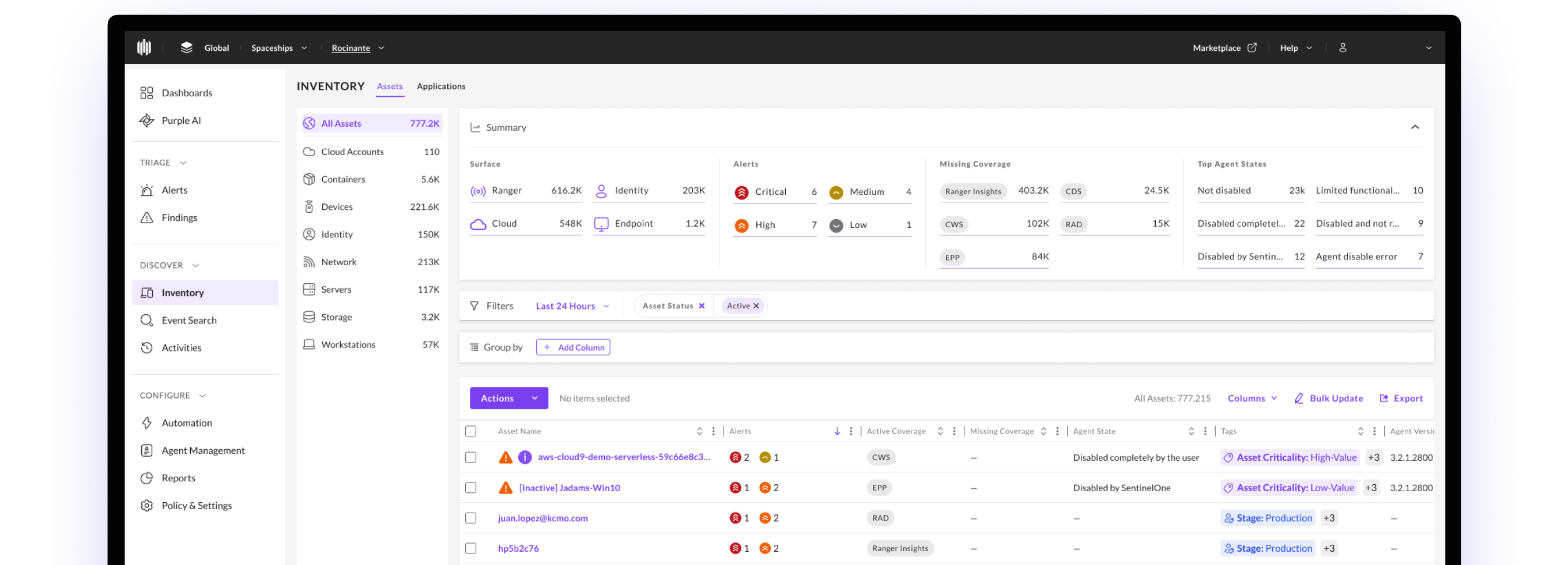
2. SentinelOne SIEM

SentinelOne AI SIEM is built on a scalable data lake that ingests structured and unstructured data from across the environment without relying on indexing. It applies AI-driven analytics and automation to detect threats, correlate signals, and accelerate response, while supporting integration with existing security tools and workflows.
主な特徴は以下の通り:
- AI-enhanced detection: Uses machine learning algorithms to identify patterns and anomalies that traditional rule-based systems may miss.
- Real-time visibility: Provides a unified dashboard for monitoring security events and making faster decisions.
- Automated workflows: Automates repetitive tasks and investigation steps to reduce manual effort.
- Threat intelligence integration: Enriches detections with up-to-date threat intelligence for better context.
- Incident response playbooks: Delivers guided response steps to ensure consistent handling of security incidents.
- Scalable data ingestion: Supports large-scale data collection from multiple sources with flexible retention.

Source: SentinelOne
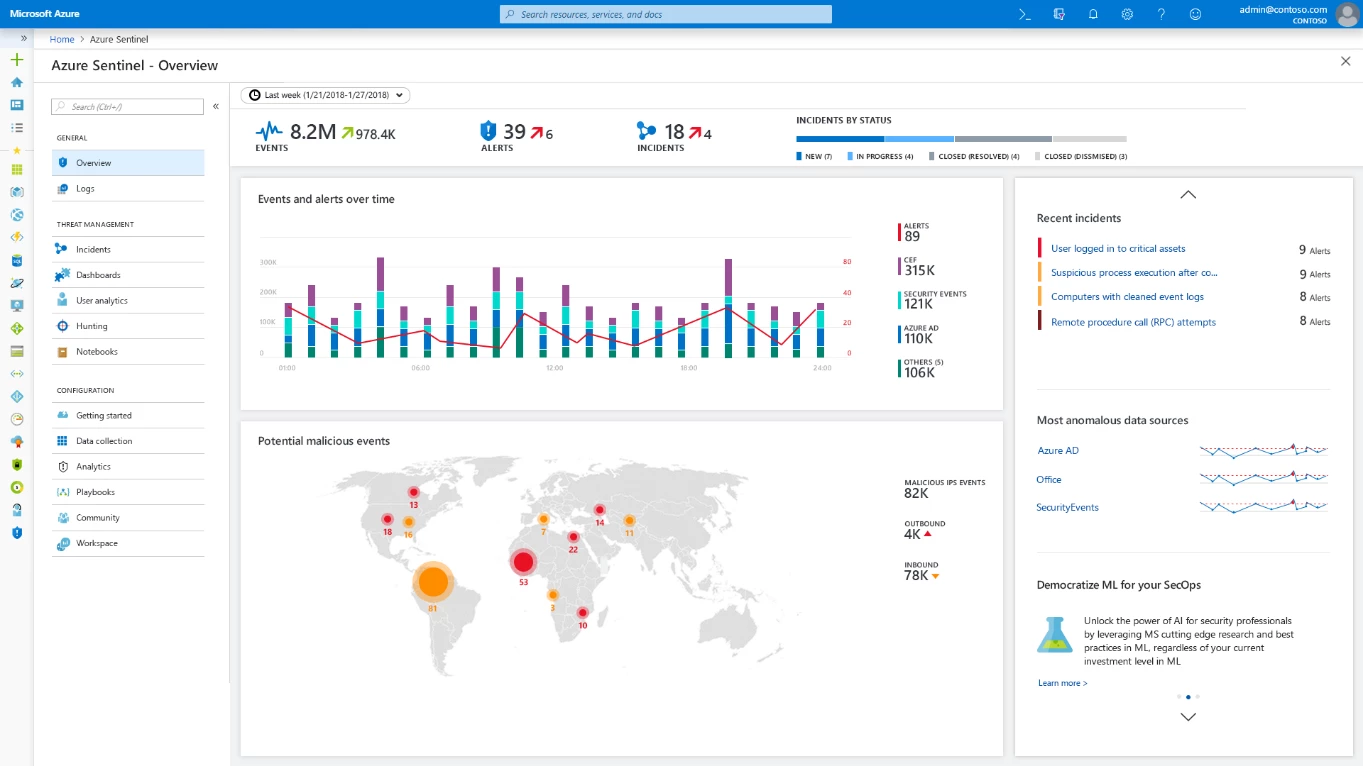
3.マイクロソフトセンチネル

Microsoft Sentinel is a cloud-native SIEM platform that centralizes security data and applies AI-driven analytics to detect and respond to threats across hybrid and multicloud environments. It combines data lake storage, behavioral analytics, and automation to improve visibility and streamline security operations.
主な特徴は以下の通り:
- Cloud-native architecture: Uses a scalable data lake to store and analyze large volumes of security data without infrastructure overhead.
- AI-driven detection and correlation: Applies machine learning to identify threats, reduce false positives, and improve detection accuracy.
- Graph-powered context: Provides contextual insights by mapping relationships between users, devices, and activities.
- Integrated SIEM and SOAR capabilities: Combines detection, investigation, and automated response within a single platform.
- Extensive data connectors: Supports ingestion from hundreds of sources across cloud, on-prem, and third-party environments.
- AI-assisted investigation: Uses generative AI to summarize incidents, generate queries, and recommend next steps.

Source: Microsoft
Established / Traditional SIEM Platforms
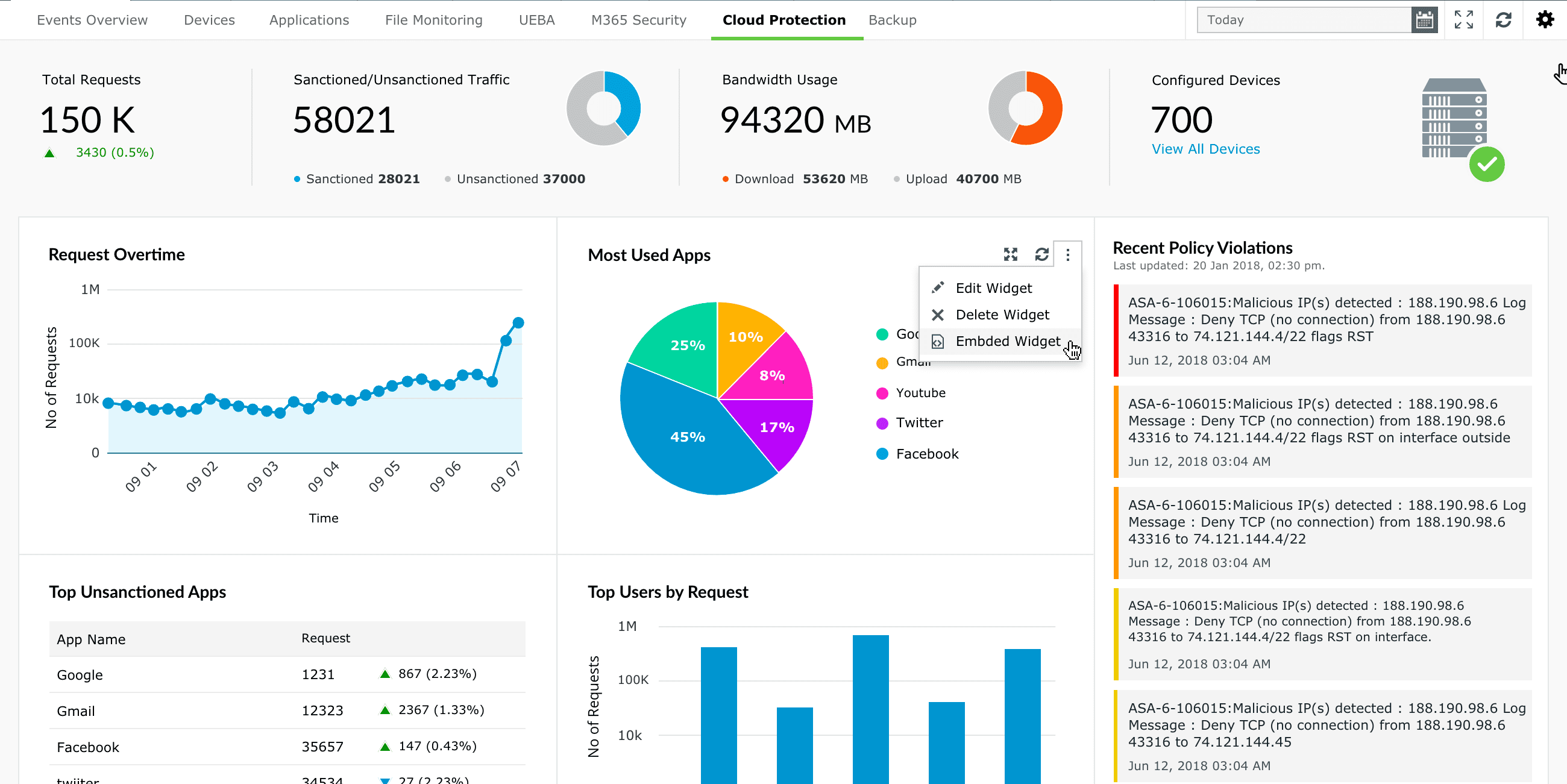
4. MangeEngine Log360

ManageEngine Log360 is a unified SIEM platform that combines log management, threat detection, and threat intelligence to improve visibility and response. It enriches security events with external intelligence and uses correlation and analytics to prioritize real threats over noise.
主な特徴は以下の通り:
- Threat intelligence integration: Aggregates and normalizes threat feeds from multiple sources to enrich alerts with context.
- Alert enrichment and prioritization: Adds reputation scores, geolocation, and indicators of compromise to improve triage accuracy.
- Event correlation with threat data: Matches internal events against external threat indicators to detect malicious activity.
- Real-time intelligence updates: Continuously updates threat data to support proactive detection and response.
- MITRE ATT&CK mapping: Aligns detections with known adversary techniques to improve understanding of attack patterns.
- Investigation acceleration: Enriches incidents automatically to reduce manual analysis during response.

Source: ManageEngine
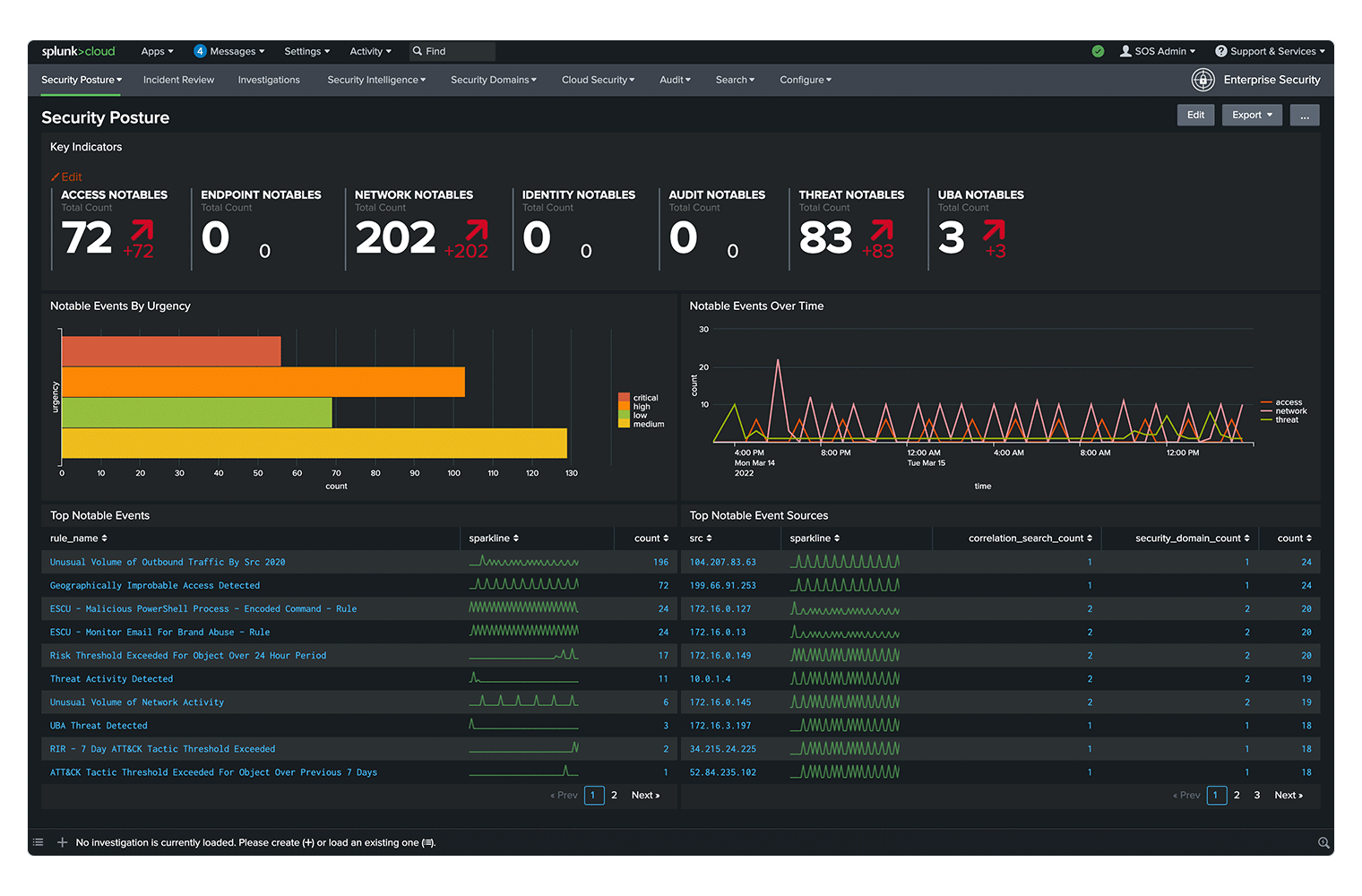
5.Splunk Enterprise セキュリティ

Splunk Enterprise Security is a SIEM platform that provides centralized visibility, analytics, and automation for security operations. It integrates SIEM, UEBA, SOAR, and AI-driven workflows to support detection, investigation, and response within a unified environment.
主な特徴は以下の通り:
- Unified detection, investigation, and response: Centralizes workflows across the threat lifecycle.
- Risk-based alerting: Aggregates events into risk scores to prioritize high-impact threats and reduce alert volume.
- Behavioral analytics (UEBA): Uses machine learning to detect anomalies such as insider threats and compromised accounts.
- AI-driven workflows: Supports investigation with automation, natural language queries, and guided processes.
- Threat intelligence enrichment: Integrates external intelligence to provide context for detections and alerts.
- Detection lifecycle management: Enables testing, deployment, and monitoring of detection rules aligned with frameworks like MITRE ATT&CK.

Source: Splunk
6. IBM QRadar

IBM QRadar SIEM provides centralized visibility and analytics to detect and respond to threats across an organization’s environment. It correlates data from multiple sources, supports real-time detection, and helps analysts investigate and respond to incidents more efficiently.
主な特徴は以下の通り:
- User behavior analytics: Identifies anomalous user activity to detect insider threats and compromised accounts.
- Real-time threat detection: Monitors and analyzes events continuously to identify threats as they occur.
- Data correlation across sources: Combines data from multiple systems to provide a unified view of security events.
- Threat hunting capabilities: Enables analysts to explore datasets and uncover hidden threats in near real time.
- Integration with security tools: Supports interoperability across a wide range of security technologies and data sources.
- Compliance and reporting support: Helps organizations meet regulatory requirements with monitoring and audit capabilities.

Source: IBM
SIEM製品を選ぶ際の注意点
適切なSIEM製品を選択するには、技術的な能力、組織のニーズ、長期的な拡張性を慎重に評価する必要がある。すべてのSIEMが同じように構築されているわけではなく、ある環境ではうまくいっても、別の環境ではうまくいかないこともあります。以下は、意思決定プロセスの指針となる主な検討事項です:
- Data ingestion and scalability: Evaluate how well the SIEM can handle current and projected log volumes. Scalable architecture is critical for high-throughput environments. Look for efficient ingestion models, such as schema-less designs or decoupled storage and compute.
- Integration and data coverage: Ensure the SIEM supports integration with existing infrastructure, including cloud platforms, on-prem systems, endpoints, and third-party tools. Broad native connector support reduces customization overhead.
- Features and detection capabilities
Check for built-in analytics, correlation rules, and support for advanced threat detection techniques like UEBA or ML-based models. Rich detection capabilities improve response accuracy and reduce false positives. - Cost structure and licensing: Understand the pricing model, whether it’s based on data volume, user count, or infrastructure usage. Cloud-native SIEMs may offer more flexible cost structures but can become expensive with unoptimized data retention.
- Usability and analyst experience: A clean, intuitive interface with customizable dashboards and guided investigation tools can significantly enhance analyst productivity. Features like natural language queries or AI assistants can lower the barrier to entry.
- Vendor support and ecosystem: Assess the vendor’s support options, community resources, and ecosystem maturity. A robust support model and access to updated detection content or threat intelligence feeds add long-term value.
- Alert management and automation: Look for support for risk-based alerting, automated triage, and incident response workflows. Integration with SOAR platforms or built-in automation features can greatly reduce manual effort and response time.
- Compliance support: Consider regulatory requirements specific to the industry. Choose a SIEM that offers out-of-the-box compliance reports and long-term log retention policies aligned with standards like HIPAA, PCI DSS, or GDPR.
Conclusion
SIEM 製品は、今日の複雑な脅威を防御するために必要な、一元化された可視性、自動化、インテリジェンスを提供する、最新のセキュリティ運用に不可欠な製品です。効果的な SIEM により、組織はインシデントを早期に検出し、迅速に対応し、規制へのコンプライアンスを維持することができます。クラウドでもオンプレミスでも、適切な SIEM ソリューションは、セキュリティデータの統合、アラートの忠実度の向上、攻撃対象領域全体にわたる実用的な洞察によるアナリストの能力向上によって、運用の回復力を強化します。