Best Insider Threat Detection for Enterprises: Top 5 in 2026
- 7 minutes to read
Table of Contents
What Is Insider Threat Detection?
Insider threat detection identifies and mitigates security risks from individuals within an organization. These risks can come from current employees, former employees, contractors, or third-party partners who have, or previously had, access to internal systems, data, or facilities.
Unlike external threats, insider threats are challenging to detect because insiders often possess legitimate credentials and knowledge of systems and processes, allowing them to bypass conventional security controls more easily.
The detection process typically involves monitoring user activity, analyzing behavior for signs of malicious or negligent intent, and employing tools that leverage machine learning to identify patterns indicating potential security breaches. Insider threat detection requires continuous vigilance, an understanding of normal business operations, and the ability to distinguish between routine actions and suspicious activities.
The Importance of Insider Threat Detection for Enterprises
Detecting insider threats is critical for enterprises because the damage from internal actors can be severe, often going unnoticed until significant harm is done. With increasing digital transformation and distributed workforces, the risk surface for insider threats has grown wider. Insider threat detection helps prevent data breaches, financial losses, and reputational damage that can stem from both malicious insiders and negligent users.
Key reasons why insider threat detection matters for enterprises:
- High impact risks: Insider threats can lead to large-scale data leaks, intellectual property theft, and operational disruption, often with long-term consequences for the business.
- Bypasses traditional defenses: Insiders use legitimate access, making it difficult for conventional perimeter-based security tools to detect harmful actions.
- Regulatory compliance: Many industries are subject to strict regulations (e.g., HIPAA, GDPR, SOX) that require organizations to monitor and protect sensitive data from unauthorized internal access.
- Increased attack surface: The rise of remote work, cloud services, and third-party integrations increases the number of access points that insiders can exploit.
- Human error as a vector: Not all insider threats are malicious; negligent behavior, such as mishandling data or falling for phishing attacks, also poses significant risk.
- Incident response preparedness: Early detection enables faster response and containment, minimizing damage and reducing recovery time and costs.
- Cultural and legal ramifications: A well-implemented insider threat detection program signals to employees that security is taken seriously, promoting a culture of accountability while adhering to legal safeguards.
Related content: Read our guide to detecting insider threats
Types of Insider Threats in Enterprise Environments
Negligent and Careless Insiders
Negligent and careless insiders are team members who unintentionally cause security incidents due to unsafe practices, oversight, or lack of awareness. Common actions include falling for phishing attacks, mishandling sensitive data, using weak passwords, or misconfiguring systems. These actions, though not deliberately harmful, can create vulnerabilities that attackers (internal or external) can exploit, and they often bypass controls designed to stop more direct threats.
This threat category is frequently overlooked because the personnel involved do not have malicious intent and may be otherwise trusted and competent in their roles. However, repeated mistakes or consistent disregard for best practices signals a risk that requires attention through security awareness programs and automated alerting systems.
Malicious Insiders with Authorized Access
Malicious insiders are individuals who exploit their legitimate access to harm the organization for personal gain, revenge, or competitive advantage. This group includes employees who intentionally steal intellectual property, leak confidential information, or sabotage systems.
Because they are familiar with internal workflows and security mechanisms, malicious insiders can carefully conceal their actions, making detection particularly challenging without behavioral monitoring. These insiders might act independently or in collusion with external actors, sometimes motivated by financial incentives, disgruntlement, or coercion.
Compromised Insiders and Account Takeover
Compromised insiders refer to employees or users whose accounts have been hijacked by external attackers through tactics like phishing, credential stuffing, or malware deployment. In these cases, the external attacker operates using the compromised user’s legitimate credentials, making their actions appear authentic and blending them into normal system activity.
This challenges traditional security systems that depend on explicit malicious signatures or anomalous network activity. Detection strategies must focus on identifying behavioral deviations from established user baselines, such as impossible travel, accessing unfamiliar resources, or anomalous data exfiltration attempts.
Third-Party and Contractor Insider Risks
Third-party and contractor insider risks arise from individuals who are not direct employees but have access to internal data, applications, or infrastructure. These users include vendors, suppliers, and service providers performing tasks without the same oversight or cultural alignment as permanent staff.
Their access is sometimes over-provisioned or loosely monitored, creating vulnerabilities exploitable by both negligent and malicious actors within this group. Addressing third-party risks requires thorough vetting, clear contractual security requirements, and granular management of access rights.
Notable Insider Threat Detection Solutions for Enterprises
1. Exabeam

Exabeam offers a threat detection, investigation, and response (TDIR) platform that identifies malicious, compromised, or negligent insider threat activity across both human and non-human identities.
By extending user and entity behavior analytics (UEBA) to the digital workforce, the platform provides deep visibility into how employees, service accounts, and autonomous systems interact
A stateful session data model tracks related activity over time to construct a complete timeline of user actions, enabling security teams to catch slow-moving, lateral risk
General features include:
- Stateful user timelines: Connects related activities across systems and devices into a single, cohesive narrative
- Identity behavioral baselining: Establishes normal profiles for human users, credentials, and machines to flag abnormal operations.
- Credential misuse detection: Flags when valid credentials are used in unusual ways, helping expose account takeover attempts
- Data exfiltration and destruction alerts: Spots unusual deletion patterns and sensitive file access before operational damage occurs.
- Dynamic risk scoring: Automatically calculates and ranks security risks based on behavior and organizational context
Enterprise features include:
- Agent Behavior Analytics: Extends behavioral baselining to non-human actors and AI agents to monitor queries, tool calls, and data access
- AI security workflows: Integrates telemetry from major AI platforms, including ChatGPT, Microsoft Copilot, and Google Gemini
- Audit tampering protection: Correlates retained and late-arriving logs to expose internal attempts to conceal malicious activity
- Outcomes Navigator tracking: Measures security program progress, identifies coverage gaps, and aligns with the OWASP Top 10 for Agentic AI
- Hybrid threat visualization: Provides a unified interface that correlates human actions with AI-driven workflows across the enterprise
2. Proofpoint Insider Threat Management

Proofpoint Insider Threat Management (ITM) is a solution to detect and prevent insider threats across enterprise environments by providing visibility into user activity and identifying risky behavior from careless, compromised, or malicious insiders. It offers a contextual timeline of user actions, allowing security teams to understand who did what, when, and where.
General features include:
- User activity timeline: Visualizes endpoint behavior including file actions, app use, and web activity
- Prebuilt detection rules: Offers out-of-the-box alert libraries for fast setup and immediate insights
- Multichannel telemetry: Collects data from endpoints, email, and cloud in a unified dashboard
- Data classification integration: Supports Microsoft Information Protection labels and Proofpoint DLP
- Contextual evidence: Provides screenshots and event records for clear, actionable investigations
Enterprise features include:
- Cross-channel correlation: Links activity across multiple systems to reveal hidden threats
- Custom rule creation: Allows enterprises to define detection scenarios tailored to their environment
- Cloud and global data residency support: Supports storage compliance with multiple regional data centers
- Collaboration tools: Export activity records and screen captures in standard formats for team investigations
- Executive-level insights: Helps demonstrate security program value to stakeholders with actionable reporting
3. Varonis Insider Risk Management

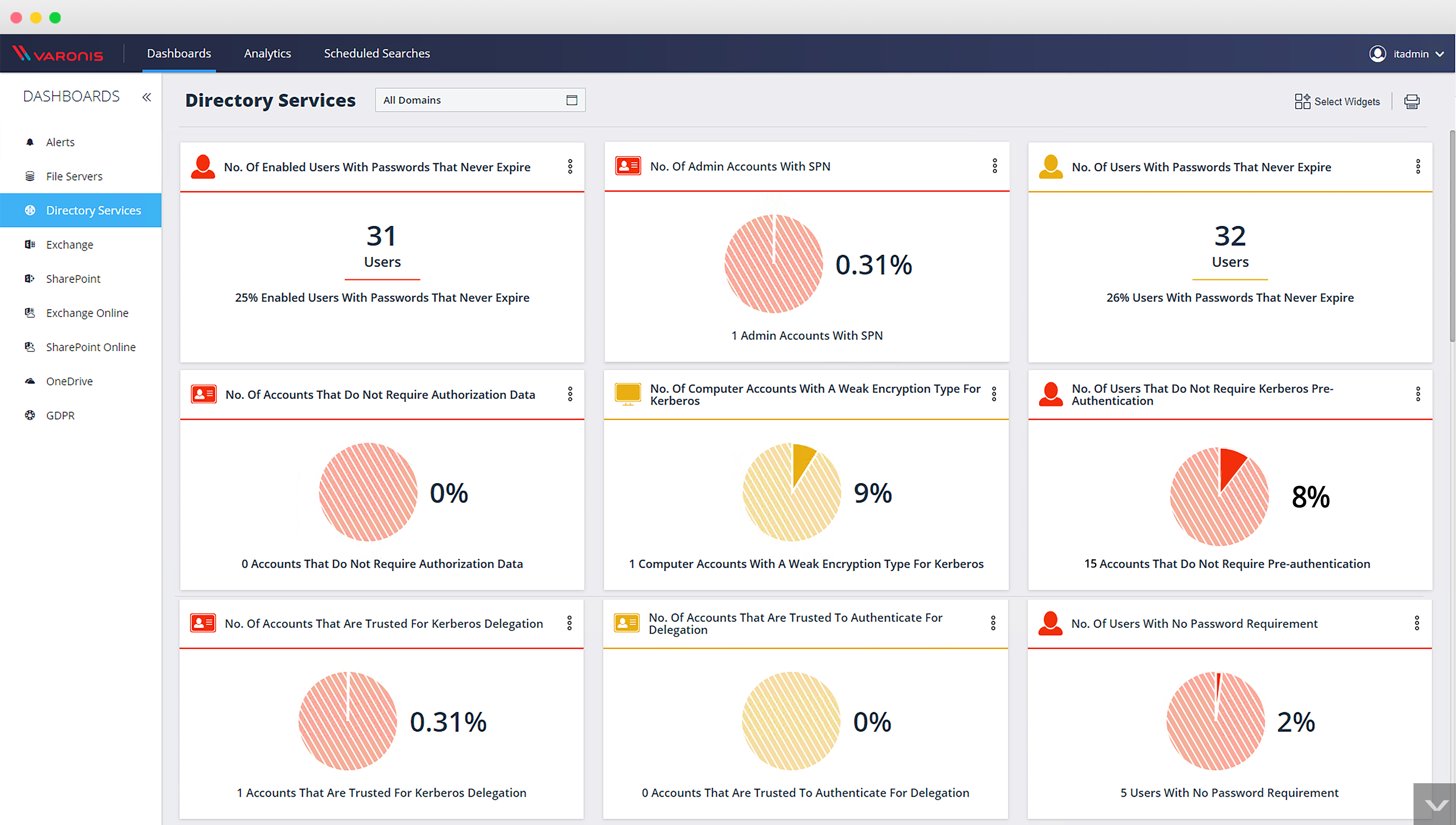
Varonis Insider Risk Management helps enterprises detect and contain insider threats by focusing on data: who can access it, how it’s being used, and what risky behaviors are taking place. Using behavior-based threat models and real-time monitoring, Varonis identifies abnormal file access, suspicious privilege escalation, and other signs of malicious or negligent activity.
General features include:
- Behavior-based detection: Hundreds of prebuilt threat models identify anomalies in user behavior
- Real-time monitoring: Tracks file access, permissions changes, and data movement continuously
- Automated alerting: Flags risky activity like abnormal downloads or label removals for fast response
- Searchable forensics: Enables rapid investigation of incidents through searchable access history
- Permissions remediation: Automatically revokes excessive access rights to reduce exposure
Enterprise features include:
- Automated remediation: Fixes risky configurations and permissions at scale without human effort
- Continuous risk scoring: Assesses security posture in real time and ranks threats by impact
- Investigation support: Security experts triage alerts and surface only the most relevant incidents
- 24x7x365 managed detection and response: Around-the-clock expert support for insider threat monitoring
- Blast radius reduction: Limits how much data any one user can access, minimizing breach impact

Source: Varonis Risk Management
4. Forcepoint Insider Risk Protection

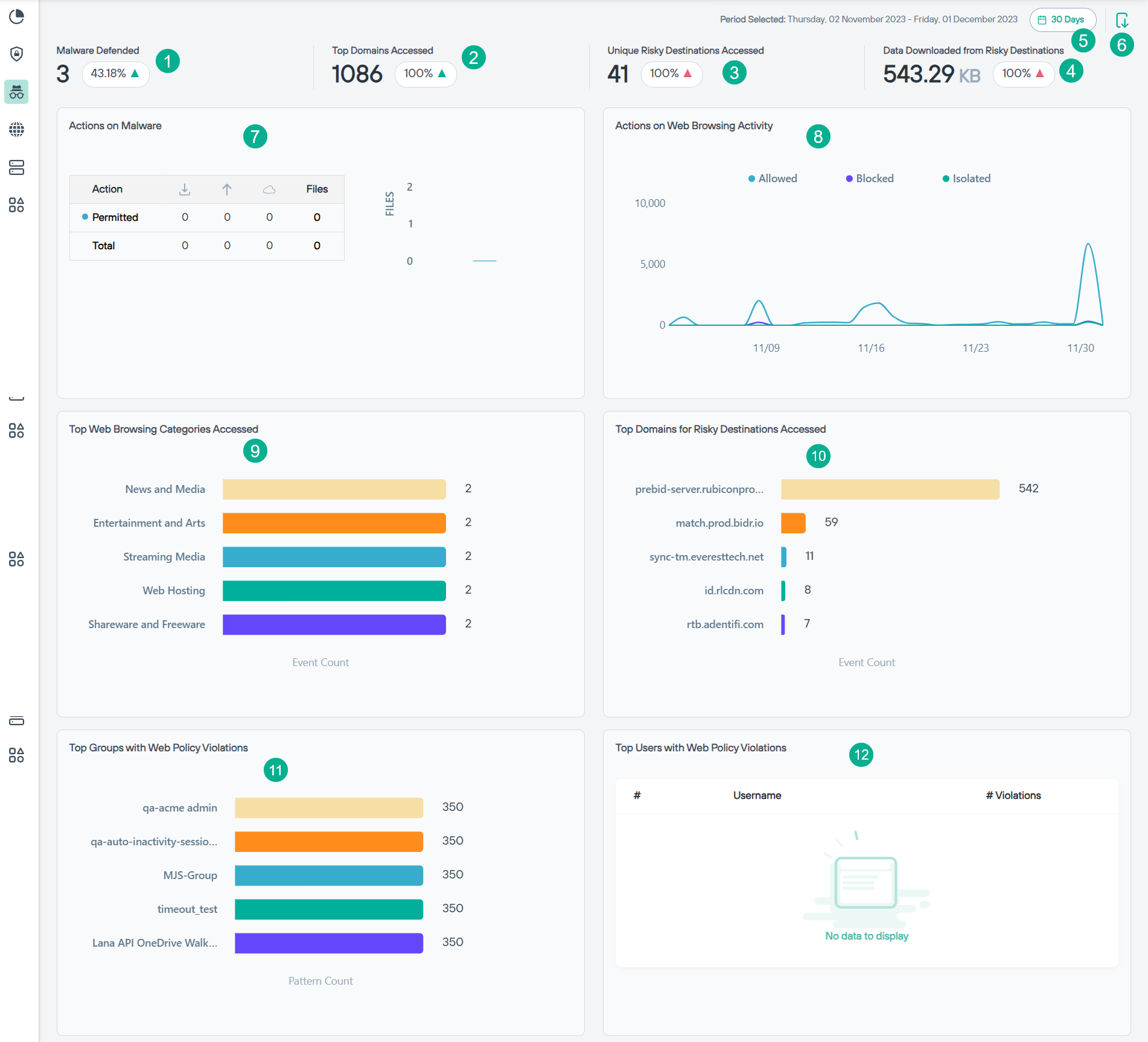
Forcepoint Insider Risk Protection enables organizations to detect and respond to insider threats by combining behavioral analytics with adaptive policy enforcement. Unlike traditional DLP systems that rely on static rules, Forcepoint uses over 150 behavior indicators to monitor user activity and assess intent.
General features include:
- Behavioral monitoring: Tracks user activity across applications and channels in real time
- 150+ risk indicators: Detects anomalies using a rich library of behavioral signals
- Real-time risk scoring: Continuously updates user risk based on behavior and context
- Context-aware alerts: Surfaces meaningful alerts by analyzing user intent, not just policy violations
- Adaptive policy enforcement: Automatically tightens or relaxes DLP controls based on risk level
Enterprise features include:
- Risk-adaptive DLP: Dynamically enforces security policies in response to real-time risk assessments
- Intent-based detection: Identifies insider threats by analyzing motive, not just activity
- Granular controls: Blocks or limits sensitive actions only when necessary, preserving workflow
- Policy automation: Adjusts enforcement levels without manual tuning or static rules
- Integrated visibility: Correlates user actions, risk scores, and policy responses in a unified view

Source: ForcePoint
5. Microsoft Purview Insider Risk Management

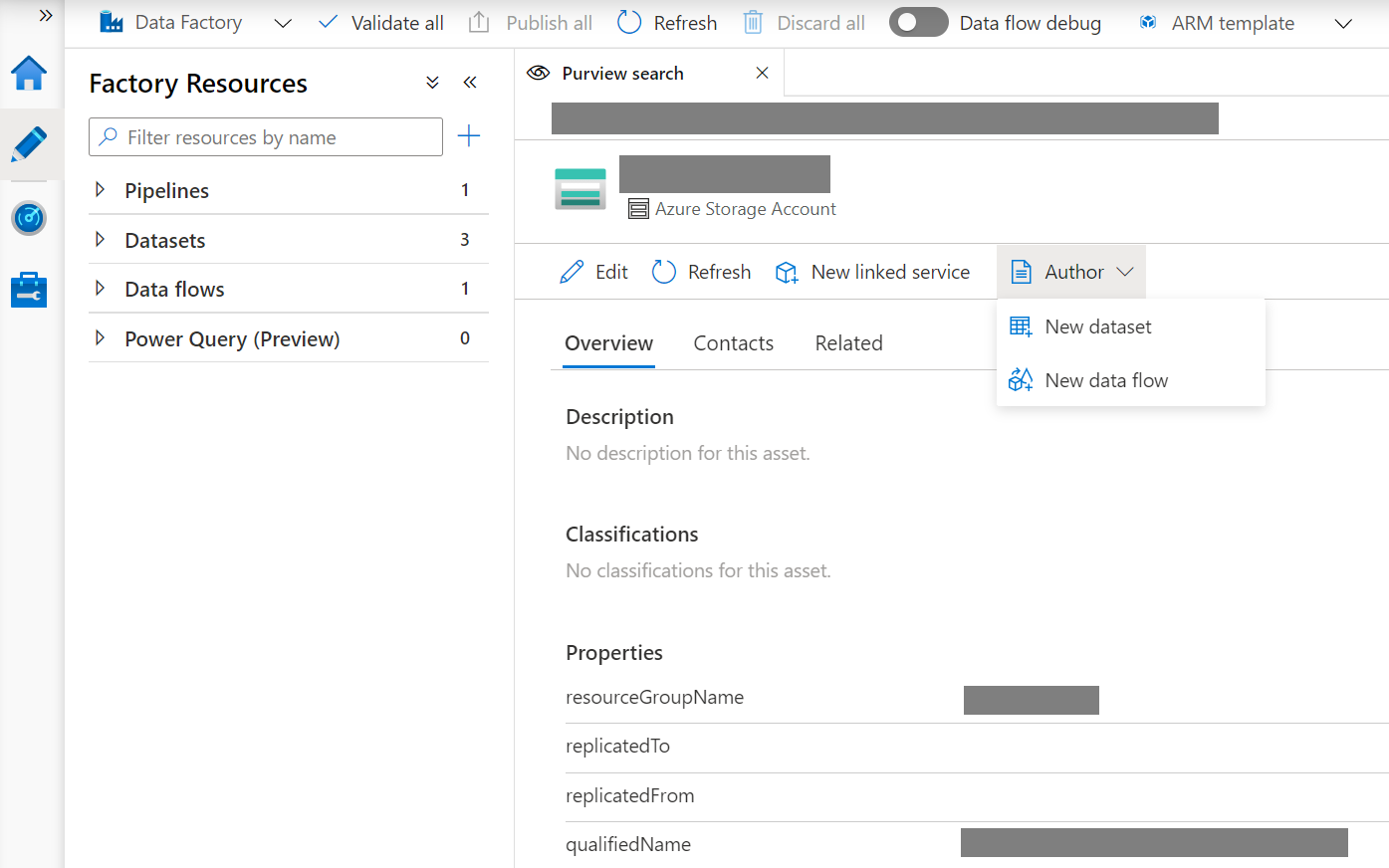
Microsoft Purview Insider Risk Management is a compliance-focused solution to detect, investigate, and remediate internal risks caused by both malicious and unintentional user actions. Built on Microsoft 365 and Graph data, it uses customizable policies and behavior-based risk indicators to identify issues such as data leaks, IP theft, and regulatory violations.
General features include:
- Behavioral risk detection: Uses built-in indicators to detect data leaks, IP theft, and compliance violations
- Customizable policies: Define risk types, triggering events, and affected user groups using templates
- Privacy by design: Balances monitoring with privacy controls and transparency
- Integrated alerting: Automatically generates alerts when user behavior matches policy conditions
- Triage tools: Dashboards allow review, filtering, and assignment of alerts for further action
Enterprise features include:
- Policy templates: Covers scenarios like departing users, patient data misuse, and AI usage risks
- Microsoft 365 integration: Leverages existing telemetry from Microsoft services for deep context
- eDiscovery (Premium) escalation: Transfer case data for legal hold, investigation, and export workflows
- Content explorer: Automatically surfaces emails and files tied to risk events for detailed review
- SIEM integration (Preview): Export alert data to external systems via Office 365 Management APIs

Source: Microsoft Purview
Related content: Read our guide to insider threat indicators
Conclusion
Insider threat detection is essential for protecting enterprise assets in an environment where internal access can be misused intentionally or accidentally. By leveraging behavioral analytics, continuous monitoring, and contextual risk assessment, organizations can detect warning signs early, contain incidents faster, and maintain trust and compliance across their digital operations.
Learn More About Exabeam
Learn about the Exabeam platform and expand your knowledge of information security with our collection of white papers, podcasts, webinars, and more.