Skip to content

Behavior Intelligence: The New Model for Securing the Agentic Enterprise — Read the Blog.

Best Insider Threat Products: Top 5 in 2026

  • 6 minutes to read

Table of Contents

    What Are Insider Threat Products? 

    Insider threat products are cybersecurity solutions to detect, prevent, and mitigate risks from users within an organization. These products focus on threats posed by trusted insiders (employees, contractors, or vendors) who have access to sensitive systems and data.

     Malicious actions, negligence, or mistakes by insiders can result in data breaches, intellectual property theft, or operational disruption. These products serve as a layer of defense, complementing perimeter-focused security tools.

    Unlike traditional threat detection tools aimed at external attackers, insider threat products provide visibility into the actions of authorized users. They track access to sensitive resources, analyze user behavior, and issue alerts for suspicious activities. The purpose is to catch harmful actions that might otherwise go unnoticed because they are performed by users with legitimate access.

    This is part of a series of articles about information security.

    How Insider Threat Products Work 

    Insider threat products operate by collecting and analyzing data from various sources within an organization to identify risky or abnormal user behavior. These sources typically include endpoint activity, file access logs, user authentication records, email and messaging systems, and cloud service usage. The goal is to build a behavioral baseline for each user and flag deviations that may indicate a threat.

    User and entity behavior analytics (UEBA) is a core component. It uses machine learning to detect patterns that suggest insider threats, such as large file downloads, off-hours access, or attempts to access restricted areas. These tools can distinguish between regular job functions and potential misuse of privileges.

    Some products also incorporate data loss prevention (DLP) features, which block or quarantine suspicious activities like unauthorized data transfers. Integration with identity and access management (IAM) systems enables real-time enforcement of access controls and rapid response to high-risk behavior.

    By correlating activity across systems and applying contextual analysis, insider threat products help security teams prioritize alerts, investigate incidents, and take corrective actions before damage occurs.

    Core Capabilities of Insider Threat Products

    Real-Time User Monitoring and Alerts

    Real-time user monitoring enables organizations to track employee activity as it happens, capturing data on logins, file access, network traffic, and application use. By collecting this wide array of information, insider threat products form a view of what each user is doing at any given moment. 

    Alerts are triggered when activities deviate from established norms, such as accessing sensitive files outside of business hours or transferring atypical amounts of data to external locations. Immediate detection is vital for stopping data leaks or sabotage before significant damage occurs. 

    Behavioral Analytics and Anomaly Detection

    Behavioral analytics involves profiling standard patterns of user activity, such as typical work hours, accessed documents, and communication habits. Insider threat products use machine learning to establish these baselines for each individual and peer group. By continuously updating these profiles, the system accounts for evolving job roles and seasonal changes.

    Anomaly detection compares real-time behavior against established baselines to flag suspicious actions. For example, if an employee suddenly downloads a large volume of files or attempts to access systems they have never interacted with before, the platform raises an alert. These capabilities enable organizations to spot subtle forms of insider threat, such as slow data exfiltration or escalation of privileges, that static rule-based systems might miss.

    Automated Response and Orchestration

    Automated response capabilities enable insider threat products to act the moment risky behavior is detected, limiting potential damage before security personnel even begin an investigation. These automated actions may include deactivating compromised accounts, blocking risky file transfers, revoking access privileges, or isolating affected endpoints from the network. 

    By embedding response playbooks, the systems ensure rapid containment and reduce the dwell time of an insider attack. Orchestration extends these automated responses by coordinating actions across multiple security tools. For example, an insider threat platform might share alert data with a SIEM, trigger network access controls, or prompt an identity management system to cycle passwords. 

    Forensic Investigation and Incident Response

    Forensic investigation features within insider threat products provide detailed records of user actions, including keystrokes, screenshots, accessed files, and application usage timelines. These logs allow security teams to reconstruct events and determine the scope and impact of a potential threat. Detailed context is crucial for distinguishing between malicious intent, human error, or system misconfiguration during post-incident reviews.

    Incident response tools enable teams to act swiftly after a threat is confirmed. Features may include automated evidence collection, guided investigation workflows, and case management integration. With these tools, organizations document investigative steps, maintain chain-of-custody for evidence, and generate reports for legal or regulatory review.

    Access Control and Privilege Management

    Access control and privilege management functions ensure that users have only the permissions necessary for their role and nothing more. Insider threat products often integrate with identity and access management (IAM) systems to enforce the principle of least privilege. Through ongoing permission audits and policy enforcement, the software reduces the attack surface by limiting unnecessary or excessive privilege grants.

    These tools also monitor for instances of privilege escalation, such as when a standard user gains admin rights without proper authorization or justification. Alerts and automated responses help organizations quickly address any privilege misuse, while detailed logs support investigation and policy improvement. 

    Compliance Reporting and Audit Logs

    Compliance reporting capabilities ensure that organizations can meet internal and external regulatory requirements for data handling and monitoring. Insider threat products generate comprehensive audit logs, tracking all monitored activities and any security actions taken, such as alerts, incident responses, and corrective measures. Reports can be tailored to specific regulations like GDPR, HIPAA, SOX, or NIST standards, simplifying compliance audits.

    Well-structured logs also simplify investigations by providing searchable, timestamped records of user activity. This transparency helps organizations demonstrate due diligence to regulators and auditors, reduce liability, and identify process improvements. 

    Related content: Read our guide to threat hunting

    Notable Insider Threat Products 

    1. Exabeam

    Exabeam light logo

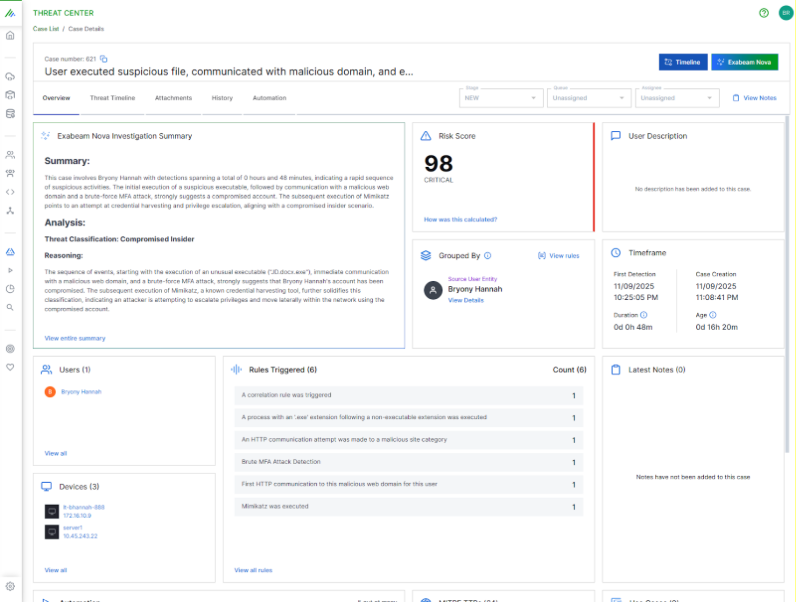
    Exabeam is a behavioral analytics and security operations platform that helps organizations detect insider threats through user and entity behavior analytics (UEBA), risk scoring, and investigation workflows. The platform analyzes activity across identities, endpoints, cloud services, and network environments to identify anomalous behavior that may indicate credential misuse, privilege abuse, or data exfiltration.

    Key features include:

    • Behavioral analytics and UEBA: Establishes behavioral baselines for users, devices, and entities to detect suspicious deviations and insider threat activity
    • Risk-based prioritization: Applies dynamic risk scoring to prioritize high-risk users and activities based on context and behavioral indicators
    • Cross-environment visibility: Correlates telemetry across cloud, endpoint, identity, and network sources for broader insider threat detection coverage
    • Investigation timelines and case management: Provides investigation workflows and event timelines to support forensic analysis and incident response
    • AI-assisted security operations: Uses AI-driven analytics and investigation support to help analysts identify and investigate insider-related risks more efficiently
    • Security data lake integration: Supports large-scale telemetry analysis and long-term behavioral investigations across security data lake and SIEM environments

    Case details from the Exabeam Threat Center. Source: Exabeam

    2. Varonis Insider Risk Management

    Varonis - Exabeam Partner

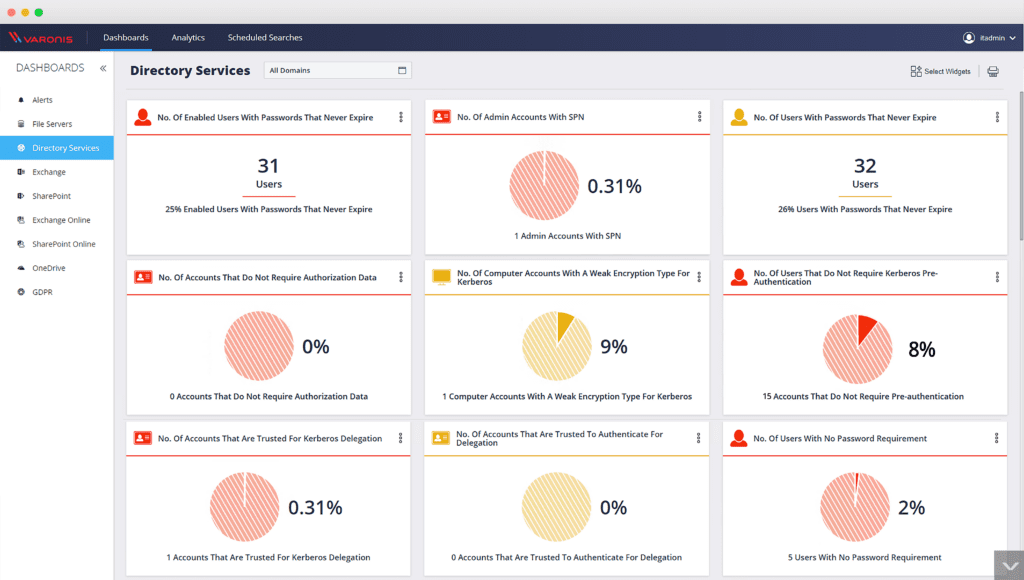
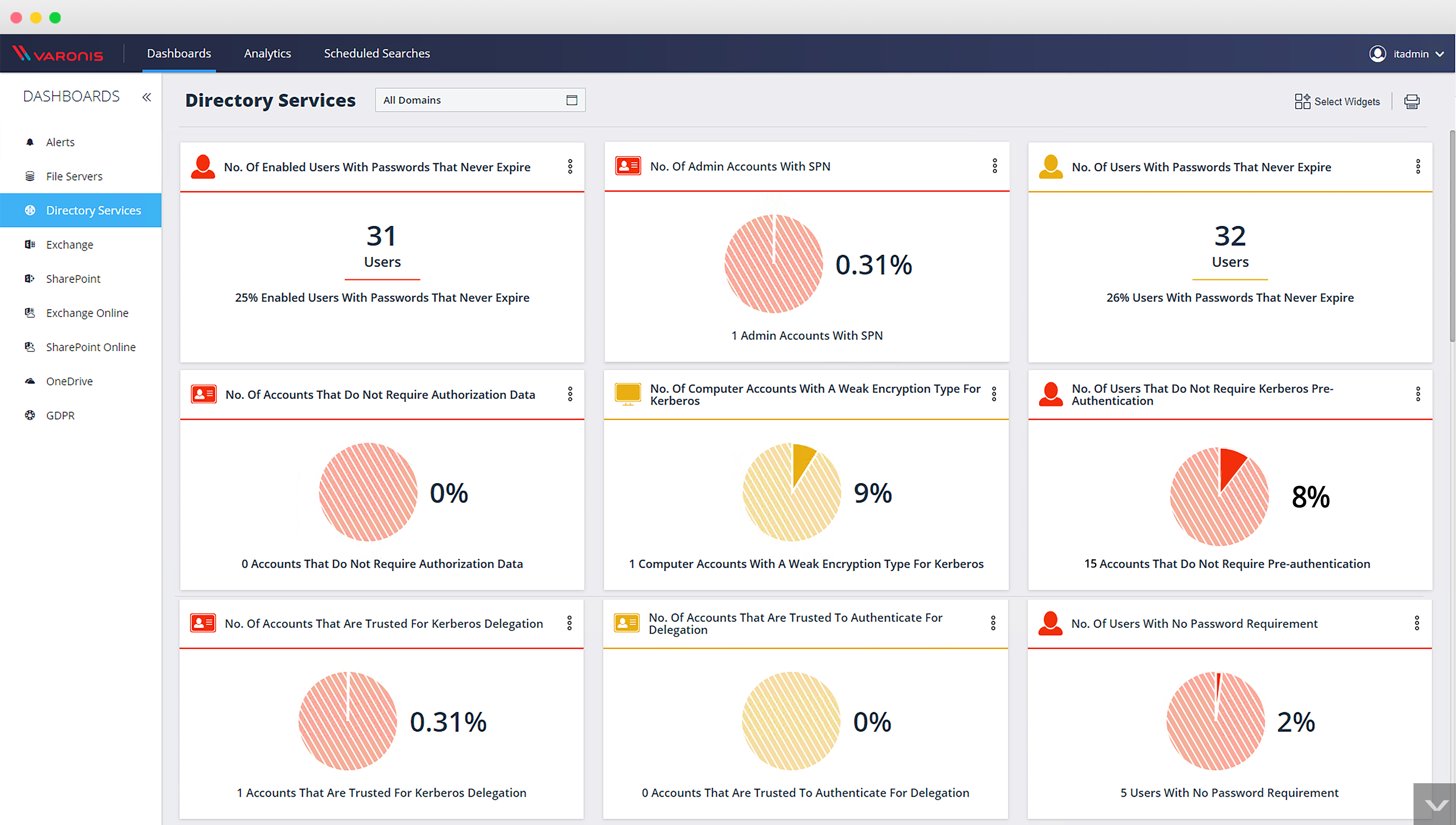
    Varonis Insider Risk Management is a data-centric security solution that detects and prevents insider threats by combining behavior-based analytics, real-time monitoring, and automated remediation. It focuses on identifying excessive data access, privilege misuse, and suspicious activity across cloud and on-prem environments. 

    Key features include:

    • Behavior-based threat detection: Uses hundreds of models to detect abnormal file access, privilege escalation, and unusual behavior
    • Real-time monitoring: Tracks user activity and data access continuously across the data estate
    • Automated remediation: Revokes excessive permissions and mitigates risks without manual intervention
    • Searchable forensics: Provides records of user actions to support investigations and audits
    • Permissions management: Identifies and removes unnecessary data access rights at scale

    Source: Varonis Risk Management

    3. Proofpoint Insider Threat Management

    Proofpoint - Exabeam Partner

    Proofpoint Insider Threat Management (ITM) is a user-focused data protection solution to detect, investigate, and prevent data loss caused by careless, compromised, or malicious insiders. It gives security teams visibility into user activity, helping to identify risky behavior before it leads to business disruption.

    Key features include:

    • User activity timeline: Presents a visual timeline of user actions, showing context around file access, data movement, and endpoint behavior
    • Behavior evidence collection: Captures detailed user actions, including optional screenshots, to support fast, accurate investigations
    • Endpoint data loss prevention: Blocks risky actions such as USB transfers, cloud uploads, print operations, and unauthorized software use
    • Risk-based controls: Adjusts monitoring and enforcement levels based on individual user risk profiles, enabling proactive prevention
    • Privacy-aware design: Integrates transparency and user-centric privacy controls to support compliance and reduce bias

    4. Teramind Insider Threat Detection

    Teramind

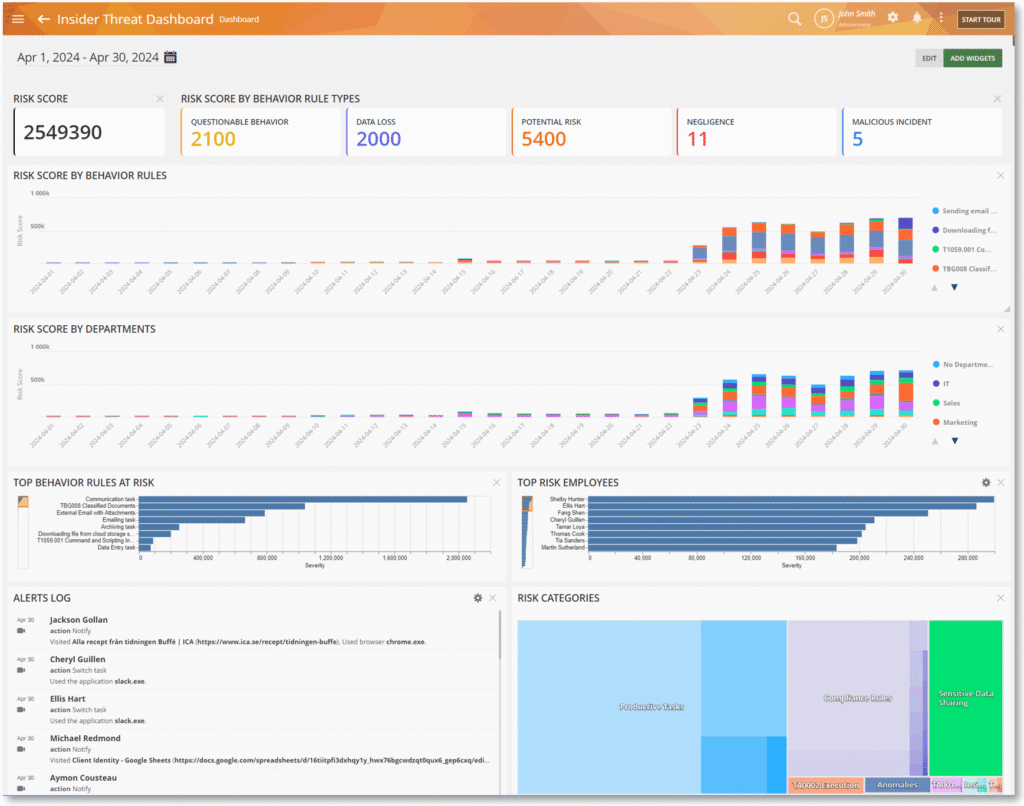
    Teramind Insider Threat Detection is a behavior-driven security solution that monitors user activity to detect, prevent, and respond to insider threats. It collects granular endpoint data to build behavioral baselines and spot deviations that may signal malicious intent, negligence, or compromised accounts. 

    Key features include:

    • Behavioral monitoring and analytics: Tracks user activity to establish normal behavior and flags anomalies across endpoints
    • Real-time threat alerts: Issues immediate alerts for suspicious actions such as unauthorized file transfers or after-hours access
    • Automated data loss prevention: Blocks risky behavior with hundreds of customizable responses, including USB restrictions and email filters
    • Privileged access controls: Restricts data access based on user roles, time windows, and risk levels to minimize insider exposure
    • Forensic investigation tools: Captures detailed timelines, user actions, and screen recordings to support incident analysis

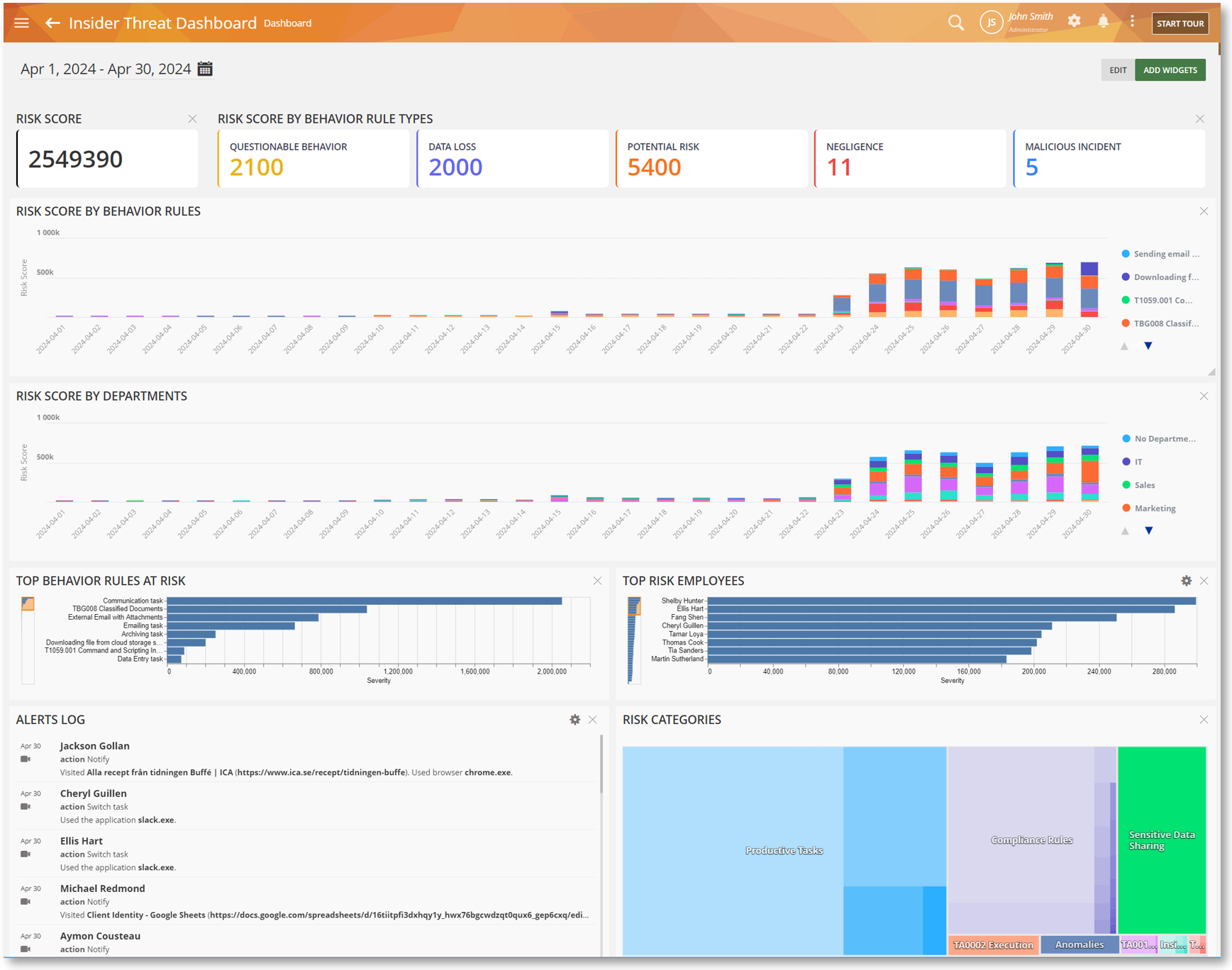
    Source: Teramind Insider

    5. Mimecast Incydr

    Mimecast - Exabeam Partner

    Mimecast Incydr is an insider risk management solution that protects sensitive data from loss, theft, and leaks without disrupting employee productivity. Unlike traditional DLP tools that rely on restrictive policies, Incydr focuses on visibility, context, and automated response. It monitors file activity across devices, sanctioned and unsanctioned apps, and GenAI tools to detect high-risk behavior.

    Key features include:

    • Real-time visibility: Detects data leaks, IP theft, and risky file activity without relying on predefined policies
    • Automated response actions: Corrects unsafe behavior automatically, blocks unacceptable actions, and logs incidents for follow-up
    • PRISM risk prioritization: Highlights the most critical insider risks using behavioral intelligence and contextual analysis
    • GenAI activity monitoring: Tracks data movement to generative AI tools, preventing leaks through copy-paste or uploads
    • Comprehensive coverage: Monitors data exposure across endpoints, cloud services, sanctioned and unsanctioned applications

    Conclusion

    Insider threat products provide organizations with essential capabilities to detect and respond to threats originating from within their trusted environment. By combining real-time monitoring, behavioral analytics, automated response, and forensic investigation, these solutions help security teams manage complex internal risks. As insider threats continue to evolve, driven by remote work, cloud adoption, and increased data mobility, having dedicated tools to monitor and control insider behavior is no longer optional.

    Learn More About Exabeam

    Learn about the Exabeam platform and expand your knowledge of information security with our collection of white papers, podcasts, webinars, and more.

    • Webinar

      The Insider Isn’t Human | Exabeam Elevate 2026

    • Webinar

      From Alerts to Outcomes | Exabeam Elevate 2026

    • Webinar

      The Quantum Reckoning | Exabeam Elevate 2026

    • Webinar

      Lessons From an Insider Threat | Exabeam Elevate 2026

    • Show More