- ホーム >
- 用語解説 >
- クラウドセキュリティ
Cloud Security Solutions: 8 Categories and 8 Tools to Know in 2026
- 13 minutes to read
目次
What Are Cloud Security Tools?
Cloud security tools are software solutions designed to protect cloud-based data, applications, and infrastructure. These tools address various security concerns, including data privacy, unauthorized access, and vulnerabilities within cloud services. They help organizations maintain compliance, prevent threats, and ensure the integrity of their cloud environments.
Cloud security tools can fall into several categories:
- Cloud Security Posture Management (CSPM): CSPM tools continuously monitor and assess cloud security configurations, identify misconfigurations, and help organizations improve their overall security posture.
- Cloud Access Security Broker (CASB): CASB tools are physical or software-based gateways that allow organizations to apply consistent access policies across on-premises and cloud environments.
- Cloud Workload Protection Platforms (CWPP): CWPP tools help protect cloud workloads like virtual machines, containers, and serverless functions by discovering them and applying security policies.
- Cloud compliance: Cloud compliance tools help organizations understand how to align their cloud environments with compliance requirements.
- Security Incident and Event Management (SIEM): SIEM tools ingest alert and data and analyze security-related behavior to help detect, investigate, and mitigate attacks.
- eXtended Detection and Response (XDR): XDR tools help organizations implement threat detection and incident response across the layers of a cloud environment.
- Secure Access Service Edge (SASE): SASE tools provide remote access to cloud systems with live context, compliance, and security policies based on device identities.
- Security Service Edge (SSE): SSE tools help secure access to cloud services and applications by ensuring access control, threat protection, monitoring, and data security.
Key functions of cloud security tools include:
- Identity and access management (IAM): Ensures only authorized users can access cloud resources, often through features like single sign-on (SSO), multi-factor authentication (MFA), and role-based access control (RBAC).
- Data encryption: Protects sensitive data at rest (when stored) and in transit (when being transmitted) by converting it into an unreadable format.
- Threat Detection and Response: Monitors for suspicious activity and malicious attacks, alerting administrators and often providing automated or manual mitigation.
- Web application firewalls (WAFs): Protect web applications hosted in the cloud from common attacks like SQL injection and DDoS.
- Endpoint protection: Secures devices accessing cloud resources, detecting and responding to malware and other threats.
- Data loss prevention (DLP): Prevents the unauthorized sharing or transfer of sensitive data.
より多くの企業がクラウドインフラを採用し、機密データの保存やミッションクリティカルなアプリケーションの実行にクラウドリソースを使用するようになるにつれ、データプライバシーとセキュリティに関する懸念は拡大し続けている。
クラウド環境が直面する多くのセキュリティ脅威により、企業はセキュリティ・インシデントを自動的に検出し、環境全体の脅威をプロアクティブに特定する必要がある。クラウドセキュリティは、クラウド技術とセキュリティツールが連携して初めて対処できる、進化し続ける課題である。
このコンテンツは、クラウドセキュリティに関するシリーズの一部です。
クラウドで何を守るべきか?
クラウド環境は複雑で、多数の可動部品で構築されている。多くの組織は、SaaSクラウド・サービスのセキュリティを管理するためにSaaS Security Posture Management(SSPM)を使用しており、DevOps、セキュリティ、ITの各チームがSaaS環境のセキュリティ・ポスチャを可視化し、管理できるようにしている。以下は、クラウド・セキュリティ・ソリューションが対応しなければならない主な資産の種類である:
クラウド・ネットワーク
ファイアウォールはオンプレミスと同様にクラウドでも重要だが、いくつかの異なる要件がある。クラウド・ファイアウォールは、仮想プライベート・クラウド(VPC)内や、より広範なクラウド・ネットワーク内の重要な接続を妨害しないように導入されなければならない。ファイアウォールやその他のテクノロジーは、クラウド・リソースとの間のネットワーク・トラフィック(イングレス/エグレス・トラフィック)の検査やフィルタリングに使用できる。
計算インスタンス
仮想マシン(VM)としても知られるコンピュート・インスタンスは、クラウドのワークロードを実行するコンピューティング・リソースである。コンピュート・インスタンスは、他のサーバーと同様に、脆弱性、マルウェア、制御不能な変更から保護されなければならない。クラウドインスタンスは動的に起動・停止されるため、保護はより複雑になります。また、各インスタンスはセキュリティ・ポリシーによって管理されなければならない。
容器
クラウドにおける一般的なデプロイパターンは、アプリケーションをコンテナで実行することだ。コンテナは、ソフトウェア環境全体を格納できる軽量なプロセスである。コンテナは、あらゆる環境でソフトウェアを確実に実行するために使用される。
コンテナはイメージに基づいているため、セキュリティ・ソリューションは、コンテナ・イメージを使用する前や使用中に、脆弱性や不正な変更がないかスキャンする方法を提供する必要がある。さらに、実行中のコンテナの監視と保護、およびKubernetesのようなコンテナ・オーケストレーターのための追加のセキュリティ・レイヤーも必要です。
クラウドアプリケーション
クラウドアプリケーションは、クラウドインスタンス、コンテナ、サーバーレスプラットフォームのいずれにデプロイされるかにかかわらず、独自のセキュリティ対策が必要です。これには、アプリケーション・コンフィギュレーションの保護、強力な認証の確保、悪意のあるパターンや異常なパターンがないかアプリケーションのトラフィックを監視することなどが含まれる。ログも認証方法も安全でなければならない。IT管理者とセキュリティ・チームは、脅威の検知と対応を可能にするために、クラウド・アプリケーションを一元的に可視化し、コントロールする必要がある。
クラウド・セキュリティ・ソリューションはガバナンスとコンプライアンスにどう影響されるか?
クラウド・セキュリティ・ソリューションは、組織に影響を与える標準や規制をサポートし、コンプライアンスを支援する必要がある。
一般データ保護規則(GDPR)のような規制や、PCI DSS(Payment Card Industry Data Security Standard)のような基準は、クラウド環境に広範な影響を及ぼす。理想的には、クラウド・セキュリティ・ソリューションが組織を支援する必要がある:
- コンプライアンス要件に違反する可能性のある環境要素を特定する。
- コンプライアンスに関する問題の修正
- アクセスログや変更ログなど、環境から関連データを収集する。
- 監査人にコンプライアンスを示す報告書を作成する
Key Functions of Cloud Security Tools
アイデンティティとアクセス管理(IAM)
IAM tools ensure secure user authentication and authorization by enforcing policies such as least privilege and role-based access. They help manage identities across hybrid and multi-cloud environments, providing visibility into who is accessing what and under which conditions.
データ暗号化
Encryption tools secure sensitive data by converting it into unreadable formats for unauthorized users. These tools often support both symmetric and asymmetric encryption and are essential for protecting data during storage, transmission, and processing.
脅威検知対応
These tools monitor logs, network traffic, and system behavior to identify potential threats in real-time. They often leverage machine learning or rule-based analysis to detect anomalies and can trigger automated responses to contain or mitigate threats.
Webアプリケーションファイアウォール(WAF)
WAFs filter and monitor HTTP traffic between applications and the internet. They block malicious traffic such as SQL injection, cross-site scripting (XSS), and other OWASP Top 10 threats, helping to secure cloud-hosted web applications.
エンドポイントプロテクション
Endpoint protection tools defend user devices that access cloud environments. They provide antivirus, anti-malware, and behavioral analysis features to detect and stop threats at the device level before they can impact cloud resources.
データ損失防止(DLP)
DLP solutions monitor data transfers and apply controls to prevent sensitive data from leaving the organization. They classify data, detect policy violations, and enforce rules to block unauthorized sharing or exfiltration of critical information.
8 Cloud Security Solution Categories
以下は、組織がクラウド・コンピューティング環境のセキュリティを確保するために、最も一般的に使用されている SSPM ソリューション・カテゴリーである:
クラウド・セキュリティ・ポスチャ管理(CSPM)
CSPMツールは、クラウド構成をスキャンして、安全でない構成や、セキュリティ標準やコンプライアンス要件から逸脱した構成を特定する。セキュリティ構成の誤りは、クラウドにおけるセキュリティ侵害の最大の原因の1つである。CSPMは誤設定を特定し、影響を受けるシステムの脆弱性を自動的に修正することができる。また、コンプライアンス目的でクラウド構成をレポートすることもできる。
Related content: Read our explainer on Cloud Security Posture Management.
クラウド・アクセス・セキュリティ・ブローカー(CASB)
CASBツールは、ユーザーとクラウドサービス間のゲートウェイとして機能する。CASBは物理的なデバイスとしても、ソフトウェア・アプリケーションとしても、クラウドでもオンプレミスでも導入できる。CASBは、オンプレミス環境を超えてセキュリティ・ポリシーを拡張し、オンプレミスとクラウドの両方に同じアクセス・ポリシーを適用することを可能にする。
CASBソリューションは、組織で使用されているクラウドサービスを自動検出し、各サービスに関連するリスクを判断し、データ使用とユーザーアクセスのポリシーを設定して実施することで機能する。CASBソリューションは通常、データの暗号化やマルウェア対策も行う。
クラウド・セキュリティ・ポスチャ管理(CSPM)
CSPMツールは、クラウド構成をスキャンして、安全でない構成や、セキュリティ標準やコンプライアンス要件から逸脱した構成を特定する。セキュリティ構成の誤りは、クラウドにおけるセキュリティ侵害の最大の原因の1つである。CSPMは誤設定を特定し、影響を受けるシステムの脆弱性を自動的に修正することができる。また、コンプライアンス目的でクラウド構成をレポートすることもできる。
関連コンテンツ:
クラウド・ワークロード・プロテクション・プラットフォーム(CWPP)
CWPPツールは、仮想マシン、コンテナ、サーバーレス機能などのクラウドワークロードを保護する。複数のクラウド環境で稼働するワークロードを検出し、すべてのワークロードに一貫したセキュリティポリシーを適用できる。CWPPは通常、クラウドプロバイダーのAPIと統合するのではなく、オペレーティングシステムから直接情報を収集する。
クラウド・コンプライアンス
クラウド・コンプライアンス・ソリューションは、クラウド・ワークロードの可視性を向上させる。クラウド環境のどの部分がコンプライアンス要件に違反しているかを把握するのに役立つ。クラウドコンプライアンスツールは、クラウドシステムが特定の規制や標準に準拠しているかどうかを示す監査を生成し、コンプライアンス上の問題に対する改善策を提案することができる。
セキュリティインシデント・イベント管理(SIEM)
最新の SIEM ソリューションは、あらゆるクラウドまたはオンプレミスのデータソースからすべてのセキュリティアラートデータを取り込んで動作分析し、組織がサイバー攻撃をより効率的に検出、調査、対応できるようにする独自の機能を備えています。
クラウドサイバーコップとして効果的に機能するために、最新のSIEMには、クラウドセキュリティを確保するために必要なあらゆるソースからのアラートデータの取り込みを可能にする複数のAPIベースのコネクタが必要です。また、オンプレミスのデータ・ソースをハイブリッド・マルチクラウド環境に取り込むこともできる。一般的には、オンプレミスのインフラを保護するのと同じで、プロセスは次のようになります:
- ログはSIEMに取り込まれ、一元管理される。
- セキュリティツールまたはSIEMの相関ルールからアラートが発せられるか、行動分析から注目すべきユーザーまたはエンティティのイベントが作成される。
- これが調査の引き金となり、アナリストはSIEMに集められた証拠を検証する。
- 証拠はインシデント・タイムラインに処理される
- タイムラインに基づき、アナリストは攻撃に対応することができる。
アナリストは、どのシステムとユーザーが関与していたかを把握し、そのアクティビティを表示し、修復のためのプレイブックに相談したり、適用したりすることができる。
eXtendedディテクション&レスポンス(XDR)
XDRは、組織が脅威検知とインシデントレスポンス(TDIR)をより効果的に提供できるようにする新しいセキュリティパラダイムである。クラウド環境には、パブリック・ネットワーク、仮想プライベート・ネットワーク(VPN)、API、ワークロード、アプリケーションなど、複数のレイヤーがあります。もう一つの次元は、クラウドサービスに接続する保護されていないユーザー・デバイスです。
XDRは、3種類のデータをTDIR体制に組み合わせ、攻撃のタイムラインを自動的に構築することで、インシデントの迅速な調査に役立てることができる:
- アイデンティティ管理 -人間のユーザーとサービス・ロールを監視し、異常な活動を監視する。
- クラウドログ -クラウド環境の複数のレイヤーから大量のログデータを収集し、異常なイベントを抽出する。
- ネットワークフローの分析 -クラウド環境全体のネットワークトラフィックを観察することで、クラウドマシンのNetFlowを監視するだけでなく、ネットワークセグメンテーションを設定することで自動的に対応します。
XDRは、クラウド環境からのデータを、オンプレミスシステムやIoTなどの分散システムからのデータと組み合わせる能力で輝きを放っている。
セキュアアクセスサービスエッジ(SASE)
SASEは、デバイスやエンティティのアイデンティティに基づき、リアルタイムのコンテキスト、セキュリティ、コンプライアンスポリシーを備えたクラウドシステムへのリモートアクセスを可能にする。
SASEは、SD-WANやZTNA(Zero Trust Network Access)など、様々な統合ネットワークとセキュリティ機能を提供します。また、ブランチオフィス、リモートワーカー、ローカル向けの一般的なインターネットセキュリティもサポートしています。
SASEは、クラウド・デリバリー・モデルを通じて、重要なネットワーク・サービスの提供と運用を大幅に簡素化し、俊敏性、回復力、セキュリティを向上させる。その最大の利点は、完全に統合されたソリューションであることです。旧世代のリモート・アクセス・ソリューションでは、完全に安全なソリューションを提供するために4~6種類のツールを統合する必要がありました。
セキュリティ・サービス・エッジ(SSE)
SSEは、ウェブ、クラウドサービス、個人用アプリケーションへのアクセスを保護します。機能には、アクセス制御、脅威保護、データ・セキュリティ、セキュリティ監視、および許容可能な使用制御が含まれ、これらはすべてWebベースおよびAPIベースの統合によって実装されます。
SSEテクノロジーにより、企業はクラウド中心のアプローチで、いつでもどこでもセキュリティ・ポリシーを実施し、従業員をサポートすることができる。複数のセキュリティ機能を単一の製品に統合することで、複雑さを軽減し、ユーザー・エクスペリエンスを向上させる機会を即座に提供します。
Notable Cloud Security Tools and Solutions
1.エクサビーム

Exabeam New-Scale Fusion is a cloud-native security operations platform that combines SIEM, log management, and behavioral analytics. Built to unify threat detection, investigation, and response (TDIR), it monitors both human activity and machine activity to secure enterprise environments against credential misuse, insider threats, and compromised accounts.
主な特徴は以下の通り:
- Behavioral analytics and risk scoring: Establishes behavioral baselines for human and non-human entities, applying dynamic risk scoring to flag anomalies that bypass static correlation rules.
- Agent Behavior Analytics: Extends continuous behavioral monitoring and anomaly detection to AI agents and other non-human identities.
- Cloud-native SIEM and log management: Ingests, parses, and enriches security telemetry at scale, using a Common Information Model to ensure data is normalized and immediately searchable.
- Standards-based automation: Accelerates incident response workflows with low-code automation and prebuilt playbooks that integrate with external tools and security infrastructure.
- AI-driven investigation: Employs Exabeam Nova agents to analyze security alerts, simplify triage workflows, and automatically generate case summaries.
- Outcomes-focused coverage: Utilizes the Exabeam Nova Advisor Agent to map detection coverage directly to the MITRE ATT&CK framework and recommend posture improvements (see image below of Outcomes Navigator).

Source: Exabeam
2. Palo Alto Networks Prisma Cloud

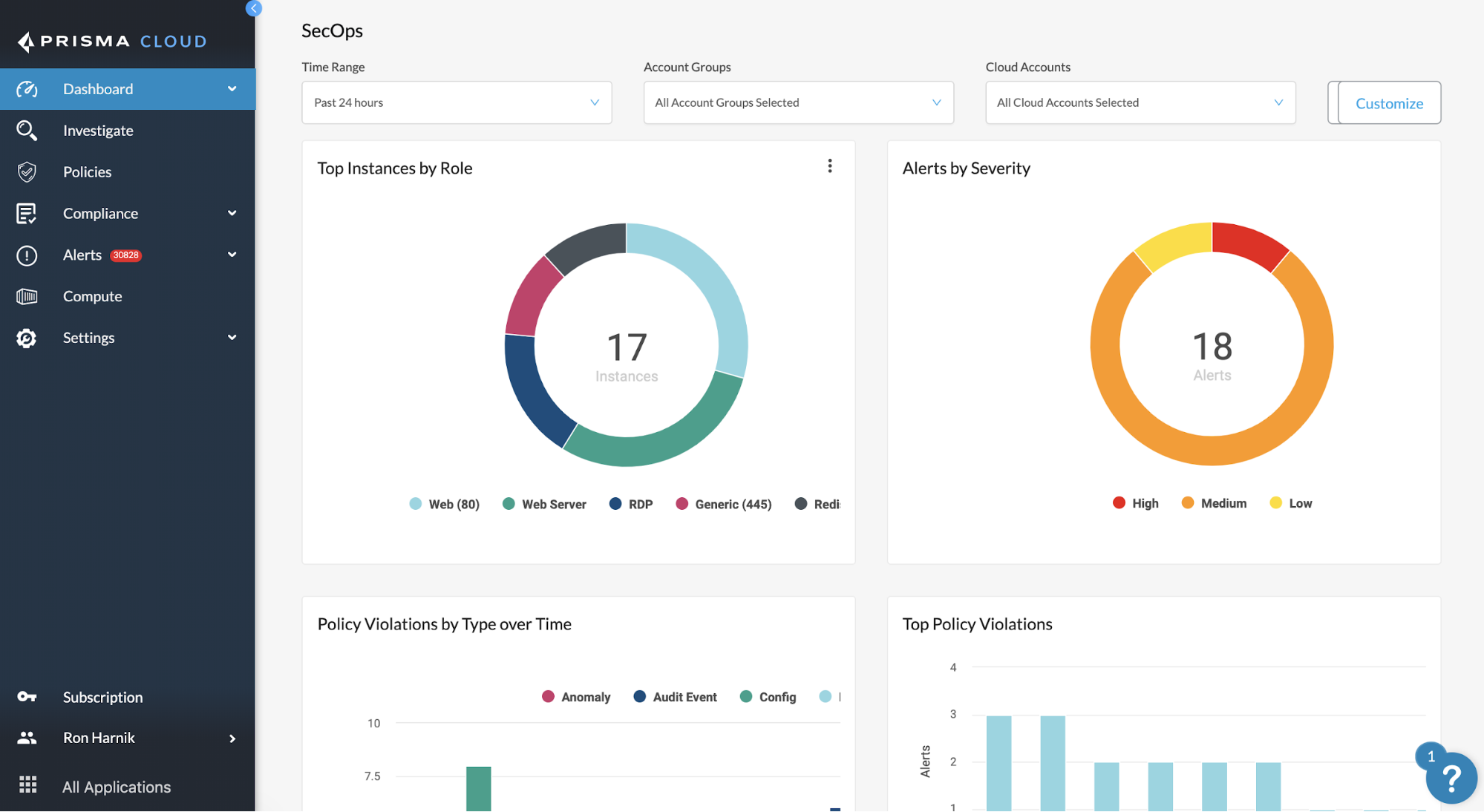
Prisma Cloud by Palo Alto Networks is a cloud-native security platform that protects applications from development through deployment and into runtime. Built as a unified “code to cloud” platform, it secures the application lifecycle by integrating with development pipelines, monitoring infrastructure, and providing threat protection.
主な特徴は以下の通り:
- Code security: Identifies and remediates vulnerabilities early in development with tools like infrastructure-as-code (IaC) scanning, secrets detection, CI/CD pipeline security, and software composition analysis (SCA).
- Infrastructure protection: Monitors and hardens cloud infrastructure using cloud security posture management (CSPM), API visibility, cloud infrastructure entitlement management (CIEM), and agentless workload scanning.
- Runtime defense: Provides in-line protection for workloads, containers, serverless environments, and APIs.
- Threat detection: Uses AI to detect new attacks and analyze cloud events to uncover security risks.
- AI SPM (AI Security Posture Management): Secures AI-powered applications by monitoring model integrity, data usage, and access to deployed models.

3. SentinelOne Singularity Cloud

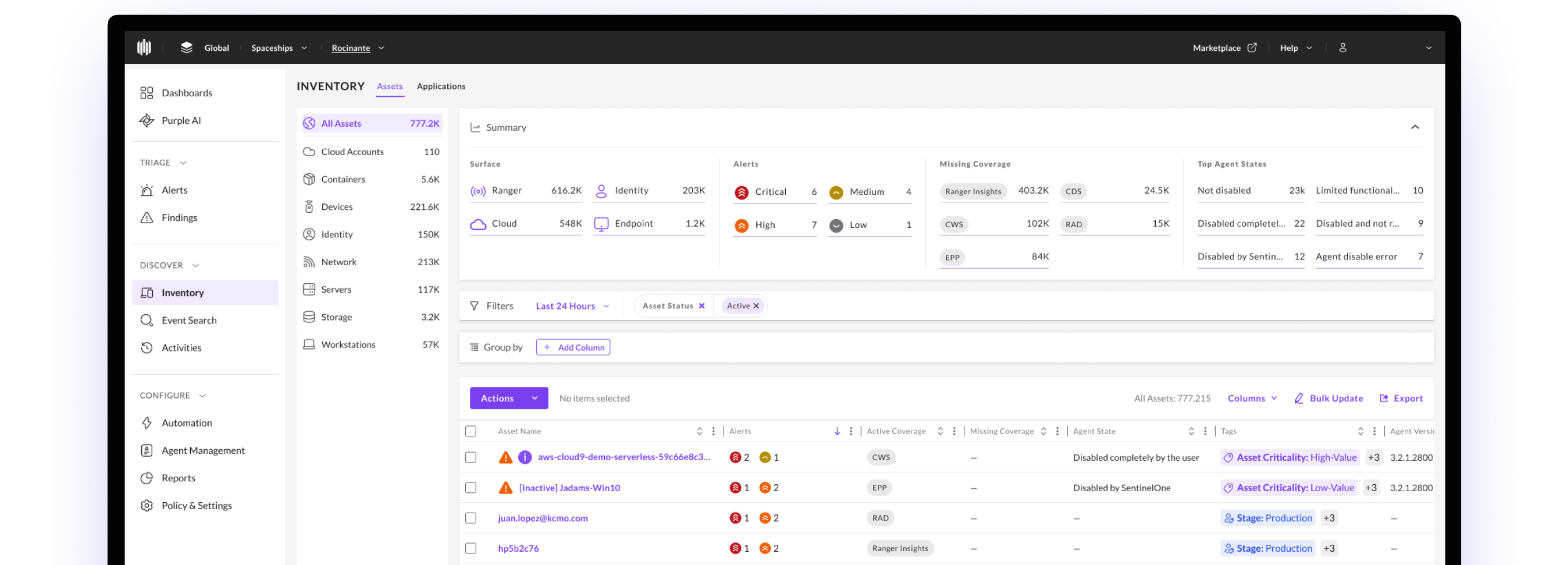
SentinelOne Singularity Cloud is a cloud workload security solution to protect virtual machines, containers, and Kubernetes environments. As part of the Singularity Platform, it combines runtime protection, behavioral detection, and autonomous response to deliver visibility and control over cloud-native workloads.
主な特徴は以下の通り:
- Runtime protection for cloud workloads: Continuously monitors runtime behavior of VMs, containers, and Kubernetes clusters to detect and block malicious actions using behavioral AI models.
- Autonomous detection and response: Automatically identifies indicators of compromise and remediates threats without manual intervention.
- Agent-based workload security: Uses lightweight agents to provide visibility into workload activity.
- Cloud-native threat intelligence: Integrates threat intelligence into detection workflows to stay ahead of evolving threats targeting cloud workloads.
- Kubernetes and container protection: Secures containerized workloads and orchestrators with runtime visibility, drift prevention, and behavioral analytics for Kubernetes environments.

Source: SentinelOne
4. Qualys Cloud Platform

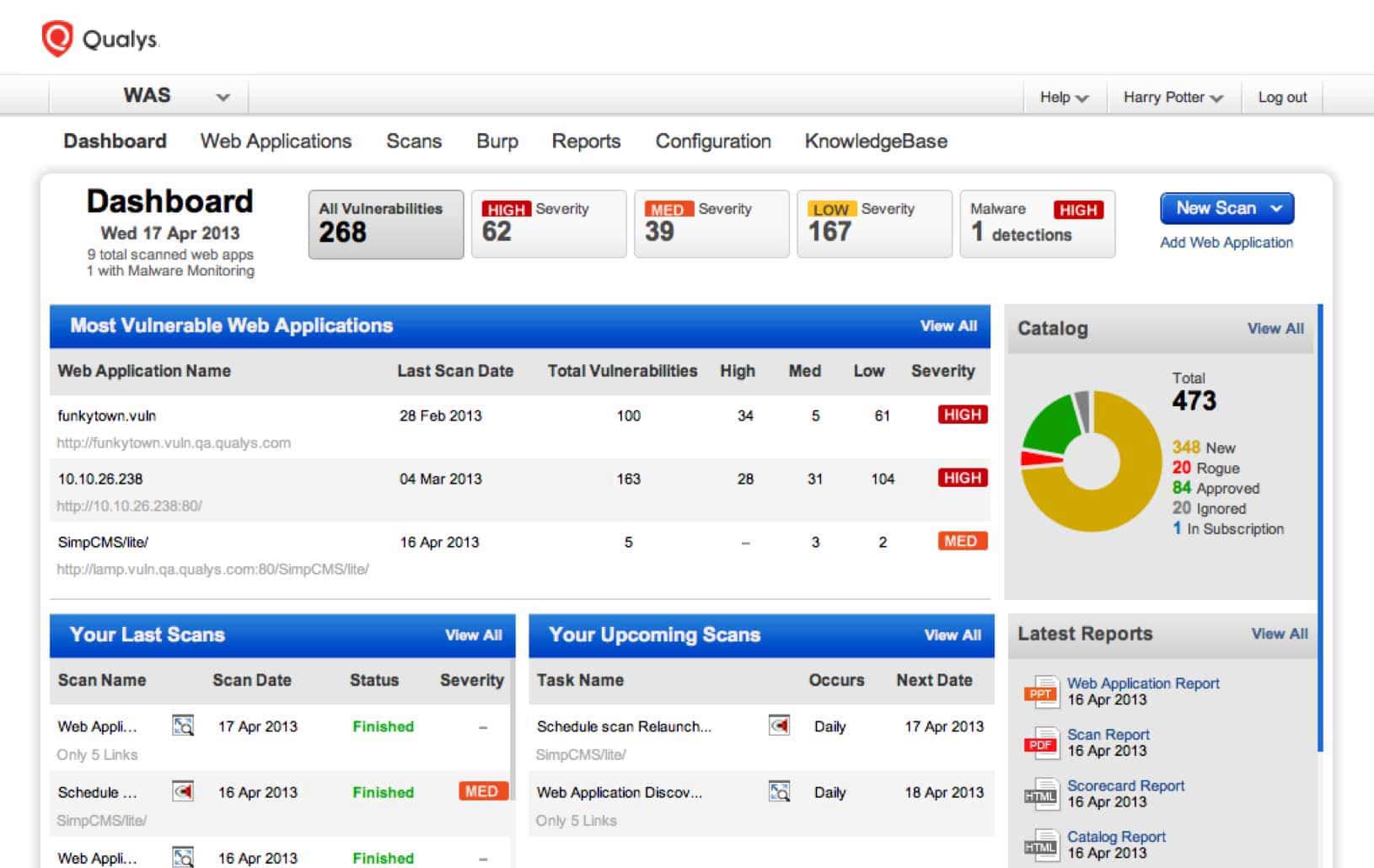
Qualys Cloud Platform is a cloud security and compliance solution that gives organizations visibility into their cloud assets and vulnerabilities. It continuously monitors workloads, configurations, and vulnerabilities across major cloud platforms like AWS, Azure, Google Cloud, and Oracle. It automates detection, prioritization, and remediation of security issues and compliance risks.
主な特徴は以下の通り:
- Asset visibility: Continuously discovers and classifies cloud assets, including instances, workloads, and services.
- Cloud inventory and security assessment: Qualys Cloud Inventory creates a full inventory of cloud workloads and infrastructure, while Cloud Security Assessment identifies misconfigurations and non-standard deployments across accounts and services.
- Vulnerability Management and Threat Prioritization: tracks vulnerabilities across cloud assets and uses threat intelligence to prioritize remediation based on risk impact.
- Policy compliance automation: Assesses and monitors cloud assets for compliance with internal policies and external regulations.
- Web application security: Scans web applications for vulnerabilities and integrates with a web application firewall (WAF) to block attacks and virtually patch issues.

Source: Qualys
5. Checkpoint CloudGuard

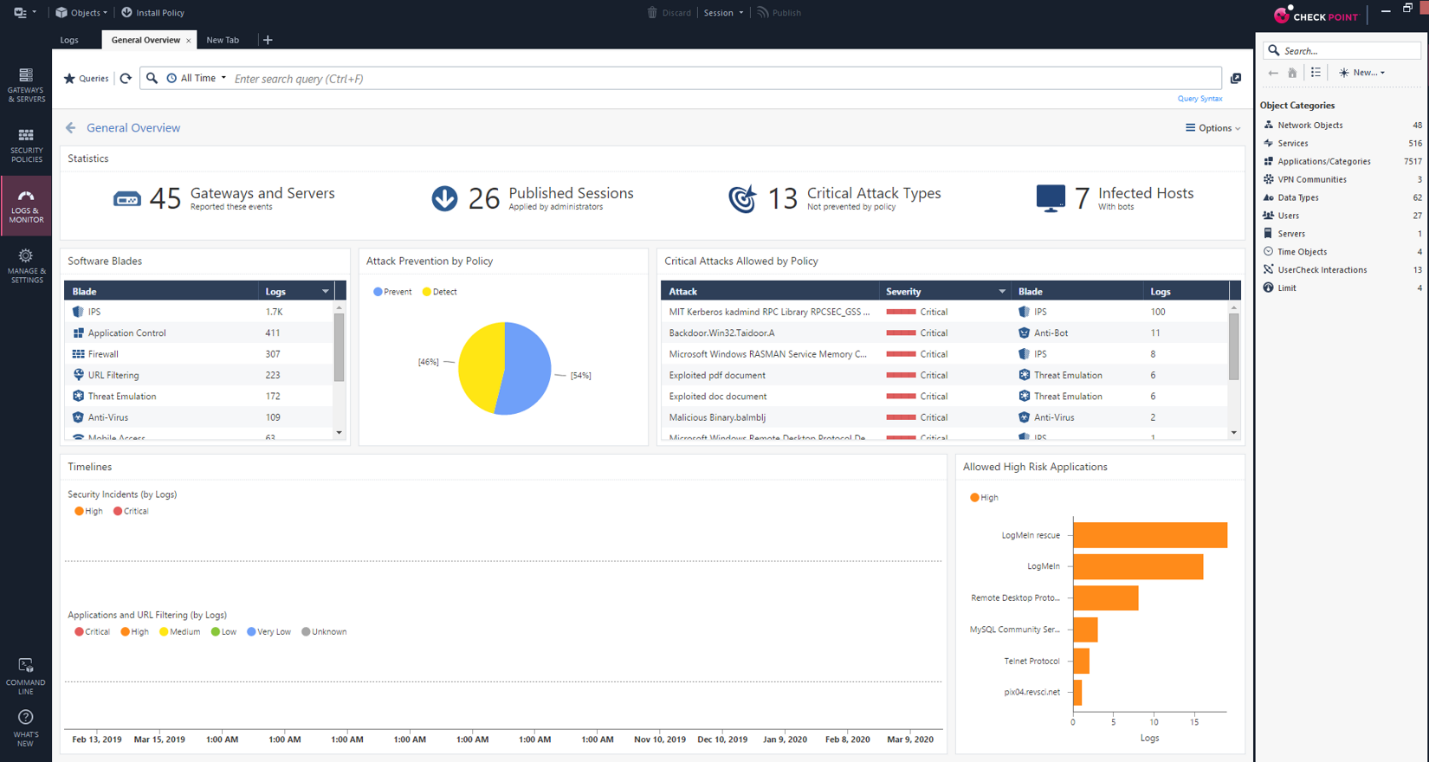
Check Point CloudGuard is a prevention-focused cloud security platform that delivers protection across applications, workloads, code, and network infrastructure. Intended to secure multicloud and hybrid environments, it integrates seamlessly with leading cloud providers and DevOps pipelines to block threats, detect misconfigurations, and prioritize risk across the application lifecycle.
主な特徴は以下の通り:
- CNAPP: Secures applications from development to deployment by identifying misconfigurations, enforcing security best practices, and preventing threats across workloads, containers, and cloud services.
- AI-based web application and API protection: Uses contextual AI to provide signature-less protection against known and zero-day attacks on web applications and APIs.
- Cloud network security: Implements cloud-native security gateways that offer threat prevention, traffic inspection, and unified policy enforcement across public, private, and hybrid cloud networks.
- Cloud detection and response: Delivers cloud visibility with threat intelligence, intrusion detection, network traffic analysis, and automated response capabilities.
- Code security: Scans infrastructure-as-code and source repositories to detect exposed credentials, insecure configurations, and risks in development workflows.

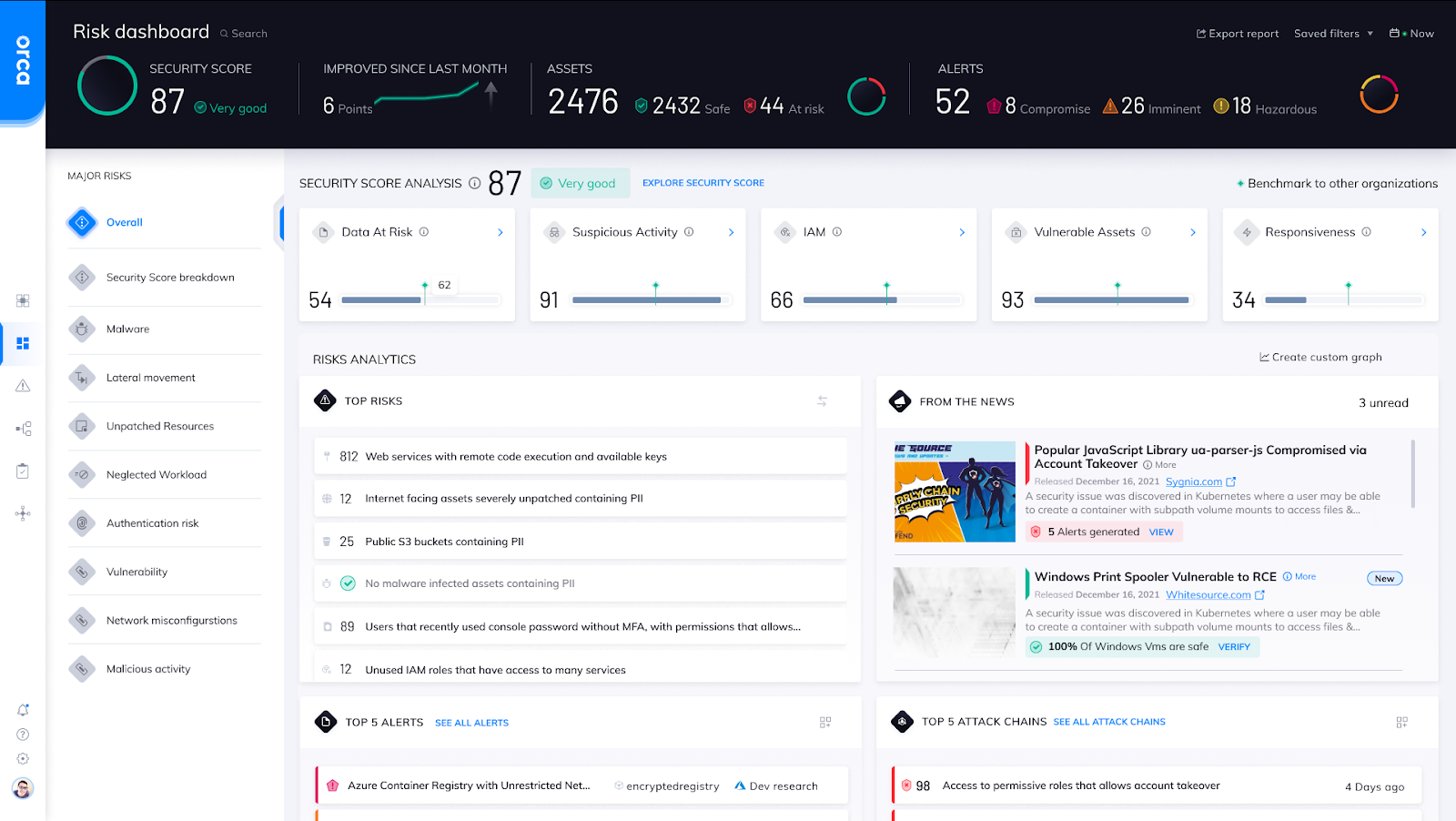
6. Orca Security

Orca Security is a cloud security platform that provides risk visibility and protection across multi-cloud environments without the operational burden of deploying agents. Designed to simplify cloud security, it delivers full-stack coverage from vulnerabilities and misconfigurations to identity risks, data exposure, and runtime threats.
主な特徴は以下の通り:
- Agentless visibility: Connects to cloud environments via API to scan and analyze assets.
- Unified risk context: Correlates data across vulnerabilities, misconfigurations, identities, APIs, and data to deliver a prioritized view of the most critical risks.
- Prioritized risk graphs and attack paths: Uses contextual analysis to map potential attack paths and identify high-risk combinations that represent real threats.
- Vulnerability and workload protection: Detects software vulnerabilities, malware, and misconfigurations across VMs, containers, and serverless workloads.
- Cloud Compliance and governance: Continuously assesses compliance posture against frameworks like CIS, GDPR, HIPAA, and PCI-DSS.

Source: Orca Security
7. Lacework FortiCNAPP

Lacework FortiCNAPP is a cloud-native application protection platform (CNAPP) to secure cloud environments from code to runtime. Built through the integration of Lacework’s behavioral analytics and Fortinet’s security capabilities, it consolidates cloud security functions into a single, AI-driven platform.
主な特徴は以下の通り:
- Unified CNAPP platform: Combines CSPM, KSPM, CIEM, CWPP, SAST, SCA, IaC security, and cloud detection and response into one platform.
- Context-aware risk prioritization: Visualizes relationships between risks, entities, and attack paths to assess exploitability and potential impact.
- Zero-day threat detection: Uses machine learning to detect unknown and early-stage threats like credential compromise, ransomware, and cryptojacking, without relying on static rules or signatures.
- Cloud identity management (CIEM): Continuously maps all users, groups, and roles across cloud environments, calculates net-effective permissions, and flags overprivileged identities for remediation.
- Cloud compliance automation: Continuously maps assets and configurations to standards such as PCI DSS, HIPAA, SOC 2, and ISO 27001.

Source: Fortinet
8. CrowdStrike Falcon

CrowdStrike Falcon® Cloud Security is a unified cloud-native application protection platform (CNAPP) to prevent breaches across the cloud lifecycle from code to runtime. Built on CrowdStrike’s Falcon platform, it combines agent-based and agentless protection in one console, helping protect workloads, containers, applications, and AI models.
主な特徴は以下の通り:
- Agent and agentless protection: Combines agent-based runtime protection and agentless scanning for visibility and defense across multi-cloud environments.
- Code-to-cloud coverage: Secures the full application lifecycle, including infrastructure (CSPM), software (ASPM), data (DSPM), and AI models (AI-SPM).
- Runtime security: Built on the Falcon sensor, provides visibility and defense for workloads, containers, and Kubernetes.
- Cloud detection and response (CDR): Accelerates incident response by using real-time telemetry, behavior analytics, and managed services.
- Adversary-focused threat intelligence: Tracks over 250 adversaries.

Source: CrowdStrike
クラウド・セキュリティ・ソフトウェアの選び方
ここでは、クラウド・セキュリティ・ソリューションを選択する際に考慮すべき重要な点を説明する:
パブリッククラウド対応
- ソリューションは複数のパブリッククラウドプロバイダーをサポートしていますか?
- 各クラウドプロバイダーで複数のアカウントを管理できますか?
- ソリューションのさまざまな機能に対して、きめ細かなアクセス制御を行っていますか?
コンプライアンスとポリシー
- ソリューションは、CISセキュリティベンチマーク、NISTクラウドセキュリティガイドライン、PCI DSSなどのコンプライアンス基準をサポートしていますか?
- カスタムセキュリティポリシーが可能か。
脅威の検出
- セキュリティの脆弱性をリアルタイムで検出しているか、また、どのような種類の通知を提供しているか。
- セキュリティの脆弱性をどのように可視化し、迅速な対応を可能にする実用的な情報を提供するのか。
- ソリューションは自動修復や脅威対応を行うことができるか、またその程度はどの程度か。
データの取り扱い
- ソリューションが保存できるデータ量と保存期間は?
- ソリューションは、クラウド・オブジェクト、サービス、ユーザー・アカウント間の関係を識別できるか?
- このソリューションは、書き込み権限がなくても動作しますか?
デベロッパーサポート
- セキュリティ問題を、開発者が行った特定の変更まで追跡できるか。
- どのようなサードパーティとの統合がサポートされているか?既存のセキュリティ・ツールとの連携は可能か?
- そのソリューションはAPIとサポート文書を提供していますか?
使いやすさ
- ソリューションは使いやすく、どの程度のトレーニング、文書化、サポートが受けられるか。
- ソリューションはどのくらいの頻度で更新され、更新には組織からのアクションが必要ですか?
エクサビーム:高度なセキュリティ分析で脅威検知を強化
Exabeam Fusion Enterprise Edition Incident Responderは、SIEM、行動分析、自動化、ネットワークの可視性を強力に組み合わせ、企業が脅威を検知、調査、対応する方法を変革します。ファイアウォールのログと、エンドポイント、クラウド環境、アイデンティティ・システム、その他のセキュリティ・ソースからのデータを相関させることにより、Exabeamは、通常であれば検出されない進化する脅威について、より深い洞察を提供します。
Exabeamは、行動分析によって静的なルールやシグネチャの枠を超え、クレデンシャルの不正使用、内部脅威、ネットワーク全体の横移動を示す異常な行動を特定します。通常のユーザーやエンティティの行動を長期にわたって分析することで、Exabeamは従来のセキュリティ・ツールが見落としていたリスクの高い行動を発見します。
自動化された調査は、異種のデータポイントを包括的な脅威のタイムラインにリンクすることでセキュリティ運用を合理化し、アナリストが手作業でインシデントをつなぎ合わせる時間を短縮します。これにより、チームは攻撃の根本原因を迅速に特定し、的確に対応できるようになります。