


現代の組織のためのインシデント対応5段階ガイド
ガイド
準備、検知、封じ込め、対応、復旧がいかにして業務への支障を軽減するか
このガイドでは、5段階からなるインシデント対応計画が、組織がセキュリティインシデントへの備え、検知、対応、および復旧を行う上でどのように役立つかを解説します。
セキュリティインシデントは、多くの場合、認証情報の不正使用や脆弱性の悪用から始まり、数週間から数ヶ月にわたって展開します。調査によると、対応プロセスが不明確であったり、検知が遅れたりすると、調査期間の長期化、業務への支障、およびインシデントによる全体的な影響が拡大することが分かっています。
このガイドでは、インシデント対応を5つの段階に分け、各段階が業務への影響を最小限に抑え、復旧作業を円滑に進める上で果たす役割について解説しています。また、実際のセキュリティ侵害事例やコストに関するデータを基に、セキュリティチームがインシデント発生前に実践できる具体的な計画策定の指針を示しています。
このガイドが役立つ主な質問
- 効果的なインシデント対応計画には、どのような5つの段階がありますか?
- インシデントは通常、どのように発生し、これらの段階を経て進行していくのでしょうか?
- なぜ事前の準備が捜査や復旧活動に影響を与えるのでしょうか?
- 発見の遅れは、インシデントの影響をどのように増大させるのでしょうか?
- インシデント発生後、チームはどのような点を確認・更新すべきでしょうか?
Exabeamが、セキュリティ運用チームがこれらの知見を活用するのをどのように支援するか
最近の報告によると、多くのインシデントは、IDの不正利用やシステムの異常な動作から始まっていることが示されています。
Exabeamセキュリティ運用チームが、ユーザー、サービスアカウント、自動化エージェントの経時的な挙動に焦点を当てることで、こうした知見を活用できるよう支援します。 行動分析により、ベースラインが確立され、認証情報の不正使用、異常なアクセスパターン、および横方向の移動に関連する逸脱が明らかになります。このアプローチは、環境内で認証を行い動作するAIエージェントを含む非人間的なIDにも適用され、チームにより広範な可視性と、より効率的な調査ワークフローを提供します。
このガイドをダウンロードして、インシデント対応の5つの段階と、各段階が業務への支障を軽減し、復旧作業の負担を軽減する仕組みについて理解しましょう。
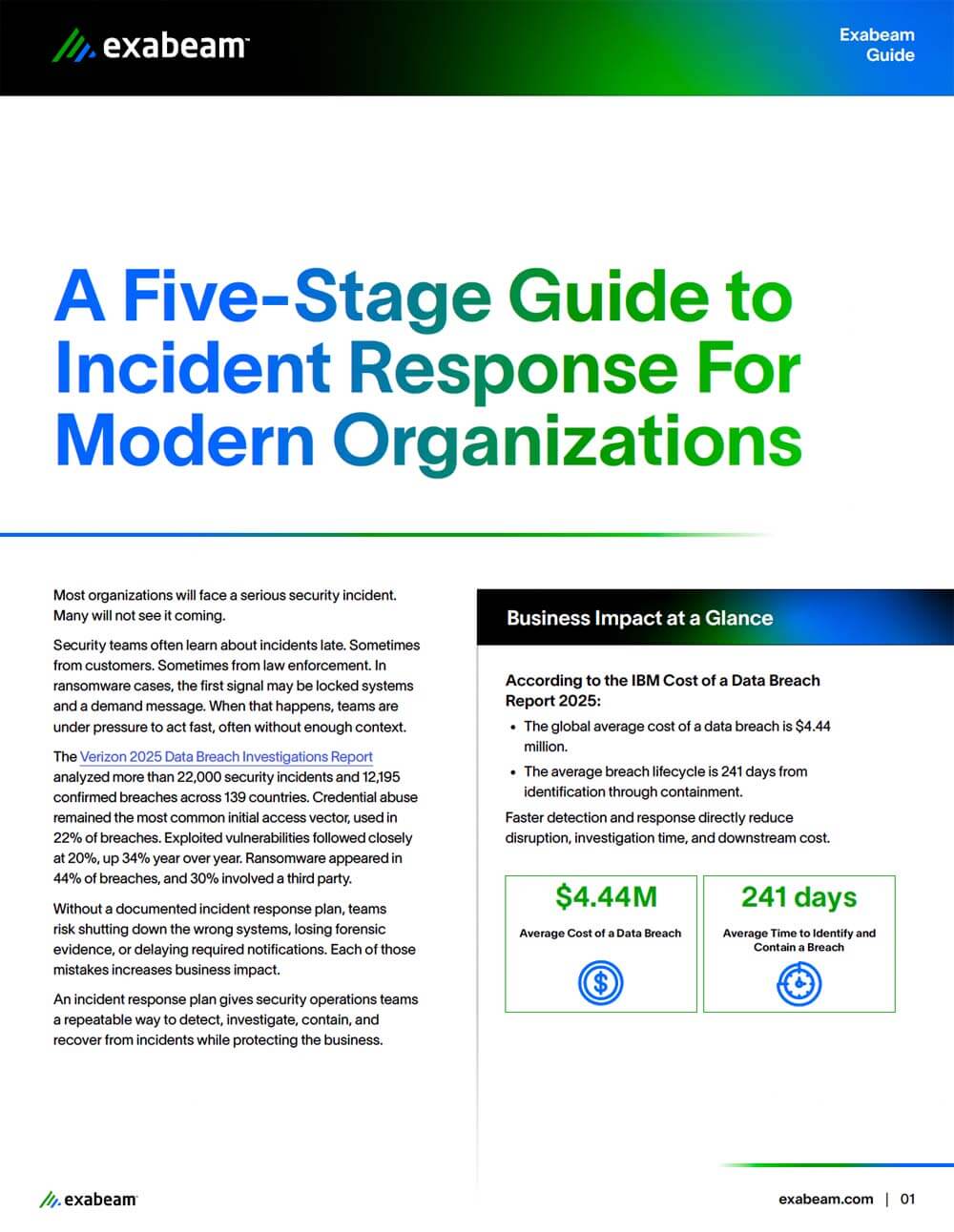
ガイドを入手:現代の組織のためのインシデント対応5段階ガイド
以下のフォームにご記入の上、送信してください。