


Fünf Wege, wie CISOs Cyberrisiken kommunizieren und das Unternehmen schützen können
Führung
Ein Rahmenwerk zur Erklärung von Cyberrisiken in betriebswirtschaftlichen Begriffen und zur Ausrichtung der Sicherheitsmaßnahmen an den Prioritäten der Organisation
Dieser Leitfaden beschreibt fünf Möglichkeiten, wie CISOs Cyberrisiken kommunizieren können, indem sie identitätsbezogene Aktivitäten mit den Auswirkungen auf das Geschäft verknüpfen.
Die Diskussionen über Cyberrisiken geraten oft ins Stocken, wenn sich Sicherheitsteams auf technische Details anstatt auf Geschäftsergebnisse konzentrieren. Lange Erkennungszeiten, Identitätsmissbrauch und unklare Zuständigkeiten erschweren es Führungskräften, die Gefährdung zu verstehen und frühzeitig zu handeln.
Dieser Leitfaden bietet einen strukturierten Ansatz zur Darstellung von Cyberrisiken in einer für Führungskräfte verständlichen Sprache. Anhand von fünf gezielten Maßnahmen unterstützt er CISOs dabei, Bedrohungen zu erläutern, die Beteiligten einzubinden und aufzuzeigen, wie verhaltensbasierte Erkennung die Auswirkungen auf das Geschäft reduziert.
Wichtige Fragen, die dieser Leitfaden beantwortet
- Wie können CISOs Cyberrisiken erklären, ohne auf technische Details zurückzugreifen?
- Warum ist Identitätsmissbrauch die Ursache vieler schwerwiegender Sicherheitsvorfälle?
- Wie wirken sich die Verhaltensweisen von Angreifern auf den Betrieb und die Finanzen aus?
- Welche Rolle spielt die Früherkennung bei der Begrenzung von Betriebsunterbrechungen?
- Wie können Sicherheitsmaßnahmen besser auf die Prioritäten der Führungsebene abgestimmt werden?
Wie ermöglicht Exabeam die Kommunikation von verhaltensbedingten Risiken?
Exabeam nutzt Verhaltensanalyse und dynamische Risikobewertung, um Sicherheitsteams dabei zu helfen, das Verhalten von Identitäten im Zeitverlauf zu verstehen. Durch die Fokussierung auf das Verhalten anstatt allein auf Warnmeldungen erhalten die Teams einen besseren Einblick in Risiken, Prioritäten bei Untersuchungen und potenzielle Auswirkungen auf das Geschäft.
Laden Sie den Leitfaden herunter, um fünf Wege kennenzulernen, wie Sie Cyberrisiken kommunizieren und Sicherheitsmaßnahmen mit den Geschäftszielen in Einklang bringen können.
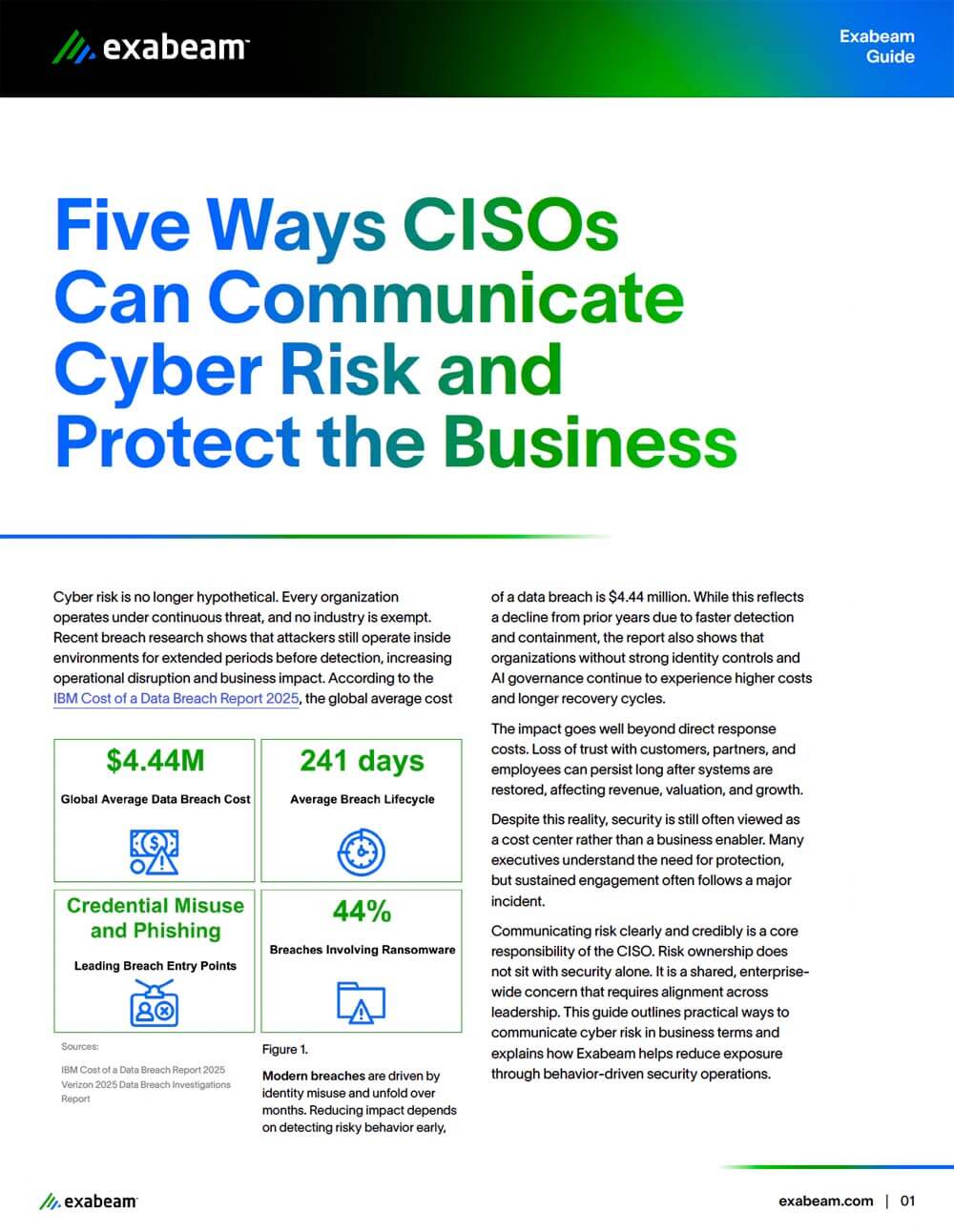
Leitfaden herunterladen: Fünf Wege, wie CISOs Cyberrisiken kommunizieren und das Unternehmen schützen können
Füllen Sie das untenstehende Formular aus und senden Sie es ab, um diese Ressource herunterzuladen.