- Home >
- Blog >
- SIEM Trends
Securing the Agentic Enterprise with Behavioral Analytics and AI Visibility
- Jun 09, 2026
- Ramy Ahmad
- 3 minutes to read
Table of Contents
By mid-2026, the question is no longer whether AI belongs in the enterprise. It’s already embedded in daily work, supporting research, development, customer engagement, and operations. AI agents now act on behalf of employees, automate decisions, and interact directly with enterprise data and systems.
This shift creates a new security challenge. As AI adoption accelerates, security operations teams must protect an expanding attack surface that includes not only people, but also autonomous and semi-autonomous agents. These agents operate at machine speed, chain actions together, and often hold broad access to sensitive resources.
Blocking AI Is Not a Strategy
Early attempts to restrict access to LLMs and AI tools proved ineffective. When official tools were blocked, employees turned to unmanaged accounts, personal devices, and unsanctioned services. This shadow usage reduced visibility and increased the risk of data exposure.
AI Adoption Risks and Trends
Recent research illustrates how deeply AI is embedded in enterprise operations:
- Widespread adoption: According to Deloitte’s 2026 State of AI in the Enterprise, 88% of organizations report regular AI use in at least one business function, up from roughly 55% in 2023
- Operational impact: A 2025 LinkedIn Talent Report found that teams using AI reclaim an average of 20% of their workweek through task automation and decision support.
- Governance gaps: Despite rapid adoption, only 20% of companies report having mature governance models for autonomous AI agents.
As AI becomes part of core workflows, security teams must assume that agents will interact with sensitive data, external services, and internal systems on a continuous basis.
AI Expands Insider Risk
AI doesn’t just introduce new external threats; it also accelerates insider risk by enabling both humans and machines to act faster and at greater scale.
Industry research shows that insider-related incidents continue to drive significant financial impact. At the same time, over-privileged or poorly governed AI agents can be misused or exploited to move data, access systems, or execute actions that bypass traditional controls.
Attackers are also adapting. Techniques such as prompt manipulation and model abuse are increasingly used to coerce AI agents into exposing proprietary data or sensitive information.
Securing the Agentic Enterprise With Exabeam
Traditional SIEM rules were designed to evaluate discrete events. AI-driven activity is different. An AI agent executes sequences of actions that include prompts, tool calls, data access, and API execution. Detecting risk requires understanding behavior over time, not isolated logs.
New-Scale Fusion is built to address this shift by applying behavioral analytics to both human users and AI agents.
Real-Time Visibility Across the AI Activity Lifecycle
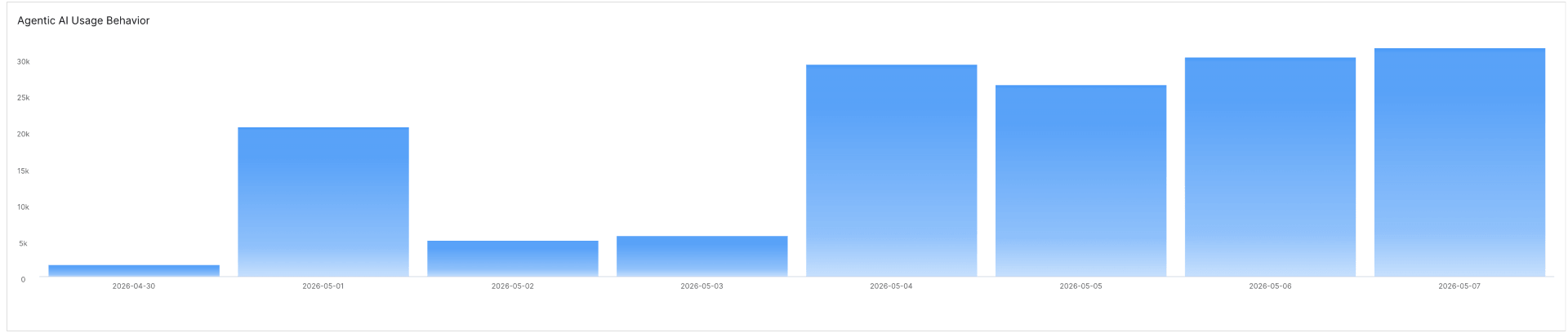
Security operations teams need to see how AI is used inside the organization. New-Scale Fusion provides visibility into AI interactions, usage patterns, and downstream activity.
This includes insight into which users interact with specific AI agents, whether third-party or internally developed, and how those agents access files, applications, and services. Instead ov viewing AI as a single endpoint, teams gain context into the full chain of activity.
Behavioral Baselines for Humans and Agents
Detecting risk requires understanding what is normal before identifying what is not.
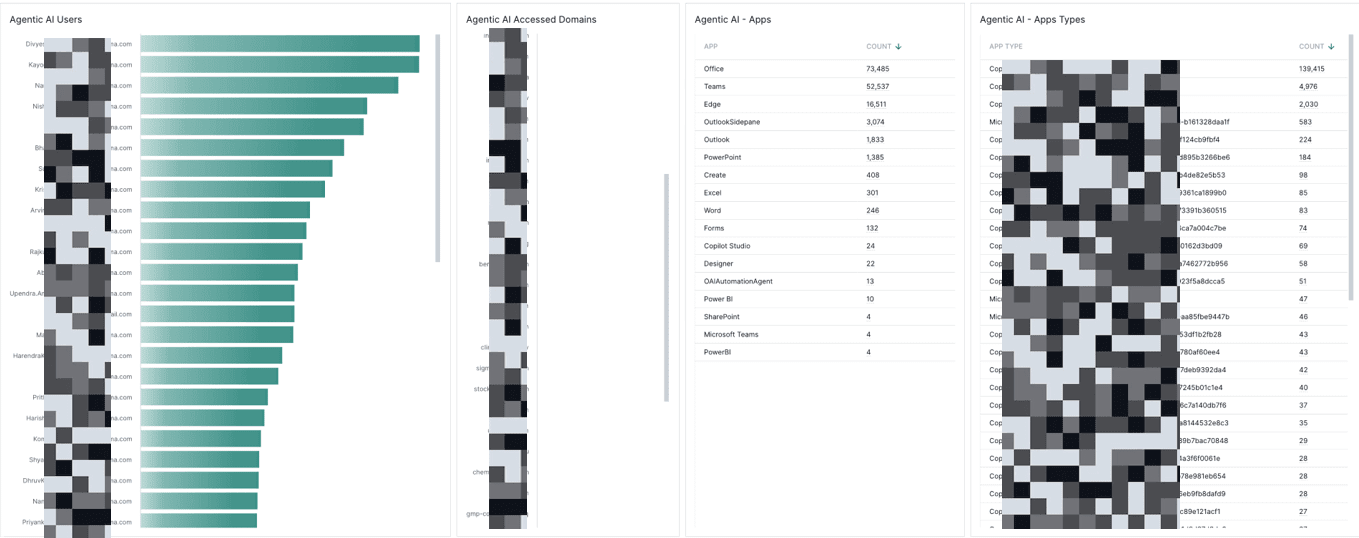
New-Scale Fusion applies user and entity behavior analytics (UEBA) together with Agent Behavior Analytics (ABA) to establish behavioral baselines for both people and machines. This dual approach allows security teams to correlate human intent with agent activity.
For example, unusual changes in how an employee interacts with AI tools can be evaluated alongside shifts in an agent’s behavior. Similarly, agents that begin accessing new data sources or issuing unexpected external calls can be identified early, before data movement escalates.
Detecting High-Speed and Subtle Data Movement
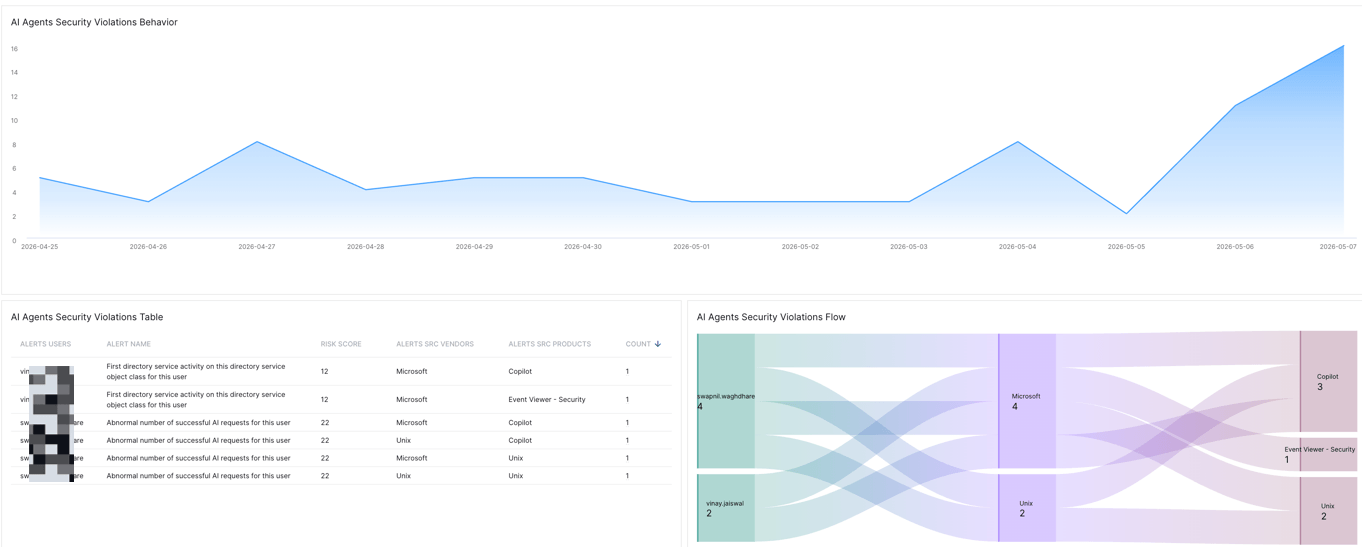
AI agents can move data quickly, but they can also operate quietly. Both patterns are difficult to detect with isolated alerts.
The Exabeam Session Data Model connects related activity into a unified timeline, allowing security teams to see how actions unfold across users, agents, and systems. This behavioral view supports faster investigation of potential data exposure, model manipulation, or misuse of privileged access.
Moving Forward With Visibility
Security operations can no longer rely on static controls to manage dynamic, AI-driven workflows. Enabling AI adoption while protecting sensitive data requires visibility into behavior, context, and risk across both humans and agents.
By focusing on behavioral analytics and agent-aware visibility, organizations can protect intellectual property and critical data while allowing teams to work effectively with AI.
Related resource:
To help security teams respond to modern threats, including AI-driven incidents, download A Five-Stage Guide to Incident Response for Modern Organizations today.

Ramy Ahmad
Senior Director, Solutions Engineering | iMETA (India, Middle East, Turkey, and Africa) | At Exabeam – LogRhythm, I proudly serve as the Principal Director of Solutions Engineering for the dynamic iMETA region, where I lead with a deep understanding of complex security solutions and an unwavering commitment to customer success. Through robust sales engineering strategies tailored to diverse market needs, I’ve helped elevate our impact across India, the Middle East, Turkey, and Africa. Our success is powered by a strategic blend of technical expertise and customer-centric innovation—driving growth, trust, and stronger cybersecurity postures for organizations across the region.
More posts by Ramy AhmadLearn More About Exabeam
Learn about the Exabeam platform and expand your knowledge of information security with our collection of white papers, podcasts, webinars, and more.