AI-Powered Security for Hybrid Cloud Environments: Top 8 Solutions Compared
- 18 minutes to read
Table of Contents
TL;DR: AI-powered security software for hybrid cloud environments uses machine learning, LLMs and agentic AI to detect, investigate, and respond to threats across on-premises and cloud. Exabeam is best for behavioral analytics for users and AI agents, Microsoft Sentinel fits Microsoft-centric SOCs, CrowdStrike fits cloud runtime defense, and Vectra AI fits network and identity attacks.
How Can AI Help Secure Hybrid Cloud Environments?
AI helps secure hybrid cloud environments by detecting, investigating, and responding to threats across public clouds, private infrastructure, and on-premises systems. It analyzes security telemetry from networks, workloads, endpoints, and identity providers to identify suspicious activity that may span multiple environments. Machine learning can detect unusual behavior, while AI agents can correlate events, investigate potential attack paths, and identify threats that isolated security tools might miss.
AI security platforms for hybrid cloud environments deliver autonomous threat detection and unified policy enforcement across on-premises data centers and cloud workloads. Securing a hybrid cloud setup means protecting data, identities, and infrastructure as they move between local servers and public clouds.
Main AI-powered capabilities for hybrid cloud security:
- Agentic security operations and multi-agent orchestration: Coordinates specialized AI agents to investigate threats and manage security workflows across cloud and on-premises systems.
- Autonomous alert triage and investigation: Collects evidence, correlates security events, and classifies alerts to reduce manual investigation work.
- AI-powered threat hunting: Develops and tests threat hypotheses using security telemetry to identify malicious activity that existing alerts may miss.
- AI-driven detection engineering: Generates, tests, and improves detection rules based on emerging threats, observed activity, and coverage gaps.
- Contextual risk and exposure analysis: Combines vulnerabilities, identity permissions, asset criticality, and attack paths to prioritize exploitable security weaknesses.
- AI-assisted identity threat investigation: Detects suspicious authentication, privilege escalation, and credential misuse involving users, service accounts, and workload identities.
- Automated incident reconstruction and root cause analysis: Connects events across security systems to reconstruct attack sequences and identify likely entry points and affected resources.
- Agentic incident response and remediation: Recommends or executes approved containment actions, such as revoking sessions, disabling compromised accounts, or isolating affected workloads.
- Natural-language security investigation and query generation: Converts analyst questions into security queries, retrieves relevant telemetry, and supports evidence-based investigations.
- Continuous security posture assessment and proactive remediation: Monitors configurations, permissions, and vulnerabilities across hybrid infrastructure and recommends corrective actions as risks change.
This is part of a series of articles about agentic AI security
Quick Comparison: AI-Powered Security Solutions for Hybrid Cloud Environments
The table below summarizes the key differences between the AI security platforms covered in this guide. We explore each platform in more detail in the sections that follow.
| Category | Solution | Best For | Key Strengths | Things to Consider |
| AI-Driven Security Operations Platforms | Exabeam New-Scale Fusion | Behavioral analytics for users, service accounts, and AI agents | UEBA, dynamic risk scoring, Nova agents, open integrations | Legacy and newer analytics versions can coexist |
| AI-Driven Security Operations Platforms | Microsoft Sentinel | Microsoft-centric SOCs | Built-in SOAR, UEBA, data lake, Security Copilot | Ingestion-based costs, KQL learning curve |
| AI-Driven Security Operations Platforms | Google Security Operations | Fast search over large telemetry volumes | Curated detections, Google threat intel, Gemini | YARA-L and UDM learning curve, custom parsers |
| AI-Driven Security Operations Platforms | Palo Alto Networks Cortex XSIAM | Consolidating SIEM, XDR, and SOAR | Unified data layer, ML detections, AgentiX automation | Complex, resource-intensive implementation |
| AI-Driven Cloud and Network Threat Detection | CrowdStrike Falcon Cloud Security | Cloud workload runtime protection | Agent and agentless coverage, real-time CDR | Cost and module packaging |
| AI-Driven Cloud and Network Threat Detection | SentinelOne Singularity Cloud Security | CNAPP with runtime workload defense | Verified exploit paths, runtime protection, Purple AI | Policy setup effort, limited custom dashboards |
| AI-Driven Cloud and Network Threat Detection | Vectra AI Platform | Attacker behavior across network, identity, and cloud | Agentless NDR, AI triage and stitching | Limited reporting, early tuning |
| AI-Driven Cloud and Network Threat Detection | Darktrace / HYBRID NETWORK | Anomaly detection across network, cloud, and OT | Organization-specific baselines, autonomous response | Alert tuning, costs rise with coverage |
Why Is Hybrid Cloud Security Challenging?
Security Data Is Distributed Across Multiple Environments
Hybrid cloud infrastructure generates security data in many locations. Public cloud platforms, private clouds, on-premises servers, endpoints, applications, and network devices often use different logging formats and monitoring tools. This fragmentation makes it difficult to maintain a complete view of activity.
Security teams must collect and normalize these data sources before they can analyze events consistently. Gaps in logging or telemetry can create blind spots, while large data volumes can make manual analysis impractical.
Related content: Read our guide to multi-cloud security
Users and Identities Operate Across Cloud and On-Premises Systems
Users, service accounts, and workloads may access resources across several identity systems. Organizations often combine cloud identity providers with on-premises directories, role-based access controls, API credentials, and machine identities.
This creates complex trust relationships and makes access harder to monitor. A compromised identity can move between environments or gain additional privileges without triggering a single obvious alert. Security controls must therefore track identity activity across the entire hybrid environment.
Security Teams Must Correlate Signals Across Different Platforms
A security event in one platform may appear harmless when viewed alone. Its significance can become clear only when it is connected with events elsewhere. For example, an unusual authentication event in a cloud service may precede access to an on-premises system and a large data transfer.
Correlating these signals requires consistent timestamps, normalized event data, and context about identities, assets, and permissions. Without this correlation, security teams may receive many isolated alerts instead of a clear view of an attack sequence.
How Does AI Improve Security in Hybrid Cloud Environments?
Investigate Threats Across Cloud and On-Premises Systems
AI security agents can investigate incidents that involve multiple infrastructure environments without requiring analysts to manually switch between security tools. Using LLM reasoning, agents can identify relevant evidence, query connected systems, enrich findings with threat intelligence, and build a more complete picture of suspicious activity.
For example, an AI agent investigating compromised credentials might examine cloud authentication logs, review changes to identity permissions, retrieve endpoint activity, and inspect connections to on-premises servers. Rather than simply correlating predefined events, it can determine which additional evidence is needed and use available tools to investigate potential attack paths.
This approach helps security teams investigate attacks that cross traditional infrastructure boundaries. It is particularly valuable when attackers exploit legitimate identities, established trust relationships, or cloud management interfaces to move between environments.
Automate Security Alert Triage With Contextual Reasoning
Modern AI agents can evaluate security alerts, investigate their underlying evidence, and produce classification decisions without requiring an analyst to direct every step. Unlike earlier systems that primarily assigned anomaly scores or applied fixed classification rules, reasoning-based agents can dynamically select investigative tools and evaluate several possible explanations for suspicious activity.
In a hybrid environment, an agent might examine an unusual authentication event, determine whether the account recently received new permissions, and investigate whether related endpoint or workload activity indicates compromise. It can then provide a verdict with supporting evidence and explain why further investigation is or is not necessary.
Automating routine investigations helps reduce repetitive work and allows analysts to concentrate on complex incidents. Depending on the platform and configured permissions, agents may also close supported false-positive alerts or escalate incidents that require human intervention.
Identify Emerging Threats Through Autonomous Threat Hunting
Traditional threat hunting relies heavily on analysts developing hypotheses, writing queries, and investigating the results. Agentic AI extends this process by allowing security agents to formulate investigation hypotheses, search available telemetry, evaluate findings, and refine searches based on newly discovered evidence.
An agent might use recent threat intelligence to identify suspicious authentication sequences, unusual cloud API activity, or potential lateral movement across hybrid identity infrastructure. If an initial query identifies an abnormal pattern, the agent can investigate related accounts, devices, and workloads rather than stopping at the first result.
This enables more continuous and adaptive threat hunting. AI agents can help identify previously overlooked attack paths and emerging techniques, although their findings still require validation against reliable security evidence.
Adapt Security Detections to New Attack Techniques
Hybrid cloud environments change frequently as organizations deploy new workloads, update infrastructure, and introduce new services. Static detection rules can become less effective when attackers change their techniques or exploit new vulnerabilities.
AI-powered detection engineering can analyze threat intelligence, existing detection coverage, environmental context, and suspicious activity to identify gaps in security monitoring. Specialized agents can then generate detection logic, create test cases, and validate proposed rules against representative events before deployment.
This shifts detection engineering toward a more adaptive process. Instead of relying exclusively on analysts to manually create and maintain every detection, AI can support continuous improvements as threats and infrastructure evolve. Human review and testing remain important to prevent unreliable detections and excessive false positives.
Coordinate Investigations and Response Across Security Tools
An important development in modern security AI is the ability to orchestrate multiple agents and tools within a single workflow. Instead of operating as an isolated assistant, an AI agent can delegate specialized tasks to other agents, exchange investigation context, and coordinate activities across security platforms.
For example, one agent might investigate an identity compromise, another could assess the affected cloud workloads, and a third could evaluate potential data exposure. Their findings can be combined to determine the scope of the incident and recommend an appropriate response. Integrations with security orchestration tools can then translate approved recommendations into actions.
This approach can reduce the fragmentation caused by separate cloud, endpoint, identity, and network security systems. Organizations should establish permission boundaries, approval requirements, and audit trails so that agents cannot make unauthorized or disruptive changes to production infrastructure.
Which AI-Powered Capabilities are Important for Securing Hybrid Environments?
1. Agentic Security Operations and Multi-Agent Orchestration
Agentic security operations enable AI agents to perform multi-step security tasks using reasoning models, connected tools, and defined operational objectives. Agents can collect evidence, make decisions about subsequent investigative steps, and coordinate workflows without requiring continuous analyst input.
Multi-agent orchestration extends these capabilities by assigning specialized responsibilities to different agents, such as cloud investigation, identity analysis, threat intelligence, or incident response. A shared orchestration layer can preserve context across agents and security platforms, reducing the need for manual handoffs.
2. Autonomous Alert Triage and Investigation
Autonomous triage agents evaluate incoming alerts, retrieve relevant context, and determine whether the evidence indicates a genuine threat. They can use LLM-based reasoning, threat intelligence, historical incidents, and security tool integrations to investigate supported alert types.
Unlike conventional alert scoring, these agents can dynamically perform investigative actions, such as retrieving process histories, checking identity permissions, or searching for related activity. Their outputs may include classification verdicts, supporting evidence, incident summaries, and recommendations for further investigation.
3. AI-Powered Threat Hunting
AI-powered threat hunting uses reasoning models and autonomous agents to search for malicious activity that existing security alerts have not identified. Agents can develop hypotheses based on threat intelligence, investigate suspicious patterns, and expand searches when new evidence emerges.
For hybrid environments, this capability is particularly useful for identifying attacks involving cloud identities, compromised endpoints, lateral movement, and unexpected access to on-premises infrastructure. Effective implementations support iterative investigation rather than limiting AI to natural-language query generation.
4. AI-Driven Detection Engineering
AI-driven detection engineering helps security teams create, improve, and validate detection rules using threat intelligence and observed activity. Specialized AI agents can assess existing detection coverage, identify potential gaps, and generate new detection logic for emerging threats.
These systems can also create synthetic events or testing scenarios to evaluate proposed rules before deployment. This helps organizations maintain detection coverage as cloud services, applications, infrastructure configurations, and attacker techniques change.
5. Contextual Risk and Exposure Analysis
Contextual risk analysis combines information about vulnerabilities, asset criticality, identity permissions, attack paths, security configurations, and threat intelligence. Modern AI models can reason over these relationships to identify which weaknesses present meaningful security risks.
For example, an AI agent might determine that a vulnerable cloud workload is especially dangerous because it is externally accessible, uses an overprivileged identity, and can reach sensitive on-premises systems. This provides more actionable context than evaluating the vulnerability’s severity score in isolation.
6. AI-Assisted Identity Threat Investigation
AI-assisted identity investigation analyzes suspicious activity involving human users, service accounts, workload identities, and AI agents. It can examine authentication events, permission changes, access relationships, and activity across cloud identity providers and on-premises directories.
Reasoning-based AI agents can investigate how compromised credentials might be used to escalate privileges or move between environments. They can also identify potentially excessive permissions, correlate identity activity with endpoint and cloud telemetry, and recommend access restrictions or credential revocation when supported by evidence.
7. Automated Incident Reconstruction and Root Cause Analysis
AI investigation systems can reconstruct an incident by gathering evidence from different sources and organizing it into a coherent sequence of events. LLM-based reasoning can help interpret relationships between authentication activity, process execution, cloud API calls, network connections, and configuration changes.
Beyond summarizing an incident timeline, AI agents can investigate competing explanations and retrieve additional evidence to identify the likely entry point, affected systems, and potential root cause. Their conclusions should include supporting artifacts and distinguish confirmed facts from inferred attack steps.
8. Agentic Incident Response and Remediation
Agentic incident response combines AI reasoning with security orchestration and automation to recommend or execute defensive actions. Depending on the integration and authorization model, agents may initiate workflows to contain compromised endpoints, revoke sessions, disable accounts, or update security policies.
Modern implementations can combine dynamic AI investigations with deterministic response playbooks. Low-risk, predefined actions may be automated, while disruptive operations, such as isolating critical production workloads or changing privileged access, can require explicit analyst approval. This balances faster response with operational control.
9. Natural-Language Security Investigation and Query Generation
Generative AI interfaces allow security analysts to investigate hybrid environments using natural-language instructions. Instead of manually constructing queries for different security platforms, analysts can request information about suspicious identities, affected cloud resources, or related incident activity.
More advanced systems extend beyond conversational assistance by generating queries, executing them through authorized tools, interpreting results, and performing additional investigative steps. This can simplify interactions with complex security platforms while enabling analysts to review underlying evidence rather than relying solely on AI-generated summaries.
10. Continuous Security Posture Assessment and Proactive Remediation
AI-powered posture assessment can help security teams identify weaknesses across cloud configurations, identities, workloads, and connected infrastructure. Reasoning models can evaluate how individual misconfigurations and vulnerabilities interact, including whether they create exploitable attack paths between cloud and on-premises resources.
Specialized agents can continuously reassess exposure as environments change, prioritize weaknesses based on potential impact, and recommend corrective actions. Where supported, they can also prepare remediation workflows or configuration changes for validation and approval, enabling more proactive risk reduction.
Notable AI Security Software for Hybrid Cloud Environments
How we selected these tools: We shortlisted AI security software for hybrid cloud environments based on cross-environment data collection and normalization, behavioral analytics, AI-driven detection and event correlation, investigation support, and automated response.
AI-Driven Security Operations Platforms
1. Exabeam New-Scale Fusion

Best for: Hybrid SOCs that need behavioral analytics for users and AI agents
Strengths: UEBA, dynamic risk scoring, and Exabeam Nova AI for investigation
Things to consider: Legacy and newer analytics versions can coexist in some setups
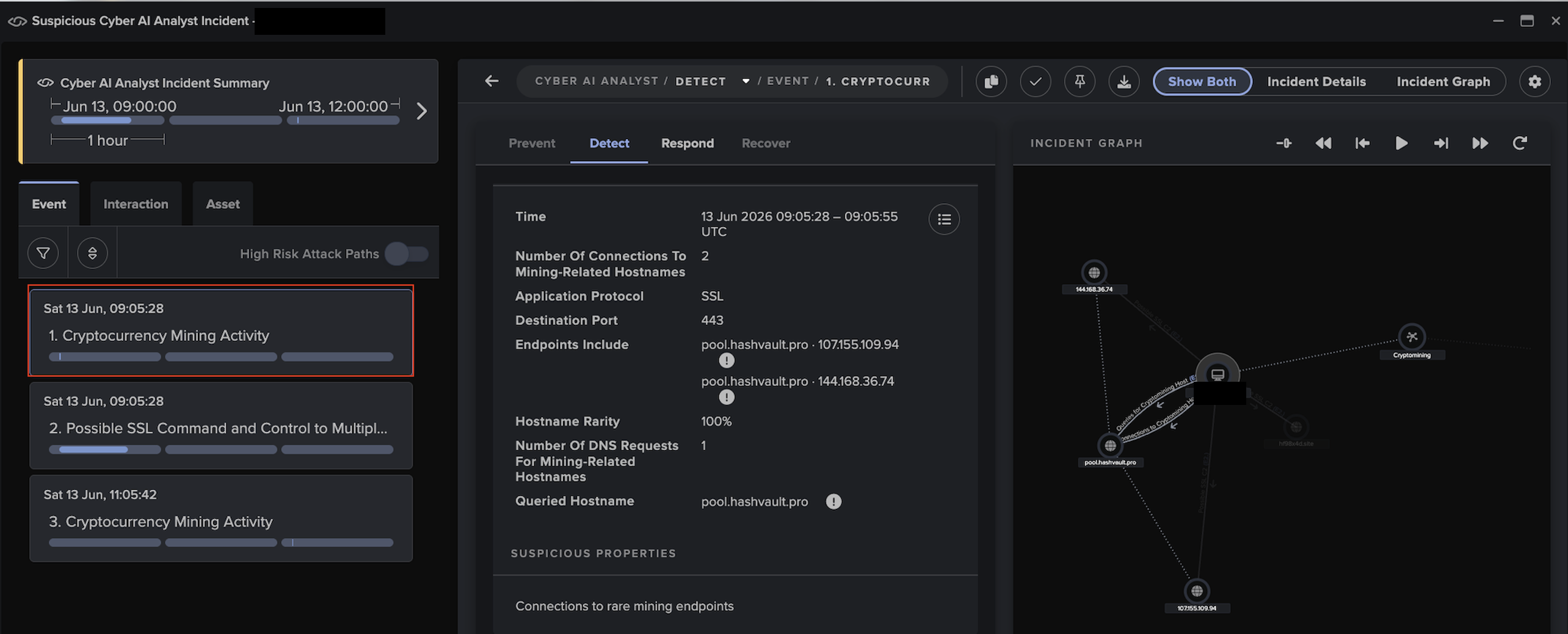
Exabeam New-Scale Fusion is a cloud-native security operations platform that combines New-Scale SIEM and New-Scale Analytics in one environment. It ingests and normalizes log data from on-premises, cloud, and third-party sources, then applies behavioral baselining and dynamic risk scoring to users, devices, service accounts, applications, and AI agents.
Nova AI agents run across the platform to collect context, run secondary searches, and assist with triage during investigations. Organizations can deploy New-Scale Fusion as a full SIEM replacement, or add New-Scale Analytics and automation on top of an existing SIEM.
Key features include:
- Log management and normalization: Ingests, parses, stores, and searches data at scale. Events are normalized to a Common Information Model (CIM) and enriched at ingestion, so they are immediately ready for search, investigation, and analytics.
- Behavioral analytics and risk scoring: New-Scale Analytics builds behavioral baselines for human and non-human entities and applies dynamic risk scoring to detect insider threats, credential misuse, and attacks that static rules can miss.
- Agent Behavior Analytics (ABA): Extends behavioral monitoring to non-human identities, ensuring automated activity from systems and tools is analyzed alongside users and service accounts.
- Exabeam Nova AI: A platform-wide AI sidebar that keeps context across screens, collects background context, runs secondary searches, and supports AI-assisted rule creation, tuning, and conversion.
- Attack Surface Insights: Aggregates data from existing tools into entity profiles with contextual attributes and relationships, which analysts use to understand exposure and prioritize risk.
- Investigation and automation: Machine-built timelines support investigations, and low-code automation and standards-based APIs connect to more than 1,000 tools. An MCP server extends platform data into external workflows and automated tools.
- Open integrations and federated search: Connects to hundreds of on-premises and cloud products through prebuilt integrations, APIs, syslog, and log aggregators. Data can be routed to third-party storage and searched in place.
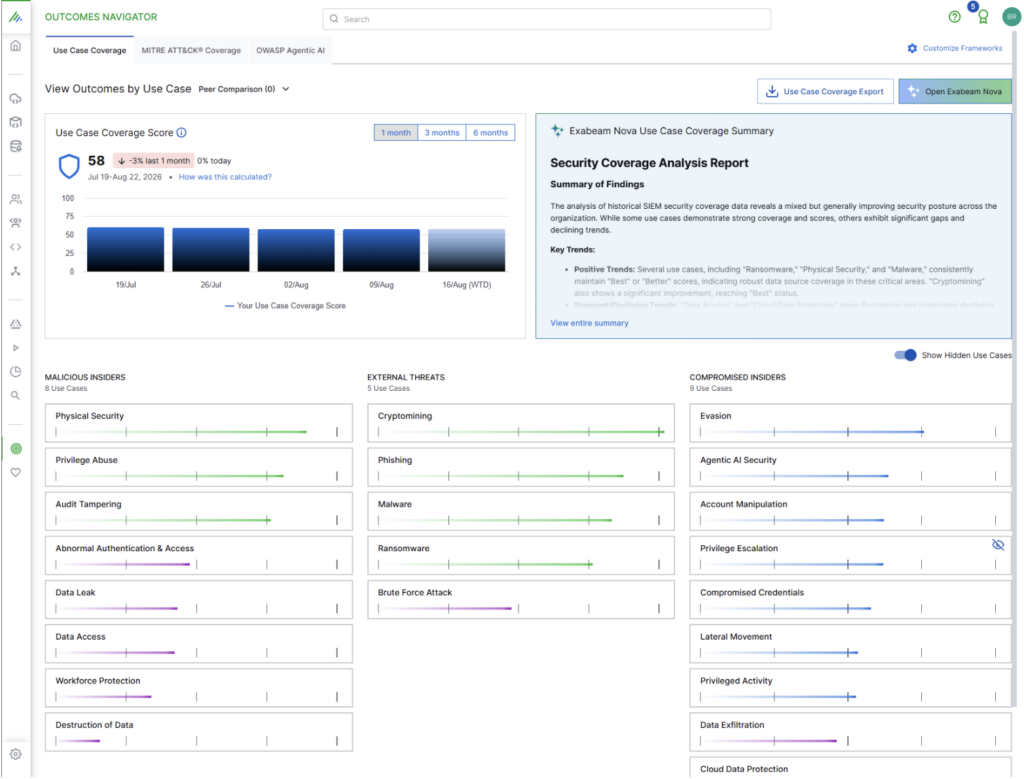
- Outcomes-focused content: Prebuilt detection content is mapped to MITRE ATT&CK, the OWASP Agentic Top 10, and compliance frameworks, with benchmark assessments for coverage gaps.
Limitations (as reported by users on Gartner Peer Insights):
- Coexisting analytics versions: Organizations with older and newer behavioral analytics offerings may need to choose which version to standardize on.
- Default rule visibility: Locating and adjusting the default rule sets can take some effort, and some teams add their own detection layer on top.
- Content across versions: Detection content published for different product versions can be hard to map to the version in use.
2. Microsoft Sentinel

Best for: Cloud-native SIEM for teams invested in Microsoft Defender and Azure
Strengths: Built-in SOAR, UEBA, data lake, and Security Copilot assistance
Things to consider: Ingestion-based costs and a KQL learning curve for new analysts
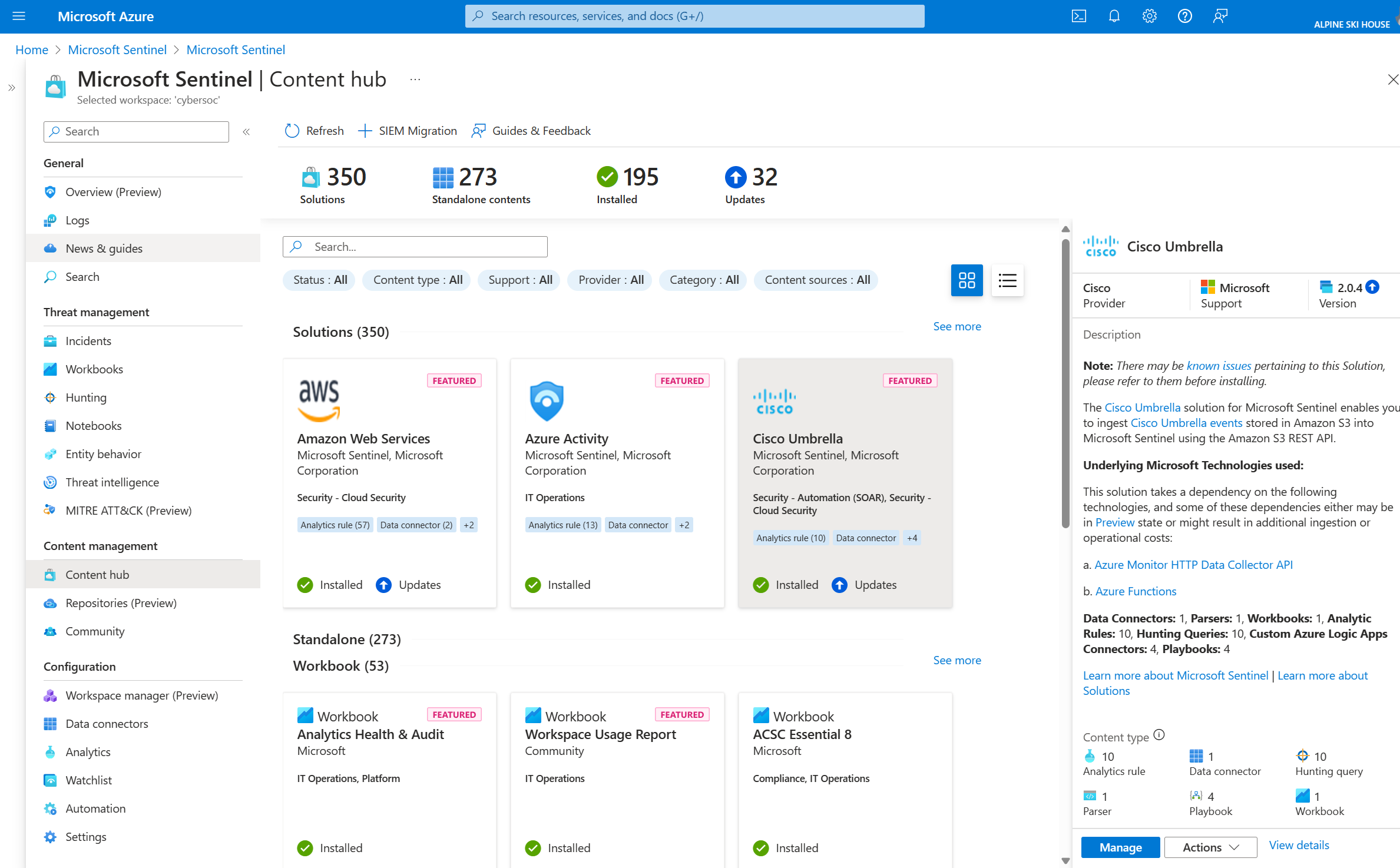
Microsoft Sentinel is a cloud-native SIEM that collects and correlates security data across multi-cloud and multiplatform environments. It includes SOAR, user and entity behavior analytics (UEBA), and threat intelligence, and runs in the Microsoft Defender portal alongside Defender XDR for unified incident handling.
Data comes in through 400+ connectors and a codeless connector framework, and long-term logs can be kept in a built-in data lake at lower cost. Security Copilot is built in to summarize incidents and draft Kusto Query Language (KQL) queries.
Key features include:
- Cross-environment correlation: Correlates signals across identities, endpoints, cloud apps, and infrastructure, using AI-driven detection to surface lateral movement, phishing, and insider threats.
- Built-in UEBA: Baselines normal activity for users and entities and flags behavior that rule-based detection misses, such as compromised accounts and insider risk.
- Built-in SOAR: Out-of-the-box playbooks and codeless automation handle triage and response steps for incidents.
- Data connectors: 400+ native connectors and a codeless connector framework bring in data from Microsoft services, AWS, Google Cloud, on-premises infrastructure, and third-party security tools.
- Microsoft Sentinel data lake: Stores and queries years of security data in a lower-cost tier, keeping logs available for hunting, compliance, and AI-driven detection.
- Security Copilot: Summarizes incidents, drafts KQL queries, and recommends next steps within the analyst workflow.
- SOC optimization and migration: AI-driven recommendations for rule tuning and ingestion costs, plus an AI-assisted migration tool that converts Splunk and QRadar detections into Sentinel detections.
Limitations (as reported by users on G2):
- Ingestion-based costs: Costs can rise quickly as log volumes grow, especially with verbose sources such as firewall logs, so log sources and retention need planning.
- KQL learning curve: Writing custom queries and detections in KQL takes time for analysts who are new to the language.
- Rule tuning: Some out-of-the-box analytics rules generate noisy alerts and need tuning before they are useful.
- Data structure: Different log types may require separate data collection rules and tables, and normalization functions (ASIM) can be slow.
- Non-Microsoft integrations: Connecting legacy systems and some third-party tools can be complex and time-consuming.

Source: Microsoft
3. Google Security Operations
Best for: Teams needing fast search over large volumes of hybrid telemetry
Strengths: Curated detections, Google threat intel, and Gemini assistance
Things to consider: YARA-L and UDM learning curve; custom parsers for niche sources
Google Security Operations (Google SecOps) is a cloud-native security operations platform that combines SIEM, SOAR, and threat intelligence. It ingests telemetry from on-premises systems and all major cloud providers, and applies curated detections maintained by Google threat researchers alongside custom rules written in YARA-L.
Investigations use threat-centric case management, alert graphing, and automatic stitching of related entities. Gemini adds natural language search, case summaries, and response recommendations. Pricing is package-based and tied to ingestion, with 12 months of telemetry retention included.
Key features include:
- Curated and custom detections: Out-of-the-box detections maintained by Google experts cover on-premises and cloud threats, and teams can write custom detections in YARA-L.
- Data pipeline management: Routes, filters, redacts, and transforms security telemetry before analysis. The depth of these options depends on the package.
- Context-rich investigation: Threat-centric case management, interactive alert graphs, and automatic entity stitching, combined with search across collected data.
- Gemini in security operations: Natural language search, an interactive investigation assistant, AI-generated case summaries, recommended response actions, and help creating detections and playbooks.
- SOAR playbooks: Automates common response actions and orchestrates 300+ tools, including EDR, identity management, and network security, with an auto-documenting case wall.
- UEBA: In the Enterprise package, YARA-L rules for user and entity behavior analytics, a risk dashboard, and out-of-the-box behavior-style detections.
- Applied threat intelligence: In the Enterprise Plus package, access to Google Threat Intelligence, including Mandiant and VirusTotal, with ML-based prioritization of indicator matches.
Limitations (as reported by users on G2):
- Query language learning curve: Analysts moving from SPL or KQL need training to work with YARA-L and the Unified Data Model (UDM).
- Custom parser effort: Non-standard or in-house log sources may require custom parsers, which can slow onboarding.
- Dashboard and reporting flexibility: Native dashboards and executive reporting can feel rigid, and some teams export data to external BI tools.
- SIEM and SOAR consistency: Navigation and workflows can differ between the SIEM and SOAR parts of the platform.
- Entry cost for smaller teams: The base package cost can be high for smaller security teams.
4. Palo Alto Networks Cortex XSIAM

Best for: Enterprises consolidating SIEM, XDR, and SOAR on one platform
Strengths: Unified data layer, ML detections, and agentic response automation
Things to consider: Implementation can be complex and resource-intensive
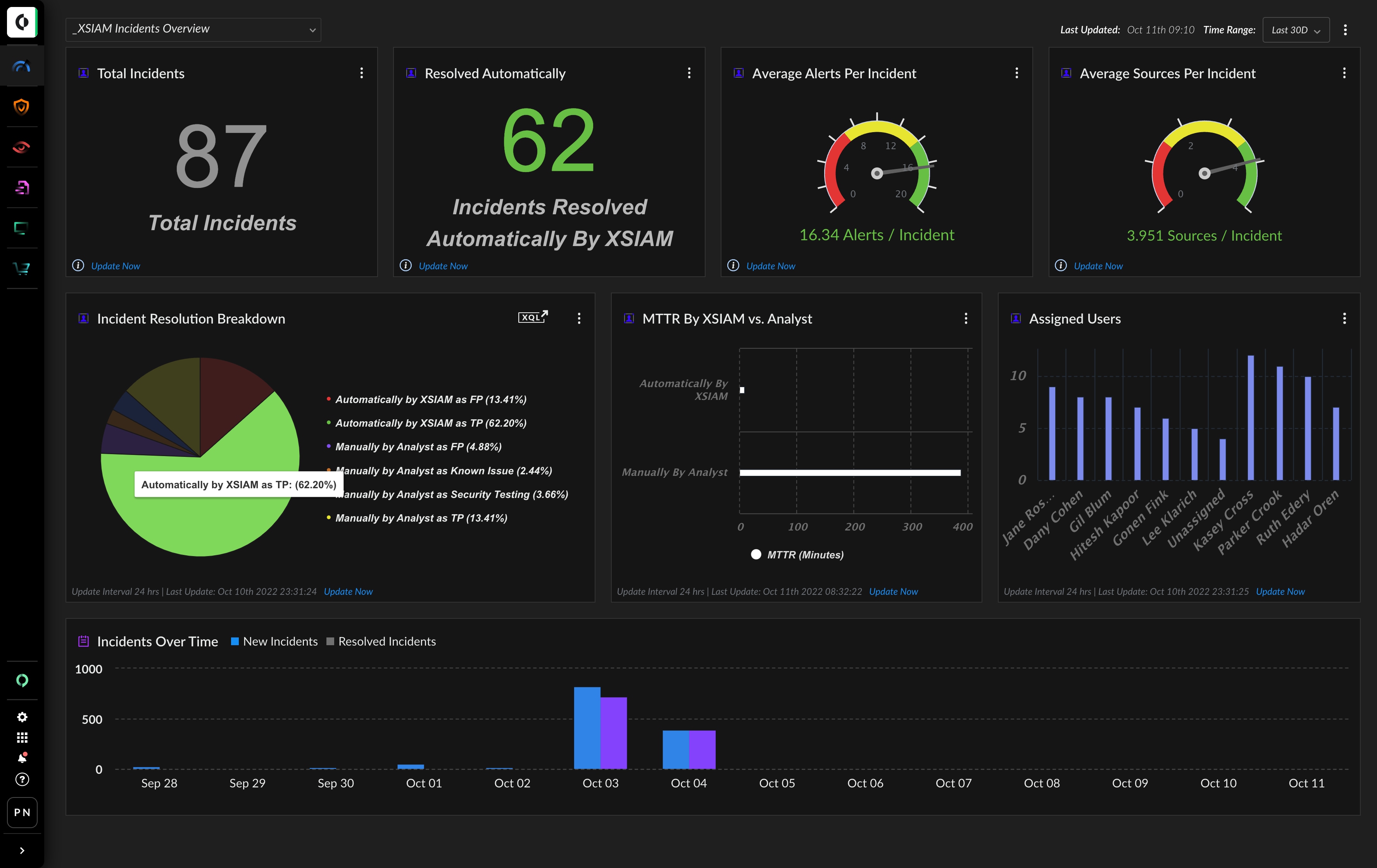
Cortex XSIAM is an AI-driven security operations platform that replaces a traditional SIEM by combining SIEM, SOAR, EDR, NDR, and cloud detection and response (CDR) on a shared data layer, Cortex XDL. It brings in telemetry from endpoints, networks, identities, cloud, and third-party sources.
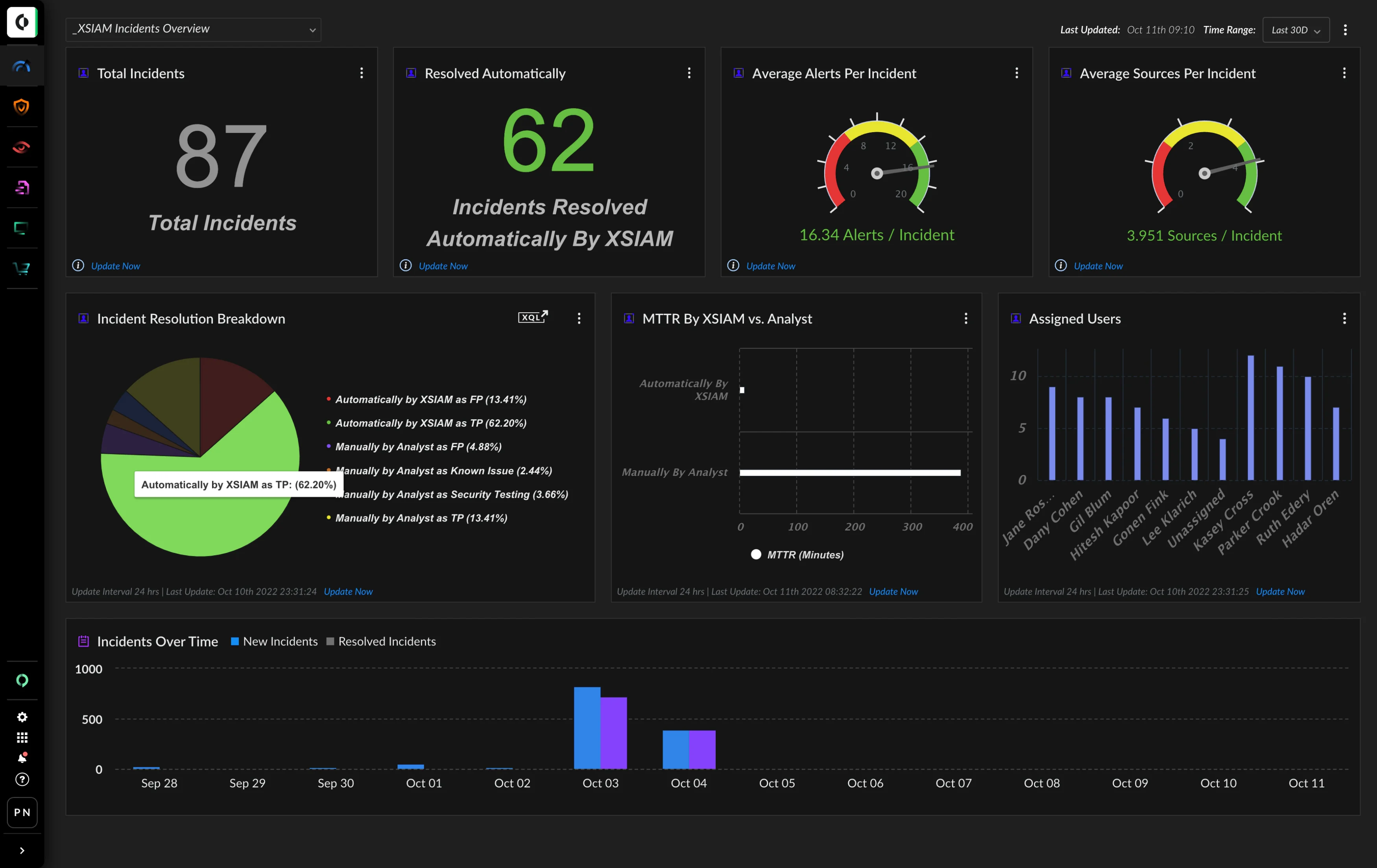
XSIAM prepares and enriches collected data, stitches it into security events, and applies machine learning detection analytics. Related alerts are grouped into prioritized cases that show root cause, and Cortex AgentiX adds AI agents and automation for response.
Key features include:
- Unified data foundation: Collects endpoint, network, identity, cloud, and third-party data into Cortex XDL, including EDR telemetry and enriched firewall logs.
- ML-based detection: Applies 2,900+ machine learning models and 13,300+ detections to the collected data.
- Incident grouping and root cause: Groups large numbers of alerts into a smaller set of prioritized cases and shows the attack sequence, including root cause.
- Agentic response with Cortex AgentiX: AI agents plan and carry out response tasks within enterprise guardrails, alongside playbook-based automation.
- Extended capabilities: Exposure management, threat intelligence management, identity threat detection and response (ITDR), and email security can be added on the same platform.
- Managed services: Unit 42 managed detection and response, managed threat hunting, and Managed XSIAM are available for 24/7 coverage.
Limitations (as reported by users on G2):
- Implementation complexity: Initial deployment can be time-consuming and requires specialized expertise.
- Resource requirements: Rollouts can require significant resources, which affects implementation time and infrastructure costs.
- Cost: Pricing can be high, particularly for smaller organizations.
- Dashboard navigation: Some users find asset monitoring and navigation within dashboards difficult.
Source: Palo Alto Networks
AI-Driven Cloud and Network Threat Detection
5. CrowdStrike Falcon Cloud Security

Best for: Teams protecting cloud workloads with runtime detection and response
Strengths: Agent and agentless coverage with real-time cloud detection
Things to consider: Cost and module packaging can be complex to evaluate
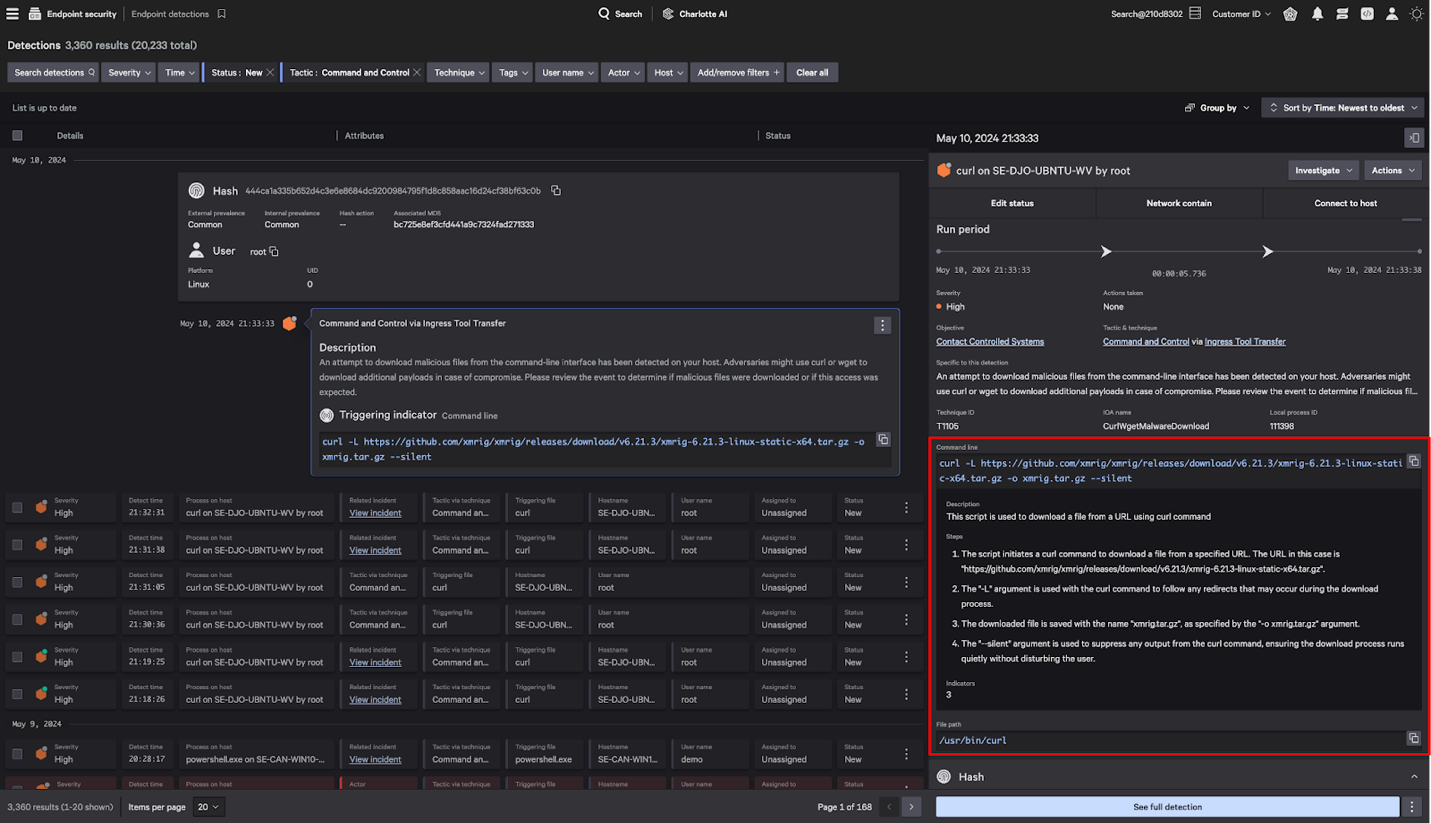
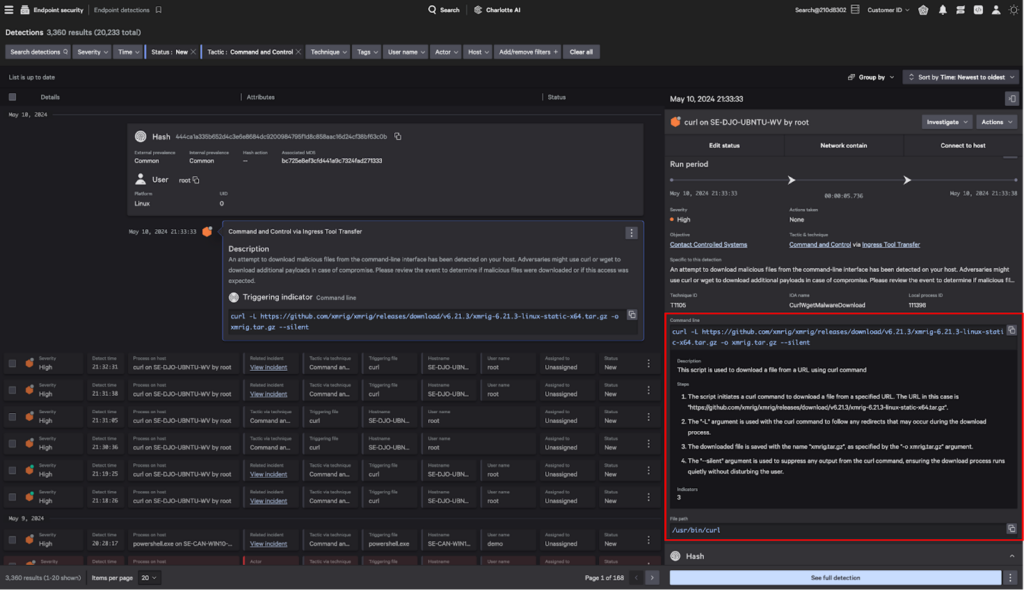
CrowdStrike Falcon Cloud Security is a cloud-native application protection platform (CNAPP) that combines agentless visibility with the CrowdStrike Falcon sensor for runtime protection. It covers cloud posture, workloads, applications, and AI infrastructure across multi-cloud environments.
Its cloud detection and response (CDR) analyzes cloud control plane activity in real time and correlates it with endpoint and identity signals in the Falcon platform. Detections are mapped to known adversaries and tactics, techniques, and procedures (TTPs) using CrowdStrike threat intelligence.
Key features include:
- Real-time cloud detection and response: Monitors cloud control plane activity across multi-cloud environments and correlates it with endpoint and identity signals for cross-domain investigations.
- Agent and agentless coverage: Uses agentless scanning for broad visibility and the Falcon sensor for runtime protection of cloud workloads, including containerized workloads.
- Adversary intelligence: Enriches detections with intelligence on 281+ tracked adversaries and more than 300 million real-time indicators, and maps activity to known TTPs.
- Agentless posture management: Identifies misconfigurations and enriches risk findings with adversary intelligence and graph-based context to prioritize exploitable exposures.
- Application-aware risk: Runtime application code analysis maps how business applications run on cloud infrastructure and prioritizes reachable vulnerabilities.
- AI workload protection: Provides visibility into AI infrastructure and into how business applications depend on AI models and run AI agents.
Limitations (as reported by users on G2):
- Cost: Some users report pricing that is higher than other cloud security tools.
- Pricing and packaging clarity: The scope of individual price list items and the prerequisites for adding new modules can be unclear.
- Learning curve: New users may face a steep learning curve, along with complexity in managing alerts and integrations.
- False positives and usability: Some reviewers mention false positives and areas where the user experience could improve.
Source: CrowdStrike
6. SentinelOne Singularity Cloud Security

Best for: Organizations needing a CNAPP with autonomous runtime workload defense
Strengths: Verified exploit paths, runtime protection, and Purple AI
Things to consider: Initial policy setup can be complex; limited custom dashboards
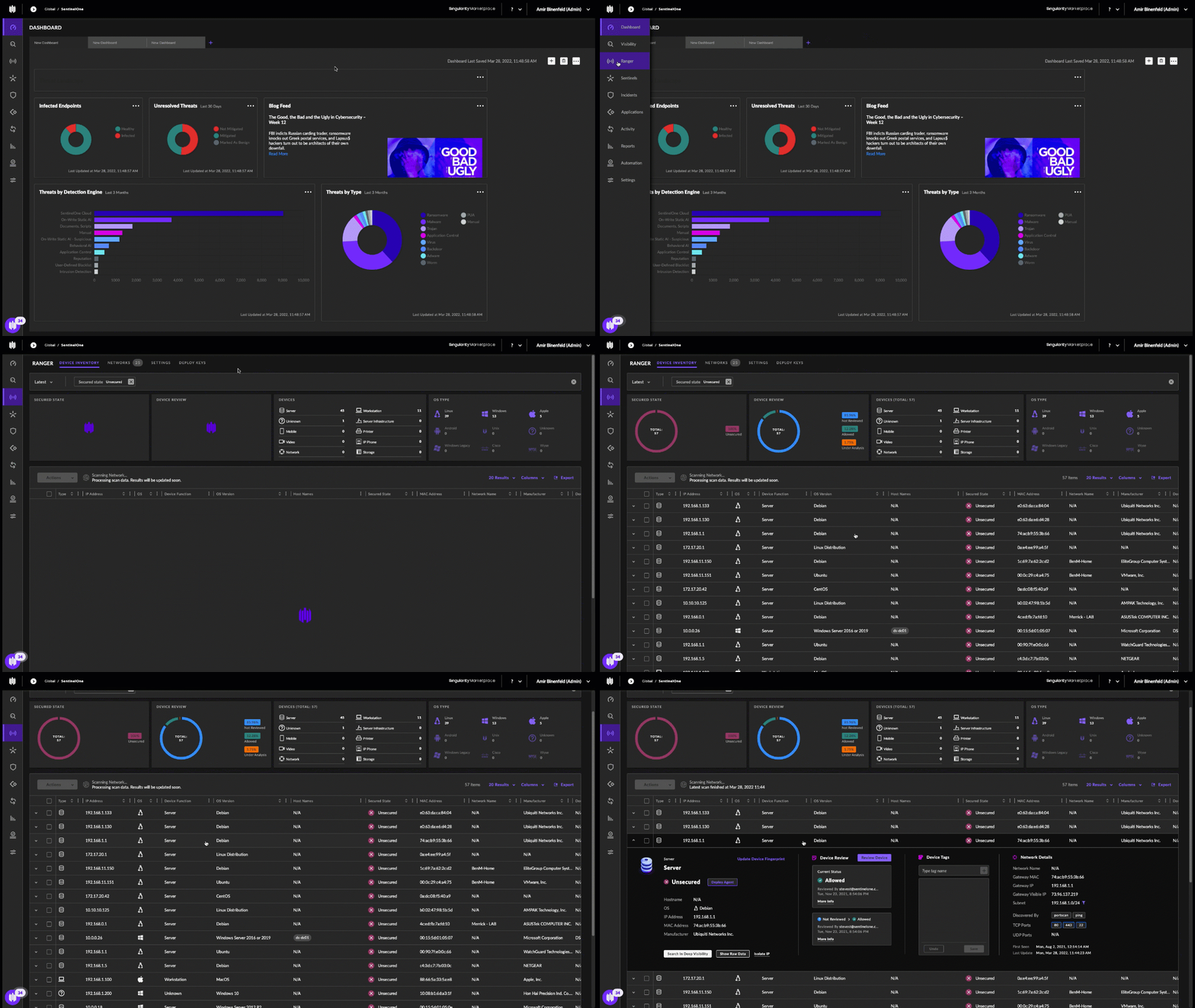
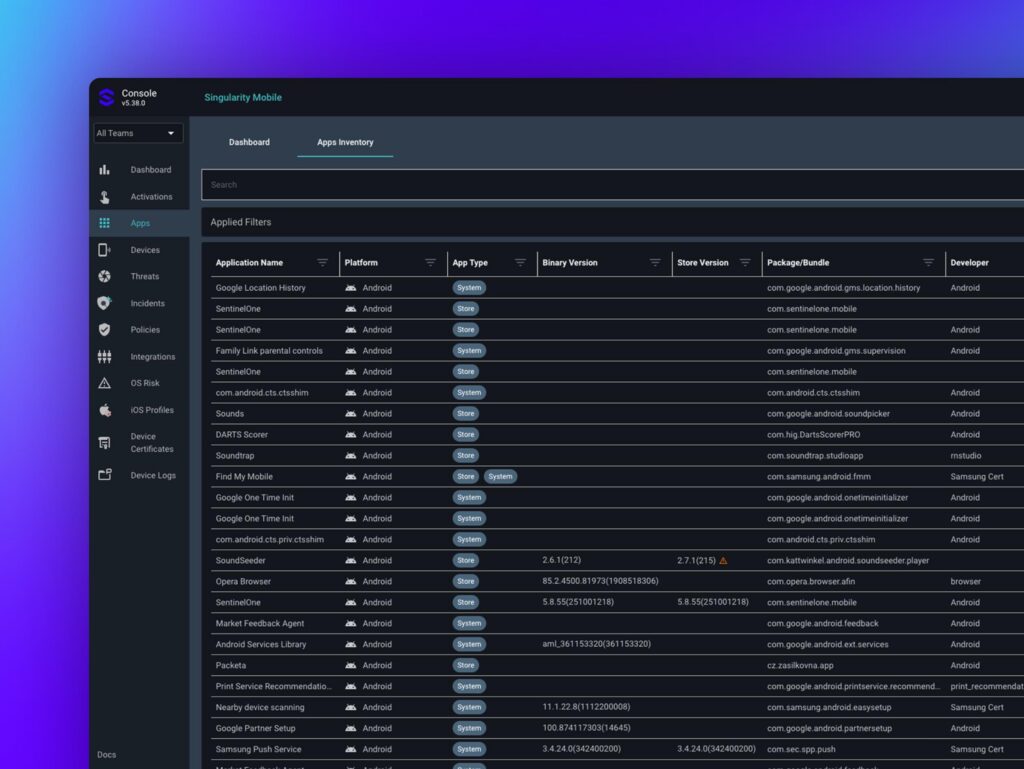
SentinelOne Singularity Cloud Security is a CNAPP that brings posture management, runtime workload protection, and data security into one platform. It covers cloud security posture management (CSPM), cloud workload protection (CWPP), CIEM, DSPM, and AI security posture management (AI-SPM) under one data model.
Cloud, endpoint, and identity telemetry is correlated in the Singularity platform, so a single investigation can follow an attack across domains. Purple AI and Hyperautomation support investigation and automated response.
Key features include:
- Cloud workload security: Detects and stops threats inside running containers, VMs, and AI workloads, and contains attacks to limit lateral movement across cloud environments.
- Verified exploit paths: Prioritizes exploitable risk using contextual evidence, so teams can fix exposures before they reach production.
- Posture and entitlement controls: CSPM detects misconfigurations and compliance gaps, and CIEM identifies excessive or misconfigured identity permissions.
- Cloud data security: Protects sensitive data across hybrid storage environments and blocks malicious files before they reach internal systems.
- AI security posture management: Inventories and governs AI models, services, and the data pipelines that feed them.
- Unified intelligence and response: Correlates cloud, endpoint, and identity telemetry in one data foundation, with Purple AI and Hyperautomation for investigation and response.
Limitations (as reported by users on G2 and PeerSpot):
- Setup complexity: Initial setup and policy configuration can be complex and time-consuming for teams without cloud security expertise.
- Cost: Some users find the pricing higher than other cloud security platforms.
- Dashboard customization: Options for building custom dashboards are limited compared to the default views.
Source: SentinelOne
7. Vectra AI Platform

Best for: Detecting attacker behavior across network, identity, and cloud
Strengths: Agentless NDR with AI triage, stitching, and prioritization
Things to consider: Built-in reporting is limited, and early tuning may be needed
The Vectra AI Platform extends network detection and response (NDR) across data centers, campuses, remote sites, cloud, identity, SaaS, and IoT/OT. It analyzes network traffic and metadata, identity activity, and cloud logs to detect attacker behavior, including activity inside encrypted traffic.
AI models trained on real attacker techniques triage detections, stitch related activity across changing IPs and cloud roles, and prioritize threats by risk. The platform is agentless and can be deployed on-premises, as SaaS, or in a hybrid model.
Key features include:
- Network detections: Surfaces east-west and north-south lateral movement across data center, campus, remote work, cloud, and IoT/OT networks by analyzing behavior and metadata, including in encrypted traffic.
- Identity detections: Detects credential theft, account compromise, and privilege escalation across human and machine identities in Active Directory, Microsoft Entra ID, Microsoft 365, AWS, and Azure.
- Cloud detections: Analyzes cloud flow logs and data-plane activity across AWS, Google Cloud, Microsoft Azure, Microsoft 365, Microsoft Copilot for M365, Oracle Cloud, and IBM Cloud.
- AI triage, stitching, and prioritization: Separates real threats from benign activity, correlates activity across domains to identify the original compromised device and account, and ranks threats by attack progression.
- Investigation and hunting: Pre-built queries for each threat, SQL query support, automatic log categorization, and a unified view of hosts and accounts for threat hunting.
- Response options: Native, integrated, and managed response, with single-click pivots to third-party tools and integrations with SIEM, SOAR, and EDR platforms.
Limitations (as reported by users on PeerSpot):
- Reporting: Built-in reporting options are limited, and users would like more granular, customizable reports.
- Initial tuning: Some deployments needed tuning early on to reduce false positives.
- Architecture flexibility: Changing how sensors and analysis components (brains) are configured can be complex.
- Automation and integrations: Some users want deeper automation and more integration options with external tools.

Source: Vectra AI
8. Darktrace / HYBRID NETWORK

Best for: Self-learning anomaly detection across network, cloud, and OT
Strengths: Organization-specific behavioral baselines and autonomous response
Things to consider: Alert tuning effort; costs increase as coverage scales
Darktrace / HYBRID NETWORK is part of the Darktrace Behavioral Defense Platform. It detects, investigates, and contains threats across network, cloud, OT, endpoint, and identity using Adaptive AI, which learns the normal behavior of each organization instead of applying a generic, globally trained model.
The solution passively ingests traffic from on-premises and virtual networks and multi-cloud environments, and analyzes both encrypted and decrypted data. The Real-Time AI Analyst correlates related events into incidents, and response actions run natively or through firewalls, EDR, SOAR, and ITSM tools.
Key features include:
- Infrastructure detection and response: Analyzes traffic across network, cloud, and OT to find activity that does not fit the environment, then contains it under configurable response policies.
- Identity detection and response: Evaluates account activity within the same behavioral profile to flag account takeover, privilege escalation, and insider misuse, even when valid credentials are used.
- Cross-domain correlation: 360° Insights connects activity across AI systems, email, SaaS, identity, endpoint, cloud, network, and OT into connected incidents.
- Real-Time AI Analyst: Gathers evidence, correlates related activity, produces an incident narrative, and supports autonomous response actions.
- Forensic acquisition: Automatically captures host and workload artifacts across endpoints, cloud, containers, and SaaS at the point of detection.
- Attack path modeling: Tests each exposure for presence, reachability, and connection to critical assets, and maps how exposures could chain together.
Limitations (as reported by users on G2):
- Alert tuning: High alert volumes can require fine-tuning and ongoing effort to keep detections aligned with the business environment.
- False positives: Some detections turn out to be false positives that require manual investigation.
- Scaling costs: Costs increase when expanding to more network segments or adding advanced features.
- Response disruption: Autonomous actions occasionally block legitimate activity, and IT needs to restore access.

Source: Darktrace
Conclusion
AI security software helps organizations protect hybrid cloud environments by connecting security data across on-premises infrastructure, public clouds, identities, networks, and workloads. Machine learning and behavioral analytics can identify suspicious activity across these environments, while AI agents support threat investigation, alert triage, and response automation. When evaluating solutions, organizations should prioritize cross-environment visibility, reliable detection, integration with existing security tools, and evidence-backed investigation results. Automated remediation should also include access controls, approval workflows, and audit trails to reduce the risk of disrupting legitimate operations.
Learn More About Exabeam
Learn about the Exabeam platform and expand your knowledge of information security with our collection of white papers, podcasts, webinars, and more.
-
 Blog
Exabeam Named a Leader for the Seventh Time in the Gartner® Magic Quadrant™ for Security Information and Event Mana...
-
Webinar
The Insider Risk Program Just Got Bigger: How Digital Workers Are Changing Identity, Behavior, Ownership, and...
- Show More