Table of Contents
Security information and event management systems are now used by medium-sized and even small organizations. Open Source SIEMs are compelling for new adopters because of their low licensing cost and growing feature set. Which open source SIEMs are out there, and how do they compare to the traditional enterprise offerings?
SIEM security systems used to be for large organizations only, but they are increasingly adopted by medium-size and even small organizations. Open Source SIEMs are compelling for new adopters because of their low licensing cost and growing feature set. Which open source SIEMs are out there, and how do they compare to the traditional enterprise offerings?
This content is part of a series about SIEM tools.
What is SIEM?
SIEM (security information and event management) is a security and auditing system. It is not a single tool, but rather a ‘toolbox’ of multiple monitoring and analysis components.
SIEMs aggregate data from hundreds of security and IT tools across the organization, uses statistical correlations and rules to convert events and log entries, and turn them into usable information. Security teams use this information to detect threats in real time, manage forensic investigations on security incidents, organize incident response, and prepare compliance audits.
SIEM is now a standard security approach. An increasing number of organizations are adopting SIEM due to the ongoing increase in cyber attacks and stricter security regulations. Changes to regulations like PCI DSS and the European Union’s GDPR have made it imperative that system and application log events are removed from individual servers and stored securely for investigation and action.
Editor’s note: Updated the article to cover recent market trends, updated product information to reflect features and capabilities in 2026, and added 6 new tools.
SIEM Market Trends
Market Growth and Adoption
The SIEM market is valued at USD 10.67 billion and is expected to reach USD 20.78 billion by 2031, with a CAGR of 11.5%. This growth reflects the rising need to handle large-scale security telemetry and improve threat detection.
Deployment Models and Architecture Trends
A clear shift is happening from on-premises systems to cloud-based SIEM. On-premises deployments still held 55.27% of the market, but cloud solutions are growing at a faster rate due to flexible pricing and scalability.
At the architecture level, cloud-native platforms are gaining traction. These systems separate storage from compute, allowing organizations to store large volumes of logs cheaply and run analytics only when needed. Hybrid setups are also common, especially in regions with strict data residency rules.
Technology Advancements
Vendors are improving SIEM platforms with AI and machine learning capabilities. These features help reduce alert noise by filtering out low-priority events and highlighting real threats.
AI-driven tools also assist analysts by summarizing incidents and suggesting response actions. This reduces investigation time and helps teams handle higher alert volumes without increasing staff.
Rise of Managed Services
To address resource constraints, many organizations are turning to managed SIEM services. These services provide external monitoring, threat analysis, and incident response support.
Managed providers operate at scale and offer 24/7 coverage, helping organizations reduce internal workload. This trend is growing quickly, especially among companies that lack dedicated security teams.
Open Source SIEM vs. Enterprise-grade SIEM
Security information and event management is a foundational system in modern cybersecurity. Other security tools represent information flows, which the SIEM can process and extract value from. Not all SIEMs have the same capabilities; choosing a SIEM that suits the needs of your organization can mean the difference between preventing and missing a catastrophic security breach.
Open source SIEM
Organizations can use open source SIEM tools to reduce software licensing costs and evaluate certain capabilities before extending their product investments. Open source SIEM solutions provide basic capabilities that can suit the needs of smaller organizations that are starting to log and analyze their security event information.
Limitations of open source SIEM
- As an organization grows, open source SIEM software can become labor-intensive.
- An organization may save money on licensing costs, but spend money on continual maintenance.
- Many open source SIEM solutions lack key SIEM capabilities, such as reporting, event correlation, and remote management of log collectors.
- An organization may have to combine open source SIEM with other tools.
- Open source SIEM typically requires a high level of expertise and time to deploy effectively.
- Open source SIEMs typically do not provide or manage storage, a sensitive issue because of the massive volumes of data.
Enterprise-grade SIEM
Enterprise SIEM solutions offer improved management of configuration and installation, correlation configurations, filters, and pre-built visualizations for the most prevalent use cases. They enable organizations to monitor large scale data center activities and centrally manage and configure security-relevant applications.
Perhaps most importantly, currently only enterprise SIEM platforms provide the capabilities of next-generation SIEM. Next-gen enterprise SIEMs come with two new technologies that can save time for security teams and dramatically improve incident detection and response:
- User and entity behavior analytics (UEBA) – goes beyond rules and correlations, leveraging AI and machine learning to look at behavioral patterns of users and IT systems and find high-risk anomalies that may indicate threats.
- Security orchestration, automation and response (SOAR) – integrates with enterprise systems and orchestrates them to automate incident response processes, such as mitigating a malware or data exfiltration attack.
Read more about Exabeam’s Security Management Platform.
Top Open Source SIEM Tools
Wazuh

Wazuh is an open source security platform that combines SIEM and XDR capabilities in a unified architecture. It collects and analyzes log data from endpoints and cloud workloads while providing real-time detection and response. The platform integrates multiple security functions into a single agent-based system, allowing organizations to monitor infrastructure, detect threats, and automate responses across different environments.
Limitations as reported by users on G2:
- Complex initial setup: Users report that setup and configuration can be difficult and time-consuming.
- Steep learning curve: New users often struggle due to the level of expertise required.
- Challenging interface: The interface can feel complex, especially during early use.
- Difficult on-prem deployment: Implementing the on-prem console can add additional complexity.
Key features include:
- Unified SIEM and XDR capabilities: Combines log analysis, threat detection, and response within a single platform.
- Endpoint and workload protection: Monitors endpoints, containers, and cloud environments for security events.
- File integrity monitoring: Detects unauthorized changes to files and system configurations.
- Vulnerability detection: Identifies weaknesses across systems to support risk management.
- Threat intelligence and hunting: Uses external data and analytics to identify and investigate threats.
- Active response automation: Executes remediation actions directly on affected systems.
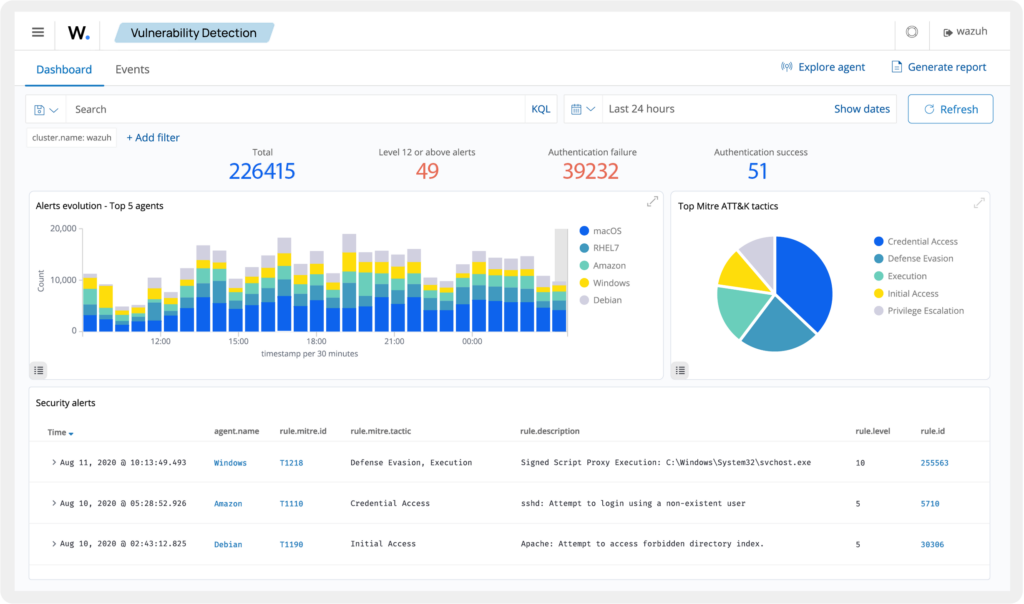
Source: Wazuh
Security Onion

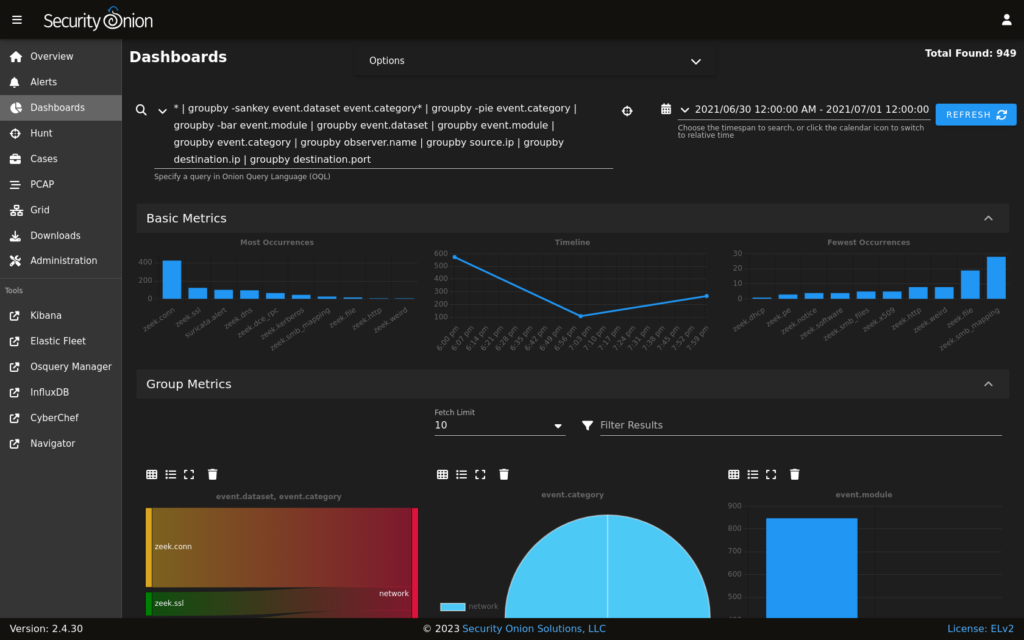
Security Onion is a Linux-based open source platform for threat hunting, network security monitoring, and log management. It combines multiple open source tools into a single distribution, giving organizations a pre-integrated environment for collecting and analyzing network and host-based data. This approach reduces the need to assemble individual components while still providing flexibility for advanced users.
Limitations as reported by users on G2:
- Difficult setup for beginners: Initial deployment can be challenging without prior experience.
- High expertise requirements: Effective use requires strong networking and security knowledge.
- Complex configuration: Users report difficulties configuring and tuning the platform.
- Operational challenges: Managing the system can be demanding for less experienced teams.
Key features include:
- Integrated toolset: Combines tools like Suricata, Zeek, and the Elastic Stack for comprehensive monitoring.
- Network security monitoring: Captures and analyzes network traffic to detect suspicious activity.
- Log management and analysis: Aggregates logs from multiple sources for centralized visibility.
- Threat hunting capabilities: Enables analysts to investigate and explore security data interactively.
- Prebuilt detection rules: Includes a large set of rules to identify common attack patterns.
- AI-assisted analysis: Provides an integrated assistant to support detection tuning and analysis tasks.
Source: Security Onion
AlienVault OSSIM

AlienVault OSSIM is an open source SIEM platform that integrates multiple security tools to provide centralized visibility and event correlation. It is designed to combine data from network and host-based systems and transform it into actionable security insights. By aggregating different layers of information, it supports detection, analysis, and decision-making across the security stack.
Limitations as reported by users on PeerSpot:
- Slow response under load: Performance can degrade with high traffic volumes.
- Complex initial setup: Deployment requires significant configuration effort and is not intuitive.
- Limited integrations: Users report gaps in integration with some security tools.
- Frequent false positives: Detection accuracy can require tuning to reduce noise.
- Pricing concerns: Some users find costs high relative to alternatives.
Key features include:
- Multi-layer event correlation: Combines low-level logs, anomaly data, and high-level risk insights.
- Integrated security tools: Includes components such as Snort, OpenVAS, and Nmap for detection and assessment.
- Network and host visibility: Provides insight into infrastructure through logs, alerts, and monitoring data.
- Intrusion detection capabilities: Uses signature-based and anomaly-based detection methods.
- Vulnerability assessment integration: Identifies system weaknesses alongside event monitoring.
- Centralized data storage: Uses databases and data aggregation tools to manage security information.
Graylog

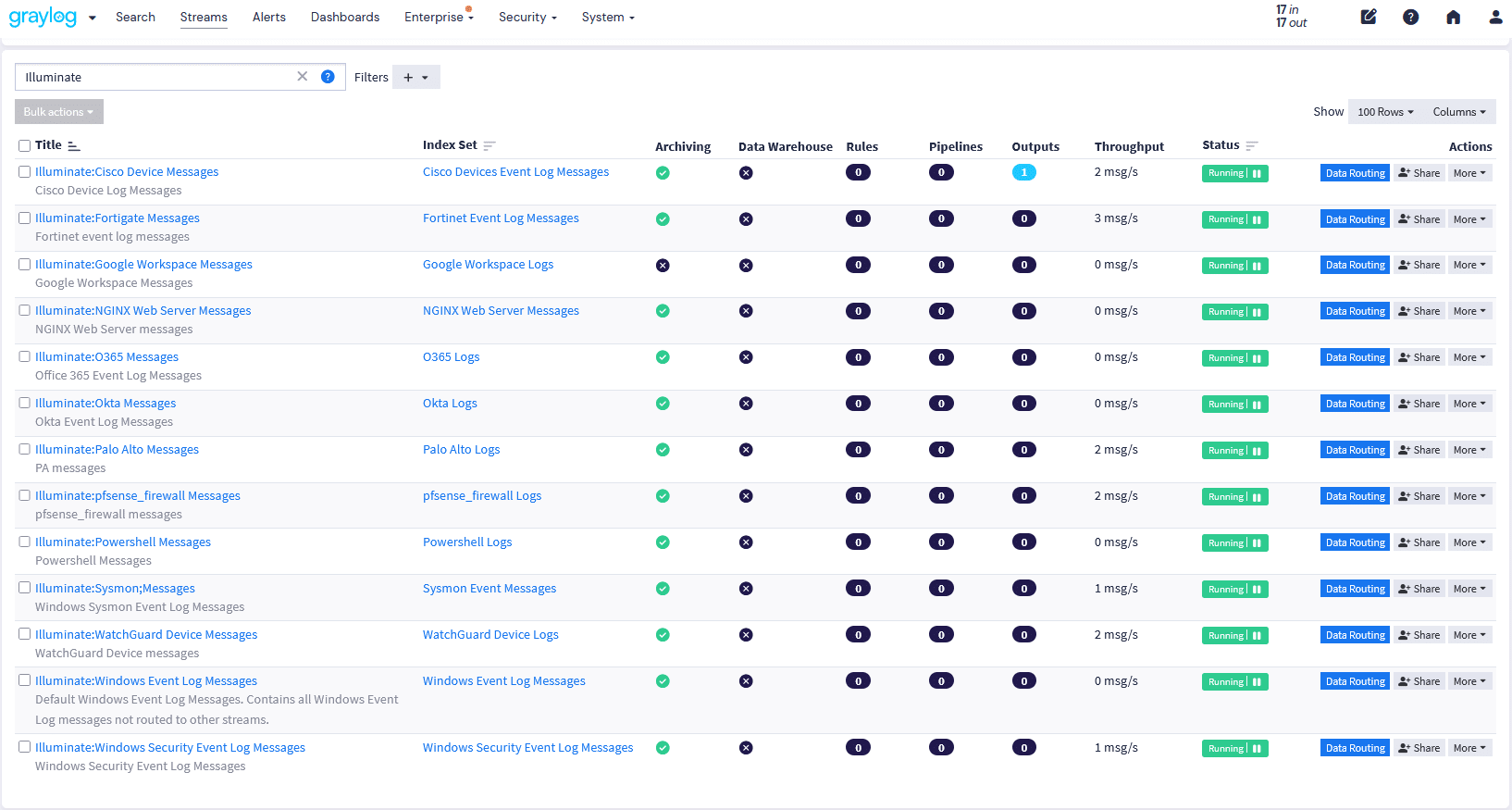
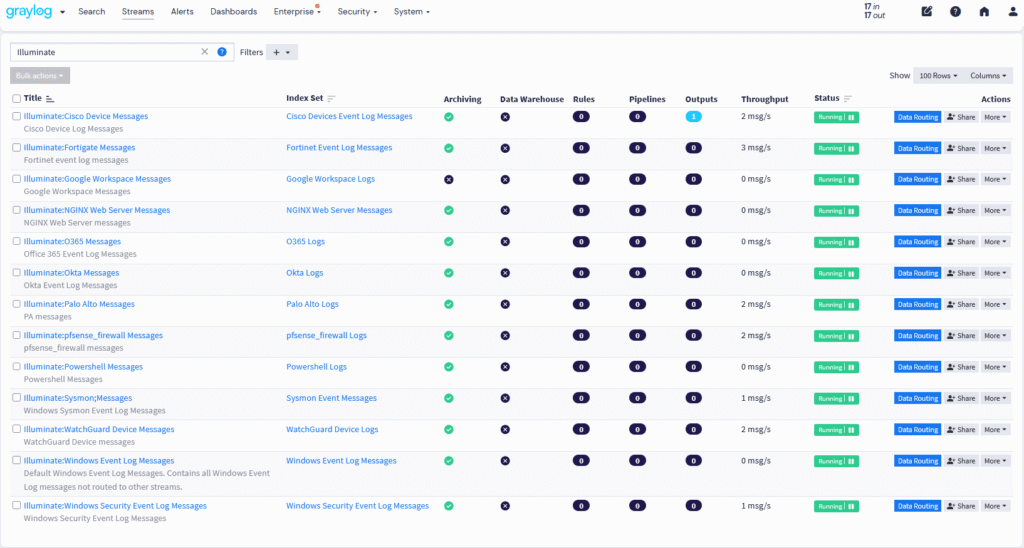
Graylog is an open source log management platform that can function as a SIEM foundation by collecting, storing, and analyzing large volumes of log data. It emphasizes flexibility and scalability, allowing organizations to deploy it in on-premises, cloud, or hybrid environments. With search and visualization capabilities, it helps teams investigate events and monitor systems in real time.
Limitations as reported by users on G2:
- Platform complexity: Users report that the system can be difficult to manage and navigate.
- Steep learning curve: Time is required to become proficient with logs, APIs, and workflows.
- Debugging challenges: Troubleshooting issues can be time-consuming and inefficient.
- Integration limitations: Connecting external systems can be difficult in some cases.
- Time-consuming operations: Tasks like debugging and analysis can slow down workflows.
Key features include:
- Centralized log ingestion and storage: Collects data from diverse sources with configurable retention.
- High-speed search and analytics: Enables fast querying across large datasets for investigation.
- Dashboards and visualization: Provides real-time insights through customizable dashboards.
- Alerting and event management: Triggers notifications based on defined conditions.
- Extensible architecture: Supports plugins, APIs, and integrations with external tools.
- Flexible deployment models: Runs on-premises, in the cloud, or in hybrid environments.
Source: Graylog
ELK Stack

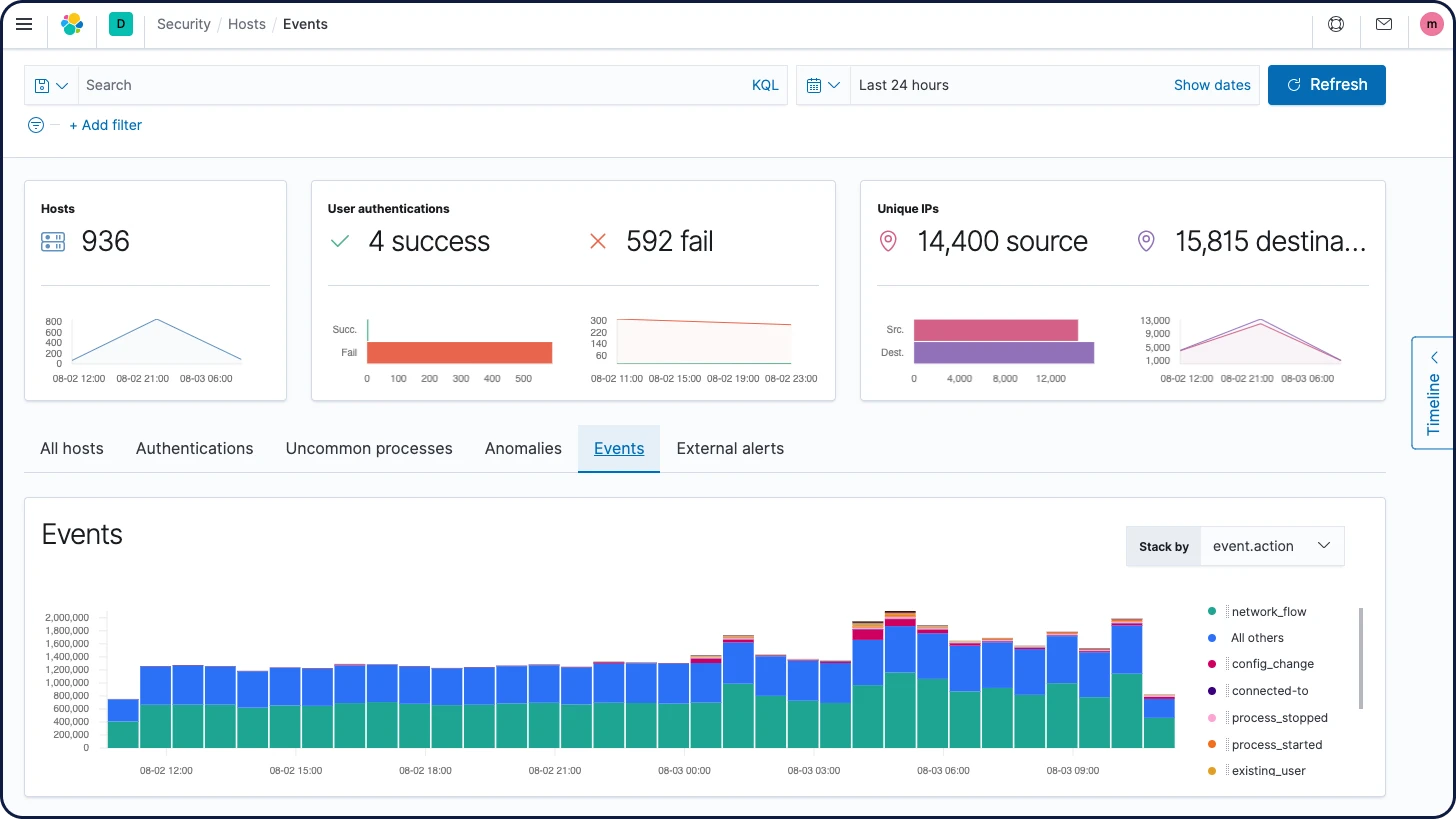
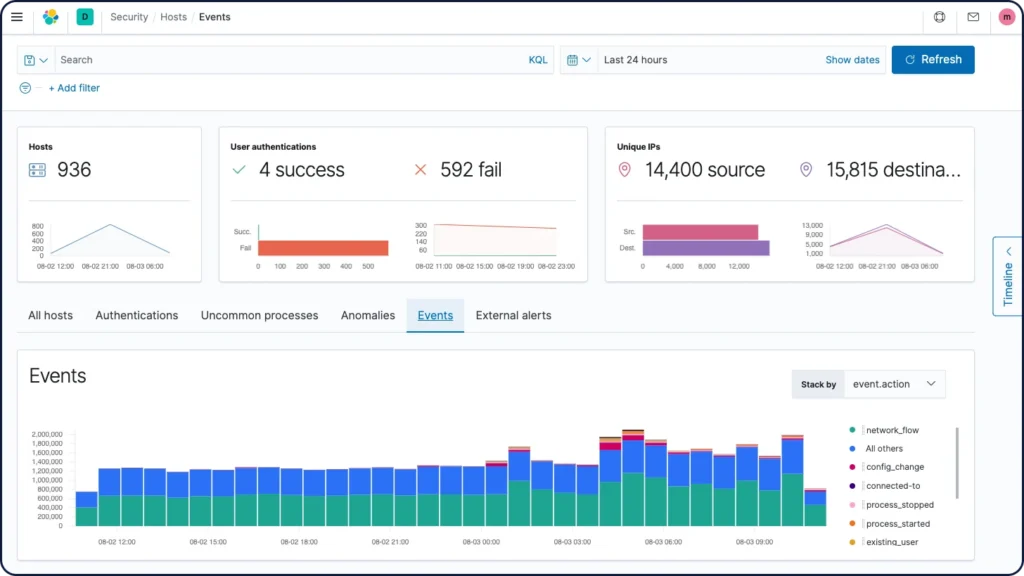
The ELK Stack (Elasticsearch, Logstash, and Kibana) is a widely used open source framework for log collection, search, and analytics that can be adapted for SIEM use cases. It allows organizations to ingest data from many sources, process it, and visualize it through interactive dashboards. Its modular architecture makes it flexible, but it often requires additional configuration to function as a full SIEM.
Limitations as reported by users on G2:
- High resource usage: Requires significant memory and infrastructure, especially at scale.
- Complex management: Operating and tuning clusters demands strong expertise.
- Expensive scaling: Costs increase due to infrastructure and licensing considerations.
- Steep learning curve: Users need deep knowledge to manage performance effectively.
- Operational overhead: Ongoing maintenance and optimization require continuous effort.
Key features include:
- Distributed search and analytics engine: Elasticsearch enables fast querying and analysis of large datasets.
- Data ingestion and processing: Logstash and Beats collect and transform data from multiple sources.
- Visualization and dashboards: Kibana provides interactive views and reporting capabilities.
- Broad integration ecosystem: Supports hundreds of integrations for ingesting diverse data types.
- Scalable architecture: Handles large volumes of data with distributed storage and processing.
- Flexible deployment options: Can be deployed on-premises or across major cloud platforms.
Source: Elastic
OSSEC

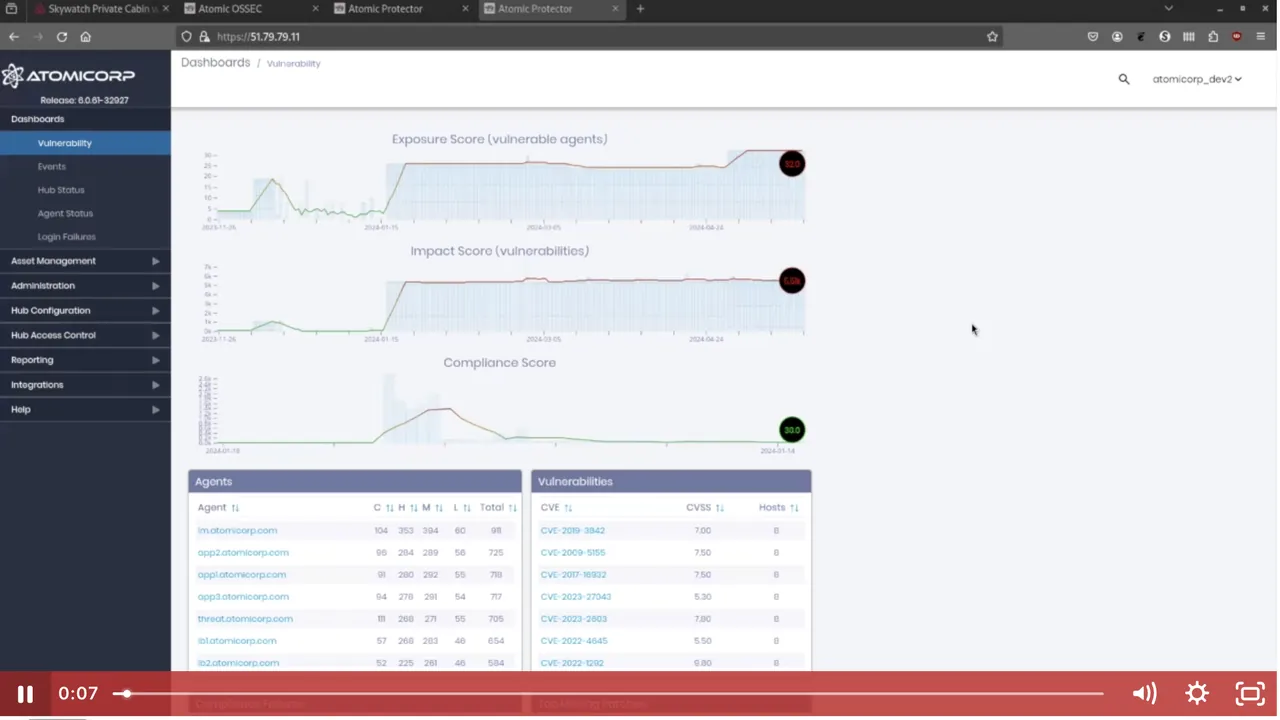
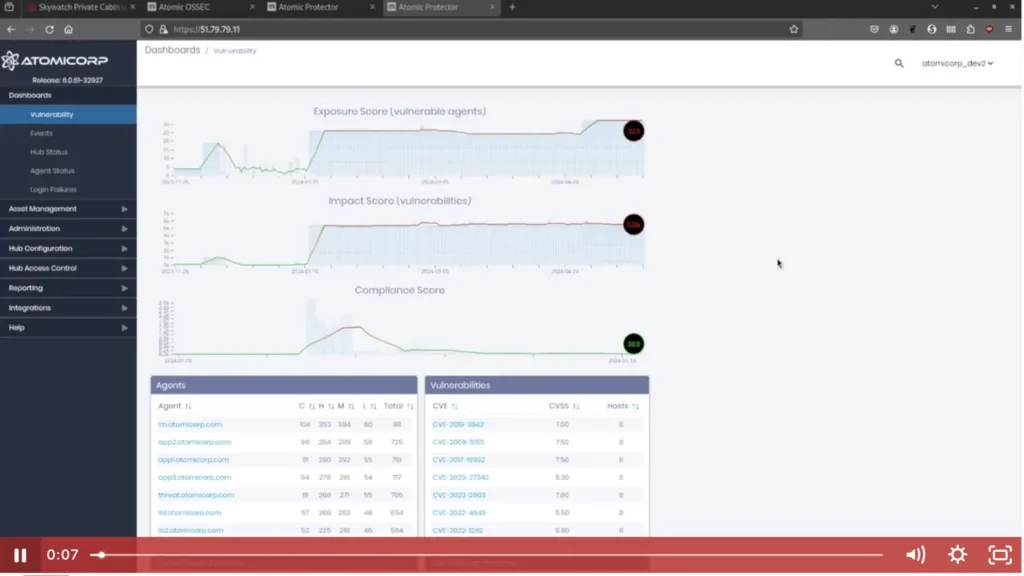
OSSEC is an open source host-based intrusion detection system (HIDS) that provides log analysis, integrity monitoring, and active response capabilities. It focuses on endpoint-level visibility, analyzing system logs and file changes to detect suspicious behavior. While not a full SIEM on its own, it is often used as a core component within larger SIEM architectures.
Limitations as reported by users on G2:
- Limited visualization capabilities: Lacks a built-in dashboard for analyzing and visualizing data.
- No modern web interface: Users rely on logs and external tools for visibility.
- High configuration overhead: Requires significant effort to configure and maintain.
- Command-line management: Administration is largely CLI-based, which can be challenging.
- Upgrade challenges: Updating the system can be difficult and disruptive.
Key features include:
- Host-based intrusion detection: Monitors system activity and logs across multiple operating systems.
- File integrity monitoring: Tracks changes to critical files and configurations in real time.
- Malware and anomaly detection: Identifies suspicious behavior using rules and pattern matching.
- Active response capabilities: Automatically triggers actions to mitigate detected threats.
- Compliance auditing support: Helps meet regulatory requirements through monitoring and reporting.
- Cross-platform support: Runs on major operating systems including Linux, Windows, and macOS.
Source: OSSEC
To fully understand the aspects involved in selecting a SIEM system, and whether open source or enterprise SIEM is the best choice for your scenario, read our SIEM tools buyer’s guide.
Tips from the expert

Steve Moore is Vice President and Chief Security Strategist at Exabeam, helping drive solutions for threat detection and advising customers on security programs and breach response. He is the host of the “The New CISO Podcast,” a Forbes Tech Council member, and Co-founder of TEN18 at Exabeam.
In my experience, here are tips to help organizations effectively evaluate and deploy open-source SIEM solutions while understanding when to transition to enterprise-grade systems:
Combine open-source SIEM with complementary tools
Enhance open-source SIEM functionality by integrating it with standalone tools for intrusion detection (e.g., Suricata) or behavioral analytics (e.g., open-source UEBA frameworks). This provides a modular approach to building advanced capabilities.
Start small and test with open-source SIEM in low-risk environments
Deploy open-source SIEM tools like ELK or OSSIM in a non-critical environment first. This allows your team to familiarize themselves with the setup, customization, and performance without risking vital business systems.
Leverage community-driven plugins to extend functionality
Open-source tools often have a rich ecosystem of community-built plugins. For example, extend ELK’s capabilities by integrating security-focused plugins for alerting or anomaly detection. This bridges some of the gaps between open-source and enterprise-grade tools.
Implement strict logging and storage policies early
Open-source SIEMs like Apache Metron can generate large data volumes. Establish clear data retention policies and optimize storage formats to avoid performance bottlenecks and unmanageable costs.
Use managed versions of open-source SIEM for hybrid benefits
Managed offerings like SIEMonster’s premium version combine open-source cost savings with enterprise-grade features, such as user behavioral analytics and threat intelligence, while reducing deployment complexity.
Open Source Benefits vs. Costs
Open source SIEMs have matured considerably over the past decades and are deployed successfully in many organizations. However, while the main driver for adoption is reduced license costs, it is well known that license costs are only a fraction of the total cost of ownership of SIEM systems. Additional and possibly larger components include:
- Hardware and storage, especially for medium-to-large enterprises, present a huge cost and management complexity
- Analyst time is the most precious resource in most security teams, and analysts are a must to make any use of SIEM alerts
Exabeam is a next-generation SIEM platform built as an enterprise-grade platform on top of ElasticSearch, which addresses these two pain points and cost centers:
- Provides unlimited cloud-based storage at a fixed cost
- Uses next-gen SIEM capabilities like UEBA and SOAR to dramatically reduce analyst time
Learn More About Exabeam
Learn about the Exabeam platform and expand your knowledge of information security with our collection of white papers, podcasts, webinars, and more.