Table of Contents
What Are SIEM Tools?
SIEM (Security Information and Event Management) tools are software solutions that help organizations monitor, analyze, and manage security data from various sources to detect and respond to threats. They aggregate data, correlate events, and provide insights for security teams to identify and mitigate potential risks.
What SIEM tools do:
- User and entity behavior analytics (UEBA): Advanced SIEMs incorporate UEBA to detect malicious activity based on user behavior patterns.
- Log collection and aggregation: SIEMs collect log data from various sources like servers, applications, network devices, and security systems.
- Real-time monitoring: They provide real-time monitoring of security events, allowing for quick detection of suspicious activity.
- Correlation and analysis: SIEMs analyze the collected data to identify patterns, anomalies, and potential security incidents through correlation rules and advanced analytics.
- Alerting and reporting: They generate alerts based on pre-defined rules and provide reporting capabilities for security teams to track incidents and compliance requirements.
- Incident response: SIEMs can integrate with other security tools to automate responses to security incidents, such as isolating compromised systems or blocking malicious traffic.
- Forensic investigations: They provide historical event data to help analysts reconstruct attack timelines and techniques, identifying the level of compromise.
- Compliance management: They help organizations meet regulatory compliance requirements by providing audit trails and reporting capabilities.
- Threat intelligence: Many SIEM tools integrate with threat intelligence feeds to identify and respond to emerging threats.
Editor’s note: Updated the article to cover recent market trends, updated product information to reflect features and capabilities in 2026, and added 1 new tool/s.
Why Organizations Need SIEM Tools
As cyber threats grow more complex and frequent, organizations need a centralized way to monitor, detect, and respond to potential attacks. SIEM tools provide this capability by offering real-time visibility into the entire IT environment. They aggregate data from diverse systems, such as servers, endpoints, cloud platforms, and network devices, into one place, making it easier to identify unusual behavior or malicious activity that might otherwise go unnoticed.
Here are some reasons organizations invest in SIEM:
- Faster threat detection and incident response: By continuously analyzing security events and generating alerts in real time, SIEM platforms help minimize the time between compromise and containment. This rapid response reduces potential damage and supports operational resilience.
- Detection accuracy: Modern SIEM systems also incorporate artificial intelligence and machine learning to improve threat detection. These technologies help reduce false positives, prioritize high-risk events, and surface complex attack patterns. This enables security teams to focus their efforts where they’re needed most.
- Compliance: SIEM tools support compliance with regulations such as HIPAA, GDPR, and PCI DSS by automating log collection and providing audit-ready reporting. For organizations with hybrid or multi-cloud environments, SIEM platforms ensure consistent security monitoring across all infrastructure, regardless of where systems and data are hosted.
SIEM Market Trends
SIEM Market Size and Growth
The SIEM market is expanding steadily as demand for centralized security monitoring increases. It is valued at USD 10.67 billion and is projected to reach USD 20.78 billion by 2031. This reflects a compound annual growth rate (CAGR) of 11.5% over the forecast period.
Growth is driven by the need to process increasing volumes of security data and respond to more advanced cyber threats. Organizations are investing in platforms that can scale with large and complex environments.
Key Market Drivers
Several factors are accelerating SIEM adoption:
- Rapid growth of security telemetry: Large organizations now process massive volumes of log data daily, requiring more efficient storage and analysis methods.
- Regulatory pressure: Laws and frameworks in regions like Europe and the United States require faster breach detection and reporting. These rules force organizations to adopt systems that provide real-time monitoring and searchable event data.
- Cloud and hybrid infrastructure adoption: As workloads move across multiple environments, SIEM tools must integrate with different platforms and handle distributed data sources.
- AI and machine learning: These technologies are improving detection accuracy. They help filter out low-value alerts and highlight real threats, reducing analyst workload and improving response times.
Growing Demand for Managed Services
A shortage of skilled cybersecurity professionals is increasing demand for managed SIEM services. Organizations are relying on external providers to handle monitoring, alert triage, and incident response.
Managed services are growing at over 12% CAGR, as they help companies maintain security operations without building large internal teams. This is especially important for smaller organizations that lack resources.
Challenges Affecting the SIEM Market
Despite strong growth, several challenges remain:
- High costs are a major concern, especially with pricing models based on data ingestion. As data volumes grow, costs can increase significantly.
- A global shortage of skilled analysts also limits the effectiveness of SIEM deployments. While automation and AI help reduce workload, experienced professionals are still required.
- Data sovereignty laws add complexity, as organizations must store and process data within specific regions. This makes centralized log management more difficult in global environments.
Core Capabilities of SIEM Tools
Log Collection and Normalization
SIEM tools collect logs from disparate sources (firewalls, servers, endpoints, applications, and cloud services) using protocols like syslog, APIs, or agents. The collected data arrives in various formats and structures, making direct analysis challenging. The log normalization process standardizes this data, transforming inputs into a consistent schema.
This format enables efficient searching, correlation, and analytics across datasets that otherwise would remain fragmented and difficult to interpret. Once normalized, these logs become the foundation for all subsequent SIEM activities, such as threat detection, compliance checks, and incident investigations.
SIEM tools categorize log types, parse fields, and enrich data with contextual information, such as asset criticality and user roles. This preparation ensures that security teams have accurate data when conducting investigations or meeting regulatory reporting requirements.
Real-Time Monitoring
By continuously analyzing normalized event streams, SIEMs provide up-to-the-minute insights into network and system activities. This capability allows security teams to spot abnormal behaviors, misconfigurations, or policy violations as they occur, often before any damage is done. Real-time dashboards, visualizations, and alerting mechanisms prioritize response efforts based on incident severity and business impact.
Correlation and Analysis
Correlation further improves the collected data by linking events across sources and timelines. Instead of sifting through isolated alerts, SIEM correlation engines identify related patterns, such as multiple failed logins followed by privileged access grants, and escalate these as higher-fidelity incidents for investigation. This reduces noise, shortens detection time, and enables automation in security workflows.
Incident Response
SIEM platforms provide workflows and tools to manage the incident response lifecycle. When a threat or anomaly is detected, incident tickets can be created automatically or manually, assigning relevant stakeholders and guiding actions based on playbooks. SIEMs often integrate with orchestration tools, automatically blocking network connections, quarantining endpoints, or escalating investigations.
Forensic Investigation
For forensic investigations, SIEMs preserve and index historical event data, enabling analysts to reconstruct attack timelines, trace attacker movements, and determine the scope of compromise. Search and visualization interfaces allow security teams to drill down into sequences of related activity, extract evidence, and create reports suitable for regulatory, legal, or operational review.
Alerting and Reporting
SIEM tools generate alerts based on predefined rules, statistical baselines, or behavioral anomalies. These alerts are prioritized by severity and contextualized with relevant data, allowing analysts to quickly assess the threat level and take action. Customizable thresholds and tuning options help reduce false positives and ensure alerts reflect real security issues.
In addition to alerting, SIEM platforms offer robust reporting capabilities that support both operational visibility and compliance mandates. Dashboards can be tailored to different stakeholders, from SOC analysts to auditors, presenting metrics on threat trends, incident response times, and system health. Scheduled and on-demand reports simplify documentation for audits, executive briefings, and security reviews.
Compliance Management and Auditing
Maintaining and demonstrating regulatory compliance is a key SIEM feature. These tools automate the process of collecting, retaining, and reporting security event data in accordance with standards like HIPAA, PCI DSS, SOX, and GDPR. Pre-built compliance templates and customizable dashboards help organizations meet documentation and reporting requirements, reducing manual effort.
Auditing features in SIEMs provide visibility into user behavior, system access, privilege changes, and other key activities. This centralized log management approach enables internal investigations and external audits, supporting evidence-based compliance assertions. Automated retention policies ensure that required logs are available over specified periods, further protecting organizations from lapses in compliance.
Threat Detection and Intelligence Integration
SIEM technologies use analytics and detection rules to identify both known and emerging threats. Leveraging techniques like signature-based detection, statistical analysis, and machine learning, SIEMs can flag indicators of compromise, suspicious behaviors, and attack patterns across the environment. This approach ensures both rapid detection of known threats and the discovery of novel attack techniques that evade traditional security controls.
Integration with external threat intelligence feeds further strengthens detection capabilities. By correlating internal activity with curated lists of malicious IPs, domains, and behavioral indicators, SIEM tools enrich alerts with context that enables faster triage and investigation. Automated enrichment workflows enable more accurate incident prioritization and actionable response, empowering security teams to intervene efficiently and proactively.
User and Entity Behavior Analytics (UEBA)
UEBA improves traditional SIEM functionality by establishing baselines for normal behavior across users, devices, and entities, then detecting deviations that may signal insider threats or compromised accounts. By leveraging machine learning and statistical models, UEBA identifies subtle anomalies such as data exfiltration, privilege misuse, or lateral movement, which rule-based detection often misses.
Notable SIEM Tools
1. Exabeam

Exabeam is a SIEM provider focused on analytics-driven detection and AI-assisted security operations. Its New-Scale SIEM platform brings together log management, advanced behavioral analytics, and automated investigation to help SOC teams improve efficiency and reduce mean time to respond.
Deployment models:
Exabeam is delivered primarily as a cloud-native SaaS platform, with options for hybrid support to accommodate regulatory and operational requirements.
Key features include:
- Unlimited data ingestion model: Licensing not tied to data volume, allowing organizations to scale log collection without unpredictable costs.
- User and entity behavior analytics (UEBA): Applies behavioral models to detect anomalies, privilege misuse, and insider threats with contextual risk scoring.=
- Agentic AI (Exabeam Nova): A set of specialized AI agents that automate correlation, enrichment, and investigation, helping analysts accelerate threat triage.
- Threat Center and Outcomes Navigator: Unified work surface to track alerts, investigations, and program effectiveness, with benchmarking against peer organizations.
- Automated detection and response: Correlation, risk-based prioritization, and playbooks to reduce alert fatigue and support faster decision-making.
2. Microsoft Sentinel

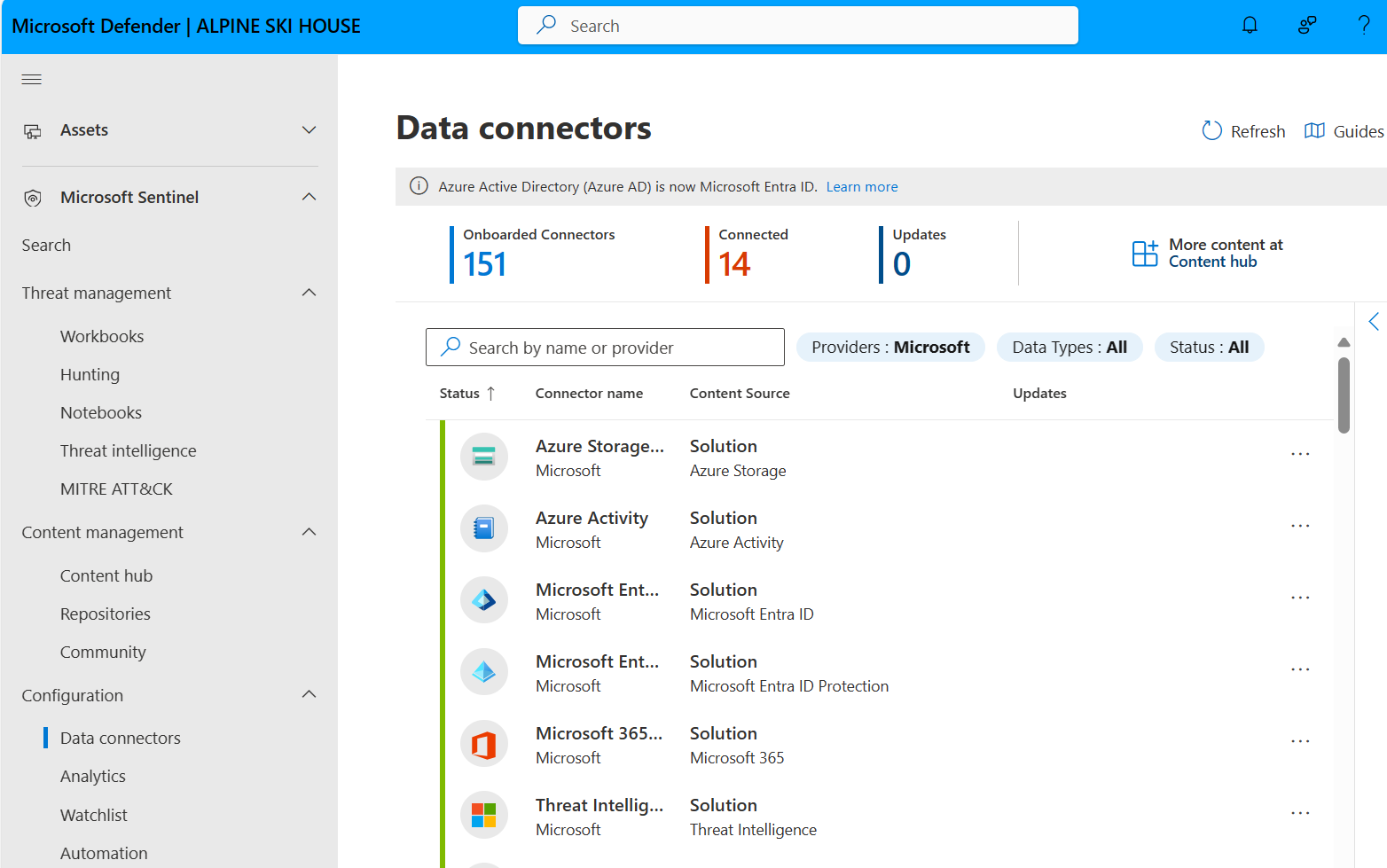
Microsoft Sentinel is a cloud-native SIEM built for multicloud and multiplatform environments. It combines SIEM, SOAR, UEBA, threat intelligence, a unified data lake, and AI-assisted investigation capabilities. The platform supports broad data ingestion through native connectors and custom integrations, helping SOC teams centralize telemetry, correlate activity, and respond across Microsoft and non-Microsoft tools.
Key features include:
- Cloud-native SIEM: Unifies security monitoring, detection, investigation, and response across distributed environments.
- Security data lake: Centralizes security data in scalable storage for analytics, detection, and AI workflows.
- Native XDR integration: Connects SIEM and XDR workflows to improve visibility and response coordination.
- Broad connector support: Supports more than 350 native connectors and no-code custom integrations.
- AI-assisted operations: Uses Security Copilot to summarize incidents, generate KQL queries, and recommend response steps.
- Threat intelligence enrichment: Correlates internal activity with Microsoft and third-party threat intelligence feeds.

Source: Microsoft
3. Sumo Logic

Sumo Logic Cloud SIEM is a cloud-native SIEM focused on real-time threat detection, investigation, and response. It normalizes structured and unstructured data, correlates related events, and uses automation to help analysts reduce alert noise. The platform also supports UEBA, threat intelligence enrichment, detection-as-code, and AI-assisted investigation workflows.
Key features include:
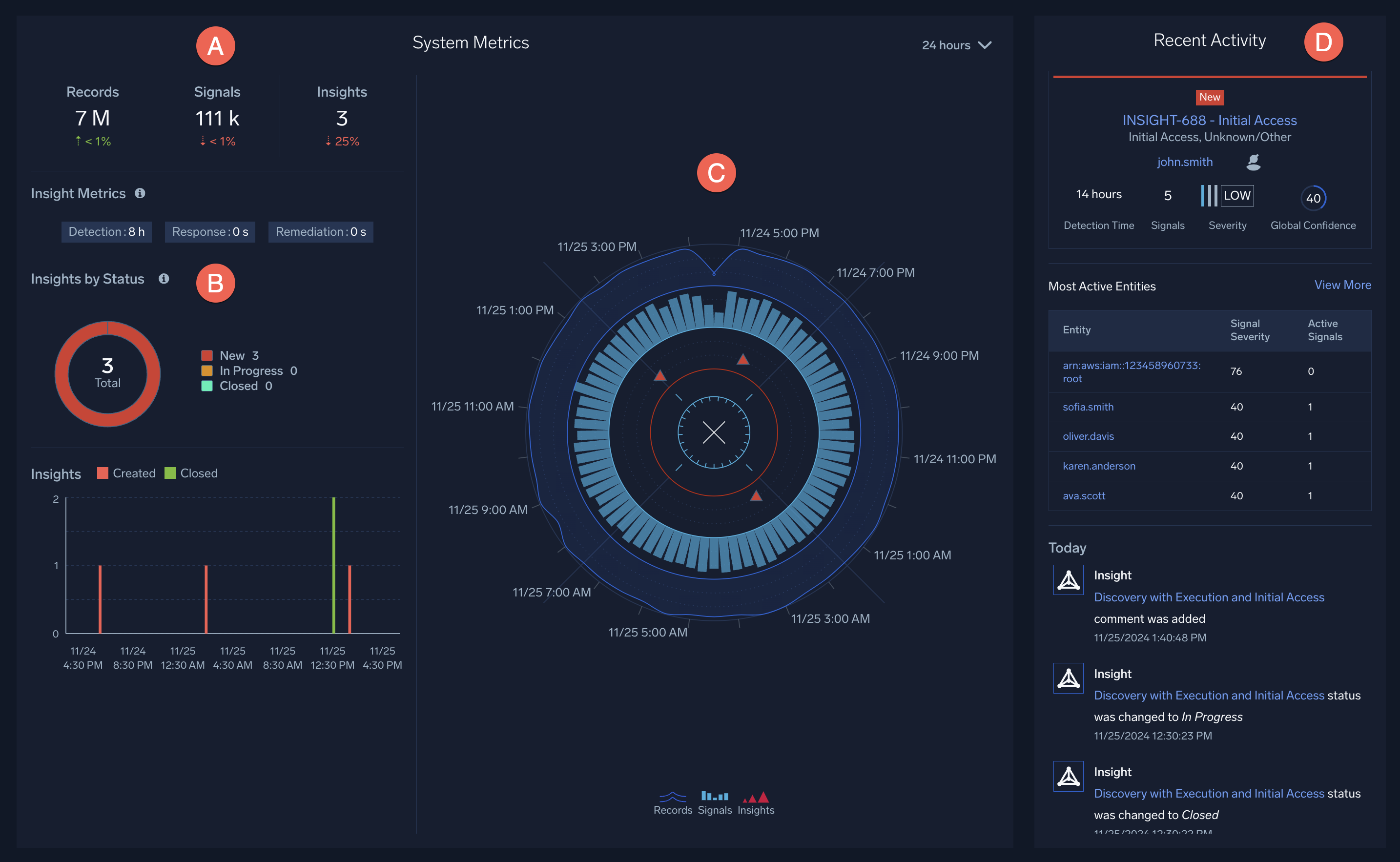
- Signal clustering and insights: Groups related signals and creates higher-priority insights when risk exceeds defined thresholds.
- UEBA baselining: Builds behavior baselines for users and entities to detect anomalies, insider threats, and compromised accounts.
- MITRE ATT&CK coverage mapping: Maps detection rules to adversary tactics and techniques to identify coverage gaps.
- AI-assisted investigation: Uses natural language queries, generated summaries, and entity relationships to support faster analysis.
- Automation and playbooks: Enriches alerts and triggers manual or automated workflows when insights are created or closed.
- Detection-as-code: Allows teams to manage SIEM rules in GitHub and reduce detection rule drift.

Source: Sumo Logic
4. IBM QRadar

IBM QRadar SIEM centralizes security visibility across data sources and tools to support real-time threat detection, investigation, and compliance. It helps analysts correlate events, prioritize risk, and reduce repetitive tasks such as case creation and false-positive review. The platform also supports advanced threat detection, threat hunting, ransomware use cases, and compliance reporting.
Key features include:
- Centralized threat visibility: Collects and correlates security data across the environment for unified monitoring.
- User behavior analytics: Detects anomalous behavior, risky users, and possible insider threats.
- Sigma rule support: Uses open detection content to help identify advanced attack patterns.
- Network threat analytics: Adds network-level visibility to support attack path analysis and threat detection.
- Compliance support: Helps produce evidence for regulatory and internal audit requirements.
- Prebuilt integrations: Connects with existing security tools through prebuilt integrations and partner extensions.

Source: IBM
5. SentinelOne AI SIEM

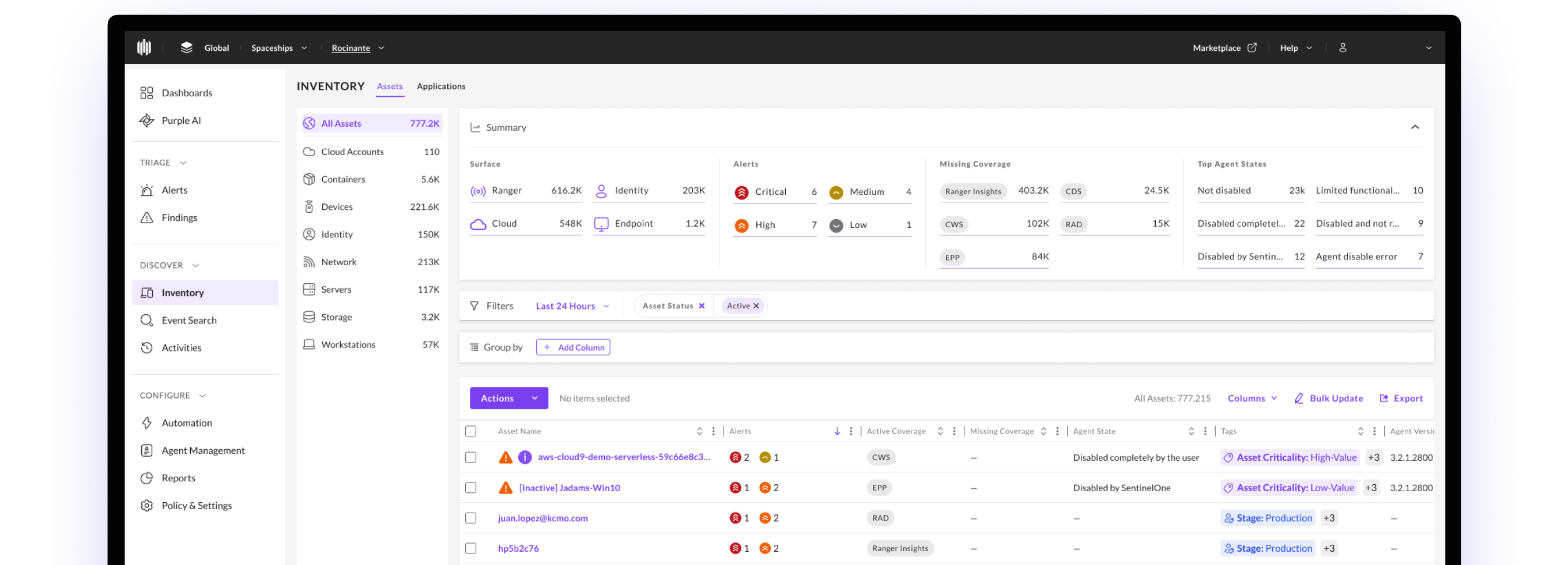
SentinelOne AI SIEM is built on the Singularity Data Lake and is intended to ingest, analyze, and retain security and IT data from many sources. It supports real-time detection, AI-assisted analytics, threat hunting, automated investigation, and response workflows. The platform emphasizes open data ingestion, schema-free storage, and automation for SOC teams managing large-scale environments.
Key features include:
- Broad data ingestion: Ingests first-party and third-party structured and unstructured data from different sources.
- Schema-free data lake: Stores data without requiring indexing or fixed schemas.
- AI-enhanced detection: Uses AI models to identify patterns, anomalies, and threats across large datasets.
- Automated investigation and response: Uses automated playbooks and workflows to guide response actions.
- Threat intelligence integration: Adds threat intelligence context to improve detection and prioritization.
- Real-time visibility: Provides dashboards and analytics for current security events and investigations.

Source: SentinelOne
6. Splunk Enterprise Security

Splunk Enterprise Security is a SIEM and TDIR platform that combines detection, investigation, response, SOAR, UEBA, and AI-assisted workflows. It helps SOC teams search and analyze data across domains, cloud environments, and devices while using risk-based alerting and enrichment to reduce noise. The platform also supports detection lifecycle management and MITRE ATT&CK coverage tracking.
Key features include:
- Full-fidelity data visibility: Searches and analyzes security data across cloud, device, and enterprise environments.
- Risk-based alerting: Prioritizes higher-risk activity to reduce alert volume and improve true positive rates.
- Unified TDIR workflows: Centralizes detection, investigation, and response in one SOC workspace.
- UEBA: Uses machine learning to detect anomalous user and entity behavior.
- SOAR and enrichment: Automates response workflows and adds context to alerts during investigations.
- Detection Studio: Supports planning, testing, deployment, and monitoring of detections mapped to MITRE ATT&CK.

Source: Splunk
Related content: Read our guide to SIEM providers
Challenges in Deploying SIEM Tools
While SIEM tools are useful for organizations to improve their security posture, they can also introduce several challenges.
High Cost and Complexity
Implementing a SIEM solution often requires significant upfront investment in software licenses, hardware (for on-premises systems), and integration efforts. Total cost of ownership can escalate when factoring in ongoing maintenance, log storage, and the need to hire or train specialized personnel.
Smaller organizations may find these costs prohibitive, while larger enterprises must also contend with the additional complexity of managing scale and multi-environment deployments. Integrating diverse data sources, maintaining regular updates, and tuning detection models to suit organizational needs require dedicated expertise. Improper configuration or integration can lead to blind spots or excessive alerting, reducing the utility of these systems.
Alert Fatigue and Tuning
SIEM platforms generate a large volume of alerts, and without fine-tuned rules and filters, security teams can become overwhelmed; a phenomenon known as alert fatigue. False positives, redundant notifications, and poorly prioritized incidents can overload analysts, causing genuine threats to be ignored or missed.
Managing the sheer number of alerts is a primary challenge for SOC teams, particularly as environments grow in complexity. Continuous tuning is required to adjust correlation rules, refine detection thresholds, and suppress known benign events. This requires skilled personnel and a sound understanding of normal business activity versus abnormal or risky behavior.
Data Volume and Scalability Issues
SIEM tools must continuously ingest, process, and store vast amounts of log and event data from different systems across an organization. As IT environments expand, so does the volume and complexity of this data. Not all legacy SIEM solutions scale efficiently, resulting in performance bottlenecks, increased latency, and extended investigation timelines.
Real-time analysis can become impractical if infrastructure is not sized correctly or if data growth outpaces platform capacity. Cloud-native SIEMs have addressed some scalability issues with elastic infrastructure and flexible pricing, but organizations must still balance ingest costs with storage and analysis needs.
Skill Gaps in SOC Teams
Effective use of SIEM platforms requires a combination of technical expertise, security awareness, and organizational knowledge. Many organizations struggle to attract or retain skilled SOC analysts who can configure systems, interpret alerts, and customize detection rules.
Skill gaps can result in underutilized SIEM features, delayed response to incidents, or failed compliance audits. Addressing these gaps involves investment in both training and process automation.
Best Practices for Implementing SIEM Tools
Here are some important practices to consider when working with SIEM tools.
1. Develop Priority Use Cases and Detection Rules
Organizations should begin SIEM implementation by identifying their most critical assets, threats, and regulatory obligations. This allows security teams to prioritize use cases such as insider threat detection, credential misuse, or malware outbreaks and develop targeted detection rules. Focusing on high-impact scenarios ensures efficient use of SIEM resources and reduces the likelihood of noise overwhelming the system.
Detection rules should be regularly reviewed and updated to reflect evolving business processes, IT infrastructure, and threat intelligence. Collaborating with stakeholders across IT, risk, and compliance functions will result in detection frameworks that align with both security and business objectives.
2. Choose the Right Deployment Model
The decision to deploy a SIEM solution on-premises, in the cloud, or as a hybrid depends on factors such as data residency requirements, scalability, operational maturity, and existing infrastructure. Cloud-native platforms offer rapid deployment and elastic scaling but may pose challenges with privacy or integration in regulated industries. Conversely, on-premises solutions provide more direct control but entail heavier administrative and maintenance overhead.
A hybrid model, blending cloud-based analytics with on-premises data collection, can offer the best of both worlds for complex environments. Selecting the appropriate deployment model simplifies ongoing management and aligns with organizational security and compliance mandates.
3. Balance Ingestion Volume and Cost via Preprocessing
SIEM costs often scale with the volume of ingested data, making indiscriminate log collection financially unsustainable. Preprocessing routines, such as filtering out low-value events, normalizing log structures, and applying enrichment prior to SIEM ingestion, help organizations control both cost and performance. Careful consideration of which logs are essential for detection and compliance is critical to minimizing unnecessary spend.
Automation tools and log management gateways can enable preprocessing, ensuring that only relevant and actionable data reaches the SIEM platform. Regular reviews of ingestion policies, in collaboration with relevant business units, help align log management practices to current security objectives and compliance requirements.
4. Deployment and Management Models
Managing a SIEM deployment involves ongoing monitoring, tuning, and optimization of both security rules and system resources. Documented processes and clear roles improve efficiency, ensure prompt responses to emerging threats, and reduce the risk of misconfigurations leading to gaps in coverage. Centralized dashboards and automation tools support proactive monitoring and minimize day-to-day administrative burden.
Organizations should consider leveraging managed SIEM or security-as-a-service (SECaaS) providers if in-house expertise is limited or if staffing a full SOC is impractical. Managed service providers offer round-the-clock monitoring, routine system maintenance, and timely updates to detection content. This model works particularly well for organizations with lean security teams or those looking to augment existing operations without a full-scale platform buildout.
5. Configure Correlation and Alert Rules Thoughtfully
Effective configuration of correlation and alert rules is essential to reducing false positives and ensuring that real threats are promptly escalated for investigation. Security teams must leverage baselining, use context-aware logic, and employ multi-stage correlation to focus on genuinely risky activities. Rules should be continuously tuned to the organization’s unique environment and evolving threat landscape.
The rule configuration process should include regular feedback loops, incorporating lessons from previous incidents, new threat intelligence feeds, and changes in business operations. Documenting rule logic and rationale aids in future tuning efforts and supports auditability. By investing upfront in thoughtful alert design, organizations can maintain manageable alert volumes, support analyst productivity, and ensure a prompt, effective incident response.
Conclusion
SIEM tools are essential for modern security operations, enabling organizations to centralize monitoring, correlate diverse event data, and respond effectively to threats. With capabilities spanning real-time detection, behavior analytics, and compliance automation, these tools empower security teams to maintain situational awareness and reduce risk. Effective implementation requires thoughtful planning, but when configured and tuned correctly, SIEM tools greatly enhance an organization’s ability to detect and respond to security incidents.
Learn More About Exabeam
Learn about the Exabeam platform and expand your knowledge of information security with our collection of white papers, podcasts, webinars, and more.