فهرس المحتويات
ما هي أنظمة SOAR؟
أنظمة تنسيق الأمان والأتمتة والاستجابة (SOAR) تدمج وتبسط عمليات الأمان. تساعد الفرق الأمنية في إدارة والرد على التهديدات بشكل أكثر كفاءة. من خلال استخدام SOAR، يمكن للمنظمات أتمتة المهام الروتينية، مما يقلل من التدخل البشري والأخطاء. نأمل أن يقلل هذا من أوقات الاستجابة ويحسن الكفاءة العامة لعمليات الأمان.
تعمل منصات SOAR كنقطة واحدة لإدارة أدوات وعمليات الأمان في المؤسسة. إنها تقوم بأتمتة سير العمل الأمني وتوفر رؤية متكاملة لعمليات الأمان. تتيح هذه الطريقة اتخاذ قرارات أفضل في التعامل مع التهديدات. من خلال دمج البيانات من أدوات الأمان المختلفة، تساعد أنظمة SOAR الفرق الأمنية على الحصول على منظور أوضح حول التهديدات والثغرات.
Editor’s note: Updated the article to cover recent market trends, updated information about tools to reflect features and capabilities in 2026.
في هذا المقال:
- تطور نظام SOAR: من حل مستقل إلى مكون في نظام SIEM
- كيف تعمل أنظمة SOAR
- أنظمة SOAR البارزة
- كيفية اختيار نظام SOAR
تطور نظام SOAR: من حل مستقل إلى مكون في نظام SIEM
اكتسبت منصات SOAR زخمًا خلال فترة كانت فيها مراكز العمليات الأمنية (SOCs) مثقلة بحجم التنبيهات ونقص المحللين المهرة. وقد وعد البائعون الأوائل بأن الأتمتة والتنظيم ستحل مشكلة الإرهاق الناتج عن التنبيهات، وتوحد استجابة الحوادث، وتبسط تكامل الأدوات عبر مجموعات الأمان المتفرقة.
نتيجة لذلك، صعدت SOAR بسرعة في دورة الضجيج الخاصة بـ Gartner، وبلغت ذروة التوقعات كحل تحويلي. ومع ذلك، كشفت التطبيقات الواقعية عن قيود. واجهت العديد من المنظمات صعوبات في دمج SOAR في بيئاتها. تطلب بناء وصيانة كتيبات التشغيل تخصيصًا كبيرًا، وغالبًا ما كانت الأتمتة الموعودة تتطلب المزيد من الضبط والإشراف مما كان متوقعًا في البداية.
نتيجة لذلك، بدأ السوق في إعادة تقييم دور SOAR. بينما لا يزال SOAR قدرة حاسمة لمركز العمليات الأمنية (SOC)، بدلاً من أن يكون فئة منفصلة، يتم امتصاص قدرات SOAR بشكل متزايد في منصات SIEM الحديثة، حيث تكمل التنسيق والأتمتة قدرات الكشف والاستجابة الأوسع.
سوق SOAR والاتجاهات
وفقًا لـ أبحاث السوق الحديثة، يُقدّر سوق SOAR العالمي بقيمة 1.87 مليار دولار أمريكي ومن المتوقع أن يصل إلى 4.42 مليار دولار أمريكي بحلول عام 2030. وهذا يعكس معدل نمو سنوي مركب (CAGR) قدره 18.82%. ويعزى النمو إلى الزيادة في عدد الحوادث السيبرانية، والموارد المحدودة للمحللين، والضغط التنظيمي لتحسين قدرات الاستجابة.
لم تعد الأتمتة خيارًا. تستثمر المؤسسات في منصات مدعومة بالذكاء الاصطناعي يمكنها معالجة آلاف التنبيهات في الوقت الحقيقي. إن الذكاء الاصطناعي التوليدي، والهياكل السحابية، ونماذج مركز العمليات الأمنية القابلة للتكوين تسرع من عملية التبني. في الوقت نفسه، تجعل الحوافز التأمينية والمبادرات الأمنية من الأتمتة مطلبًا أساسيًا بدلاً من كونها نفقات اختيارية.
شرائح السوق الرئيسية:
- حسب الصناعة، تصدرت الخدمات المصرفية والخدمات المالية والتأمين (BFSI) بحصة إيرادات تبلغ 29%. يعتبر قطاع الرعاية الصحية والعلوم الحياتية هو الأسرع نمواً، حيث يتوسع بمعدل نمو سنوي مركب يقارب 19%، مدفوعاً بالأجهزة الطبية المتصلة ومتطلبات حماية البيانات الأكثر صرامة.
- جغرافياً، احتفظت أمريكا الشمالية بـ 43% من الإيرادات العالمية بسبب التمويل الفيدرالي القوي ونظام التأمين السيبراني الناضج. منطقة آسيا والمحيط الهادئ هي الأسرع نمواً، مدعومة بالتحول الرقمي السريع وإطارات تنظيمية أكثر صرامة.
محركات السوق الرئيسية:
- زيادة حجم التنبيهات: تواجه المؤسسات ملايين من الأحداث الأمنية يوميًا عبر بيئات موزعة. يزيد الفحص اليدوي من الإرهاق ويؤخر الاستجابة. تقلل منصات SOAR من دورات التحقيق وتقلل بشكل كبير من التوقف غير المخطط له من خلال أتمتة الإثراء والتوافق والاحتواء.
- متطلبات الامتثال والتنظيمات: تتطلب اللوائح مثل GDPR وPCI-DSS 4.0 وHIPAA وقانون Gramm-Leach-Bliley بشكل متزايد تسجيلًا آليًا واحتواءً سريعًا للانتهاكات. تعزز المبادرات الحكومية، بما في ذلك التمويل الفيدرالي الأمريكي لمشاريع SOAR، الأتمتة كضرورة للامتثال.
- نقص المواهب في الأمن السيبراني: هناك ملايين من الوظائف الشاغرة في مجال الأمن السيبراني على مستوى العالم. تقوم أنظمة SOAR بأتمتة المهام من المستوى الأول مثل جمع البيانات وتحسين الأحداث، مما يسمح للمحللين بالتركيز على البحث عن التهديدات والتحقيقات المعقدة. تظهر نماذج SOC المعتمدة على الذكاء الاصطناعي أن معظم الحوادث الروتينية يمكن التعامل معها دون تدخل بشري.
- تسريع الذكاء الاصطناعي التوليدي: يقلل الذكاء الاصطناعي التوليدي من الوقت اللازم لبناء وصيانة كتيبات العمل. يؤدي توليد سير العمل المدفوع بالذكاء الاصطناعي إلى تقصير أوقات التحقيق وزيادة الحلول الآلية. تتكيف الكتيبات الديناميكية بسهولة أكبر مع تقنيات المهاجمين المتطورة، مما يقلل من عبء الصيانة.
- حوافز التأمين السيبراني: يطلب مقدمو التأمين بشكل متزايد إثبات احتواء سريع ومسارات تدقيق مفصلة. يمكن للمنظمات التي تظهر نضج الأتمتة تقليل الأقساط بنسبة 10-15%. تدعم هذه الحوافز المالية اعتماد SOAR بشكل مباشر.
كيف تعمل أنظمة SOAR
تجميع البيانات من مصادر أمنية متعددة
تجمع أنظمة SOAR البيانات من أدوات أمان متعددة ومصادر مثل جدران الحماية وأنظمة كشف التسلل وبرامج مكافحة الفيروسات. يسمح هذا التجميع بالتحليل المركزي، مما يقلل من الوقت اللازم لجمع المعلومات يدويًا من أنظمة متباينة.
تجمع البيانات يركز المعلومات ويحسن جودتها. من خلال جمع البيانات من مصادر متنوعة، يمكن لأنظمة SOAR تقديم نظرة شاملة عن الأحداث الأمنية. يدعم هذا التجميع للكشف عن التهديدات والاستجابة لها بدقة أكبر، حيث يتم أخذ جميع المعلومات ذات الصلة في الاعتبار خلال عملية اتخاذ القرار.
تحليل وتحديد أولويات التهديدات
تستخدم أنظمة SOAR التحليلات والذكاء لتقييم وتصنيف التهديدات بناءً على شدتها وتأثيرها المحتمل. من خلال استخدام الأتمتة، تقوم هذه الأنظمة بتقييم عدد كبير من التنبيهات بسرعة، وتحديد التهديدات التي تتطلب اهتمامًا فوريًا. تمكن هذه القدرة فرق الأمان من تركيز جهودها على القضايا الأكثر أهمية.
بالإضافة إلى إعطاء الأولوية للتهديدات، تدعم أنظمة SOAR التحقيق في الحوادث من خلال ربط الأحداث ذات الصلة وتحليل الأنماط. يسمح هذا التحليل الغني بالسياق بفهم أفضل وحل أسرع للحوادث الأمنية.
آليات الاستجابة الآلية واليدوية
توفر منصات SOAR قدرات استجابة تلقائية، حيث تنفذ إجراءات محددة مسبقًا للتخفيف من التهديدات دون تدخل بشري. يمكن أن تتراوح هذه الاستجابات من عزل الأنظمة المتأثرة إلى حظر عناوين IP الخبيثة. تساعد الأتمتة في تحييد التهديدات بسرعة، مما يقلل من الأضرار المحتملة ويحافظ على سلامة العمليات التجارية.
بينما تعتبر الأتمتة أمرًا حيويًا، تدعم أنظمة SOAR أيضًا التدخل اليدوي عند الحاجة. يمكن للمحللين تولي الحوادث المعقدة أو الحساسة التي تتطلب حكمًا دقيقًا. تضمن هذه القدرة المزدوجة المرونة والدقة في التعامل مع حوادث الأمن.
التعلم المستمر والتكيف مع التهديدات الناشئة
أنظمة SOAR ليست ثابتة؛ بل تتطور من خلال التعلم من الحوادث السابقة والتكيف مع أشكال جديدة من التهديدات. تقوم خوارزميات التعلم الآلي داخل هذه المنصات بتحليل البيانات التاريخية لتحديد الأنماط وتحسين الاستجابات المستقبلية. تضمن هذه القدرة التكيفية بقاء أنظمة SOAR فعالة حتى مع تغير مشهد التهديدات.
يتجاوز التعلم المستمر في أنظمة SOAR اكتشاف التهديدات. يمكن لهذه المنصات تحديث وتحسين سير العمل الآلي، من خلال دمج الدروس المستفادة من الحوادث السابقة. من خلال البقاء في مقدمة التهديدات الناشئة، تساعد أنظمة SOAR المؤسسات على الحفاظ على موقف أمني قوي.
محتوى ذي صلة: اقرأ دليلنا حولأمان SOAR
أنظمة SOAR البارزة
منصات الأمان التي تقدم خدمات SIEM و SOAR
1. إكزابين: دعم أمان جوجل كلاود

إكزابييم هي مزود رائد لحلول إدارة معلومات وأحداث الأمان (SIEM)، تجمع بين UEBA وSIEM وSOAR وTDIR لتسريع عمليات الأمان. تمكّن منصات العمليات الأمنية الخاصة بها الفرق الأمنية من اكتشاف التهديدات والتحقيق فيها والاستجابة لها بسرعة، مع تعزيز الكفاءة التشغيلية.
الميزات الرئيسية:
- جمع السجلات وإدارتها القابلة للتوسع: تسرع المنصة المفتوحة عملية إدخال السجلات بنسبة 70%، مما يلغي الحاجة لمهارات هندسية متقدمة مع ضمان تجميع سلس للسجلات عبر البيئات الهجينة.
- تحليلات سلوكية: تستخدم تحليلات متقدمة لتحديد السلوك الطبيعي مقابل السلوك غير الطبيعي، وكشف التهديدات الداخلية، والحركة الجانبية، والهجمات المتقدمة التي تفوتها الأنظمة المعتمدة على التوقيع. يذكر العملاء أن Exabeam يساعد في الكشف والاستجابة لـ 90% من الهجمات قبل أن تتمكن الشركات الأخرى من اكتشافها.
- استجابة التهديدات الآلية: تبسط عمليات الأمان من خلال أتمتة جداول الحوادث، وتقليل الجهد اليدوي بنسبة 30%، وتسريع أوقات التحقيق بنسبة 80%.
- تحقيق الحوادث السياقية: نظرًا لأن Exabeam يقوم بأتمتة إنشاء الجداول الزمنية ويقلل من الوقت المستغرق في المهام البسيطة، فإنه يقلل من الوقت اللازم لاكتشاف التهديدات والاستجابة لها بأكثر من 50%. تقلل قواعد الكورليشن المسبقة البناء، ونماذج اكتشاف الشذوذ، ودمج البائعين من التنبيهات بنسبة 60%، مما يقلل من الإيجابيات الكاذبة.
- خيارات SaaS والسحابة الأصلية: توفر خيارات النشر المرنة قابلية التوسع للبيئات السحابية والهجينة، مما يضمن سرعة تحقيق القيمة للعملاء. بالنسبة للمنظمات التي لا تستطيع، أو لا ترغب في نقل SIEM الخاص بها إلى السحابة، تقدم Exabeam SIEM رائد في السوق، كامل الميزات، ومُستضاف ذاتيًا.
- رؤية الشبكة مع NetMon: يوفر رؤى عميقة تتجاوز الجدران النارية وأنظمة كشف التسلل/أنظمة منع التسلل، ويكتشف التهديدات مثل سرقة البيانات ونشاط الشبكات الآلية، مما يسهل التحقيق من خلال البحث المرن. كما أن تحليل الحزم العميق (DPA) يبني أيضًا على محرك فحص الحزم العميق (DPI) الخاص بـ NetMon لتفسير مؤشرات الاختراق الرئيسية (IOCs).
يبرز عملاء Exabeam باستمرار كيف أن رؤيتها في الوقت الحقيقي، والأتمتة، وأدوات الإنتاجية المدعومة بالذكاء الاصطناعي، تعزز من مهارات الأمن، وتحول المحللين المرهقين إلى مدافعين نشطين مع تقليل التكاليف والحفاظ على دعم رائد في الصناعة. لمزيد من المعلومات قم بزيارة Exabeam.com

Source: Exabeam
2. IBM QRadar SIEM + QRadar SOAR

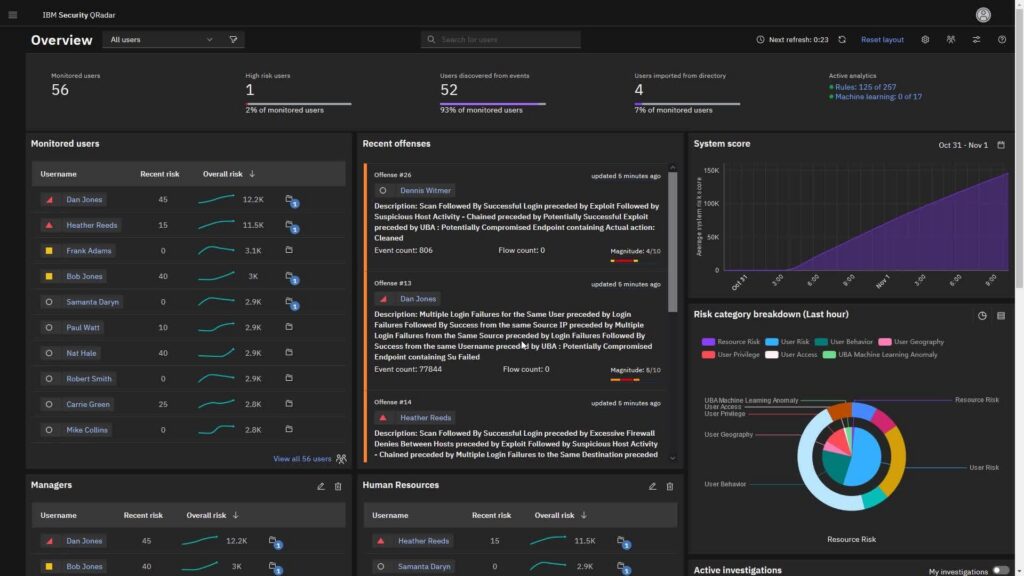
IBM QRadar SOAR (المحلي) هي منصة لتنظيم الأمان، والأتمتة، والاستجابة لمساعدة فرق الأمان في تنسيق وأتمتة عمليات استجابة الحوادث. تتكامل مع QRadar SIEM وأدوات الأمان الأخرى لتنظيم سير العمل، وتوحيد الإجراءات، وإدارة الحوادث من خلال كتيبات عمل منظمة.
تشمل الميزات الرئيسية:
- سير العمل الآلي للاستجابة للحوادث: يساعد في تنسيق أنشطة الاستجابة وتطبيق إجراءات التعامل مع الحوادث بشكل متسق من خلال سير العمل الآلي.
- استجابة مدفوعة بكتيبات اللعب: تستخدم كتيبات منظمة لتوجيه المحللين خلال خطوات الاستجابة للحوادث وتوحيد العمليات عبر مركز العمليات الأمنية.
- إدارة الحالات المتكاملة: تجمع بيانات الحوادث وتفاصيل التحقيق لدعم التعاون والتتبع والتوثيق.
- جمع بيانات المراقبة الأمنية: يجمع ويعالج بيانات الأحداث من مصادر متعددة من خلال آليات إدخال البيانات والتكاملات.
- رؤية اكتشاف الشبكة والاستجابة: تحلل نشاط الشبكة والبيانات لتقديم رؤى تساعد في تحديد والرد على التهديدات المحتملة.

Source: IBM
3. مايكروسوفت سنتينل

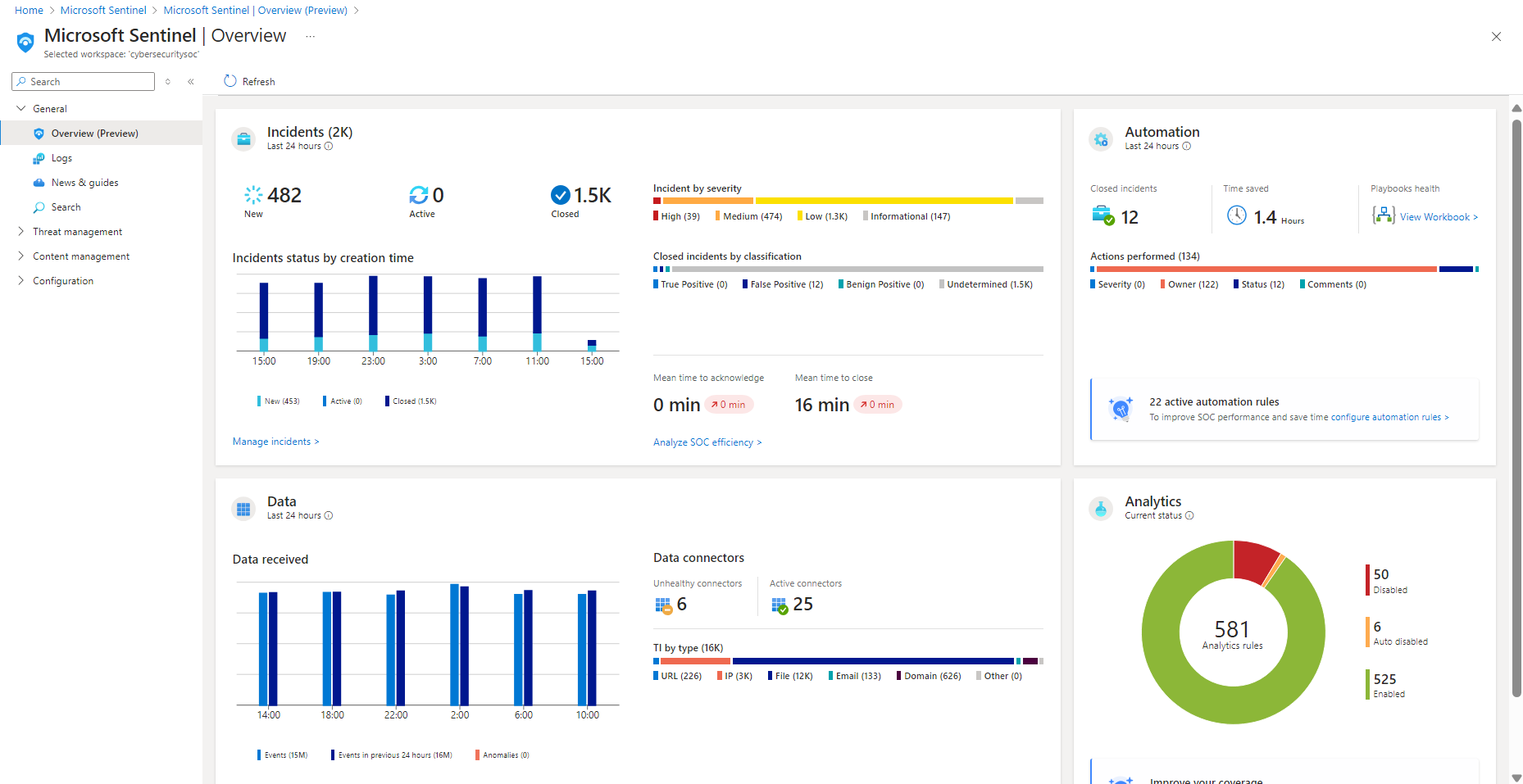
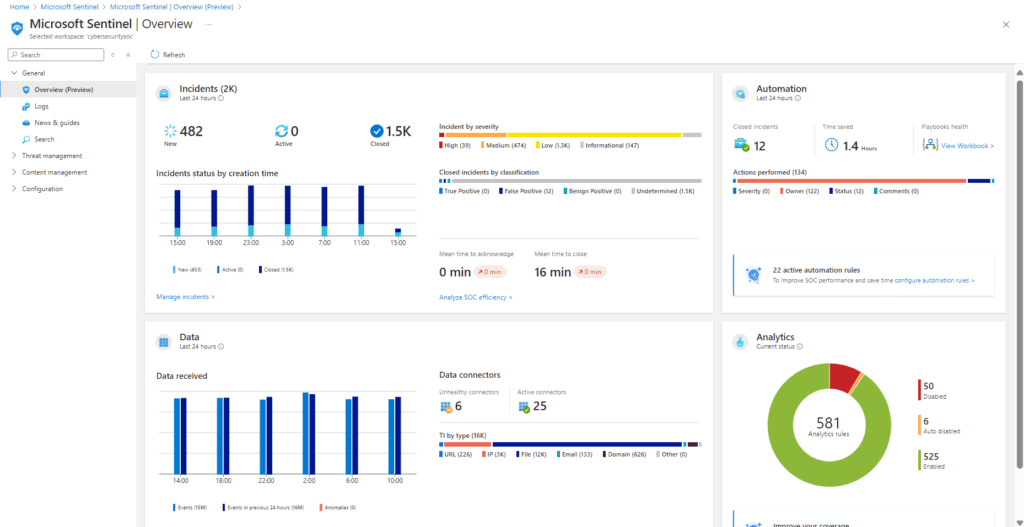
Microsoft Sentinel هي منصة SIEM و SOAR قائمة على السحابة مبنية على Microsoft Azure. تجمع وتحلل البيانات الأمنية عبر خدمات السحابة، والبنية التحتية المحلية، والأدوات التابعة لجهات خارجية. تجمع المنصة بين اكتشاف التهديدات، والتحقيق، وقدرات الاستجابة الآلية بينما تستخدم الذكاء الاصطناعي والتحليلات لدعم مراكز العمليات الأمنية في إدارة التنبيهات والحوادث عبر البيئات الهجينة.
تشمل الميزات الرئيسية:
- بنية SIEM السحابية: توفر منصة بيانات أمان قابلة للتوسع مبنية على Azure لمركزية البيانات ودعم التحليلات المتقدمة.
- رؤية شاملة على مستوى المؤسسة: تستخدم مئات الموصلات المدمجة والتكاملات المخصصة لجمع بيانات الأمان من بيئات متعددة السحب والمحلية.
- الكشف عن التهديدات المدعوم بالذكاء الاصطناعي: يطبق تقنيات التعلم الآلي وقواعد التحليل للكشف عن الأنشطة المشبوهة وتقليل الإيجابيات الكاذبة.
- قدرات SOAR المتكاملة: تقوم بأتمتة سير العمل للاستجابة للحوادث وعمليات الأمان من خلال ميزات التنسيق والأتمتة.
- تحقيق مدعوم بالرسوم البيانية: يستخدم الرسوم البيانية الأمنية لتصور العلاقات بين الكيانات ودعم التحقيق عبر البيئات المعقدة.
- العمليات المدعومة بالذكاء الاصطناعي التوليدي: تستخدم قدرات Security Copilot لتلخيص الحوادث، وإنشاء استفسارات، وتوصية بإجراءات الاستجابة.
Source: Microsoft
أدوات SOAR المخصصة
4. كورتكس XSOAR من بالو ألتو نتوركس

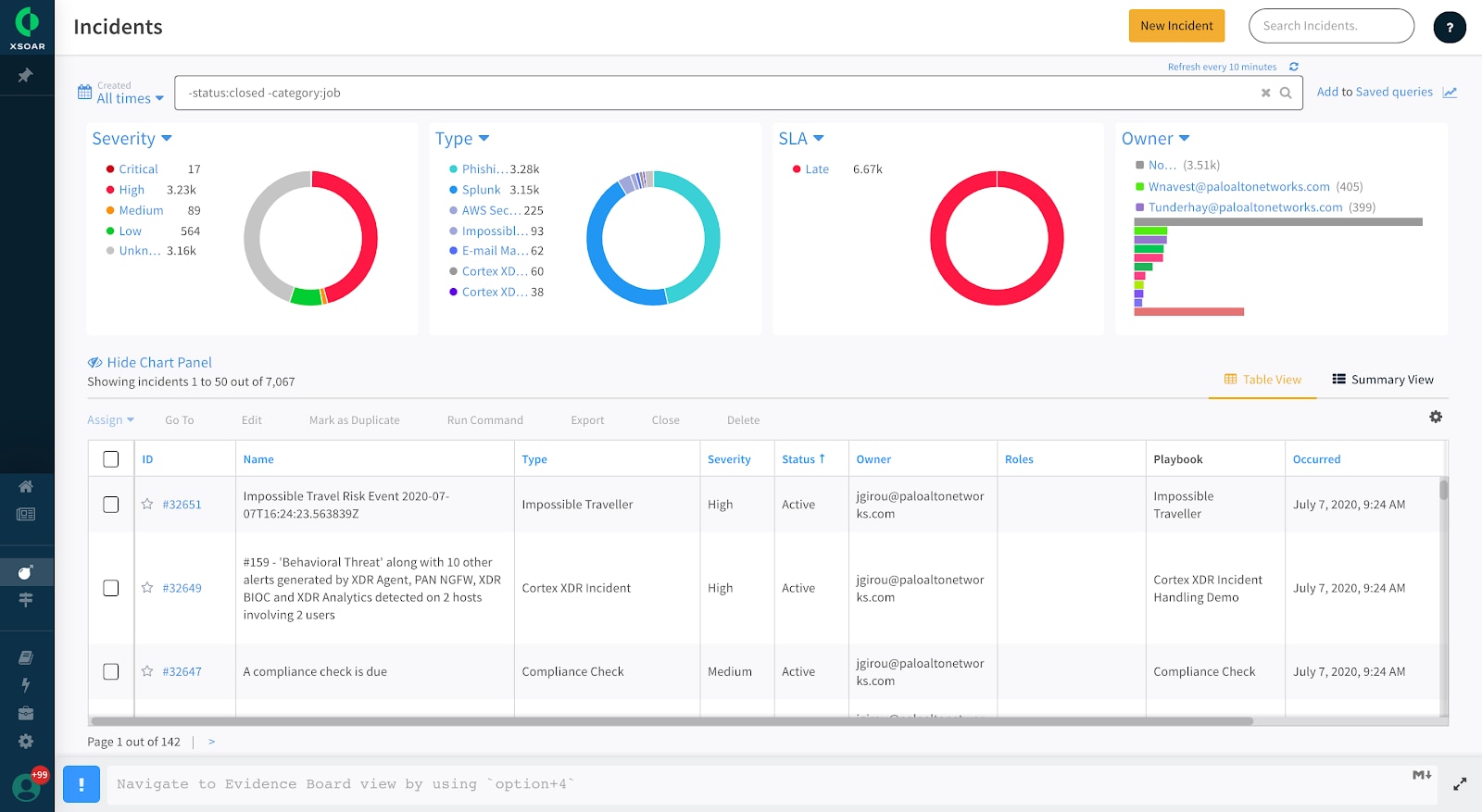
Cortex XSOAR هي منصة لتنسيق الأمن، والأتمتة، والاستجابة، تقوم بأتمتة الاستجابة للحوادث وتنسيق العمليات الأمنية عبر أدوات وفرق متعددة. توفر سير عمل مركزي، وتكاملات، وميزات تعاون تساعد فرق مركز العمليات الأمنية (SOC) في التحقيق في التنبيهات، وإدارة الحوادث، وأتمتة المهام المتكررة للاستجابة.
تشمل الميزات الرئيسية:
- استجابة تعتمد على الأتمتة أولاً: تقوم بأتمتة المهام المتكررة ومعالجة التنبيهات لتقليل الجهد المبذول في التحقيق اليدوي.
- محرر كتاب اللعب البصري: يمكن الفرق من تصميم وتخصيص سير العمل الآلي دون الحاجة إلى برمجة مكثفة.
- بيئة تعاون متكاملة للحوادث: توفر "غرفة حرب" مركزية حيث يمكن للمحللين الوصول إلى بيانات الحوادث، والمؤشرات، وذكاء التهديدات أثناء التحقيقات.
- تنسيق مركزي: ينسق العمليات والأشخاص وأدوات الأمان عبر مركز العمليات الأمنية.
- تعزيز معلومات التهديدات: يدمج مصادر خارجية لمعلومات التهديدات لتوفير سياق إضافي للتنبيهات والتحقيقات.

المصدر: بالو ألتو نتوركس
5. سبلك SOAR

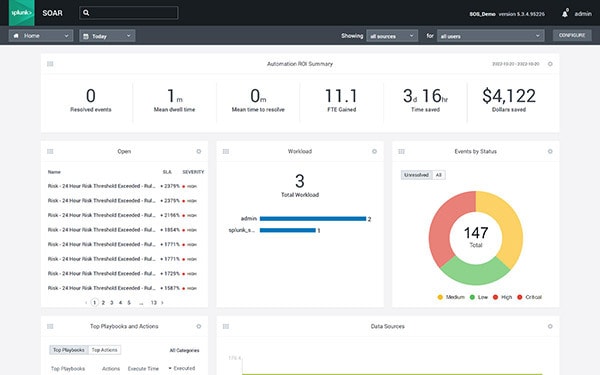
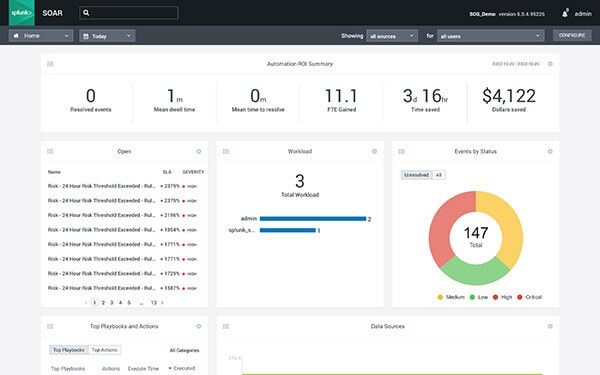
Splunk SOAR هي منصة لتنظيم الأمن، والأتمتة، والاستجابة التي تقوم بأتمتة سير العمل وتنسيق أدوات الأمن عبر مجموعة الأمن في المؤسسة. تتكامل مع العديد من الحلول من طرف ثالث وتمكن المحللين من أتمتة عمليات التحقيق والاستجابة من خلال كتيبات قابلة للتخصيص. غالبًا ما يتم نشر المنصة جنبًا إلى جنب مع Splunk Enterprise Security لدعم عمليات الأمن الموحدة.
تشمل الميزات الرئيسية:
- استجابة مدفوعة بالذكاء: تستخدم أبحاث التهديدات والمعلومات السياقية لدعم قرارات التحقيق والاستجابة.
- كتيبات التشغيل الآلية: تنفذ سير عمل الاستجابة للحوادث المحددة مسبقًا والمتوافقة مع أطر عمل مثل إطار MITRE للهجوم والتكتيكات والتقنيات المشتركة (ATT&CK) و D3FEND.
- محرر كتاب اللعب البصري: يتيح للمستخدمين بناء سير عمل الأتمتة باستخدام واجهة رسومية وكتل منطقية قابلة لإعادة الاستخدام.
- تكاملات واسعة: تتصل بمئات من أدوات الأمان وتدعم الآلاف من الإجراءات الآلية عبر الأنظمة.
- إدارة الحالات المتكاملة: تتيح للمحللين تتبع الحوادث، وتعيين المهام، وتوثيق التحقيقات ضمن المنصة.
Source: Splunk
6. فورتينت فورتيسوار

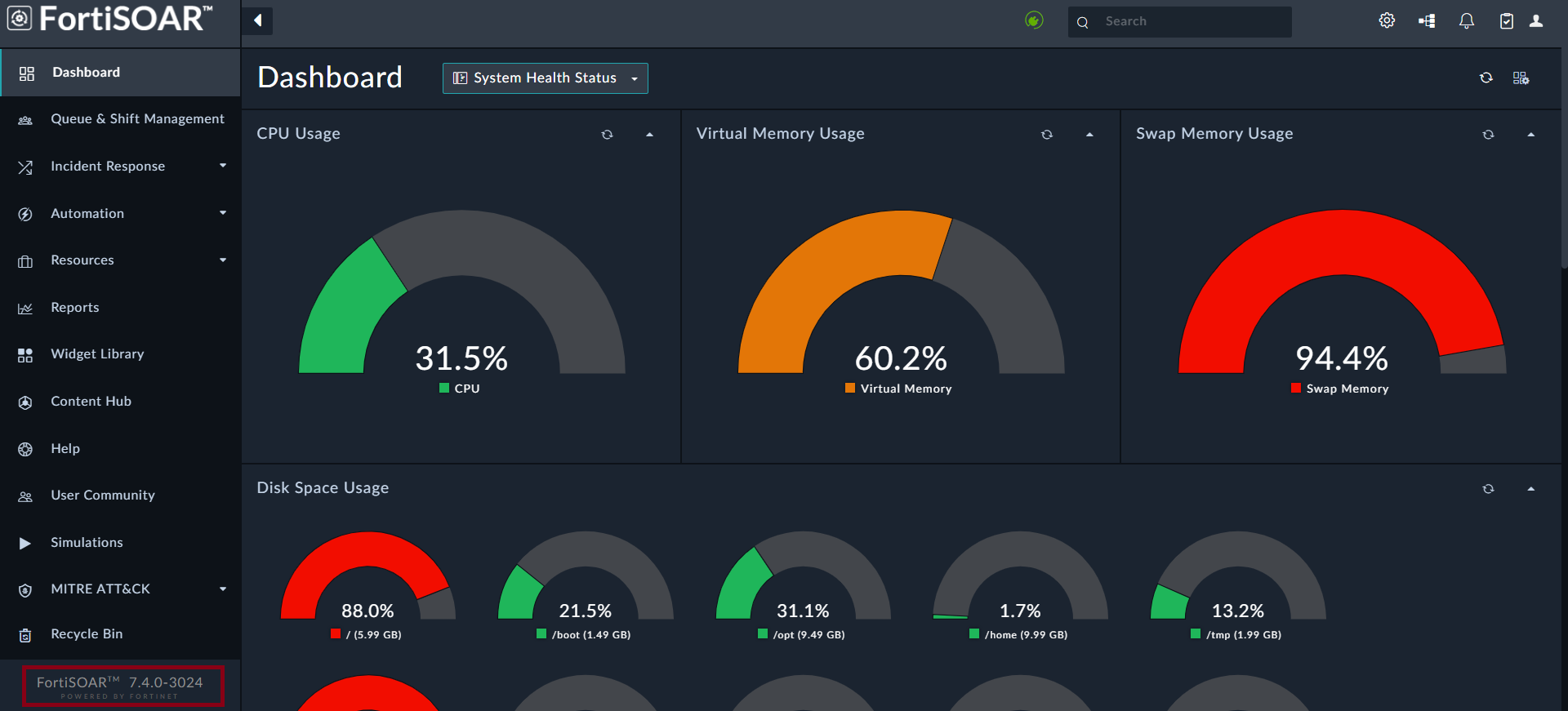
منصة Fortinet FortiSOAR هي منصة لتنظيم الأمان، وأتمتة الاستجابة، وإدارة الحوادث، تهدف إلى مركزية إدارة الحوادث وأتمتة سير العمل الأمني عبر بيئات تكنولوجيا المعلومات والتكنولوجيا التشغيلية. تعمل كحلقة مركزية لتنسيق التنبيهات، والتحقيقات، وإجراءات الاستجابة، بينما تتكامل مع أدوات الأمان المتعددة.
تشمل الميزات الرئيسية:
- إدارة الحوادث المركزية: تجمع التنبيهات وبيانات الحوادث لمساعدة الفرق في تنسيق التحقيقات وأنشطة الاستجابة.
- توجيه المحللين المدعوم بالذكاء الاصطناعي: يستخدم FortiAI ومحرك التوصيات لدعم التحقيق في التهديدات وإنشاء سير العمل.
- إنشاء دليل منخفض الكود: يوفر أدوات بصرية تمكّن فرق الأمان من بناء وتخصيص سير العمل الآلي.
- تكاملات واسعة ومحتوى: يدعم التكامل مع مئات المنتجات من طرف ثالث ويشمل كتب تشغيل موضوعة مسبقًا ووصلات.
- معلومات التهديدات المتكاملة: تستخدم معلومات التهديدات من مختبرات FortiGuard ومصادر خارجية لتعزيز التحقيقات.

Source: Fortinet
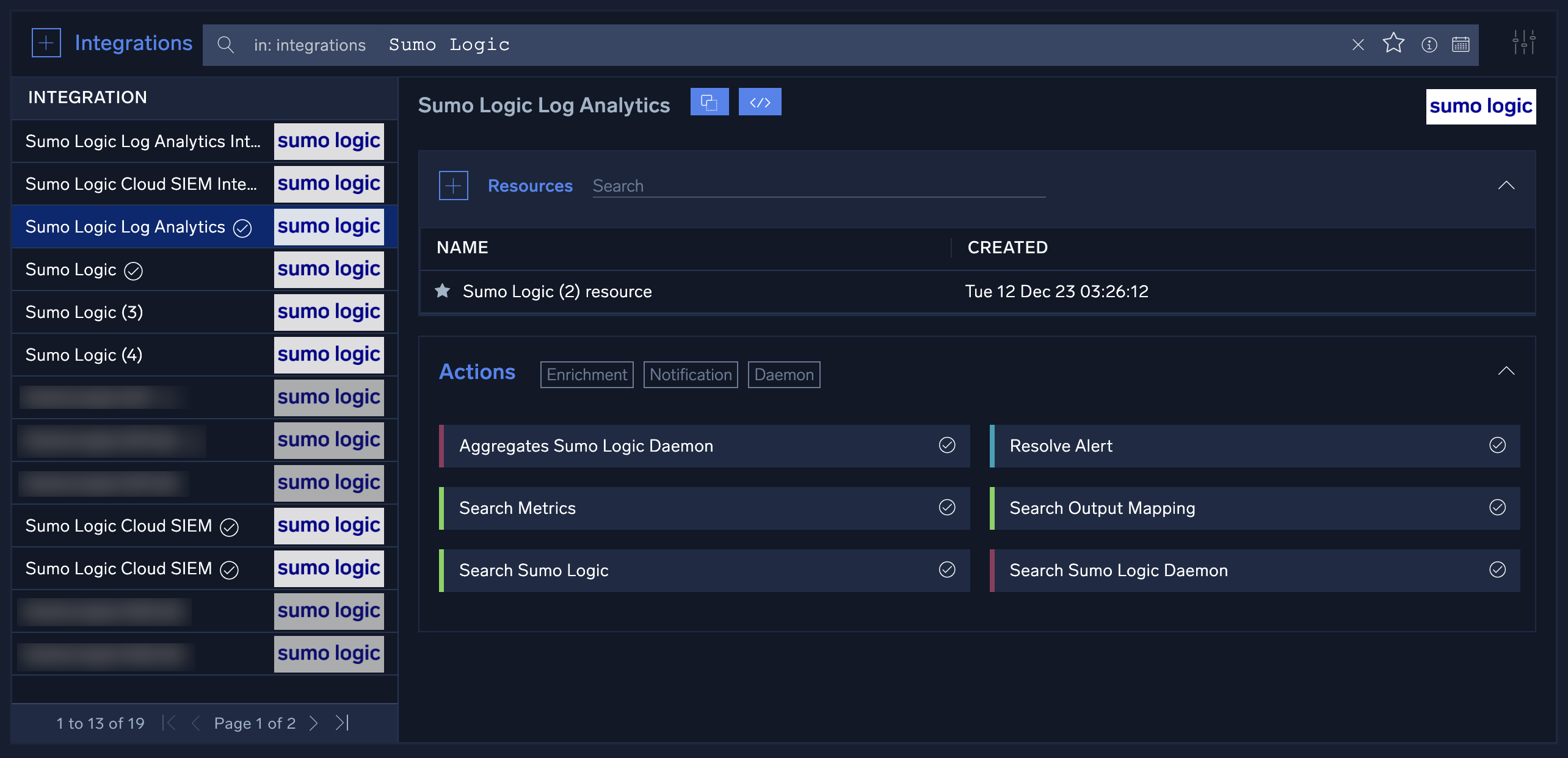
7. سمو لوجيك كلاود سور

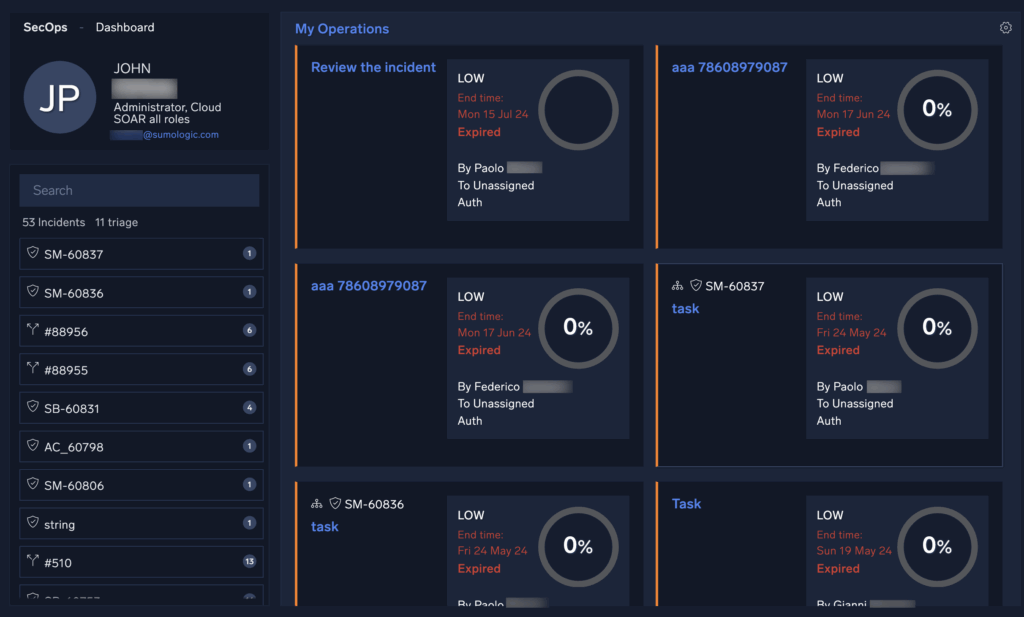
منصة Sumo Logic Cloud SOAR هي منصة سحابية أصلية لأتمتة عمليات التحقيق والاستجابة للحوادث عبر بيئات الأمان الحديثة. توفر أدوات الأتمتة، وإدارة الحالات المركزية، والتكامل مع تقنيات الأمان المتعددة لمساعدة فرق الأمان في إدارة التنبيهات والحوادث بشكل أكثر كفاءة.
تشمل الميزات الرئيسية:
- تصنيف المؤشرات الآلي: يحقق في مؤشرات الاختراق تلقائيًا لتقليل الإيجابيات الكاذبة وعبء العمل على المحللين.
- إدارة الحالات المركزية: توفر جدول زمني منظم للحوادث مع وصول قائم على الأدوار للتحقيقات التعاونية.
- إجراءات التشغيل القياسية الآلية: تقوم بأتمتة سير العمل الروتيني في مركز العمليات الأمنية والعمليات الأمنية.
- لوحات المعلومات والتقارير: تتبع مقاييس استجابة الحوادث والأداء التشغيلي من خلال لوحات معلومات قابلة للتخصيص.
- إطار عمل مفتوح للتكامل: يدعم التكاملات مع الأطراف الثالثة من خلال واجهات برمجة التطبيقات، الموصلات الجاهزة، وكتيبات الأتمتة.
المصدر: سومو لوجيك
8. رابد7 إنسايت كونكت

Rapid7 InsightConnect هي منصة SOAR لأتمتة سير العمل عبر أدوات الأمان، والتطبيقات السحابية، والأنظمة المحلية. تمكّن المنصة المؤسسات من دمج التقنيات، وتنسيق العمليات، وأتمتة المهام الأمنية الروتينية. تركز المنصة على تبسيط الأتمتة من خلال أداة بناء سير العمل المرئية ومكونات الأتمتة القابلة لإعادة الاستخدام.
تشمل الميزات الرئيسية:
- أتمتة سير العمل بدون كود: يوفر مُنشئًا بصريًا يسمح للفرق بتصميم ونشر سير العمل الآلي دون الحاجة لكتابة كود.
- تكاملات إضافات واسعة: يدعم التكامل مع مئات من أدوات الأمان وتكنولوجيا المعلومات من خلال الإضافات والمشغلات الجاهزة.
- قوالب الأتمتة الجاهزة: تتضمن سير عمل جاهزة للاستخدام لحالات الاستخدام الشائعة مثل التحقيق في التصيد وإدارة حسابات المستخدمين.
- عمليات العمل التي تتضمن الإنسان: تسمح للمحللين بإيقاف التشغيل الآلي والموافقة على الإجراءات قبل التنفيذ.
- مكونات سير العمل القابلة لإعادة الاستخدام: تدعم عناصر سير العمل المودولارية التي يمكن إعادة استخدامها عبر سيناريوهات الأتمتة المختلفة.
كيفية اختيار نظام SOAR
اختيار نظام SOAR المناسب يتطلب تقييم كل من القدرات التقنية واحتياجات المنظمة. يؤثر هذا القرار ليس فقط على كيفية التعامل مع الحوادث، ولكن أيضًا على كيفية تعاون الفرق وتحسين أدائها مع مرور الوقت. إليك بعض الاعتبارات الرئيسية التي غالبًا ما يتم تجاهلها ولكن يمكن أن تؤثر بشكل كبير على نجاح تنفيذ نظام SOAR:
- قابلية التوسع للنمو المستقبلي: تقييم ما إذا كانت منصة SOAR يمكن أن تتعامل مع زيادة أحجام البيانات واستخدامات موسعة مع نمو المنظمة. قد يواجه النظام الذي يعمل بشكل جيد في بيئة تجريبية مشاكل في الأداء عند التوسع.
- التحكم في إصدار playbooks واختبارها: ابحث عن دعم للنسخ الاحتياطي واختبار البيئة الرملية للـ playbooks. هذا يضمن تكرارًا آمنًا والتحقق من صحة سير العمل قبل نشره في الإنتاج، مما يقلل من مخاطر الأخطاء في الأتمتة.
- الدعم للامتثال وقابلية التدقيق: تأكد من أن المنصة يمكنها إنشاء سجلات تدقيق مفصلة وتقارير امتثال. هذا أمر ضروري لتلبية المتطلبات التنظيمية ومعايير الحوكمة الداخلية.
- تخصيص واجهات المستخدم ووجهات العمل: تستفيد بعض الفرق من تخصيص لوحات المعلومات ووجهات العمل لتناسب أدوارها. تحقق مما إذا كانت المنصة تدعم واجهات مستخدم خاصة بالمستخدمين أو تصورات قائمة على الأدوار.
- مرونة تعزيز الحوادث: القدرة على تخصيص كيفية تطبيق معلومات التهديد على الحوادث—مثل الوسم الديناميكي أو قواعد التعزيز الشرطية—يمكن أن تحسن بشكل كبير من كفاءة الفرز والتحقيق.
- احتجاز البائع وقابلية النقل: فهم مدى الاحتجاز بسبب لغات البرمجة الخاصة، والتكاملات، أو الاعتماد على البنية التحتية. تفضل الحلول التي تسمح بتصدير سير العمل والمنطق بسهولة.
- التكامل عبر الوظائف: اعتبر مدى جودة تكامل منصة SOAR مع أدوات الأقسام الأخرى، مثل منصات ITSM أو DevOps. يمكن أن يؤدي التكامل الأوسع إلى تعزيز التعاون وتوسيع فوائد الأتمتة إلى ما هو أبعد من مركز العمليات الأمنية.
- توفر نظام بيئي للمطورين: يوفر مجتمع قوي من المستخدمين أو المطورين الوصول إلى أدلة مشتركة، موصلات التكامل، وموارد استكشاف الأخطاء وإصلاحها - مما يسرع من النشر ويقلل من التكلفة الإجمالية للملكية.
تعلم المزيد عن إكزابييم
تعرف على منصة Exabeam ووسع معرفتك في أمن المعلومات من خلال مجموعتنا من الأوراق البيضاء، البودكاست، الندوات، والمزيد.