How Behavioral Analytics Closes the Insider Threat Dwell Time Gap
- Aug 05, 2026
- Heidi Willbanks
- 3 minutes to read
Table of Contents
Insider threats often remain hidden during early activity because individual actions appear normal in isolation. Behavioral analytics closes the dwell time gap by establishing baselines for normal behavior, evaluating activity over time, and identifying meaningful deviations before attackers trigger traditional detections.
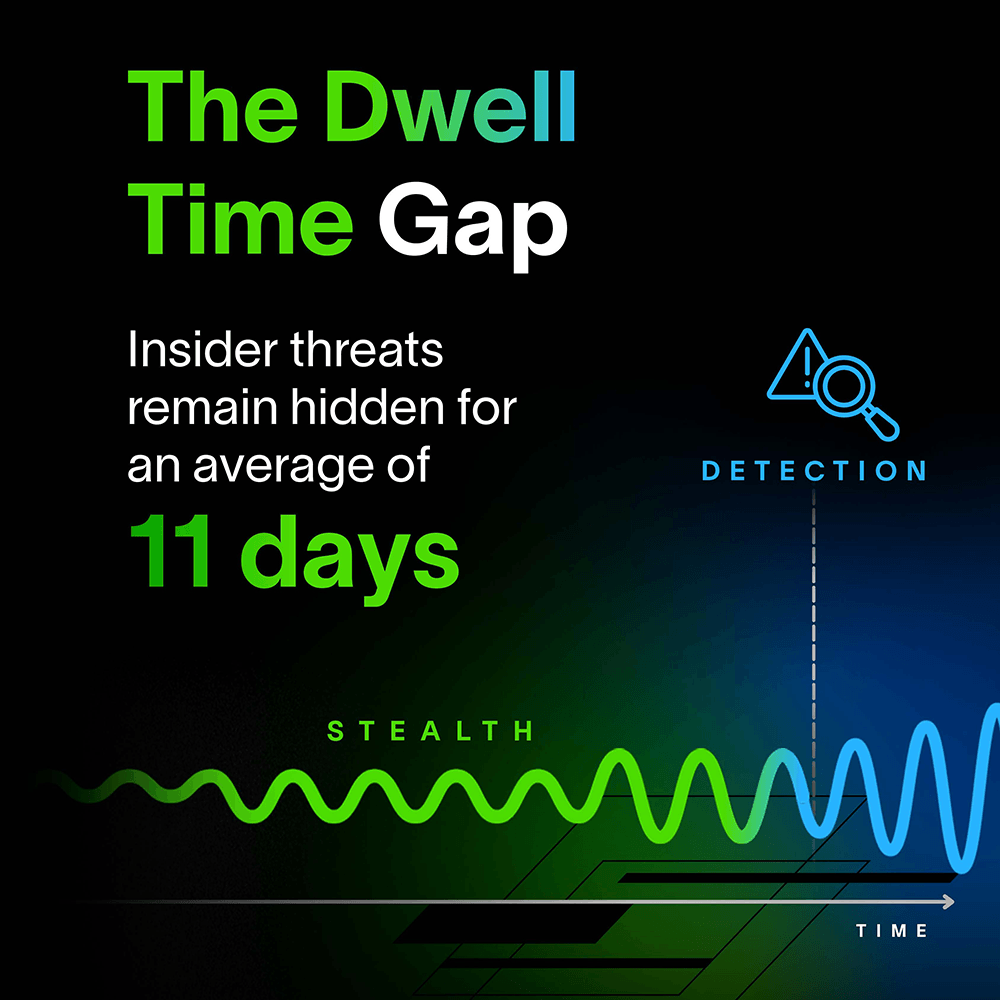
Instead of waiting for a known bad event, it detects shifts in behavior during the stealth phase, focusing on patterns, cumulative risk, and progression across users, devices, and systems.
Detect Risk Earlier in the Attack Path
Security teams often miss early-stage insider threats because risk develops gradually, not as a single event.
Activity such as system access or file movement is expected. Risk emerges when those behaviors begin to change, expand, or combine in unusual ways. Without visibility into that progression, detection occurs only after impact.
Key Takeaways
- Insider threats often start with low, slow activity that avoids traditional alerts.
- Static event correlation delivers speed but often detects threats late.
- Behavioral analytics identifies deviations and risk progression earlier.
- Detecting risk during the stealth phase reduces dwell time.
- Effective detection combines correlation and behavioral analytics.
Why Insider Threats Are Hard to Detect
Insider threats blend into legitimate activity. Users may have valid credentials and access to approved systems, making early signals difficult to interpret.
The challenge is context. Early-stage behaviors such as reconnaissance, access changes, or lateral movement rarely appear risky when viewed as isolated events. The dwell time gap is the period when this activity exists but lacks enough context to act on.
During this time, attackers expand access, test boundaries, and learn the environment. By the time activity becomes obvious, opportunities for early containment are reduced.
Static Event Correlation vs. Behavioral Analytics
Static event correlation detects known threats using rules and predefined patterns. It excels at identifying clear, high-confidence signals and enabling rapid response.
Its limitation is timing. These detections typically occur after behavior becomes obvious, such as data exfiltration or disruption.
Behavioral analytics complements correlation by establishing a baseline of normal activity and identifying deviations from that baseline over time. Rather than evaluating single events in isolation, it analyzes sequences of behavior that indicate growing risk.

Together, they improve detection. Correlation provides speed. Behavioral analytics provides earlier visibility.
Detect Threat Progression During the Stealth Phase
Behavioral analytics compares current activity to expected patterns for users, systems, and peer groups.

A single action may appear normal. A series of related changes, such as accessing unfamiliar systems, shifting access patterns, or interacting with sensitive data, signals a meaningful deviation from baseline behavior.
By connecting these changes into a sequence, behavioral analytics reveals how risk is developing. This allows teams to investigate sooner and act before impact grows.
Turn Activity Into Context
Reducing dwell time requires context, not more alerts.
Security teams already manage high alert volumes. Isolated signals do not show which activity matters. Behavioral analytics connects events into a sequence of behavior over time, showing how risk develops and where attention is needed.
This helps analysts prioritize investigations and gives leaders a clearer measure of whether their detection strategy identifies threats early enough. The goal is to extend visibility earlier, not replace existing detection methods.
Agent Behavior Analytics Across Security Roles
For Security Leaders
Identify insider risk earlier and reduce exposure to disruption, data loss, and fraud. Behavioral analytics also helps evaluate detection effectiveness.
For Security Architects
Strengthen detection strategies by connecting signals over time and adding behavioral context to event-driven controls.
For Security Analysts
Reduce false positives and gain clearer context for investigation, including how behavior deviated from normal and what led to the alert.
Related Concepts and Definitions
Dwell time: The time an attacker or insider remains active before detection or containment
Dwell time gap: The period when suspicious activity exists but lacks sufficient context for detection
Static event correlation: Detection based on rules and known patterns
Behavioral analytics: Detection based on deviations from normal behavior over time and across related activity
Stealth phase: Early-stage activity that is difficult to detect
Loud phase: Late-stage activity that triggers detection
Conclusion
Correlation enables fast response when threats become obvious. Behavioral analytics identifies risk earlier by detecting deviations and progression over time. Closing the dwell time gap requires both.
Addressing that gap also requires a deeper understanding of how insider risk evolves and how detection strategies must adapt.
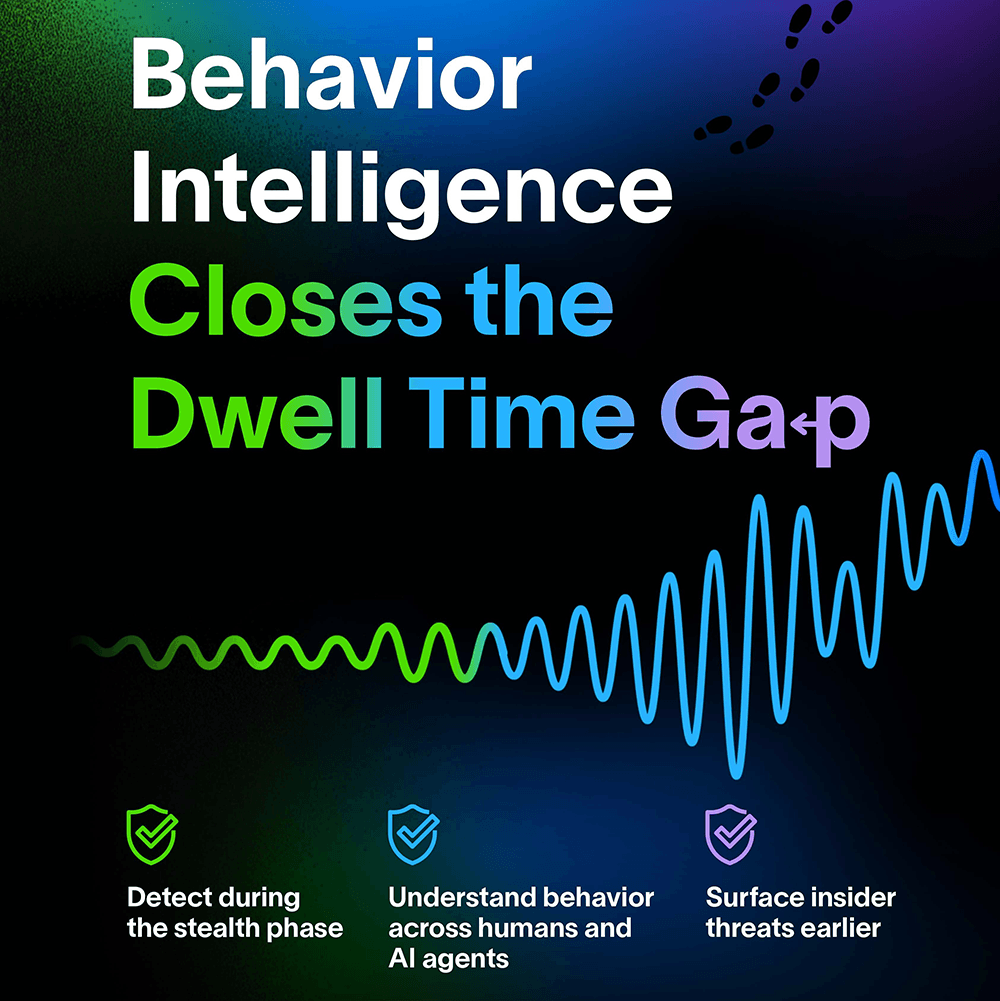
Read Six Shifts in Insider Risk for the Agentic Enterprise, which expands on these changes and outlines how security teams can detect risk earlier, prioritize more effectively, and reduce exposure.

Heidi Willbanks
Heidi Willbanks | Senior Product Marketing Manager, Content | Exabeam | Heidi Willbanks leads content strategy and go-to-market execution at Exabeam, focusing on product launches, cybersecurity solutions marketing, and technical alliances. She has 20+ years of marketing experience, including over a decade in information security and data privacy, and holds a Level IV certification from Pragmatic Institute. Heidi specializes in creating clear, technically accurate content for security practitioners and decision-makers.
More posts by Heidi WillbanksLearn More About Exabeam
Learn about the Exabeam platform and expand your knowledge of information security with our collection of white papers, podcasts, webinars, and more.
-
 Blog
Blog
What Is the Difference Between Exabeam and CrowdStrike for SIEM and Security Operations?
-
 Blog
Blog
Access Isn’t Trust: A Behavioral Risk Framework for People, Service Accounts, and AI Agents
- Show More