- Home >
- Explainers >
- Securonix
Securonix: Solution Overview, Limitations and Top 5 Alternatives
- 9 minutes to read
Table of Contents
What Is Securonix?
Securonix is a cybersecurity platform specializing in identifying, analyzing, and responding to security threats. It uses analytics to provide visibility into network activities, aiming to detect suspicious behavior before it manifests into a breach.
Securonix combines user and entity behavior analytics (UEBA), security information and event management (SIEM), and threat detection capabilities to support threat identification and response while reducing false positives.
Securonix operates through a cloud-native architecture, allowing integration and scalability. This platform offers threat intelligence through data correlation across various sources. Securonix provides automated response mechanisms that allow organizations to react to threats potentially.
This is part of an extensive series of guides about information security.
Securonix Products
Here’s an overview of the various security products offered by Securonix.
Securonix Platform
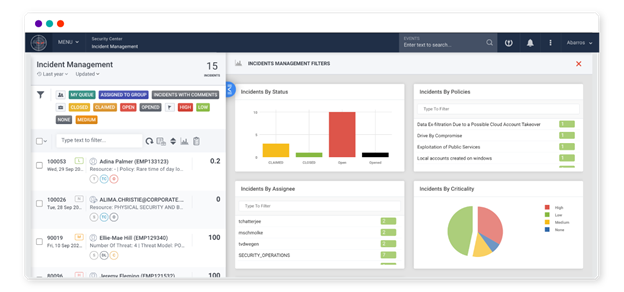
The Securonix platform is a cloud-native SIEM solution that improves threat detection, investigation, and response (TDIR) with AI-powered analytics. By integrating SIEM and SOAR capabilities, the platform automates data analysis, reduces false positives, and provides real-time threat detection. It offers scalability through a flexible cybersecurity mesh architecture, allowing integration with existing security tools and data sources.
Key features of the Securonix platform include:
- Cybersecurity mesh: Integrates with various security tools, clouds, or data lakes.
- AI-reinforced platform: Intends to improve threat detection accuracy and response through artificial intelligence.
- Scalable data lake: Provides fast access to one year of hot data for threat hunting and investigations.
- Threat content-as-a-service: Continuously delivers curated threat intelligence to reduce false positives.

Source: Securonix
Securonix EON
Securonix EON is an AI-driven cybersecurity solution attempting to improve the speed, precision, and effectiveness of security operations. It leverages AI to streamline decision-making, reduce manual tasks, and improve operational efficiency. With integration capabilities and threat detection features, Securonix EON intends to provide a defense against both external and insider threats.
Key features of Securonix EON include:
- AI-reinforced platform: Uses AI to automate and optimize security operations.
- Cybersecurity mesh: Integrates with existing security tools, clouds, and data lakes to maximize security investments.
- Insider Threat Psycholinguistics: Like other solutions in the category, detects insider threats by analyzing behavioral patterns and intent-based indicators.
- InvestigateRX: The use of AI-driven summaries to potentially reduce investigation times.
Securonix Unified Defense SIEM
Securonix Unified Defense SIEM is a scalable, cloud-based solution that improves threat TDIR capabilities for modern enterprises. Built on Snowflake’s data cloud, it enables organizations to handle volumes of data while providing end-to-end threat defense.
Key features of Securonix Unified Defense SIEM include:
- Single-tier storage model: Provides a scalable storage solution for data searches.
- Scalable data cloud: Leverages Snowflake’s data cloud to manage data requirements, offering 365 days of ‘hot’ searchable data for continuous visibility.
- Threat content-as-a-service: Provides threat content to potentially improve threat coverage and detection accuracy.
- Proactive defense: Enables collaborative threat intelligence sharing and automated threat sweeps.
- Unified TDIR experience: Offers a workflow with built-in SOAR capabilities for detection, investigation, and response.

Source: Securonix
Securonix UEBA
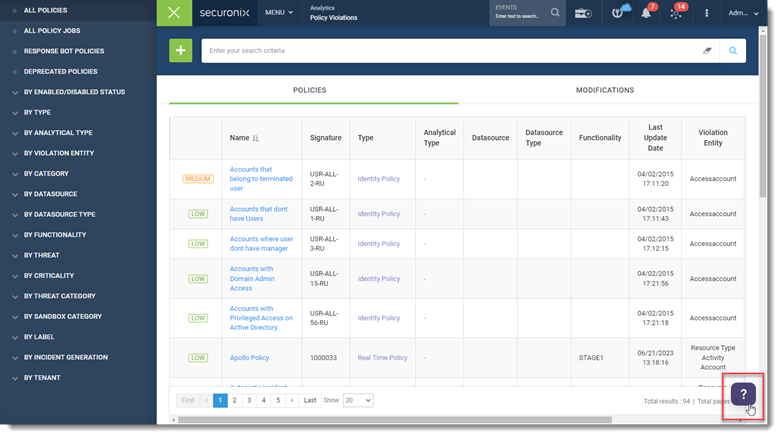
Securonix user and entity behavior analytics (UEBA) is a solution to detect anomalous behavior by leveraging machine learning and behavior analysis. It provides visibility into user and entity actions, to potentially identify insider threats and subtle security risks.
Key features of Securonix UEBA include:
- SIEM integration: Deploys on top of an existing SIEM.
- Industry-leading behavior analytics: Uses machine learning algorithms and out-of-the-box use cases for threat detection.
- Cloud visibility: Extends monitoring to cloud environments through built-in APIs for cloud platforms and applications.
- Insider threat monitoring: Detects deviations from normal behavior by combining user context with event data, mitigating the risk of insider threats.

Source: Securonix
Securonix SOAR
Securonix security orchestration, automation, and response (SOAR) is a solution within the Securonix Unified Defense SIEM. Built directly into the platform, Securonix SOAR automates security operations, reducing manual interventions and helping teams respond to threats more efficiently.
Key features of Securonix SOAR include:
- Multi-tenant deployment: Supports multi-tenant environments, enabling centralized actions across multiple tenants from a single console.
- Integrated platform: Combines detection and response into a single workflow.
- Cloud-native SOAR: Built into the SIEM with no additional infrastructure to manage.
- Simplified licensing: Offers a flat pricing model that allows unlimited analyst seats without extra costs.

Source: Securonix
Securonix ATS
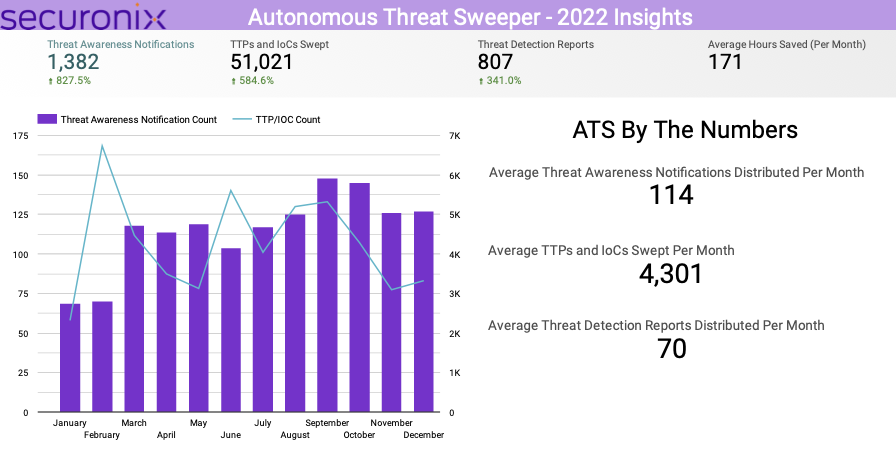
Securonix autonomous threat sweeper (ATS) automates the detection and response to threats. Supported by threat intelligence from Securonix Threat Labs, ATS performs autonomous sweeps of historical event data, ensuring rapid identification and mitigation of potential risks.
Key features of Securonix ATS include:
- Proactive security: Scans logs and historical data for emerging threats and assesses exposure.
- Curated threat advisories: Provides continuously updated threat intelligence, combining research from Securonix Threat Labs with community-sourced and industry-leading data.
- Multi-vector detection: Uses a blend of indicators of compromise (IOC) and tactics, techniques, and procedures (TTP) detection to trace both known and unknown threats.
- Reporting and alerting: Automates reporting, incident creation, and alerting.

Source: Securonix
Securonix Investigate
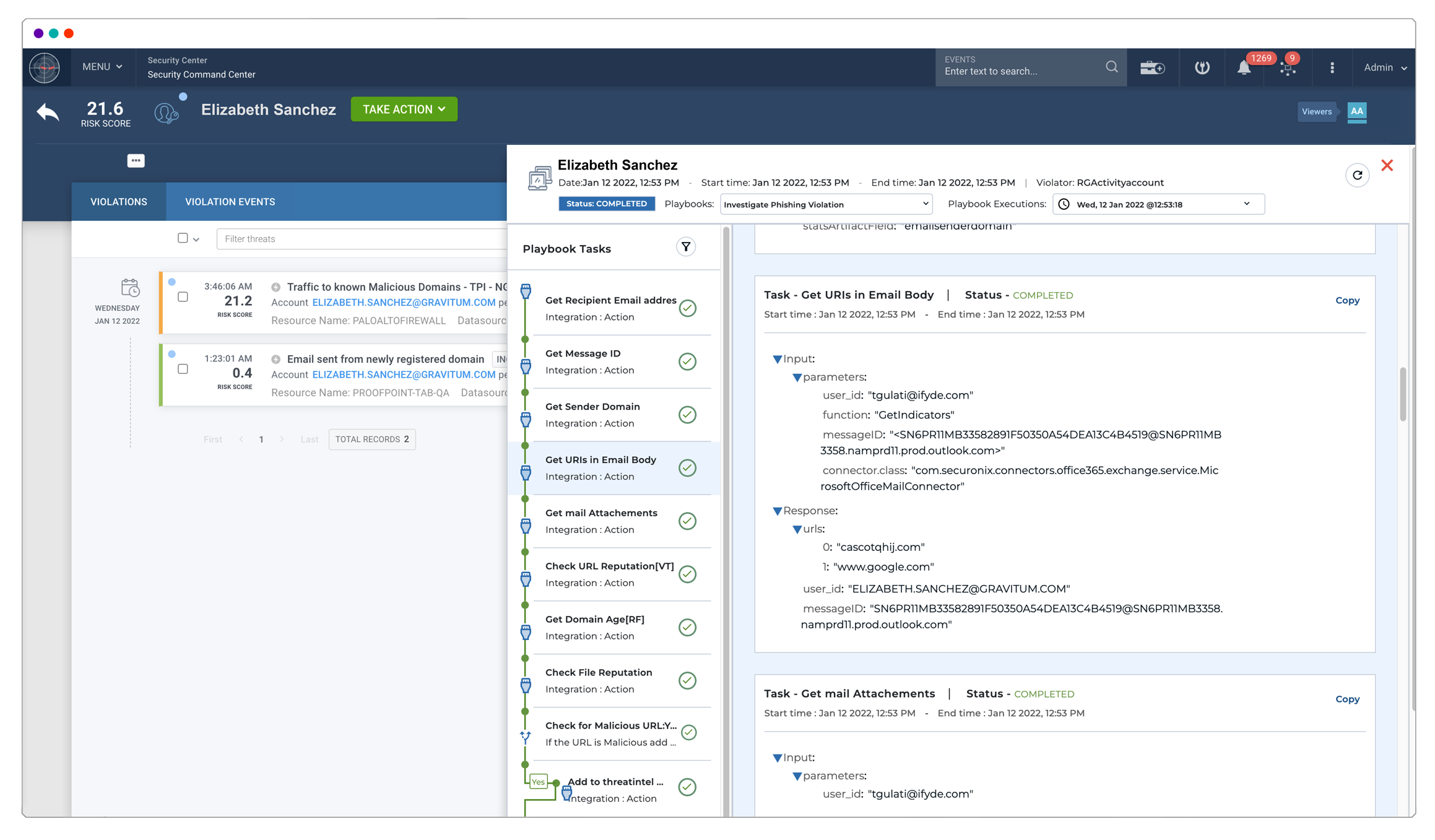
Securonix Investigate accelerates the threat investigation process by providing on-demand context enrichment and supporting collaboration among analysts. Integrated directly into the Securonix platform, it allows teams to share insights and knowledge within the investigation workflow without needing external tools like ticketing or messaging systems.
Key features of Securonix Investigate include:
- Single-view context window: Consolidates details into one view.
- On-demand data enrichment: Gathers relevant data from internal and external sources, keeping the investigation context current.
- Integrated AI: Uses AI-driven natural language capabilities to build threat content.
- Workflow annotations: Enables analysts to annotate and document observations within the investigation.
- Dedicated team channels: Enables collaboration through specific communication channels, allowing information sharing across groups like red, blue, or purple teams.

Source: Securonix
Securonix Agentic AI
Securonix Agentic AI is an AI-powered SecOps capability embedded across the Securonix platform. It is intended to accelerate threat detection, investigation, and response by using modular and autonomous AI components. The approach focuses on speed, precision, and explainability, while keeping analysts in control of security operations.
Agentic AI is built on an AI-native platform model. AI capabilities are integrated throughout the system to automate repetitive tasks, support decision-making, and reduce manual effort. The design follows a human-in-the-loop approach, where analysts retain visibility and control. AI-generated decisions are explainable, and workflows can be tuned to match operational needs.
Key components of Securonix Agentic AI include:
- Policy Agent: Converts analyst intent into detection rules. It simulates outcomes, identifies issues, and refines detection logic to keep pace with changing threats.
- Response Agent: Executes containment actions, such as locking user accounts or isolating hosts, when threats are validated. This reduces mean time to respond (MTTR).
- Insider Intent Agent: Identifies early indicators of insider risk by analyzing psycholinguistics, behavioral changes, and risk patterns. It adapts as user behavior evolves.
- Noise Control Agent: Reduces false positives using large language model reasoning, behavior analysis, and analyst feedback to suppress unnecessary alerts.
- Search Agent: Translates natural language queries into optimized data lake searches to identify anomalies. It improves over time based on analyst input.
- Investigate Agent: Assigns confidence scores and categories to indicators of compromise (IOCs), helping prioritize alerts and speed up triage.
- Threat Intel Agent: Summarizes and enriches investigation results in plain language to clarify severity and context.
- Data Pipeline Manager (DPM): Classifies and routes telemetry data to ensure critical events are analyzed in real time while reducing noise and storage overhead.
Securonix Limitations
While Securonix is a respected solution, it comes with some limitations. The following were reported by users on the G2 platform:
- Slow support response times: Some users report delays in support responses and difficulty resolving issues quickly through the support team.
- Complex query creation: Writing queries to search alerts or investigate events can be difficult for some users, particularly those without prior experience with the platform’s query language.
- Integration challenges: Users note that integrating Securonix with external tools and systems can be complicated and may require additional configuration.
- Troubleshooting difficulties: When platform errors occur, some users report limited troubleshooting capabilities within the tool itself.
- Occasional log collector issues: Some reviewers mention that the log collection component can experience intermittent problems, affecting data ingestion.
- Configuration changes may take time to apply: Certain settings or GUI changes may take time to reflect in the system, which can slow troubleshooting and operational workflows.
- May be better suited for large enterprises: Some users indicate that the platform’s capabilities and complexity may make it less practical for smaller organizations with limited security resources.
Notable Securonix Competitors and Alternatives
1. Exabeam

Exabeam is a leading provider of security information and event management (SIEM) solutions, combining UEBA, SIEM, SOAR, and TDIR to accelerate security operations. Its Security Operations platforms enables security teams to quickly detect, investigate, and respond to threats while enhancing operational efficiency.
Key Features:
- Scalable log collection and management: The open platform accelerates log onboarding by 70%, eliminating the need for advanced engineering skills while ensuring seamless log aggregation across hybrid environments.
- Behavioral analytics: Uses advanced analytics to baseline normal vs. abnormal behavior, detecting insider threats, lateral movement, and advanced attacks missed by signature-based systems. Customers report that Exabeam helps detect and respond to 90% of attacks before other vendors can catch them.
- Automated threat response: Simplifies security operations by automating incident timelines, reducing manual effort by 30%, and accelerating investigation times by 80%.
- Contextual incident investigation: Since Exabeam automates timeline creation and reduces time spent on menial tasks, it cuts the time to detect and respond to threats by over 50%. Pre-built correlation rules, anomaly detection models, and vendor integrations reduce alerts by 60%, minimizing false positives.
- SaaS and cloud-native options: Flexible deployment options provide scalability for cloud-first and hybrid environments, ensuring rapid time to value for customers. For organizations who can’t, or won’t move their SIEM to the cloud, Exabeam provides a market-leading, full featured, and self-hosted SIEM.
- Network visibility with NetMon: Delivers deep insight beyond firewalls and IDS/IPS, detecting threats like data theft and botnet activity while making investigation easier with flexible searching. Deep Packet Analytics (DPA) also builds on the NetMon Deep Packet Inspection (DPI) engine to interpret key indicators of compromise (IOCs).
Exabeam customers consistently highlight how its real-time visibility, automation, and productivity tools powered by AI, uplevel security talent, transforming overwhelmed analysts into proactive defenders while reducing costs and maintaining industry-leading support.
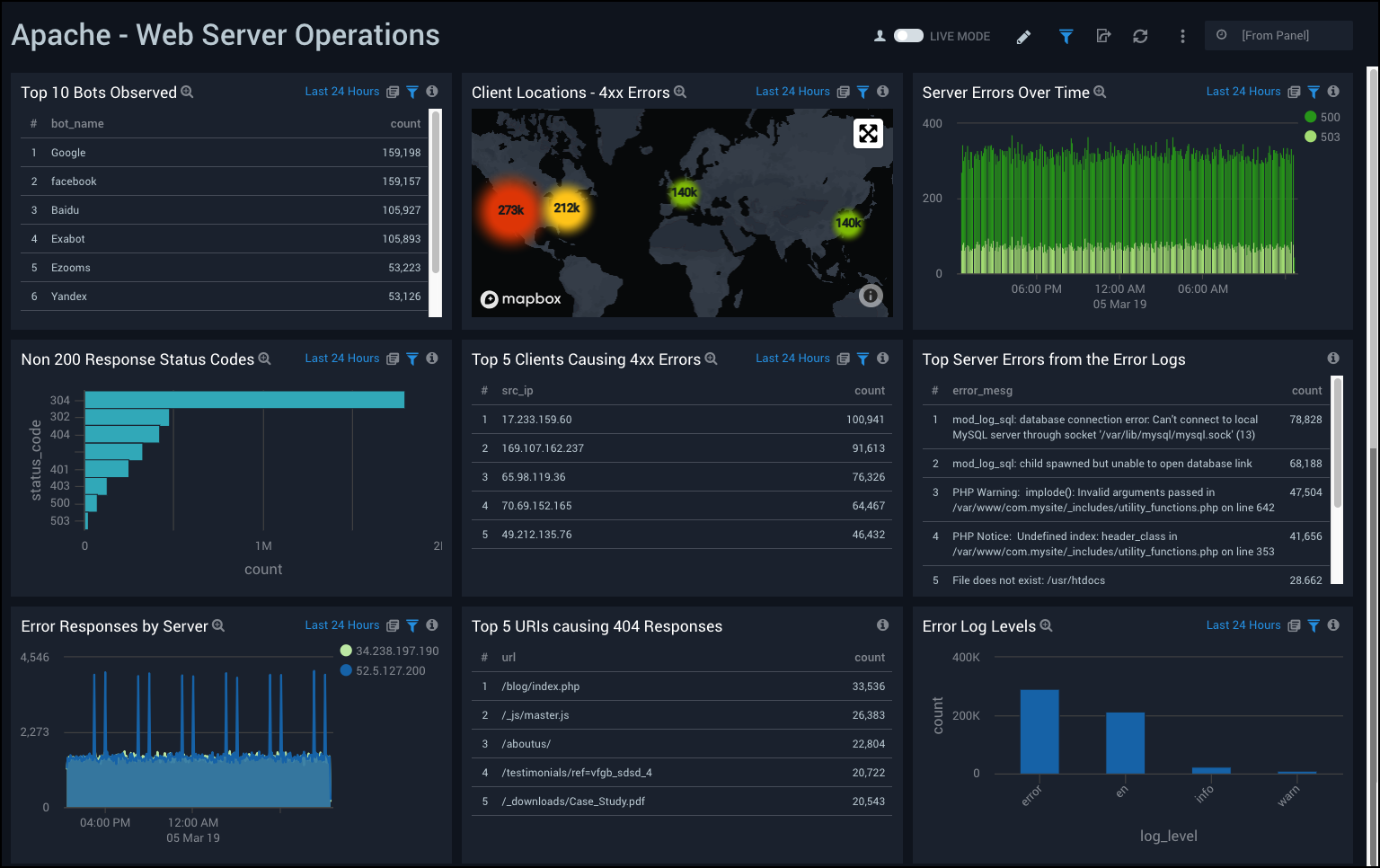
2. Sumo Logic

Sumo Logic is a cloud-native security analytics and SIEM platform that supports threat detection, investigation, and response in modern environments. The platform analyzes log data from applications, infrastructure, and security tools to identify suspicious activity and support incident investigations. Sumo Logic integrates security analytics, log management, and automation capabilities to help security teams detect and respond to threats.
Key features of Sumo Logic include:
- Unified analytics platform: Combines logs, metrics, and security analytics into a single platform for monitoring and investigation.
- Cloud-native architecture: Designed to operate as a scalable cloud service without requiring on-premises infrastructure.
- Log-based threat detection: Uses log analytics to correlate events and identify potential security threats.
- Automated alert triage: Automatically analyzes alerts and correlates related events to support faster investigation.
- Extensive integrations: Supports integrations with numerous tools and services to collect and analyze security telemetry across environments.

Source: Sumo Logic
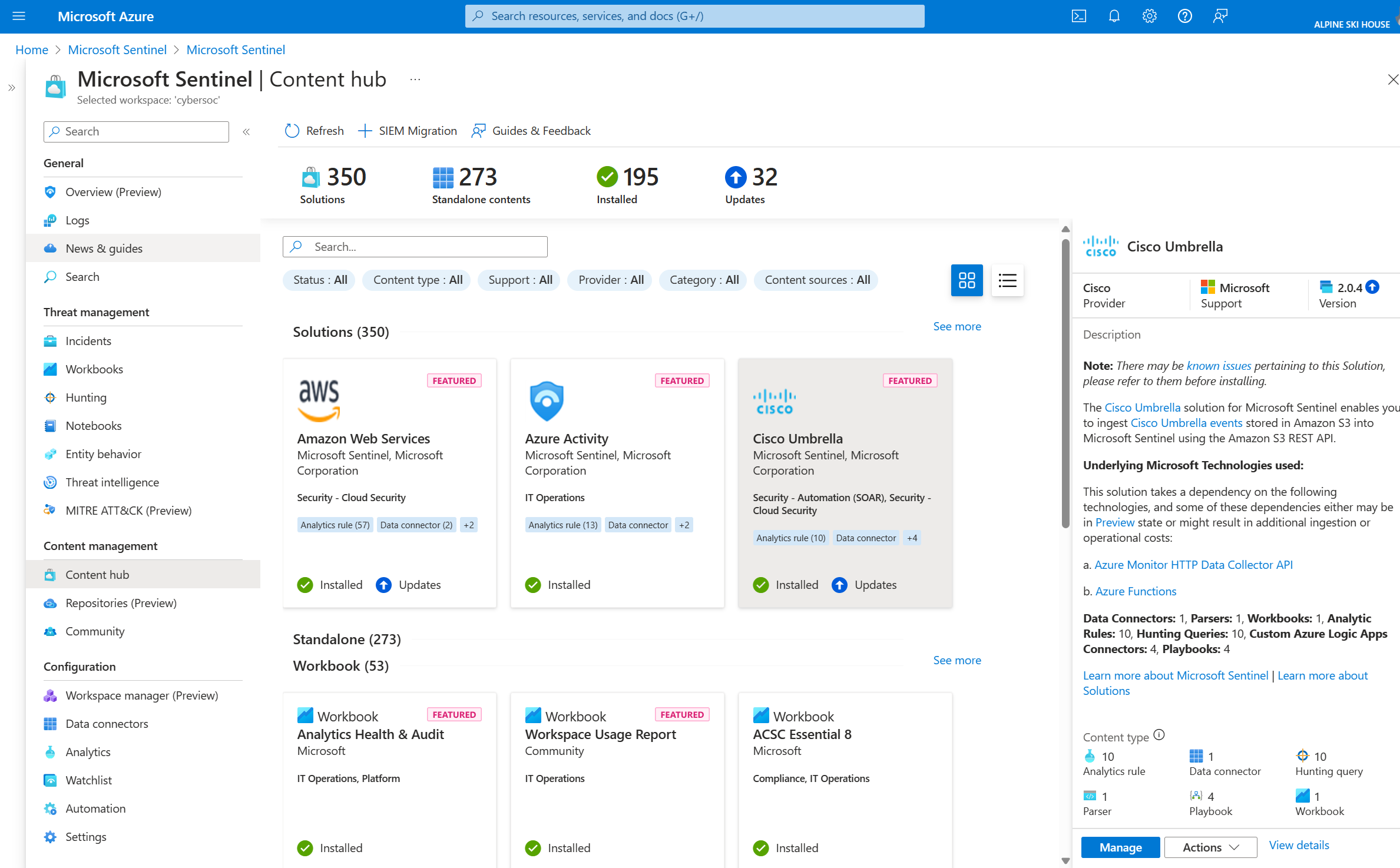
3. Microsoft Sentinel

Microsoft Sentinel is a cloud-native security information and event management (SIEM) platform that combines analytics, automation, and threat intelligence to support security operations. Built on Microsoft Azure, Sentinel centralizes security telemetry from multiple sources and uses analytics to detect suspicious activity. The platform integrates SIEM, SOAR, and UEBA capabilities.
Key features of Microsoft Sentinel include:
- Cloud-native SIEM platform: Provides centralized security monitoring and analytics without requiring on-premises infrastructure.
- Enterprise-wide visibility: Supports data ingestion from hundreds of connectors across cloud platforms, infrastructure, and third-party security tools.
- Integrated data lake: Centralizes large volumes of security data to enable analytics, threat detection, and investigation.
- Graph-powered context: Uses security graphs to provide context and visibility across security events and assets.
- AI-assisted investigation: Uses AI-driven analysis and generative AI tools to summarize incidents, generate queries, and assist analysts during investigations.

Source: Microsoft
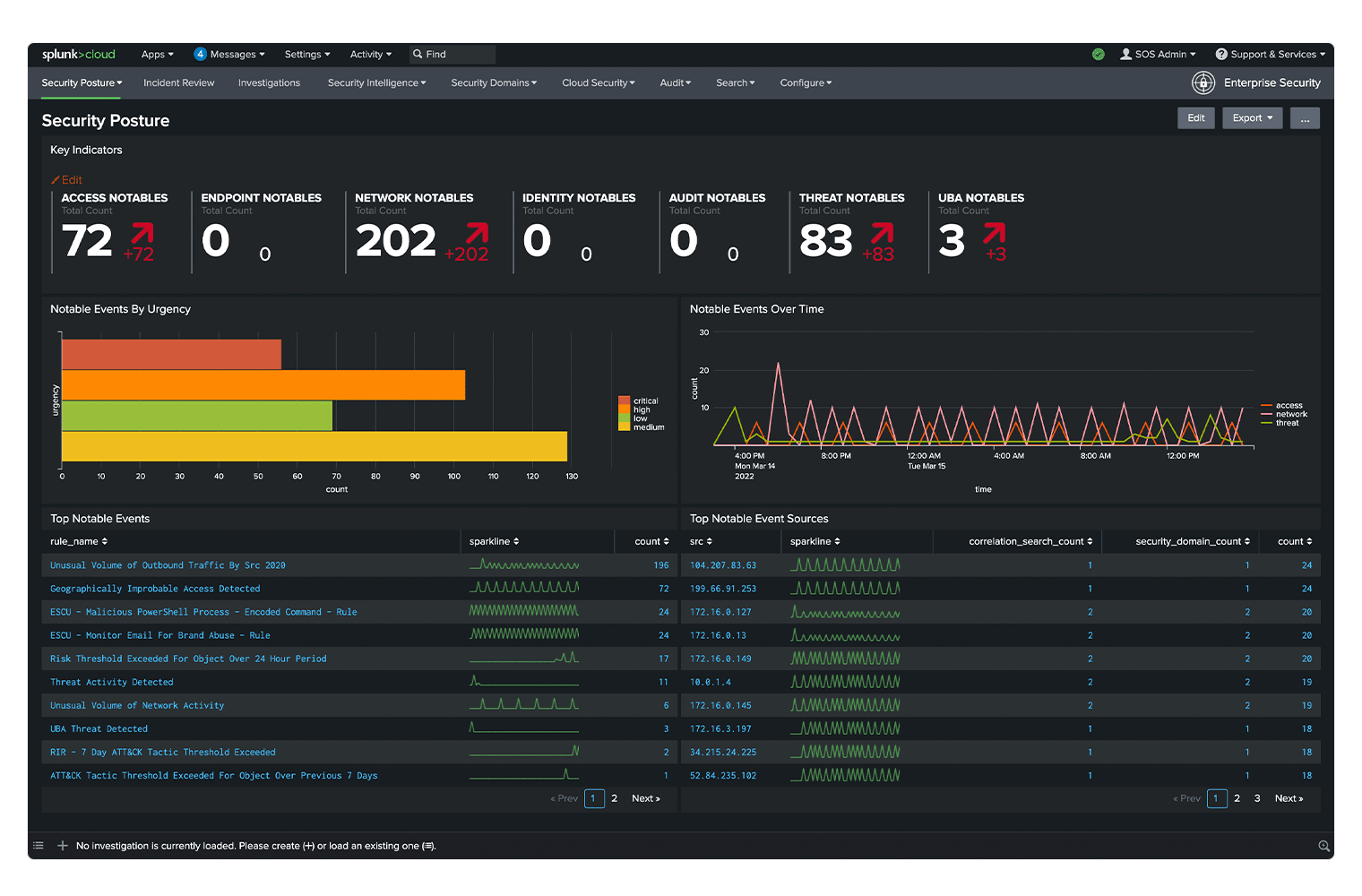
4. Splunk Enterprise Security

Splunk Enterprise Security is a SIEM and security analytics platform that supports threat detection, investigation, and response across complex environments. The platform aggregates and analyzes security data from multiple systems to provide visibility into potential threats. It integrates SIEM capabilities with automation, behavioral analytics, and threat intelligence to help security teams detect and respond to incidents.
Key features of Splunk Enterprise Security include:
- Unified TDIR platform: Combines threat detection, investigation, and response capabilities within a single security operations platform.
- Data visibility: Enables teams to search and analyze security data across cloud environments, networks, and devices.
- Behavior analytics with UEBA: Uses machine learning to identify anomalies in user and entity behavior that may indicate security threats.
- Security automation with SOAR: Automates investigation and response workflows to reduce manual tasks and accelerate incident response.
- Detection lifecycle management: Provides tools for developing, testing, deploying, and monitoring detection rules mapped to frameworks such as MITRE ATT&CK.

Source: Splunk
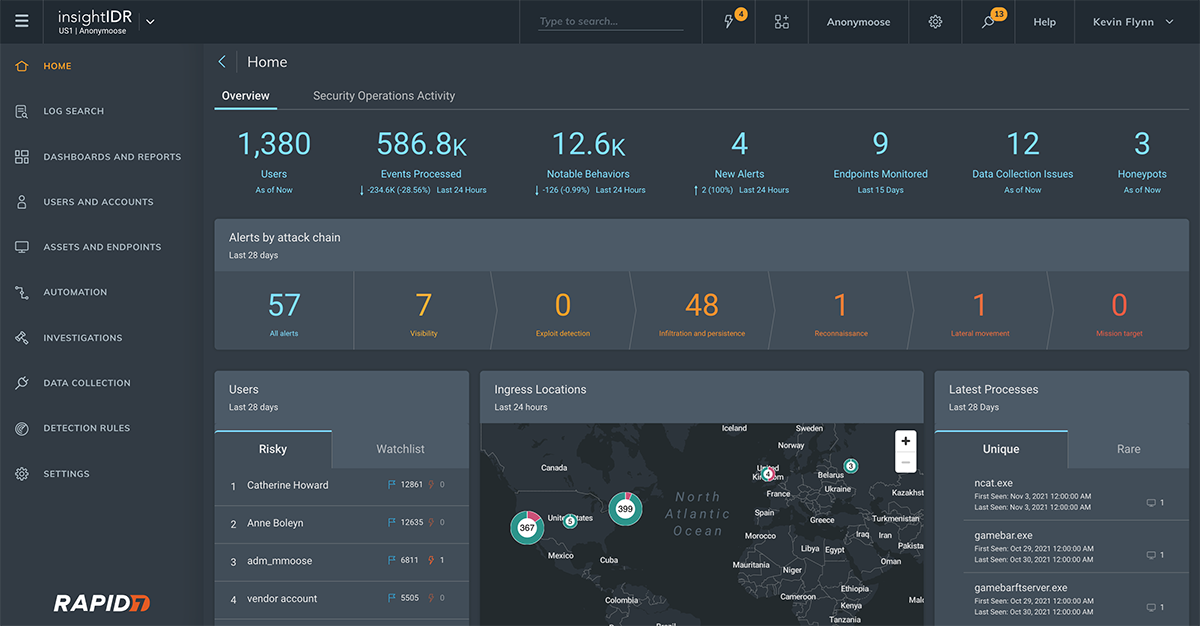
5. Rapid7 InsightIDR

Rapid7 InsightIDR is a cloud-native SIEM and extended detection and response (XDR) platform to help organizations detect and respond to security threats across their environments. The platform collects telemetry from endpoints, authentication systems, network infrastructure, and cloud services to identify suspicious activity. It combines log analysis, endpoint visibility, and behavioral analytics to help security teams investigate incidents and respond to threats.
Key features of Rapid7 InsightIDR include:
- Cloud-native SIEM architecture: Operates as a SaaS-based platform that collects and analyzes security data from distributed environments.
- Unified telemetry analysis: Aggregates logs, endpoint data, authentication activity, and network traffic to identify security threats.
- User behavior analysis: Correlates user activities and account behavior to detect unauthorized access or compromised credentials.
- Automated threat detection: Uses predefined detections and analytics to identify suspicious activity across connected systems.
- Investigation and response tools: Provides dashboards, log search capabilities, and investigation workflows to analyze incidents and support response actions.

Source: Rapid7
Conclusion
Securonix offers a comprehensive cybersecurity solution with its cloud-native SIEM, UEBA, and SOAR capabilities, providing threat detection, analysis, and automated response for large-scale organizations. While the platform excels in scalability, AI-driven insights, and behavior analytics, it’s most effective for enterprises that can manage the complexity of deployment and customization.
Learn more about the Exabeam Security Operations Platform
See Additional Guides on Key Information Security Topics
Together with our content partners, we have authored in-depth guides on several other topics that can also be useful as you explore the world of information security.
Cyber Threat Intelligence
Authored by Exabeam
- [Guide] Best Insider Threat Management Software: Top 9 Solutions in 2025
- [Guide] Best Threat Intelligence Tools: Top 8 Providers in 2025
- [Whitepaper] 2024 State of the Security Team Research
- [Product] Exabeam | AI-Driven Security Operations
FortiSIEM
Authored by Exabeam
- [Guide] FortiSIEM: Key Features, Pricing, Limitations & Alternatives
- [Guide] 10 Fortinet Competitors to Know in 2025
- [Blog] How SIEM Helps With Cyber Insurance
- [Product] LogRhythm SIEM | Self-Hosted SIEM for Advanced TDIR
Software Supply Chain Security
Authored by Oligo
- [Product] Oligo ADR | Instant Attack Detection & Supply Chain Security
- [Guide] Ultimate Guide to Software Supply Chain Security in 2025
- [Guide] Supply Chain Attack: How It Works and 5 Recent Examples
- [Blog] ShellTorch: Multiple Critical Vulnerabilities in PyTorch TorchServe Threatens Countless AI Users
Learn More About Exabeam
Learn about the Exabeam platform and expand your knowledge of information security with our collection of white papers, podcasts, webinars, and more.