- Home >
- Explainers >
- Rapid7
Rapid7: Solution Overview, Pricing, Limitations and Alternatives
- 10 minutes to read
Table of Contents
What Is Rapid7?
Rapid7 is a cybersecurity company that provides both commercial solutions and open source tools, most notably the Metasploit penetration testing platform. The company was founded in 2000 by Alan Matthews, Tas Giakouminakis, and Chad Loderand, and is traded in NASDAQ (stock symbol RPD).
Rapid7 provides a suite of products that cater to various aspects of cybersecurity, including vulnerability management, threat detection, cloud security, and automation. Like others in the category, the company’s solutions leverage analytics, threat intelligence, and machine learning to help organizations identify vulnerabilities, detect threats, and automate incident response.
This is part of a series of articles about information security.
Key Features of Rapid7 Solutions
Rapid7’s solutions offer the following security capabilities:
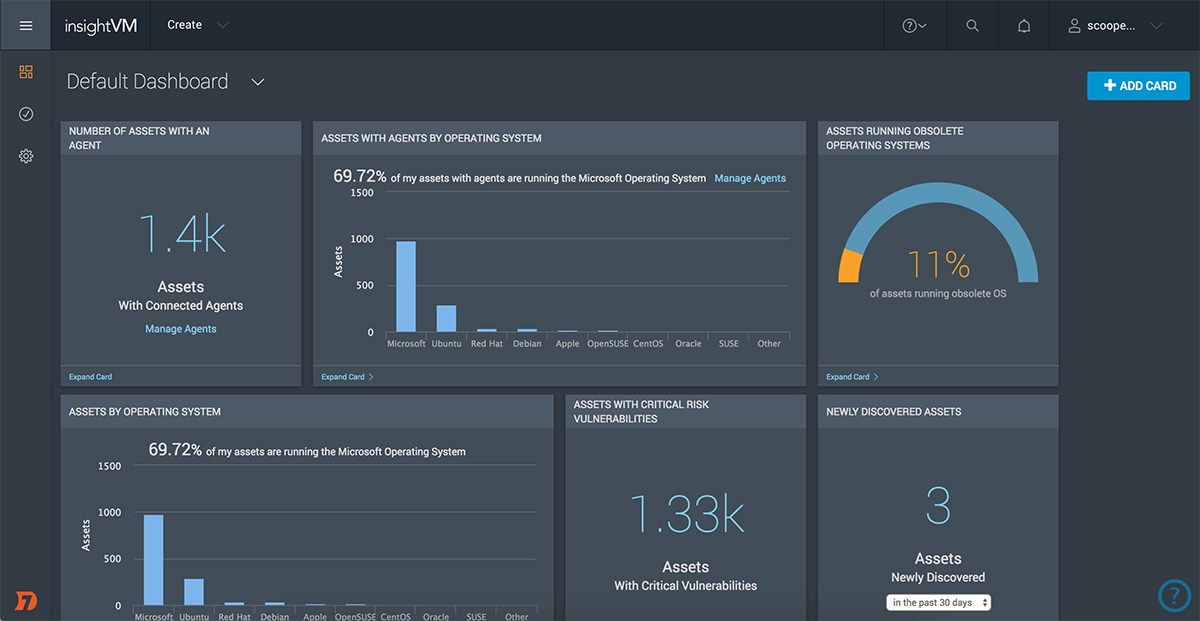
- Vulnerability management: Its InsightVM product offers continuous scanning to discover vulnerabilities in on-premises and cloud environments. This solution helps security teams prioritize risks based on known threats and remediation costs, making vulnerability management more efficient and actionable.
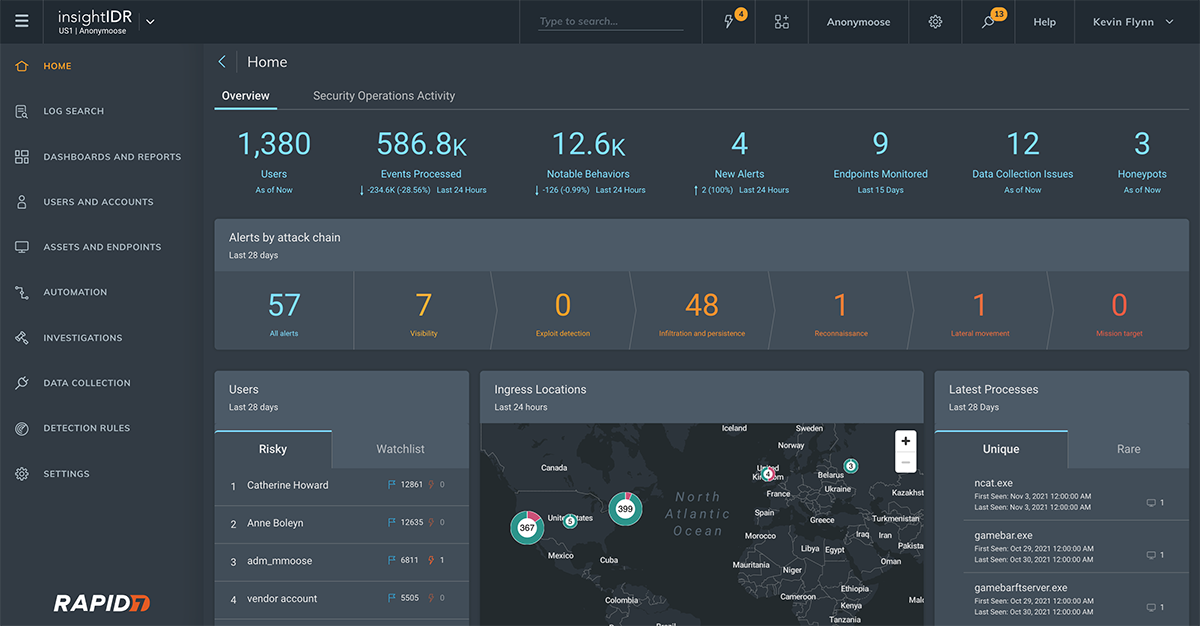
- Threat detection and incident response: InsightIDR intends to enable organizations to detect breaches by collecting and analyzing data from across the network by identifying malicious or unusual activities indicative of an attack.
- Cloud security: Rapid7 offers solutions that provide visibility and protection across cloud infrastructures. Insights, analytics, and automated compliance checks intend that cloud setups adhere to best practices and security standards. InsightCloudSec provides visibility and potentially mitigates risks associated with cloud services and applications.
- Application security: InsightAppSec can potentially aid in identifying and mitigating security weaknesses in application development. This solution provides “dynamic application security testing” (DAST) to find vulnerabilities during development and production phases. Automated scans intend to simulate attacker behavior, uncovering potential entry points that need to be secured.
- Security automation and orchestration: The InsightConnect platform automates repetitive tasks and workflows, allowing security teams to focus on higher-level initiatives like similar solutions in the category. By integrating with various tools and platforms, InsightConnect intends to assist different security teams by improving efficiency and reducing response times.
- Threat intelligence and analytics: By leveraging a set of data sources, Rapid7 delivers intelligence for security strategies and decisions. InsightIDR incorporates threat intelligence to aid in the detection and analysis of threats, providing context and guidance for actionable responses.
Notable Rapid7 Products
The Rapid7 Command Platform
The Rapid7 Command Platform provides a unified interface for managing security operations. This platform consolidates various functions such as vulnerability management, incident detection, and response.
Through its integration of multiple security tools, the Command Platform adds visibility and control over security practices with support for remediation measures.

Rapid7 InsightIDR
This tool leverages user behavior analytics and built-in threat intelligence to provide threat detection. InsightIDR offers an approach to threat management by integrating endpoint detection, log management, and user insight capabilities.
It intends to recognize and responding to attacks as well as provide consolidated incident data and automated investigation workflows for incident response.

Rapid7 InsightVM
Rapid7 InsightVM focuses on vulnerability management by providing visibility into security threats across an organization’s network. The platform combines asset visibility, dynamic risk assessment, and remediation tools into the solution. It intends to aid security teams in prioritizing vulnerabilities based on risk context and potential exploitability like other solutions.
Reporting and visualization tools help communicate vulnerability status and progress. Integrating InsightVM with other security tools enables automated workflows for the remediation process.

Rapid7 Nexpose
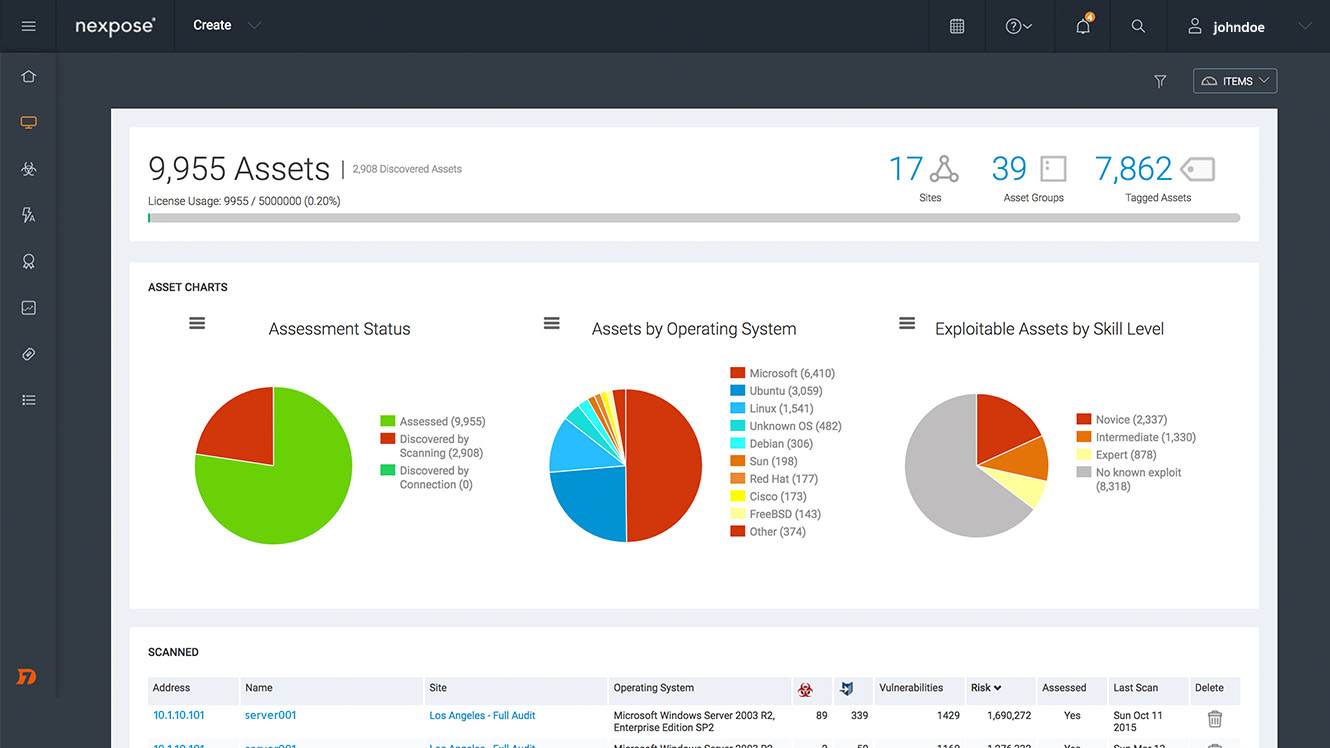
Rapid7 Nexpose provides vulnerability management and risk assessment. By scanning networks and systems, Nexpose identifies and evaluates vulnerabilities, providing insights on threats. It leverages vulnerability libraries to prioritize critical issues, to hopefully minimize potential risks and exposures as well as address security gaps.

Rapid7 InsightConnect
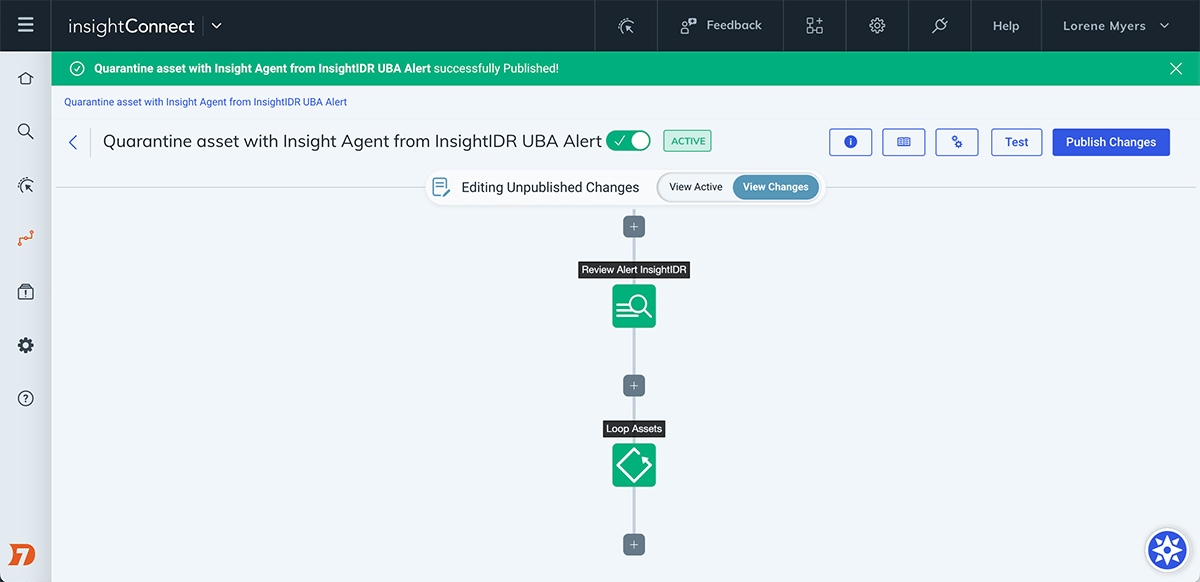
InsightConnect from Rapid7 adds to security workflows through automation and orchestration. It integrates with numerous security tools and systems, enabling simplified responses to incidents and threats. By automating routine tasks, InsightConnect can potentially help security teams focus on strategic priorities, reducing incident resolution times and human error.
The platform’s scalability helps meet the needs of both small teams and large enterprises. InsightConnect’s intends to enable organizations to manage processes and their security posture.

Rapid7 Managed XDR
Rapid7 Managed XDR (Extended Detection and Response) offers threat detection and response services. Managed XDR brings together endpoint detection, network analysis, and user behavior monitoring together. This service extends an organization’s security team by providing monitoring and threat hunting.
By offering managed services, Rapid7 ensures expert oversight and rapid response capability. Organizations benefit from the threat intelligence and expertise.
Rapid7 InsightCloudSec
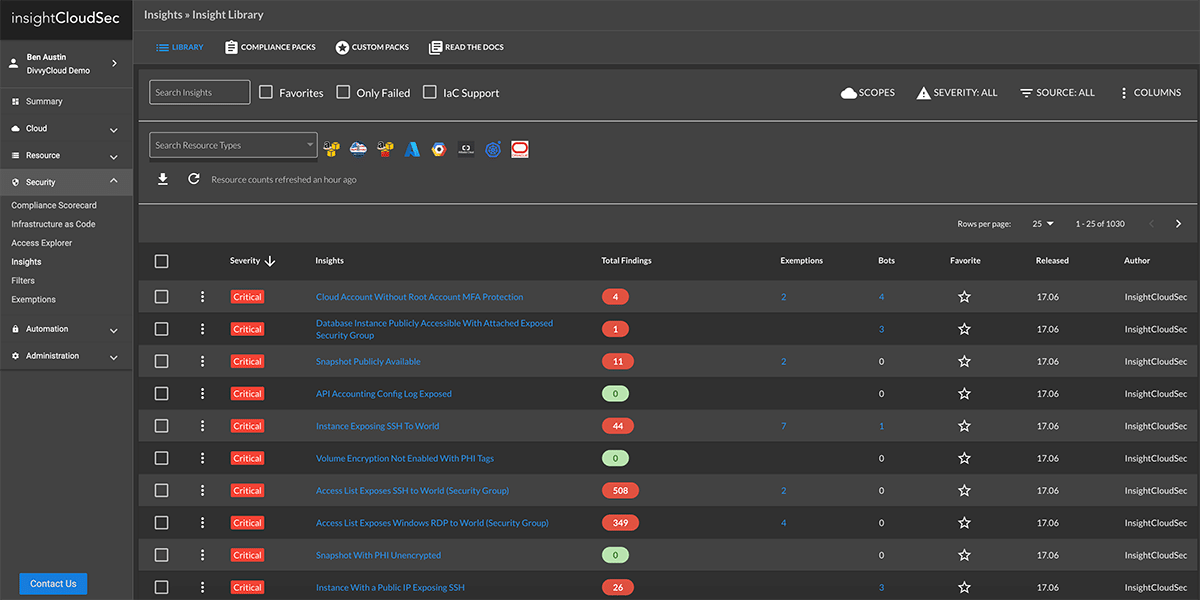
Rapid7 InsightCloudSec supports cloud security teams with monitoring and governance over cloud resources. This platform identifies risks across cloud environments, ensuring compliance with security standards. By providing visibility into cloud infrastructure, it intends to aid in both threat prevention and response efforts.
InsightCloudSec emphasizes automation to hopefully aid security teams in executing tasks across multi-cloud environments. Its capabilities are useful for governance and compliance, with goal that misconfigurations and vulnerabilities are addressed.

Rapid7 InsightAppSec
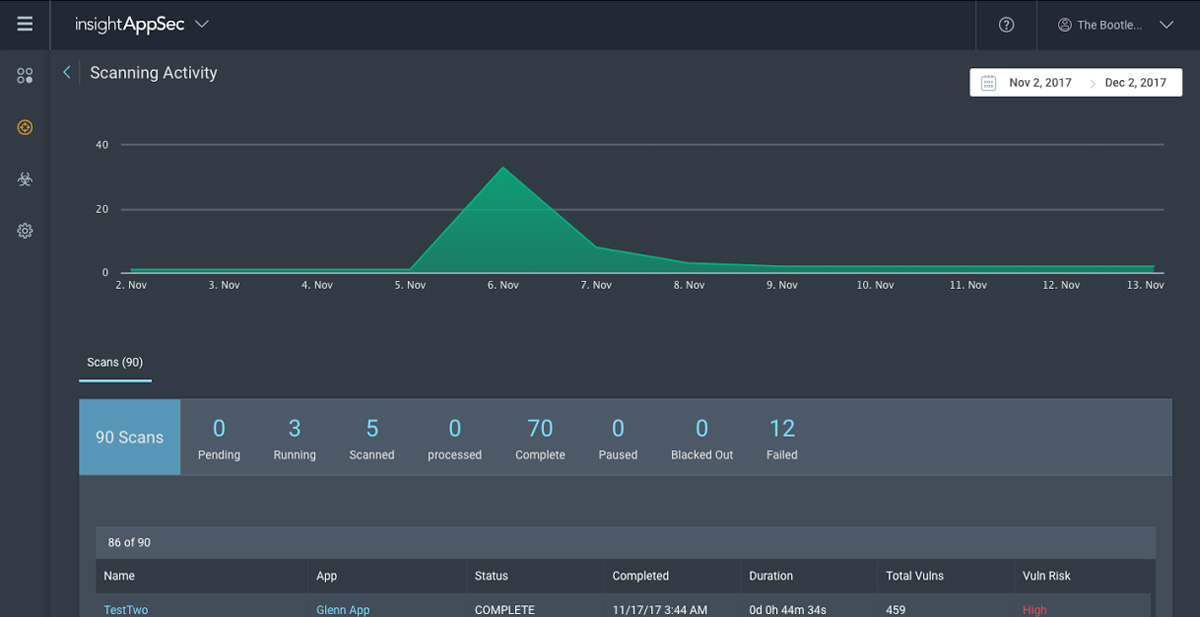
Rapid7 InsightAppSec is an application security tool that for identifying and fixing potential vulnerabilities in web applications. It uses scanning techniques to mimic real-world attack scenarios and discover security weaknesses during both development and deployment phases.
The solution identifies vulnerabilities and also intends to provide insights for remediation with the goal of having security embedded within the development pipeline.

Rapid7 Surface Command
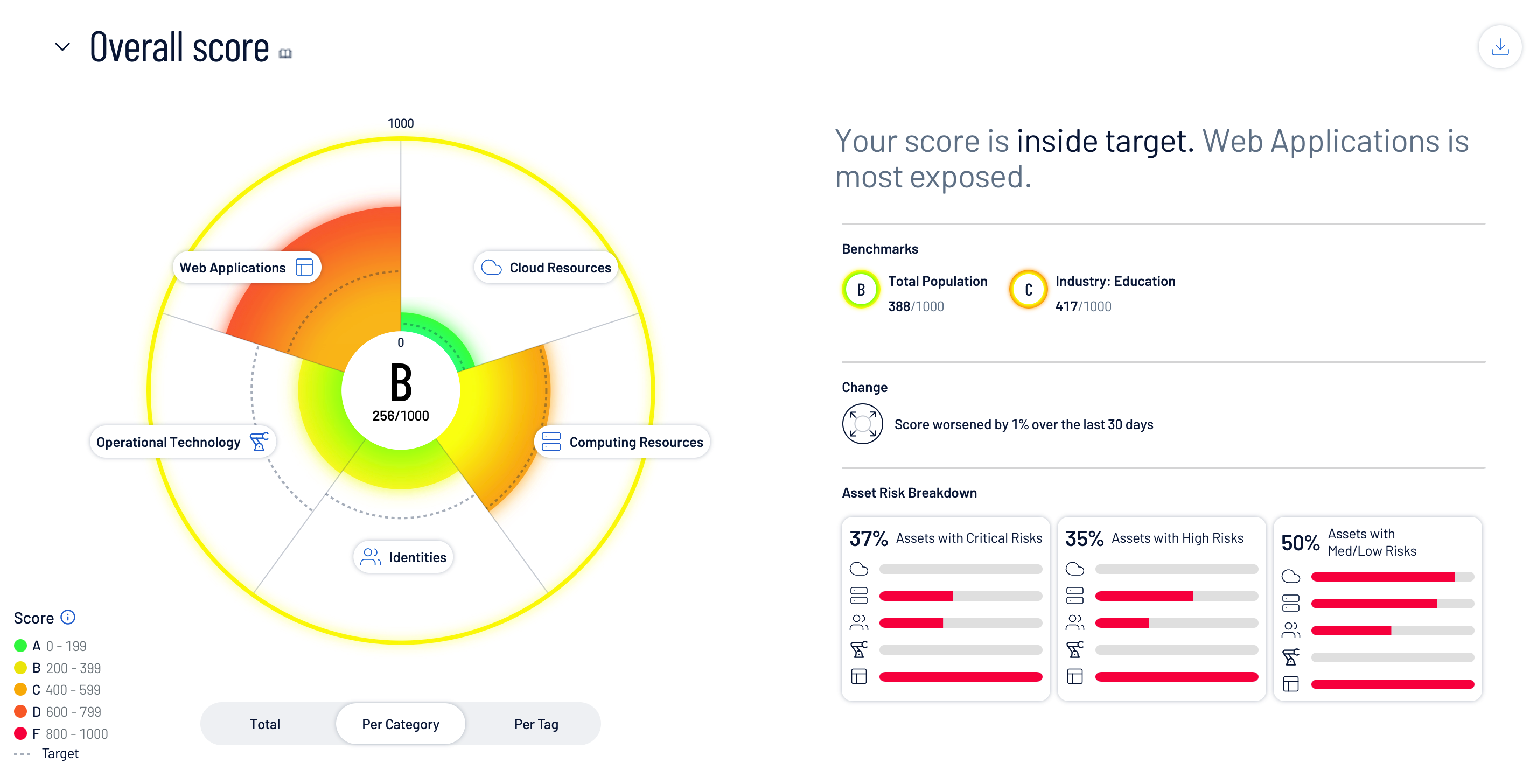
Rapid7 Surface Command is an attack surface management solution that provides a continuous 360-degree view of an organization’s attack surface. It delivers a unified view of assets across the entire digital estate, covering both internal and external environments from endpoint to cloud.
The platform continuously monitors and discovers assets to maintain accurate inventories. This ongoing discovery helps eliminate blind spots and quickly identify exposed assets that attackers could exploit. By maintaining visibility across environments, teams can reduce gaps that often lead to security incidents.

Source: Rapid7
Rapid7 Open Source Solutions
Rapid7 offers an open source project called Metasploit – a penetration testing framework for security professionals to identify and exploit vulnerabilities in various systems. Metasploit provides tools for testing defenses, simulating real-world attacks, and conducting red-team exercises. It includes a library of exploits and payloads for ethical hackers and security analysts.
Another notable open source project is Recog, a fingerprinting tool that intends to identify software, services, and protocols running on remote hosts. Recog uses a database of signatures to provide detailed information on the detected services, which assists in vulnerability assessment and asset inventory management.
Rapid7 Pricing
Pricing for Rapid7 products varies based on the solution and the requirements of an organization, including factors such as asset count or instances monitored. Here is an overview of starting prices for key Rapid7 products:
- Vulnerability risk management (InsightVM): Priced at $1.93 per asset per month, InsightVM focuses on identifying and managing vulnerabilities across on-premises and cloud environments. The entry-level pricing applies to 500 assets and allows organizations to scale as needed.
- Detection & response (InsightIDR): Starting at $5.89 per asset per month, InsightIDR provides capabilities for detecting and responding to threats. By utilizing machine learning and behavioral analytics, it helps organizations quickly identify and respond to suspicious activities across the network.
- Web application security (InsightAppSec): With a starting price of $175 per app per month, InsightAppSec offers dynamic application security testing (DAST) to help secure web applications against vulnerabilities. This tool is essential for organizations that prioritize application security in their development pipelines.
- Cloud security (InsightCloudSec): Starting at $5,775 per month for up to 500 instances, InsightCloudSec provides cloud security by monitoring and securing cloud resources across various platforms. It ensures compliance and mitigates risks in multi-cloud environments.
Rapid7 Limitations
Despite Rapid7’s extensive offering, there are some limitations that users may encounter. These limitations often impact smaller organizations or those with limited cybersecurity expertise. Key limitations reported by users on the G2 platform include:
- High pricing for some organizations: Some users report that Rapid7’s solutions can be expensive, particularly for organizations that require multiple products or advanced capabilities.
- Steep learning curve: Certain tools may require training or prior experience to use effectively, which can be challenging for less experienced security teams.
- Slow or inconsistent support response: Users occasionally report delays in support responses or difficulty resolving technical issues through support channels.
- Limited integration and automation options: Some reviewers note that integrations with external tools and automation capabilities are not always extensive, requiring manual processes for certain workflows.
- High administrative effort for simple tasks: Some tasks require additional manual configuration or administrative work, increasing operational overhead for smaller teams.
- Incomplete vulnerability coverage: Certain vulnerability management capabilities may lack coverage for some software or environments, requiring additional tools or manual validation.
- Technical issues with scanning or platform functionality: Some users report problems with scanning engines or other technical behaviors that require troubleshooting and support intervention.
Rapid7 Alternatives and Competitors
Exabeam

Exabeam is a leading provider of security information and event management (SIEM) solutions, combining UEBA, SIEM, SOAR, and TDIR to accelerate security operations. Its Security Operations platforms enables security teams to quickly detect, investigate, and respond to threats while enhancing operational efficiency.
Key Features:
- Scalable log collection and management: The open platform accelerates log onboarding by 70%, eliminating the need for advanced engineering skills while ensuring seamless log aggregation across hybrid environments.
- Behavioral analytics: Uses advanced analytics to baseline normal vs. abnormal behavior, detecting insider threats, lateral movement, and advanced attacks missed by signature-based systems. Customers report that Exabeam helps detect and respond to 90% of attacks before other vendors can catch them.
- Automated threat response: Simplifies security operations by automating incident timelines, reducing manual effort by 30%, and accelerating investigation times by 80%.
- Contextual incident investigation: Since Exabeam automates timeline creation and reduces time spent on menial tasks, it cuts the time to detect and respond to threats by over 50%. Pre-built correlation rules, anomaly detection models, and vendor integrations reduce alerts by 60%, minimizing false positives.
- SaaS and cloud-native options: Flexible deployment options provide scalability for cloud-first and hybrid environments, ensuring rapid time to value for customers. For organizations who can’t, or won’t move their SIEM to the cloud, Exabeam provides a market-leading, full featured, and self-hosted SIEM.
- Network visibility with NetMon: Delivers deep insight beyond firewalls and IDS/IPS, detecting threats like data theft and botnet activity while making investigation easier with flexible searching. Deep Packet Analytics (DPA) also builds on the NetMon Deep Packet Inspection (DPI) engine to interpret key indicators of compromise (IOCs).
Exabeam customers consistently highlight how its real-time visibility, automation, and productivity tools powered by AI, uplevel security talent, transforming overwhelmed analysts into proactive defenders while reducing costs and maintaining industry-leading support.
CrowdStrike

CrowdStrike is a cybersecurity company known for the Falcon platform, a cloud-native security solution to detect, prevent, and respond to cyber threats across endpoints, cloud infrastructure, and identities. The platform consolidates multiple security capabilities into a single system managed through one agent and centralized console.
Key features of CrowdStrike Platform:
- Unified security platform: Uses a single lightweight agent and centralized console to manage multiple security capabilities across endpoints, cloud systems, and identities.
- AI-driven threat detection: Applies behavioral analytics and artificial intelligence to identify suspicious activities and prioritize alerts for security teams.
- Endpoint detection and response (EDR): Monitors endpoint activity and enables investigation and response to threats in near real time.
- Threat intelligence and hunting: Integrates threat intelligence and threat hunting capabilities to identify adversary behavior and emerging attack techniques.
- Next-generation SIEM capabilities: Collects and analyzes log data across environments to support incident detection and investigation.

IBM Security QRadar

IBM Security QRadar is a security analytics platform to help organizations detect, investigate, and respond to cyber threats across their IT environments. The platform combines SIEM, SOAR, endpoint security, and user behavior analytics capabilities to correlate security events, prioritize alerts, and support incident response workflows.
Key features of IBM QRadar:
- Security information and event management (SIEM): Collects and analyzes event and log data from across IT systems to identify potential threats.
- User behavior analytics: Establishes baseline behavior patterns to detect anomalies that may indicate insider threats or compromised accounts.
- Network detection and response: Monitors network activity in real time to identify suspicious traffic and potential attacks.
- Security orchestration and automation: Automates incident response workflows to help organizations respond consistently and efficiently to security events.
- Telemetry data collection: Supports ingestion of security telemetry using APIs and event-based protocols for monitoring across multiple environments.
Tenable

Tenable is a cybersecurity company that provides vulnerability management solutions to help organizations identify, prioritize, and remediate security weaknesses across their IT environments. Its platform focuses on continuously discovering assets, detecting vulnerabilities, and prioritizing remediation efforts based on risk context and threat intelligence.
Key features of Tenable:
- Continuous asset discovery: Identifies and assesses known and unknown assets across environments, including cloud systems, remote workforce infrastructure, and cyber-physical systems such as OT and IoT.
- Automated vulnerability scanning: Continuously scans assets to detect vulnerabilities and security weaknesses across systems and applications.
- Risk-based vulnerability prioritization: Uses contextual data and threat intelligence to identify the vulnerabilities that pose the greatest risk to the organization.
- Vulnerability Priority Rating (VPR): Applies threat intelligence and contextual analysis to help security teams focus remediation efforts on vulnerabilities with the highest likelihood of exploitation.
- Guided remediation workflows: Provides recommended remediation actions and supports integration with ticketing systems to help security teams address vulnerabilities and track remediation progress.

Qualys

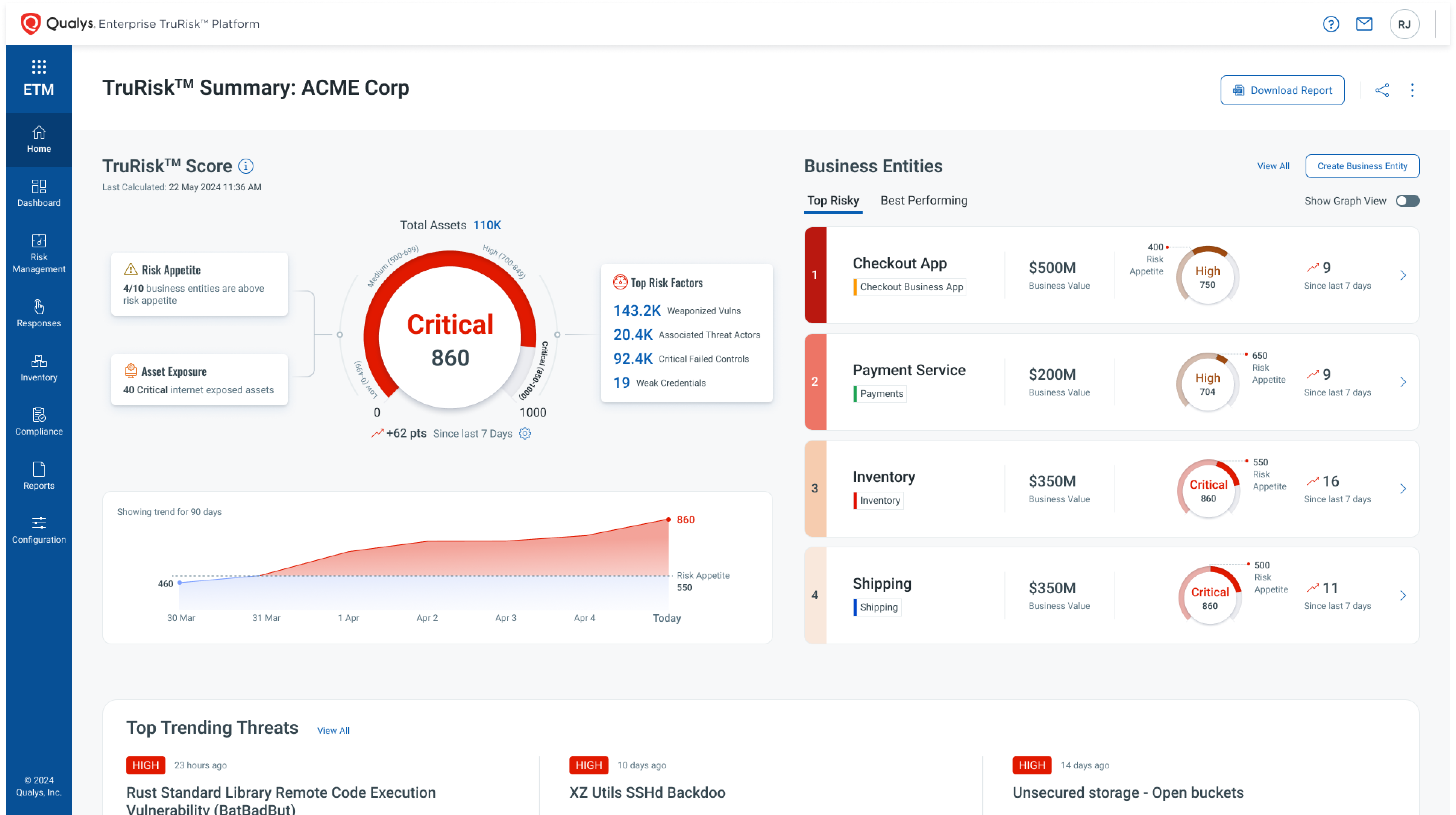
Qualys is a cybersecurity company that provides a cloud-based platform for vulnerability management, risk assessment, compliance monitoring, and threat detection. Its Enterprise TruRisk Platform consolidates multiple security and compliance applications into a single system to help organizations measure and manage cyber risk across their IT infrastructure.
Key features of the Qualys Platform:
- Unified security and compliance platform: Integrates multiple applications such as asset management, vulnerability management, and threat detection into one system.
- Asset visibility and inventory: Provides visibility into global IT assets across internal networks, cloud environments, and remote systems.
- TruRisk risk measurement: Evaluates cyber risk by combining vulnerability data, configuration issues, and other risk factors.
- Integrated vulnerability management: Continuously identifies vulnerabilities and misconfigurations across systems and applications.
- Cloud agent deployment: Uses lightweight agents to collect security data and monitor systems across distributed environments.

Acunetix

Acunetix is a web application security testing platform to identify vulnerabilities in web applications and APIs. It automates dynamic application security testing (DAST) to detect security flaws and provide remediation guidance, enabling organizations to incorporate security testing into development and deployment processes.
Key features of Acunetix:
- Automated vulnerability scanning: Detects thousands of web application vulnerabilities, including issues listed in the OWASP Top 10.
- Predictive risk scoring: Uses AI-based risk analysis to prioritize high-risk assets before scanning begins.
- Continuous asset discovery: Identifies web-facing applications and services associated with an organization for security testing.
- Proof-based vulnerability verification: Confirms vulnerabilities automatically to reduce false positives.
- Developer remediation guidance: Provides remediation instructions and highlights the exact code locations associated with vulnerabilities.

Palo Alto Networks Cortex Xpanse

Palo Alto Networks Cortex Xpanse is an attack surface management platform to discover and monitor internet-exposed assets across an organization’s digital environment. It continuously scans external infrastructure to identify unknown assets, misconfigurations, and security exposures that could be exploited by attackers.
Key features of Cortex Xpanse:
- Active attack surface discovery: Continuously scans the internet to identify exposed assets and services associated with an organization.
- Asset inventory and visibility: Detects unmanaged or previously unknown infrastructure components that could introduce security risks.
- Exposure analysis: Analyzes discovered assets to identify vulnerabilities, misconfigurations, or other potential security gaps.
- Automated remediation workflows: Supports automated responses and workflows to help organizations address discovered exposures.
- Continuous monitoring: Maintains ongoing visibility into the external attack surface to detect changes and emerging risks.

Conclusion
Rapid7 offers a security platform with a focus on vulnerability management, incident detection, and response capabilities. Its advantages include ease of deployment, extensive integrations with both cloud and on-premises environments, and vulnerability insights.
However, Rapid7 may present limitations for users seeking a fully cloud-native SIEM or advanced SOAR features, as well as for organizations with highly specific customization needs. When selecting a security management solution, organizations should evaluate their infrastructure, threat landscape, and desired level of automation to find the best fit for their security strategy.
See Additional Guides on Key Information Security Topics
Together with our content partners, we have authored in-depth guides on several other topics that can also be useful as you explore the world of information security.
SIEM Tools
Authored by Exabeam
- [Guide[ SIEM Tools: Top 5 SIEM Platforms, Features, Use Cases and TCO
- [Guide] Top 5 Free Open Source SIEM Tools [Updated 2025]
- [Guide] Best SIEM Solutions: Top 10 SIEM systems and How to Choose 2025
Bot Protection
Authored by Radware
- [Guide] Bot Protection: Attack Examples & 8 Ways to Defend Your Network
- [Guide] What Is a Botnet? Types, Examples, and 7 Defensive Measures
- [Product] Radware AI-Powered Bot Protection | Comprehensive Bot Management
Application Security
Authored by Oligo
- [Guide] What is Application Detection and Response (ADR)? 2025 Guide
- [Guide] Application Security in 2025: Threats, Solutions & Best Practices
- [Blog] Critical RCE Vulnerabilities in OpenSSH (CVE-2024-6387, CVE-2024-6409) – How to Detect and Mitigate
- [Product] Oligo | Real-Time Application Security & Risk Detection
Learn More About Exabeam
Learn about the Exabeam platform and expand your knowledge of information security with our collection of white papers, podcasts, webinars, and more.