NDR Solutions: Key Features and 7 Tools to Know in 2026
- 8 minutes to read
Table of Contents
What Are Network Detection and Response (NDR) Solutions?
Network detection and response (NDR) solutions are cybersecurity technologies that focus on identifying and mitigating threats within a network. They provide visibility into network traffic and use analytics to detect suspicious activities.
NDR tools help identify anomalies and potential security breaches, providing security teams with actionable insights to respond swiftly to threats. By continuously monitoring network activities, these solutions help ensure defense mechanisms are in place.
NDR solutions use a range of techniques, including machine learning and behavioral analytics, to detect threats in encrypted and unencrypted traffic. They complement other security measures by focusing on lateral movement, insider threats, and advanced persistent threats.
Editor’s note: Updated the article to cover recent market trends, updated product information to reflect features and capabilities in 2026.
Network Detection and Response Market Trends
The network detection and response market is steadily expanding. It has already reached USD 3.89 billion. By 2031, it is expected to grow to USD 5.59 billion, with a compound annual growth rate (CAGR) of 6.24%.
This growth is driven by a shift from reactive monitoring to proactive threat hunting. Organizations are investing in tools that provide continuous visibility and faster detection across complex environments.
Technology and Adoption Trends
AI-driven anomaly detection is gaining traction, with higher growth compared to traditional signature-based methods. Organizations are also focusing on monitoring encrypted east-west traffic, especially in operational technology (OT) environments.
There is a growing trend toward hybrid deployments. Companies process sensitive data on-premises while using cloud analytics for scalability and efficiency.
Managed security service providers (MSSPs) are packaging NDR into bundled services. This makes advanced detection accessible to smaller organizations without in-house expertise.
Challenges and Constraints
False positives remain a major issue. Security teams often spend significant time investigating benign alerts, reducing overall efficiency.
Data residency regulations limit cloud adoption in some regions. Organizations must balance compliance with the benefits of cloud-based NDR.
There is also a shortage of skilled cybersecurity professionals. This gap increases reliance on automation and external service providers.
What Are the Benefits of NDR Software?
Using an NDR solution offers organizations the following benefits.
Strengthening Security Defense
NDR solutions enhance security defenses by continuously monitoring network activities to identify potential threats. They use analytics to scrutinize large volumes of network data, flagging any irregularities that could indicate a security issue. This helps prevent network-related data breaches by identifying malicious activities early.
Deep Visibility
By capturing and analyzing granular network data, these tools offer an extensive view of network activities. This visibility enables security teams to understand normal network patterns and spot deviations that may indicate security issues. Data analytics provided by NDR tools ensure that even subtle threats are detected and addressed promptly.
Faster Threat Hunting and Response
NDR solutions speed up threat hunting by providing security teams with precise and actionable data. They reduce the noise by filtering out benign activities, allowing analysts to focus on genuine threats. This capability simplifies the identification and mitigation of threats, reducing the potential for damage from cyber incidents.
Key Features of NDR Tools
Real-Time Alerting and Incident Response
With continuous monitoring and rapid detection capabilities, these tools generate alerts as soon as suspicious activities are noted. This immediate notification allows teams to prioritize and address threats before they can cause significant harm.
Incident response is also accelerated via automated response mechanisms in NDR solutions. These systems can take predefined actions when threats are detected, such as quarantining affected devices or blocking malicious traffic.
Deep Packet Inspection (DPI)
Deep packet inspection enhances NDR tools by enabling detailed analysis of the data packets traversing a network. DPI inspects both the header and payload of packets, offering a granular view of the traffic and enabling the identification of malicious patterns that simpler inspection methods might miss.
This scrutiny provides an additional layer of security by identifying evasive threats, including those hidden within encrypted traffic. The use of DPI allows NDR solutions to identify and block threats that traditional security tools might overlook. By analyzing packet content, DPI can detect and respond to threats such as malware, intrusion attempts, and data exfiltration.
Encrypted Traffic Analysis (ETA)
Encrypted traffic analysis allows the analysis of encrypted data flows without needing to decrypt the traffic, maintaining data confidentiality while still detecting malicious activities. ETA identifies anomalies like unusual session lengths or connection patterns, which might indicate threat presence.
With ETA, NDR solutions ensure that the use of encryption does not become a blind spot in threat detection. By providing insights into encrypted traffic, NDR tools maintain security measures without compromising the privacy and confidentiality of the traffic they analyze.
Network Forensics
Network forensics aids in understanding the full scope and impact of security incidents. By maintaining logs of network activities, NDR tools support post-incident investigations. Analysts can trace attack vectors, identify compromised systems, and understand adversary tactics, improving future defenses and aiding in the prosecution of malicious actors.
NDR solutions equipped with network forensics capabilities provide a deep dive into how breaches occurred, helping to identify vulnerabilities or weaknesses in the network. The ability to audit activities with precision ensures that any lessons learned can be integrated into cybersecurity strategies, reinforcing an organization against potential future threats.
Cloud and Hybrid Environment Support
As organizations migrate to cloud and hybrid environments, NDR solutions have evolved to support these architectures. They provide visibility across on-premises, cloud, and hybrid networks, ensuring consistent security policy enforcement. This helps maintain a unified security posture, regardless of where the infrastructure resides.
With support for cloud and hybrid environments, NDR tools address the separate challenges these setups present, such as dynamic scaling and elastic workloads. NDR solutions enable organizations to detect threats across diverse environments, ensuring that security measures keep pace with technological advances and infrastructural changes.
Read our detailed explainer about threat hunting.
Tips from the expert

Steve Moore is Vice President and Chief Security Strategist at Exabeam, helping drive solutions for threat detection and advising customers on security programs and breach response. He is the host of the “The New CISO Podcast,” a Forbes Tech Council member, and Co-founder of TEN18 at Exabeam.
In my experience, here are tips that can help you better leverage NDR solutions:
Leverage threat intelligence feeds: Augment NDR capabilities with external threat intelligence feeds to identify advanced persistent threats (APTs) and zero-day attacks that are difficult to detect with network data alone.
Tune machine learning models regularly: NDR solutions relying on AI and machine learning can generate noise if not properly tuned. Regularly refine models with environment-specific data and feedback to reduce false positives and improve detection accuracy.
Implement network segmentation: Use NDR in combination with network segmentation to isolate sensitive areas. By reducing the attack surface, any detected anomalies are easier to contain, and response times are significantly improved.
Correlate NDR with endpoint data and SIEM: Cross-reference NDR detections with endpoint detection and response (EDR) or SIEM tools. This correlation enhances visibility and can help pinpoint root causes more effectively across attack surfaces.
Encrypt east-west traffic monitoring: While many NDRs focus on north-south traffic, don’t neglect internal east-west traffic within your network. Ensure your NDR can handle encrypted internal communications or deploy solutions that analyze encrypted traffic effectively.
Notable NDR Solutions
AI-Driven / Proprietary NDR Platforms
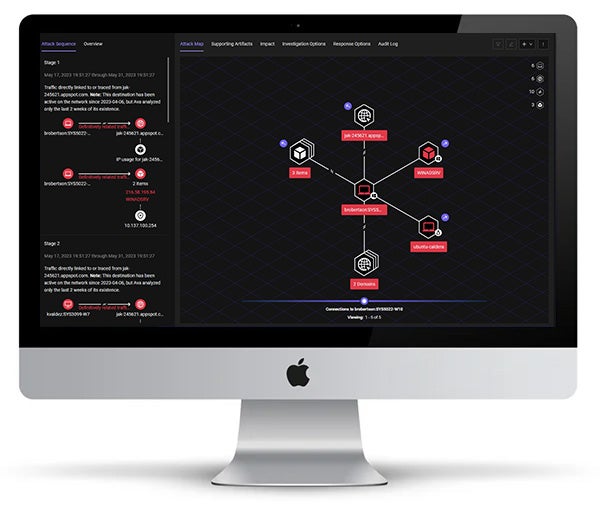
1. Arista NDR
Arista NDR is a network detection and response platform to provide continuous visibility and analysis across enterprise environments. It focuses on identifying abnormal behavior and malicious intent by analyzing relationships between users, devices, and applications, supporting faster investigation and response.
Key features of Arista NDR include:
- Continuous network visibility: Monitors all users, devices, and applications to provide a complete view of the attack surface.
- Behavioral analytics and anomaly detection: Learns patterns across entities and detects deviations that may indicate threats.
- Automated threat investigation: Correlates evidence over time to build context and visualize attack chains across entities and protocols.
- Threat hunting and custom detection models: Supports automated threat hunting and allows teams to define models for specific risks.
- Context-rich forensics and timelines: Provides detailed evidence and timelines to support incident analysis and response.
- Integration with existing tools: Shares insights with other security and IT systems to extend detection and response workflows.

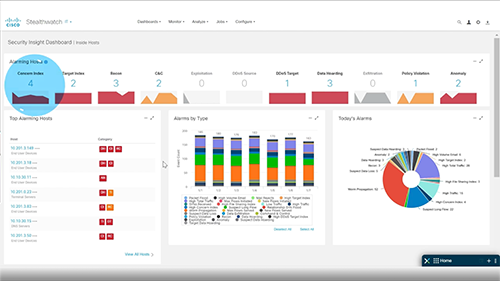
2. Cisco Secure Network Analytics
Cisco Secure Network Analytics is an NDR solution that analyzes network telemetry to detect threats that bypass traditional defenses. It uses behavioral modeling and analytics to identify suspicious activity across network environments, including encrypted traffic.
Key features of Cisco Secure Network Analytics include:
- Behavioral modeling and machine learning: Establishes baselines of normal activity and detects anomalies indicating potential threats.
- Real-time threat detection with context: Generates alerts enriched with details such as user, device, and application context.
- Encrypted traffic analytics: Identifies threats within encrypted traffic without requiring decryption.
- Detection of insider threats and unknown attacks: Helps uncover data exfiltration, policy violations, and previously unseen threats.
- Policy validation and compliance monitoring: Evaluates and improves network policies while supporting investigations.
- Integration with XDR and security tools: Connects with Cisco XDR and other systems for coordinated detection and response.

3. Darktrace DETECT
Darktrace DETECT is an AI-driven NDR solution that uses self-learning algorithms to understand normal behavior across an organization and identify deviations. It focuses on detecting novel and evolving threats without relying on predefined signatures.
Key features of Darktrace DETECT include:
- Self-learning AI models: Continuously learns normal patterns across users, devices, and systems to detect anomalies.
- Detection of unknown threats: Identifies subtle deviations and previously unseen attack techniques, including novel malware.
- Continuous real-time monitoring: Analyzes multiple metrics across the environment to uncover emerging threats.
- Automated investigation with AI analyst: Uses AI to investigate alerts, correlate events, and generate incident summaries.
- Noise reduction and prioritization: Consolidates multiple alerts into a smaller set of high-priority incidents.
- Integration with automated response: Feeds detections into response systems to enable rapid mitigation.

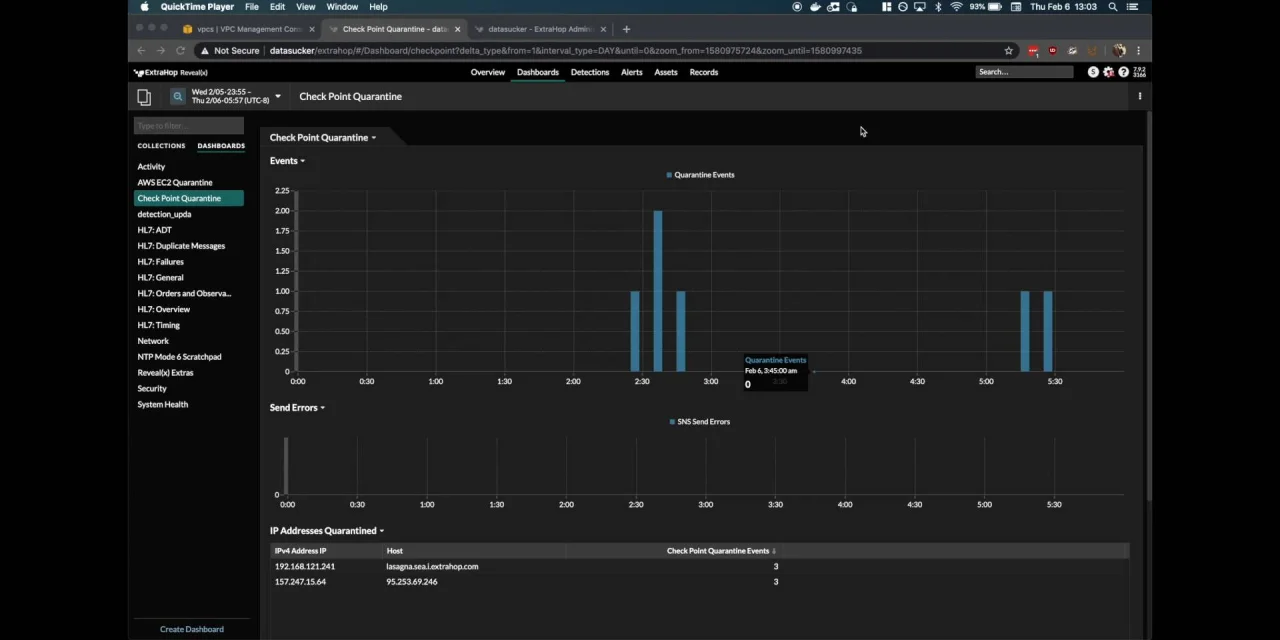
4. ExtraHop RevealX
ExtraHop RevealX is an NDR platform that provides visibility and analysis of network traffic across on-premises and cloud environments. It combines packet analysis, machine learning, and automation to detect threats and support investigations.
Key features of ExtraHop RevealX include:
- Network visibility: Captures and analyzes traffic across on-premises, cloud, and hybrid environments.
- Deep packet and protocol analysis: Decodes and analyzes protocols to extract detailed insights from network traffic.
- Automatic asset discovery and profiling: Continuously identifies and profiles devices, users, and applications on the network.
- AI-driven anomaly detection: Uses machine learning to baseline behavior and detect unusual activity.
- Integrated network forensics: Supports investigation with stored traffic data and contextual metrics.
- Workflow automation and integrations: Connects with SIEM, EDR, and SOAR tools and automates investigation steps.

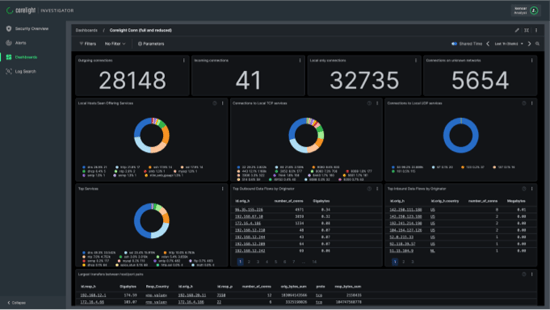
5. Corelight Open NDR
Corelight Open NDR is a platform that combines open-source and proprietary technologies to deliver network detection and response capabilities. It focuses on providing deep visibility, flexible integrations, and multiple detection methods within a unified system.
Key features of Corelight Open NDR include:
- Open-source powered detection: Leverages technologies like Zeek and Suricata for network monitoring and analysis.
- Unified detection approaches: Combines machine learning, behavioral analytics, and signature-based methods.
- Packet capture and evidence correlation: Links alerts with packet data to provide detailed investigation context.
- Integrated threat intelligence: Enriches detections with external and internal threat intelligence sources.
- SOC workflow automation: Supports integration with SIEM, XDR, and SOAR platforms for automated response.
- Flexible and extensible architecture: Enables customization and integration through an open ecosystem.

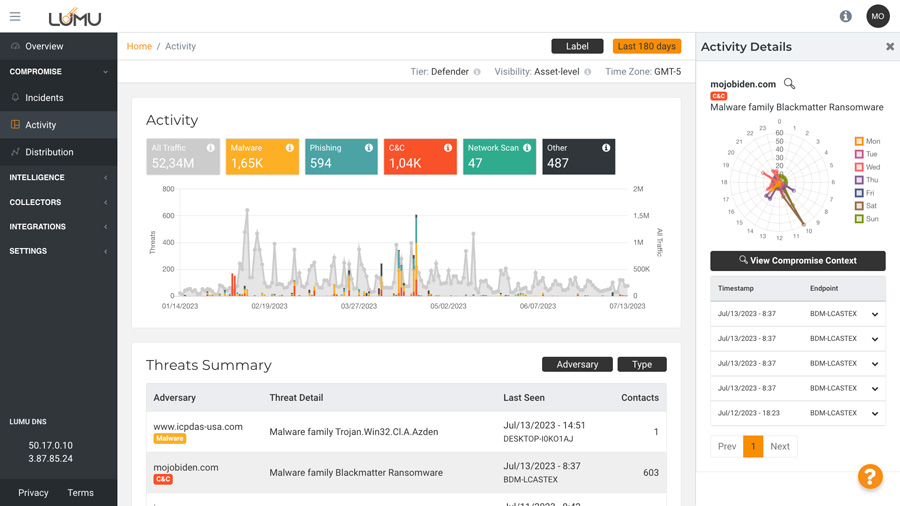
6. Lumu NDR
Lumu NDR is a threat detection and response platform that focuses on continuous compromise detection across network, endpoint, and cloud environments. It integrates with existing security tools to automate detection and response workflows.
Key features of Lumu NDR include:
- Continuous compromise monitoring: Tracks network activity to identify indicators of compromise in real time.
- Unified visibility across environments: Provides insight into network, endpoint, identity, and cloud activity.
- Automated response through integrations: Connects with existing security tools to trigger response actions automatically.
- Detection of threats bypassing defenses: Identifies attacks that evade traditional security controls.
- Contextual threat insights: Provides actionable information to support timely investigation and response.
- Seamless ecosystem integration: Integrates with a wide range of third-party security platforms.

7. Verizon Network Detection and Response
Verizon Network Detection and Response is a cloud-delivered NDR platform that combines traffic capture, analytics, and response capabilities. It focuses on providing full network visibility and long-term forensics to support proactive threat detection and investigation.
Key features of Verizon NDR include:
- Cloud-delivered architecture: Enables deployment across enterprise, cloud, and industrial environments without specialized hardware.
- Full-packet capture and retention: Stores network traffic for detailed forensic analysis and retrospective threat hunting.
- Advanced detection techniques: Uses machine learning, behavioral analytics, and threat intelligence to identify threats.
- Integrated detection and response workflows: Correlates events and supports automated response and remediation.
- Long-term searchable forensics: Allows teams to investigate past activity and validate exposure to new threats.
- Scalable data processing and analytics: Handles large volumes of network data with elastic compute and storage.
Exabeam Platform Capabilities: SIEM, UEBA, SOAR, Insider Threats, Compliance, TDIR
The Exabeam Security Operations Platform applies AI and automation to security operations workflows for a holistic approach to combating cyberthreats, delivering the most effective threat detection, investigation, and response (TDIR):
- AI-driven detections pinpoint high-risk threats by learning normal behavior of users and entities, and prioritizing threats with context-aware risk scoring.
- Automated investigations simplify security operations, correlating disparate data to create threat timelines.
- Playbooks document workflows and standardize activity to speed investigation and response.
- Visualizations map coverage against the most strategic outcomes and frameworks to close data and detection gaps.
With these capabilities, Exabeam empowers security operations teams to achieve faster, more accurate, and consistent TDIR.
Explore the Exabeam Security Operations Platform.
Learn More About Exabeam
Learn about the Exabeam platform and expand your knowledge of information security with our collection of white papers, podcasts, webinars, and more.