Best AI-Driven SOC Solutions for Scaling Security Operations: Top 8 in 2026
- 17 minutes to read
Table of Contents
TL;DR: AI-driven SOC solutions use machine learning, behavioral analytics, and AI agents to triage, investigate, and respond to threats as data and alert volumes grow. Best for: Exabeam New-Scale Fusion for behavior-based TDIR with AI agents, Cortex XSIAM for Palo Alto-centric SOCs, Microsoft Sentinel for Microsoft shops, and Torq for agentic automation.
What Are AI-Driven SOC Solutions?
The top AI-driven Security Operations Center (SOC) solutions for scaling operations feature agentic automation, autonomous alert triage, and cross-platform orchestration to combat alert fatigue and surging data volumes. They analyze security data from sources such as endpoints, networks, identities, cloud services, and applications to identify suspicious activity.
Unlike systems based only on predefined rules, AI models can also detect unusual behavior and patterns that may indicate previously unseen threats. These solutions can automate repetitive SOC tasks, including alert enrichment, event correlation, prioritization, and initial investigation.
Core capabilities for scaling:
- AI-driven threat detection: Analyzes large volumes of security telemetry to identify suspicious patterns, emerging threats, and malicious activity that traditional rules may miss.
- User and entity behavior analytics (UEBA): Establishes behavioral baselines for users, devices, applications, and service accounts to detect unusual activity and potential account compromise.
- Security data collection and normalization: Collects and standardizes telemetry from endpoints, networks, cloud platforms, identity systems, and security tools to support cross-platform analysis.
- Automated alert triage: Enriches, correlates, deduplicates, and prioritizes alerts based on threat indicators, asset criticality, identity context, and potential impact.
- Incident timeline reconstruction: Connects related security events into chronological attack sequences to help analysts identify entry points, lateral movement, affected systems, and root causes.
- AI agents for autonomous SOC operations: Performs multi-step investigations, coordinates specialized security agents, and executes approved response actions across connected tools with appropriate human oversight.
This is part of a series of articles about AI cyber security
AI-Driven SOC Solutions at a Glance
The table below summarizes the key differences between the AI-driven SOC solutions covered in this article. We explore each solution in more detail in the sections that follow.
| Category | Solution | Best For | Key Strengths | Things to Consider |
| AI-driven security operations platforms | Exabeam New-Scale Fusion | Replacing or augmenting a SIEM with behavioral analytics and AI agents | UEBA, Agent Behavior Analytics, multi-agent Exabeam Nova | Some data sources may need extra integration work |
| AI-driven security operations platforms | Palo Alto Networks Cortex XSIAM | Consolidating SIEM, XDR, and SOAR on Palo Alto Networks | Unified data layer, ML analytics, Cortex AgentiX agents | Pricing and licensing can be complex |
| AI-driven security operations platforms | Google Security Operations | Cloud-scale SIEM and SOAR with Google threat intelligence | Gemini agents for triage, hunting, and detection engineering | Playbooks and some ingestion need engineering effort |
| AI-driven security operations platforms | Microsoft Sentinel | Organizations standardized on Microsoft Defender and Azure | Built-in SOAR, UEBA, data lake, Security Copilot | Ingestion-based costs can grow with data volume |
| AI-driven security operations platforms | CrowdStrike Falcon Next-Gen SIEM | Falcon customers consolidating SIEM and endpoint data | Index-free search, Falcon Onum, agentic investigations | Dashboard creation and normalization take effort |
| AI SOC agents and agentic automation platforms | Dropzone AI | Adding autonomous alert investigation to an existing stack | End-to-end AI investigations with visible evidence | Capacity is metered by number of investigations |
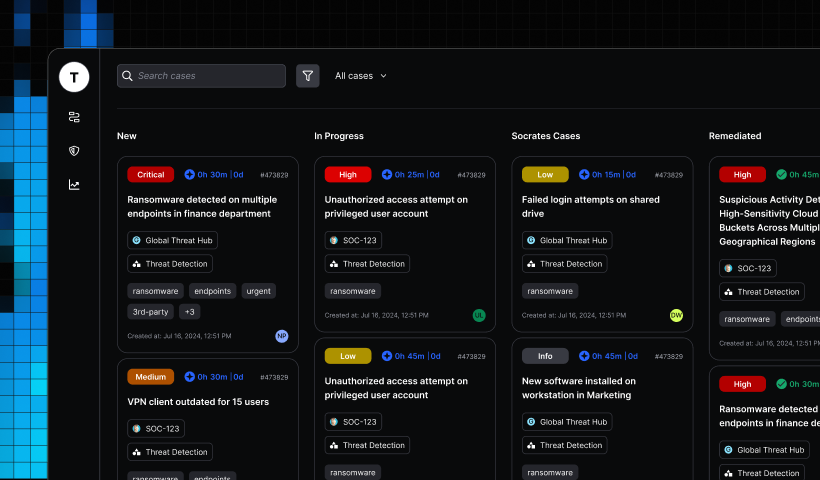
| AI SOC agents and agentic automation platforms | Torq AI SOC Platform | Automating triage through remediation with AI agents | Auto Triage, HyperAgents, Socrates, hyperautomation | Debugging complex workflows can be difficult |
| AI SOC agents and agentic automation platforms | Swimlane Turbine | High-volume, low-code SOC automation for enterprises and MSSPs | Hero AI agents, intelligent alert routing, case management | Custom playbooks often require Python skills |
Why Do SOC Teams Need AI to Scale Security Operations?
Growing Security Data Volumes
SOC teams collect telemetry from endpoints, networks, cloud platforms, applications, identity systems, and security tools. As environments grow, the volume of logs and events can exceed what analysts can review manually. AI can process this data continuously, correlate related events, and identify patterns across multiple sources.
This helps analysts find meaningful signals within large datasets without manually searching through individual logs. Machine learning models can establish baselines for normal activity and flag deviations that may indicate compromise. AI can also connect events that appear harmless individually but form a suspicious sequence when analyzed together.
Increasing Alert Volumes
Security tools can generate thousands of alerts, many of which are duplicates, low risk, or false positives. Analysts must still determine which alerts represent real threats, creating large investigation queues. High alert volumes can also increase response times and make it easier for important signals to be overlooked.
AI can group related alerts, enrich them with additional context, and prioritize cases based on factors such as behavior, affected assets, identities, and threat indicators. It can also automate parts of the initial triage process, such as gathering supporting events and checking indicators. Analysts can then spend more time investigating incidents that require human judgment.
Expanding Cloud, SaaS, and Identity Attack Surfaces
Modern organizations operate across cloud infrastructure, SaaS applications, remote endpoints, and multiple identity providers. Each environment produces different security data and introduces its own permissions, configurations, and attack paths. Attackers can exploit misconfigurations, stolen credentials, excessive permissions, and legitimate administrative tools, making malicious activity harder to distinguish from normal behavior.
AI can analyze activity across these environments instead of treating each system as an isolated source. For example, it can correlate an unusual login with privilege changes, cloud resource access, and suspicious endpoint activity. This broader context helps SOC teams detect attacks that move between identities, applications, endpoints, and cloud resources.
How Do AI-Driven SOC Solutions Help Scale Security Operations?
AI-driven SOC solutions help security teams manage growing volumes of security data by automating analysis, investigation, and selected response tasks. They connect activity across systems, prioritize likely threats, and reduce repetitive work so analysts can focus on incidents that require human judgment.
- Collect security telemetry across the environment: Ingest data from endpoints, networks, cloud services, SaaS applications, identity providers, and security tools to support visibility and investigation.
- Normalize and correlate security events: Standardize fields such as users, devices, and timestamps, then connect related events across sources to reveal suspicious activity sequences.
- Establish baselines for normal user and entity behavior: Learn typical activity patterns for users, devices, applications, and service accounts to provide context for evaluating new behavior.
- Detect behavioral anomalies and suspicious activity: Identify deviations such as unusual logins or unexpected privilege use, combining anomaly scores with other signals to assess whether investigation is warranted.
- Enrich alerts with identity, asset, and threat context: Add details such as account privileges, asset criticality, vulnerabilities, and threat intelligence to reduce manual research and clarify potential impact.
- Correlate related signals into higher-confidence incidents: Group related alerts across security tools into a unified incident, reducing duplicate work and helping analysts understand the broader attack.
- Prioritize incidents based on risk: Rank incidents using severity, asset value, account privileges, and evidence of compromise so analysts can address the most consequential threats first.
- Automate investigation and evidence collection: Retrieve logs, check indicators, review historical activity, and build timelines so analysts can validate findings rather than repeat routine queries.
- Recommend or trigger response actions: Suggest or execute actions such as isolating endpoints or revoking sessions, using predefined workflows and analyst approval for potentially disruptive steps.
Core Capabilities of AI-Driven SOC Solutions for Scaling Security Operations
AI-Driven Threat Detection
AI-driven threat detection uses machine learning models to identify malicious or suspicious activity across large volumes of security telemetry. It can detect patterns that are difficult to capture with static signatures and rules, including new attack techniques and activity spread across multiple systems.
Models can evaluate combinations of signals such as authentication behavior, process execution, network connections, file activity, and cloud events. They can also identify relationships between events that appear low risk when examined separately.
This approach helps SOC teams expand detection coverage without creating and maintaining a separate rule for every possible attack pattern. Rule-based detection remains useful for known threats, while AI adds another layer for detecting less predictable behavior.
User and Entity Behavior Analytics (UEBA)
UEBA analyzes how users, devices, service accounts, applications, and other entities normally behave. It can track factors such as login times, locations, resource access, privilege use, network connections, and data movement.
When behavior changes significantly, UEBA can assign additional risk to the activity. For example, a privileged account accessing an unusual system after an abnormal login may receive a higher risk score than either event would generate independently.
UEBA can also compare an entity with similar users or systems rather than relying only on its own history. This is useful when there is limited historical data or when an attacker gradually changes behavior to avoid simple anomaly thresholds.
Security Data Collection and Normalization
AI-driven SOC solutions need consistent access to telemetry from endpoints, networks, identity systems, cloud platforms, SaaS applications, and security products. Data collection capabilities bring these sources into a common platform for analysis.
Normalization maps different event formats into consistent fields and schemas. This allows analytics to connect the same user, device, IP address, application, or cloud resource across multiple data sources without requiring analysts to reconcile different formats manually.
Reliable data collection also affects the quality of AI analysis. Missing telemetry, inconsistent timestamps, duplicate events, and incorrect entity mappings can reduce detection accuracy. SOC teams therefore need to monitor data quality and ensure that important security sources remain connected.
Automated Alert Triage
Automated triage evaluates incoming alerts to determine their relevance, severity, and relationship to other security activity. The system can enrich alerts, remove duplicates, correlate related signals, and apply risk scores before an analyst begins an investigation.
AI can also perform common first-level investigation tasks. For example, it can check whether an IP address is known to be malicious, retrieve recent activity for an affected account, identify related endpoint alerts, and determine whether the targeted asset is business critical.
This reduces repetitive work and helps SOC teams direct analyst attention toward incidents with stronger evidence or greater potential impact. Analysts can spend more time validating complex threats rather than manually processing large queues of isolated alerts.
Incident Timeline Reconstruction
Incident timeline reconstruction organizes security events into a chronological sequence showing how an attack developed. AI-driven systems can connect authentication events, process execution, network activity, privilege changes, file operations, and other evidence associated with affected entities.
A reconstructed timeline helps analysts understand the attack path, determine its scope, and identify the likely entry point and affected resources. It can show, for example, how an initial account compromise led to privilege escalation, lateral movement, and access to sensitive data.
Automating this process reduces the need to run separate queries across multiple tools and manually align timestamps. Analysts can use the resulting timeline to validate findings, identify missing evidence, and determine which containment actions are required.
Related content: Read our guide to threat detection, investigation, and response (TDIR)
AI Agents for Autonomous SOC Operations
AI agents can perform multi-step SOC tasks with limited human involvement. Unlike traditional automation, which follows predefined playbooks, AI agents can select investigation steps based on the evidence they collect. For example, an agent investigating a suspicious login can retrieve authentication logs, check endpoint activity, examine privilege changes, and search for related alerts. It can then use the results to determine whether further investigation is needed.
Multiple specialized agents can also work together on the same incident. One agent might analyze identity activity, another examine endpoint telemetry, and a third correlate findings into an incident summary. An orchestrator agent can coordinate these tasks, share context between agents, and determine the next steps. This allows SOC teams to investigate multiple alerts in parallel without requiring analysts to perform every query and enrichment step manually.
AI agents can also execute response actions through integrations with security tools. Depending on their permissions, they may isolate compromised endpoints, disable accounts, revoke sessions, or block malicious IP addresses. Organizations can restrict autonomous actions using role-based permissions, approval requirements, and predefined policies.
Notable AI-Driven SOC Solutions for Scaling Security Operations
How we selected these solutions: We shortlisted AI-driven SOC solutions based on AI-assisted threat detection, behavioral analytics, automated alert triage and investigation, agentic workflows, and response orchestration across endpoint, identity, cloud, and network data.
AI-Driven Security Operations Platforms
1. Exabeam New-Scale Fusion

Best for: Replacing or augmenting a SIEM or similar technology (e.g. ISOC, XDR, et al.) with behavioral analytics and AI agents
Strengths: UEBA, Agent Behavior Analytics, and multi-agent Exabeam Nova AI
Things to consider: Some data sources may need extra integration work
New-Scale Fusion is a cloud-native security operations platform that combines New-Scale SIEM and New-Scale Analytics. It brings log management, SIEM detections, behavioral analytics, dynamic risk scoring, investigation workflows, and automation into one environment, and applies them to both human users and non-human entities such as service accounts and AI agents.
Nova AI runs as a platform-wide AI co-investigator in a sidebar that follows analysts across Threat Center, search timelines, and Outcomes Navigator. It collects background context, runs secondary searches, and assists with triage. Teams can use Fusion to replace an existing SIEM, or keep that SIEM and add New-Scale Analytics and automation on top of it.
Key features include:
- Nova AI platform-wide capabilities: Specialized agents handle threat scoring, investigation, search, visualization, advisory insights, rule creation, and conversational analysis. The Investigation Agent writes case summaries, analyzes threats, and recommends next steps using entity profiles and background context.
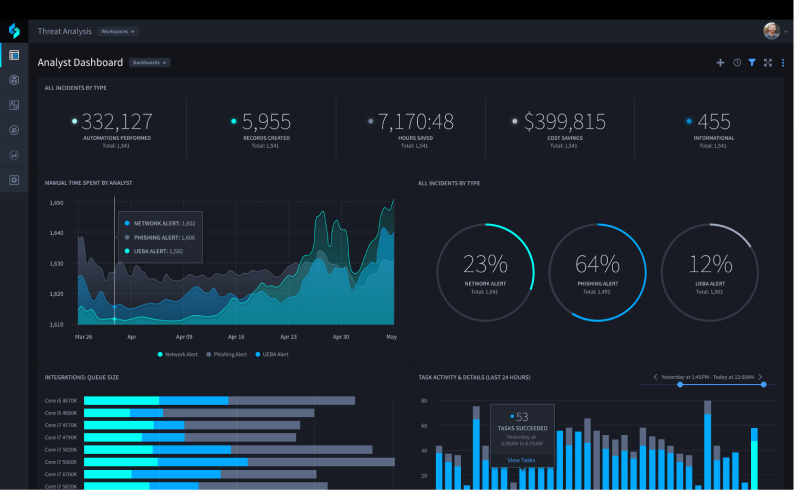
- Behavioral analytics and dynamic risk scoring: New-Scale Analytics baselines users, devices, service accounts, and applications, then scores deviations from normal behavior. Machine-learned detections cover insider threats, credential misuse, and advanced attacks that static rules can miss.
- Tool and MCP activity tracking: Monitors which tools agents use and their MCP activity, and detects autonomous installation and execution of software.
- Open-source security tools: Employs open-source projects including Praxen for pre-deployment Agent Behavior Verification (ABV) to test safety remits, and Observra to standardize runtime agent telemetry into a Common Information Model.
- Agent Behavior Analytics (ABA): Extends behavioral monitoring to AI agents and other non-human identities. When ABA flags an anomaly, Nova AI adds context to distinguish approved AI usage from suspicious activity.
- Cloud-scale log management: Ingests, parses, stores, and searches high-volume data. A Common Information Model (CIM) normalizes and enriches events at ingestion, and data can be routed to third-party storage or queried through federated search.
- Natural-language search and visualization: The Search capability translates questions in multiple languages into Exabeam Query Language, and the Visualization Agent turns natural-language requests into charts and dashboards.
- Entity context with Attack Surface Insights: Aggregates data from existing tools into entity profiles with attributes and relationships, so analysts can see a user’s or device’s exposure while prioritizing risk.
- AI-assisted detection engineering: The Rule Creator Agent generates correlation rules from natural language, tunes existing detections, and converts third-party detection content into Exabeam rules.
- Automation and open integrations: Low-code automation and standards-based APIs connect to more than 1,000 tools, and an MCP server makes New-Scale data available to external workflows and agentic tools.
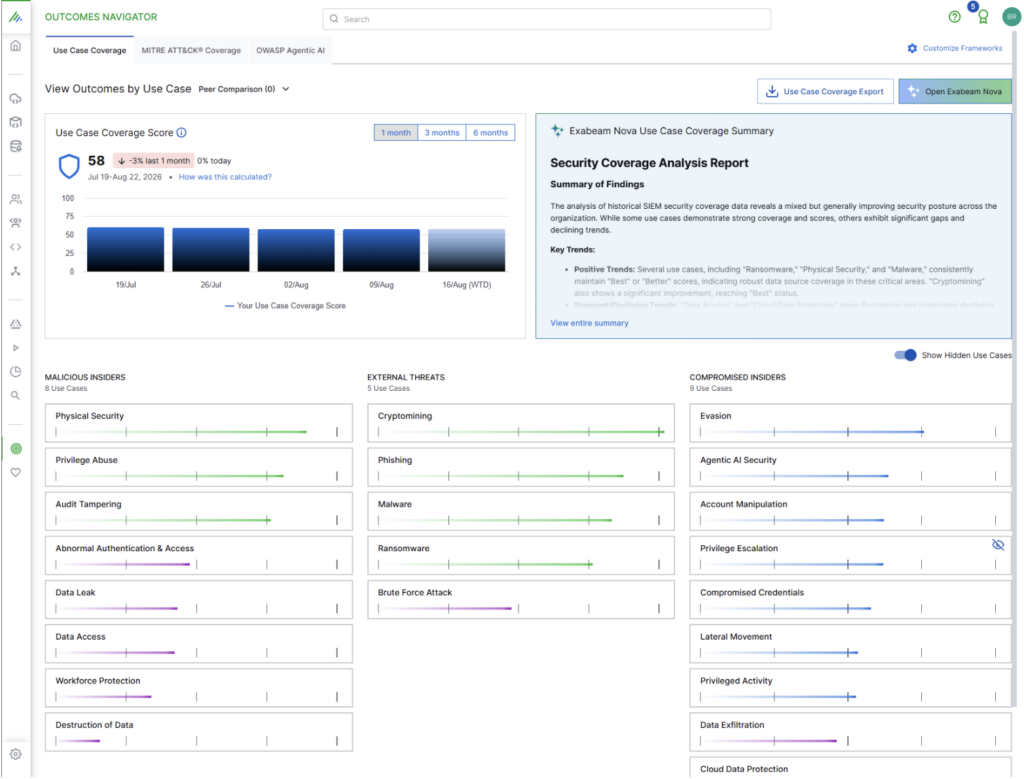
- Outcomes Navigator: Maps detection coverage to MITRE ATT&CK, the OWASP Agentic Top 10, and compliance frameworks, while the Advisor Agent highlights gaps and suggests improvements.
- Limitations (as reported by users on PeerSpot):
- Dashboard customization: Some users would like additional dashboard options and finer control over how dashboards are customized.
- Out-of-the-box integrations: A few reviewers note that certain data sources need additional configuration because they are not covered by prebuilt integrations.
- Documentation depth: Some users ask for more detailed documentation, particularly for API interactions.
2. Palo Alto Networks Cortex XSIAM

Best for: Consolidating SIEM, XDR, and SOAR on Palo Alto Networks
Strengths: Unified data layer, ML analytics, and Cortex AgentiX agents
Things to consider: Pricing and licensing can be complex
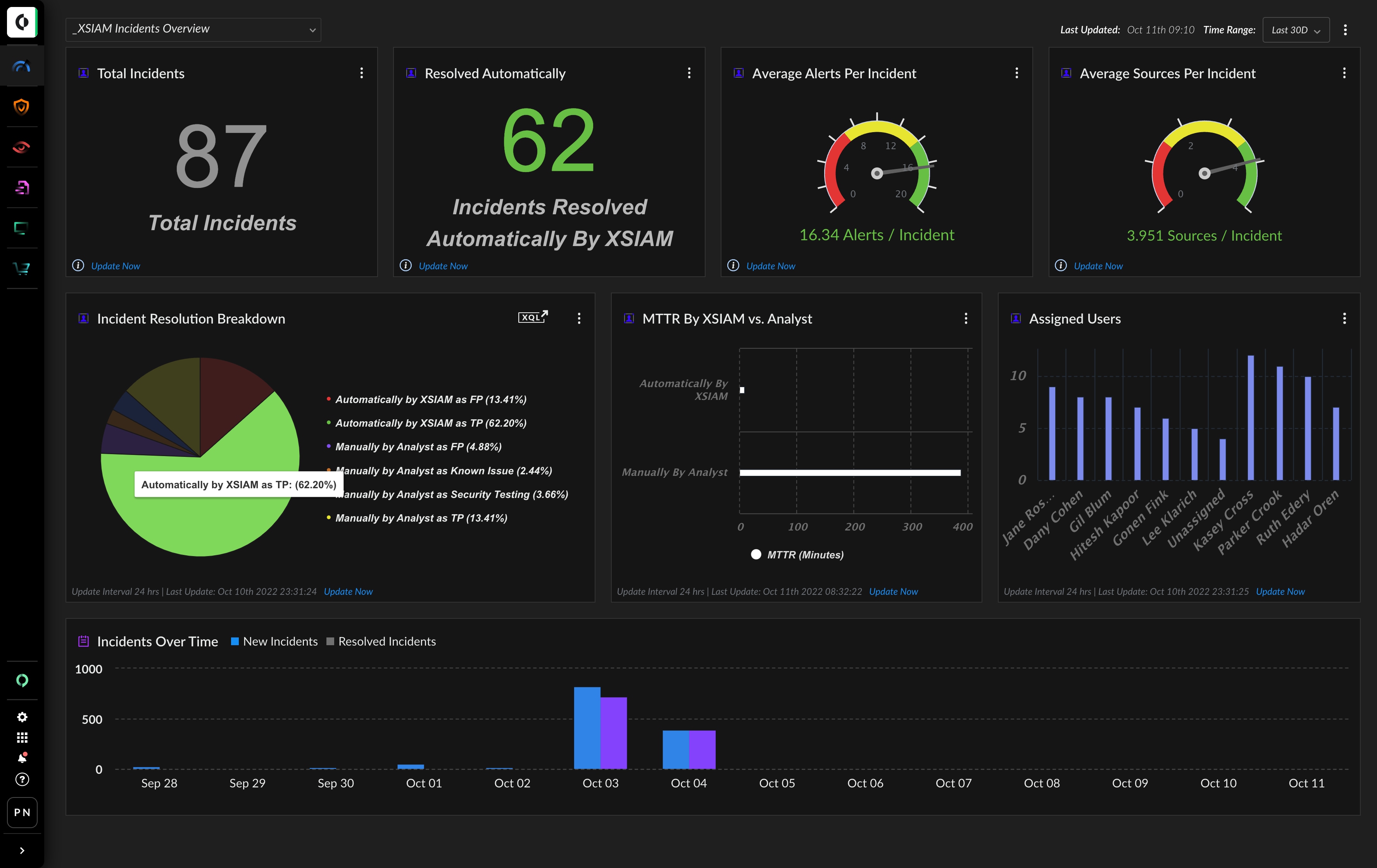
Cortex XSIAM is an AI-driven security operations platform that replaces a traditional SIEM by combining SIEM, SOAR, EDR, NDR, and cloud detection and response on one data layer, Cortex XDL. It collects telemetry from endpoints, networks, identities, cloud, and third-party sources, then prepares, enriches, and stitches that data before applying machine learning detection analytics.
The platform groups related alerts into prioritized cases and shows the attack story, including root cause, in a single view. Cortex AgentiX, the successor to Cortex XSOAR, runs AI agents for investigation and response, with guardrails that control what agents are allowed to do.
Key features include:
- Unified data foundation: Brings endpoint, network, identity, cloud, exposure, and third-party telemetry into Cortex XDL. Data is enriched and stitched as it is collected, so analytics can run across sources without manual correlation.
- ML-based detection: Applies machine learning models and a large library of prebuilt detections to the stitched data, alongside SIEM rules and integrated XDR detections.
- Alert grouping and root cause analysis: Consolidates large numbers of alerts into a smaller set of prioritized cases and presents the full attack sequence in one place.
- Agentic AI with Cortex AgentiX: Lets teams deploy AI agents that plan, reason, and take action on SOC tasks, with enterprise guardrails governing agent permissions.
- Built-in automation: Automated triage, guided actions, and playbooks drive response from the same platform used for detection and investigation.
- Extended modules: Adds email security, exposure management, threat intelligence management, and identity threat detection and response (ITDR) to the same platform.
- Managed services option: Unit 42 Managed Threat Hunting, Managed Detection and Response, and Managed XSIAM are available for organizations that want 24/7 external coverage.
Limitations (as reported by users on PeerSpot):
- Cost and licensing: Several reviewers describe the platform as expensive and the licensing process as more complex than some alternatives, with added costs for extra modules.
- Integration and onboarding gaps: Users report a need for more third-party integrations and for improvements to data onboarding and parser support.
- Interface usability: Some users find the interface less intuitive than expected and note slowdowns when several tabs are open.
- AI analytics tuning: One reviewer notes that AI analytics needed fine-tuning before certain use cases worked as expected.
- Support responsiveness: Some users say technical support can be slow and may require additional escalation.

Source: Palo Alto Networks
3. Google Security Operations
Best for: Cloud-scale SIEM and SOAR with Google threat intelligence
Strengths: Gemini agents for triage, hunting, and detection engineering
Things to consider: Playbooks and some ingestion need engineering effort
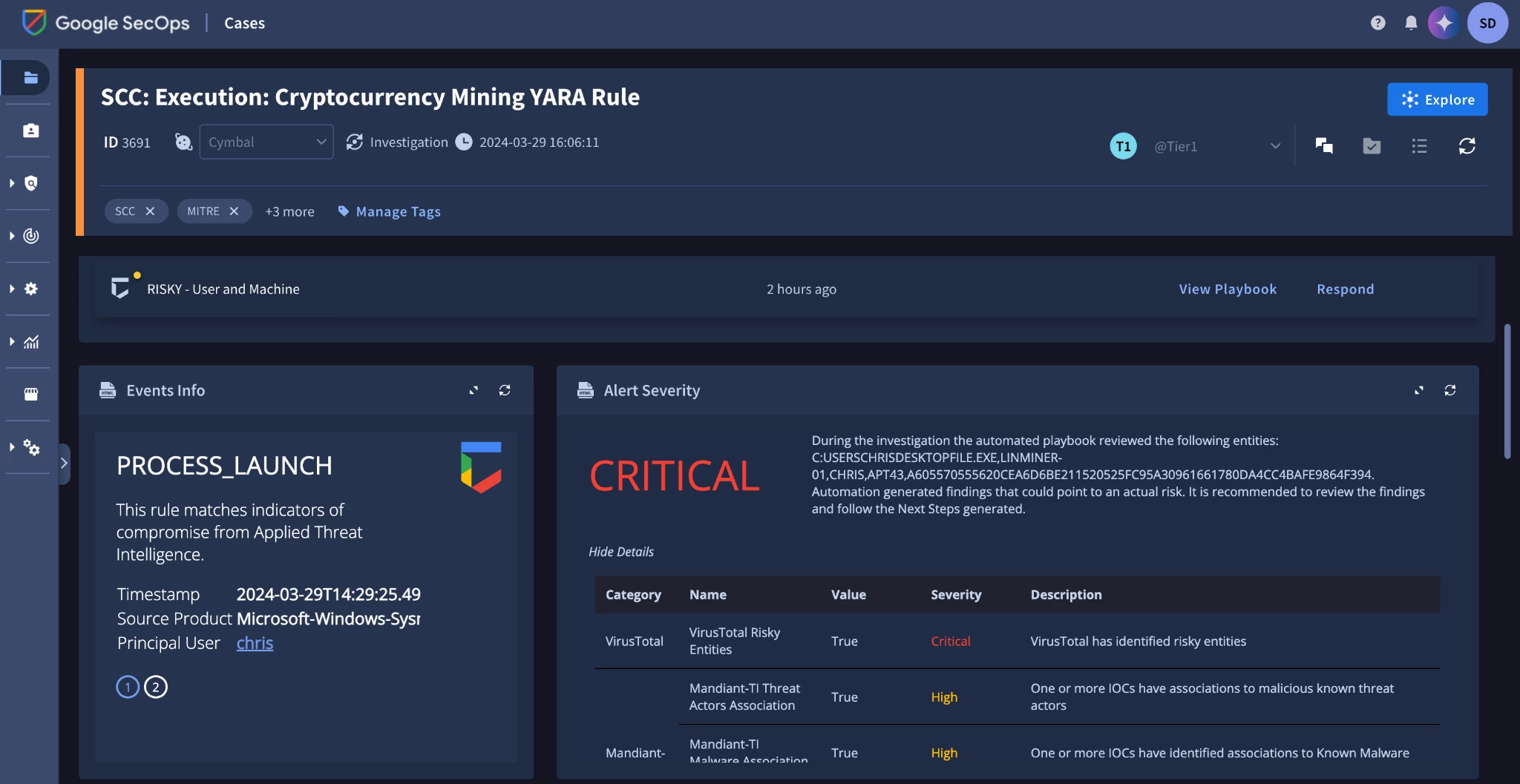
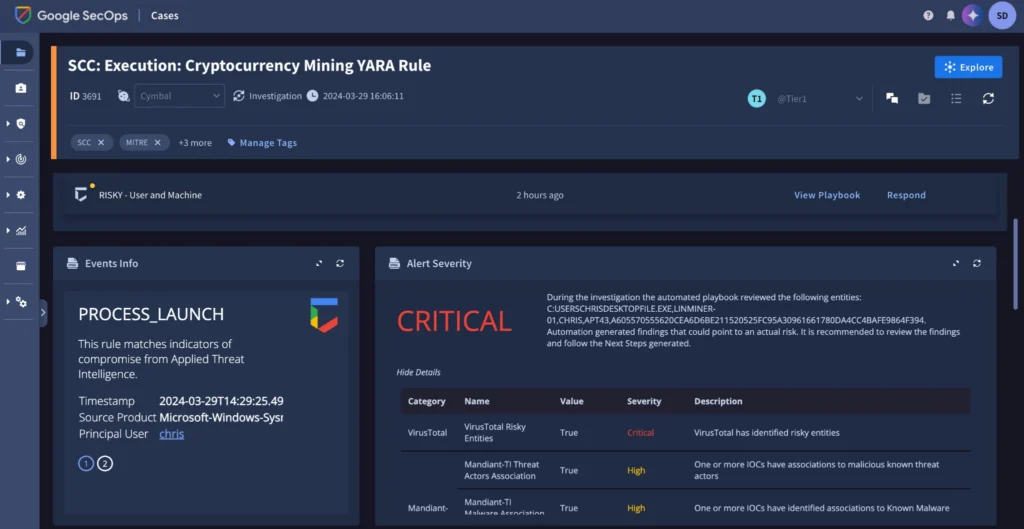
Google Security Operations (Google SecOps) is a cloud-native platform that combines SIEM, SOAR, and threat intelligence for detection, investigation, and response. It ingests telemetry from on-premises systems and all major cloud providers, applies curated detections maintained by Google threat researchers, and supports custom detection rules written in YARA-L.
Gemini in Google SecOps adds natural-language search, AI-generated case summaries, recommended response actions, and assisted detection and playbook creation. A set of AI agents automates alert triage, threat hunting, and detection engineering, using intelligence from Mandiant, VirusTotal, and Google.
Key features include:
- Triage and Investigation agent: Investigates alerts autonomously, enriches them with threat intelligence, and returns a verdict with a detailed explanation. It can automate decision-making, alert closure, and remediation flows.
- Detection Engineering agent: Analyzes the organization’s threat profile, creates and tests detection rules, and validates them against synthetic events to close coverage gaps.
- Threat Hunting agent: Searches the environment for novel attack patterns and stealthy behavior that bypasses traditional defenses, drawing on Mandiant, VirusTotal, and Google intelligence.
- Agentic automation with playbooks: Combines AI agents that gather evidence and reason through alerts with deterministic playbooks, keeping analysts in control of high-impact actions. SOAR playbooks can orchestrate more than 300 tools.
- Curated and custom detections: Provides out-of-the-box detections maintained by Google, YARA-L for custom rules, and in higher packages, UEBA-style detections and a risk dashboard.
- Context-rich investigation: Threat-centric case management, interactive alert graphs, automatic entity stitching, and fast search give analysts the context needed to work a case.
- Data pipeline management: Routes, filters, redacts, and transforms telemetry before analysis. Packages include 12 months of hot data retention and access to 700+ parsers.
Limitations (as reported by users on PeerSpot):
- Playbook and integration effort: Users report that building playbooks and connecting some tools through APIs can be challenging.
- Custom ingestion for some sources: One reviewer notes that certain third-party applications require scripts and cloud functions to pull logs instead of direct ingestion.
- Threat description detail: Some users would like threat descriptions to be more accurate and detailed.
- Search and export options: Reviewers request better search within playbooks and more options for exporting case data.
- Support experience: Some users say it can be hard to keep up with support.
Source: Google
4. Microsoft Sentinel

Best for: Organizations standardized on Microsoft Defender and Azure
Strengths: Built-in SOAR, UEBA, data lake, and Security Copilot
Things to consider: Ingestion-based costs can grow with data volume
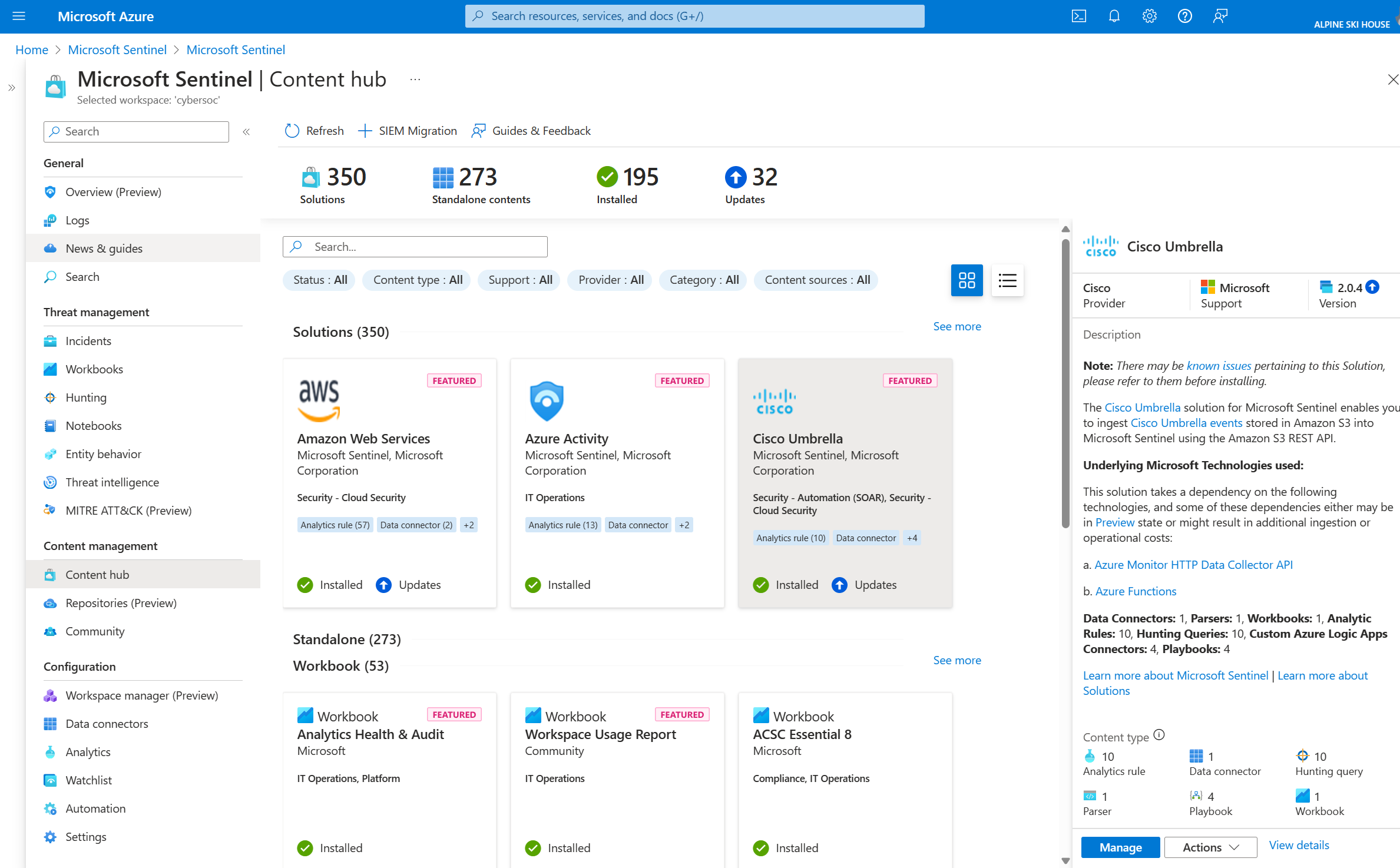
Microsoft Sentinel is a cloud-native SIEM that detects, investigates, and responds to threats across multi-cloud and multiplatform environments. It includes SOAR, UEBA, threat intelligence, and case management, and runs inside the Microsoft Defender portal alongside Microsoft Defender XDR, so alerts and incidents from both products share one workflow.
Data enters through 400+ connectors and a codeless connector framework for custom sources, and long-term logs can be kept in the built-in Sentinel data lake. Pricing is based on the volume of data ingested, stored, and consumed, with commitment tiers available.
Key features include:
- AI-driven detection and correlation: Correlates signals across identities, endpoints, cloud apps, and infrastructure, with machine learning-enhanced rules for detecting lateral movement, phishing, and insider threats.
- Built-in SOAR: Out-of-the-box playbooks and codeless automation handle repetitive triage and response steps.
- Built-in UEBA: Baselines normal user and entity activity and flags deviations that rule-based detection may miss.
- Security Copilot integration: Summarizes incidents, drafts Kusto Query Language (KQL) queries, and recommends next steps inside the analyst workflow.
- Sentinel data lake: Stores and queries years of security data with flexible tiering, keeping logs available for hunting, compliance, and AI-powered detection.
- SOC optimization: AI-driven recommendations tune rules, surface high-fidelity alerts, and identify ways to reduce ingestion costs.
- SIEM migration tooling: An AI-assisted migration experience converts Splunk and QRadar detections into native Sentinel detections.
Limitations (as reported by users on PeerSpot):
- Cost visibility: Users report that costs can rise sharply as ingestion grows and that cost visibility and controls need improvement.
- Query and interface learning curve: Reviewers ask for a more intuitive UI and simpler KQL, and some note slower query performance on large data volumes.
- Third-party integrations: Some users face challenges connecting legacy systems and non-Microsoft tools.
- Support speed: A few reviewers describe support as slow.

Source: Microsoft
5. CrowdStrike Falcon Next-Gen SIEM

Best for: Falcon customers consolidating SIEM and endpoint data
Strengths: Index-free search, Falcon Onum pipelines, agentic investigations
Things to consider: Dashboard creation and normalization take effort
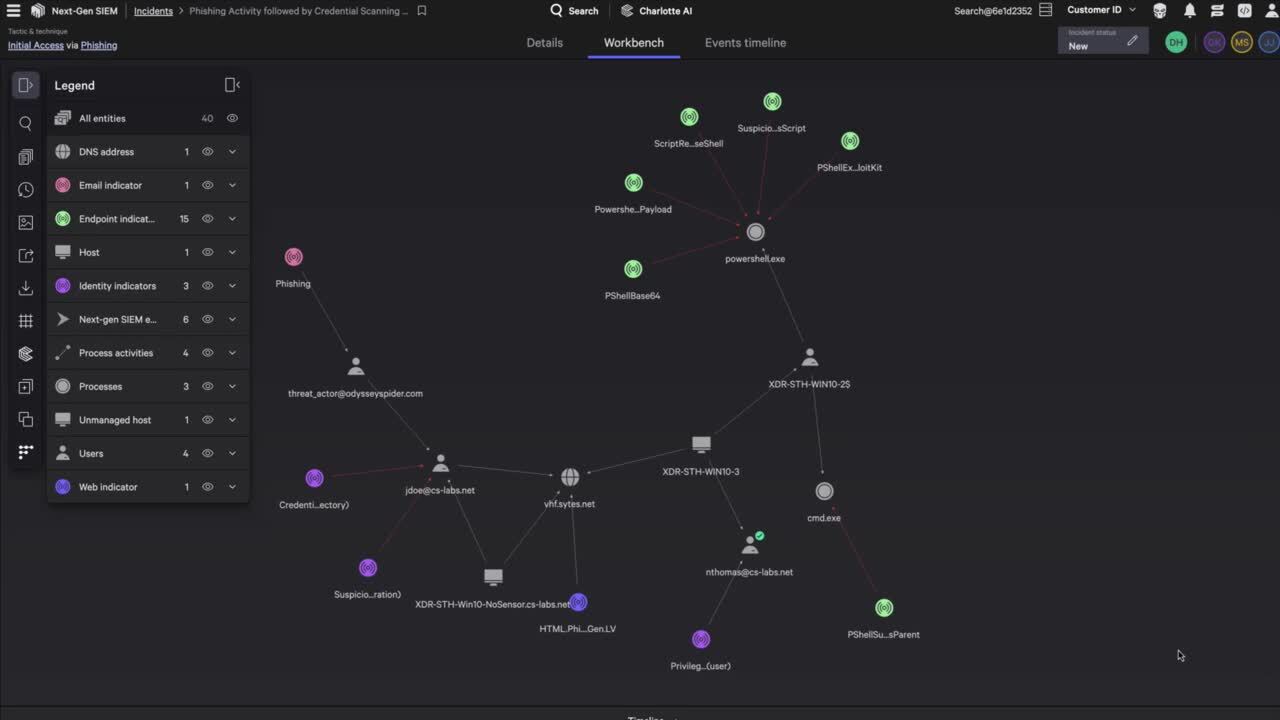
Falcon Next-Gen SIEM is the SIEM within the CrowdStrike Falcon platform. It unifies cross-domain security data, AI-powered detection, and automated response, and can also run as a standalone SIEM for third-party security and IT data. Telemetry from licensed Falcon modules, such as endpoint, identity, and cloud, is available in the SIEM without additional ingestion charges.
Investigations are handled by coordinated Charlotte AI agents, and Charlotte Agentic SOAR orchestrates agents, workflows, and automated response with configurable levels of autonomy.
Key features include:
- Index-free search: Searches security data at petabyte scale for hunting, investigation, and dashboards, with federated search across external sources such as Snowflake and ExtraHop.
- Falcon Onum data pipelines: Ingests, transforms, enriches, and routes telemetry in real time, and supports shift-left detection before data reaches storage.
- Agentic investigations: An orchestrator agent calls specialist agents that investigate each affected domain in parallel and share context to reach a single verdict.
- Charlotte Agentic SOAR: Builds and governs AI agents, orchestrates workflows, and automates response, with configurable autonomy and audit trails.
- Falcon Fusion workflow automation: No-code workflows automate tasks across the security stack.
- Third-party EDR support: Extends Next-Gen SIEM operations to third-party EDR tools, starting with Microsoft Defender.
- Falcon platform detections: Falcon indicators of attack (IOAs) and intelligence-driven detections are available inside the SIEM.
Limitations (as reported by users on PeerSpot):
- Dashboard creation: Users say building dashboards could be easier.
- Data normalization: Reviewers want better normalization of data coming from different sources.
- Storage under license: Some users would like more storage included in their current license.

Source: CrowdStrike
AI SOC Agents and Agentic Automation Platforms
6. Dropzone AI
Best for: Adding autonomous alert investigation to an existing stack
Strengths: End-to-end AI investigations with visible evidence
Things to consider: Capacity is metered by number of investigations
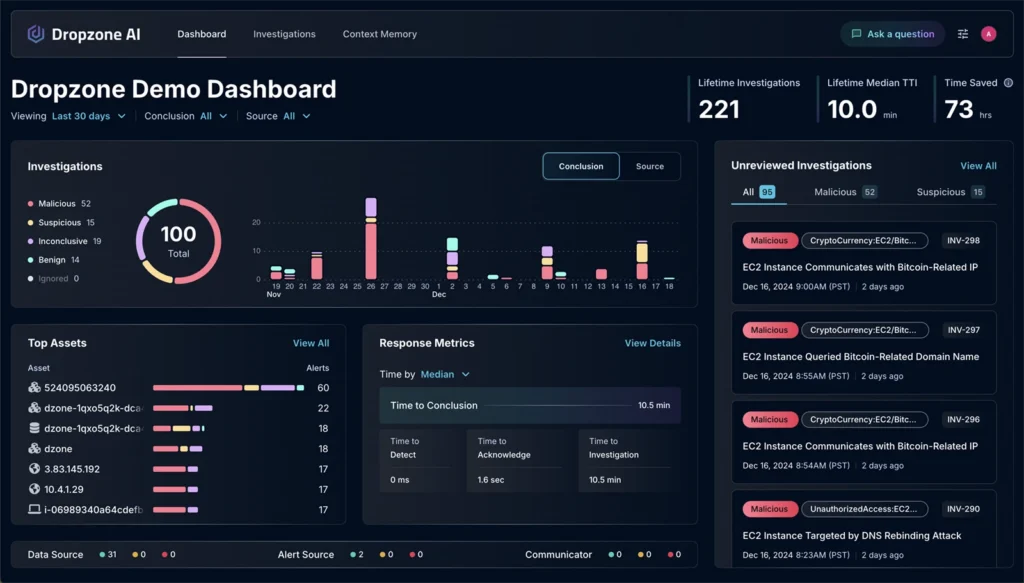
Dropzone AI provides AI SOC agents that work on top of an organization’s existing security tools. The AI SOC Analyst investigates alerts end to end, around the clock, and shows the evidence and reasoning behind each verdict so analysts can decide what to do next. The AI Threat Hunter runs hypothesis-driven hunts across SIEM, EDR, and cloud data.
Dropzone queries connected tools through their APIs in the same way an analyst would, so it does not require moving or normalizing data. An AI Threat Intel Analyst, which turns new advisories into hunt packs for the AI Threat Hunter, is listed for release in fall 2026.
Key features include:
- AI SOC Analyst: Investigates phishing, endpoint, network, cloud, identity, and insider threat alerts, and produces a verdict with supporting evidence.
- AI Threat Hunter: Runs hypothesis-driven hunts across SIEM, EDR, and cloud environments on a recurring schedule rather than only in response to alerts.
- API-based investigation: Queries tools directly through their APIs, with no data lift or normalization step.
- 90+ integrations: Connects to SIEM, EDR, cloud, identity, email, SOAR, and threat intelligence tools, including Splunk, Microsoft Sentinel, CrowdStrike, Exabeam, Okta, and Palo Alto Networks products.
- Configurable investigation strategy: Teams define what agents prioritize, how they investigate, and what normal activity looks like in their environment.
- Analyst oversight: Analysts review findings and authorize containment actions while agents perform investigation work.
- MSSP and EU deployment options: Offers an MSSP edition and an EU data residency option.
Limitations (based on publicly available sources):
- Investigation-based capacity: The AI SOC Analyst plan covers a fixed number of full investigations per year per AI analyst, and additional capacity must be purchased.
- Agent roadmap still expanding: The AI Threat Intel Analyst is not yet available, and AI Threat Hunter capabilities such as custom hypothesis hunts and response actions were announced as planned for the second half of 2026.
- Tuning time: A reviewer on Gartner Peer Insights notes that fine-tuning the product takes time.
Source: Dropzone AI
7. Torq AI SOC Platform

Best for: Automating triage through remediation with AI agents
Strengths: Auto Triage, HyperAgents, Socrates, and hyperautomation
Things to consider: Debugging complex workflows can be difficult
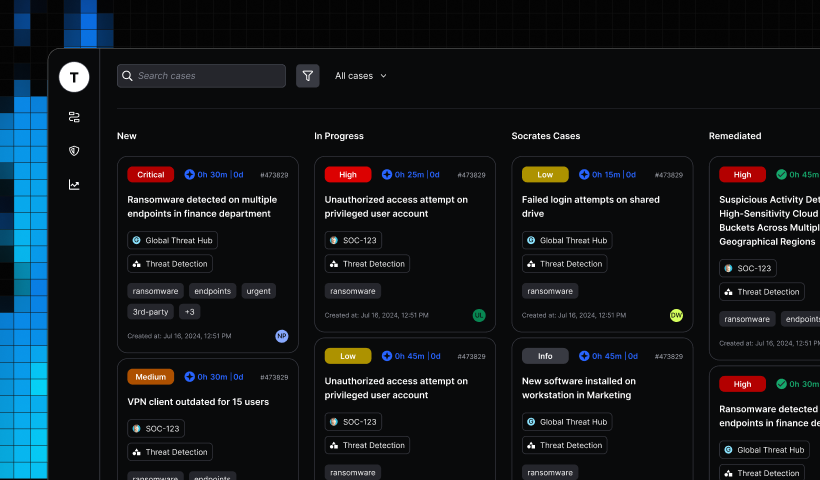
The Torq AI SOC Platform combines agentic AI with hyperautomation to handle triage, investigation, and response. It ingests and normalizes telemetry from the security stack, correlates and deduplicates events, and uses AI agents to deliver verdicts, assemble evidence, and take response actions, closing cases autonomously where teams allow it.
The platform includes native case management, 300 prebuilt integrations, and more than 4,000 prebuilt workflow steps. AI agents can also help build new integrations and workflows for custom use cases.
Key features include:
- Auto Triage: An agentic engine that prioritizes threats and separates noise from real risk using risk context and threat intelligence, and retains knowledge of how the SOC operates.
- Torq HyperAgents: Customizable AI agents that gather evidence, assemble timelines, summarize findings, and automate routine tasks under the team’s direction.
- Socrates: Coordinates specialized AI agents, manages cases end to end, and lets analysts interact with the platform in natural language.
- Native case management: Keeps evidence, timelines, and case summaries in one record from investigation through remediation.
- Agentic response actions: Contains threats, notifies the right people, and runs remediation steps through integrated tools.
- Hyperautomation and integrations: Workflow automation built on 300 prebuilt integrations and 4,000+ steps, with AI-assisted creation of new integrations.
Limitations (as reported by users on PeerSpot):
- Debugging and error messages: Users want clearer error messages and better debugging, particularly for Go-based steps.
- Case templates: Some reviewers note a lack of out-of-the-box case templates, which adds development work.
- AI consistency: A few users report inconsistent results when using AI features to build workflows.
- Large workflows and reporting: One reviewer notes limited reporting and scalability challenges with very large workflows.
- Bug fixes: Some users want minor bugs addressed faster and the ability to rerun playbooks from a failed step.
Source: Torq
8. Swimlane Turbine

Best for: High-volume, low-code SOC automation for enterprises and MSSPs
Strengths: Hero AI agents, intelligent alert routing, case management
Things to consider: Custom playbooks often require Python skills
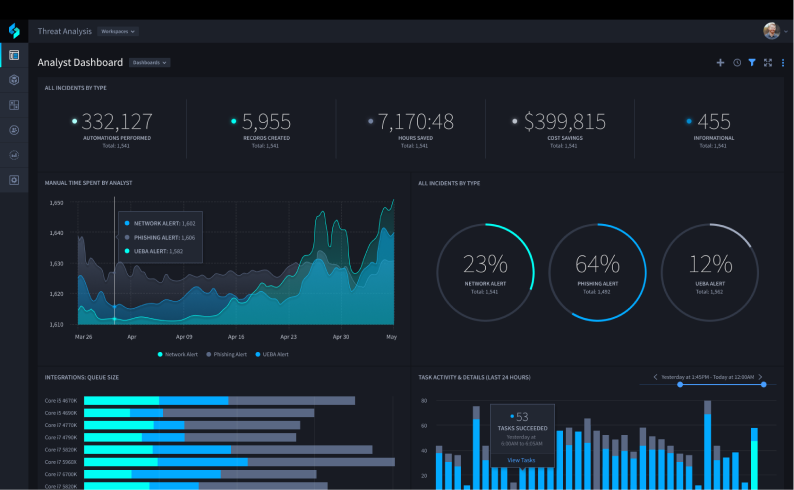
Swimlane Turbine is an agentic AI automation platform that combines AI agents with deterministic security automation. Teams use it to investigate alerts, orchestrate response, and automate vulnerability, compliance, and business continuity workflows from a single cloud-native platform.
Swimlane AI SOC adds an intelligent routing layer that sends each alert to a deterministic playbook, an AI-assisted path, or a fully agentic investigation based on risk, complexity, and available context. Complex cases are escalated for human-in-the-loop review.
Key features include:
- Intelligent alert routing: Decides per alert whether to use a playbook, AI assistance, or a full agentic investigation, which also helps manage AI token spend.
- Hero AI: Provides incident response AI agents and a private agentic companion for triage, plus agents for visualizations, data ingestion, and playbook generation, with a choice of AI model for each agent.
- AI-driven case management: A customizable case management application with domain-expert AI agents that support incident response.
- Turbine Canvas: A low-code builder for playbooks and AI agents.
- High-throughput architecture: Distributed big data ingestion and processing, with the ability to execute millions of automated actions per day.
- Swimlane Marketplace: Prebuilt connectors, playbooks, AI agents, and dashboard widgets for integrating with APIs across the environment.
- Dashboards and reporting: Customizable dashboards and AI-augmented reporting for tracking SOC KPIs and compliance.
Limitations (as reported by users on PeerSpot):
- Python dependency: Reviewers say building and customizing playbooks often requires Python and experienced developers.
- Self-hosted maintenance: Users running the platform on-premises note that Kubernetes deployment, load balancing, and scaling need dedicated engineering effort.
- Stability after updates: Some users report bugs after updates, occasional hangs, and enrichment playbooks that need to be rerun.
- Version control: One reviewer notes limited version control for moving changes between environments.
- Pricing: Some users describe pricing as slightly expensive.
Source: Swimlane
Conclusion
Scaling security operations effectively requires adopting AI-driven platforms that automate routine triage, enrich alerts with meaningful context, and correlate complex threat signals. By leveraging autonomous workflows and behavioral analytics, security teams can significantly reduce response times and mitigate alert fatigue. Implementing these modern technologies ensures robust protection and empowers analysts to focus on high-priority strategic threats across expanding digital attack surfaces.
Learn More About Exabeam
Learn about the Exabeam platform and expand your knowledge of information security with our collection of white papers, podcasts, webinars, and more.
-
Webinar
The Insider Risk Program Just Got Bigger: How Digital Workers Are Changing Identity, Behavior, Ownership, and...
-
 Blog
What Is the Difference Between Exabeam and CrowdStrike for SIEM and Security Operations?
- Show More