The Agentic SOC Isn’t Coming for Analysts’ Jobs. It’s Coming for Their Tabs.
- Oct 01, 2026
- Heidi Willbanks
- 6 minutes to read
Table of Contents
An agentic SOC uses AI-powered investigation, analysis, and automation to gather data, connect activity, and handle repetitive investigative work. Analysts remain in control and focus on judgment, prioritization, and response. This addresses the need for machine-speed security operations as AI agents gain autonomy and Tier 1 access to systems.
Spend five minutes watching a security analyst at work and the “AI will replace analysts” headline starts to sound out of touch. Seventeen browser tabs are open. Three terminals are running. A Slack thread is still waiting for a response. The bottleneck in a SOC was never a lack of good judgment. It was a shortage of time to use it.
That’s what most conversations about AI in security operations miss. Here’s a simpler way to think about the agentic SOC: It handles the investigative groundwork so analysts can focus on the work they were hired to do. The goal isn’t autonomous security operations. It’s to help people make better decisions more quickly.
What Is an Agentic SOC?
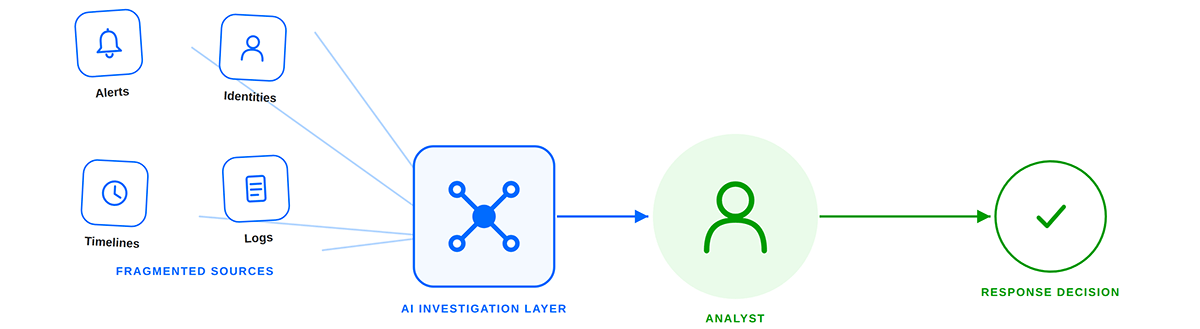
An agentic SOC is a security operations model that combines human expertise with AI-driven investigation, analysis, and automation. AI helps detect, investigate, and prioritize threats at machine speed. Analysts provide context, oversight, approve actions, or direct the response. AI gathers data, correlates activity, and handles repetitive investigative work. It returns a focused view of what happened, what’s connected, and what deserves a closer look.
The analyst still decides what’s worth acting on and owns the response. That hasn’t changed, and it shouldn’t.
Security operations doesn’t have a judgment problem. It has a time and volume problem. Analysts spend much of the day gathering evidence, switching between tools, correlating activity, documenting findings, and repeatedly answering the same investigative questions. Meanwhile, AI agents, automated workflows, cloud services, and non-human identities all generate more activity, increasing the volume of investigative work.
The agentic SOC isn’t meant to replace analysts. It reduces the manual investigative work that delays action. Analysts remain responsible for business context, prioritization, and response. AI surfaces the information they need so they can act faster.
Why Is the Agentic SOC Emerging Now?
A few years ago, most activity in a company’s environment came from people. You could think about the environment like a neighborhood. You generally knew who lived there.
That’s becoming less true. Environments increasingly rely on AI assistants, automated workflows, digital workers, cloud services, and non-human identities that communicate around the clock. Some activity comes from people. Much of it doesn’t, or won’t in the near future. All of it moves faster than any analyst can manually track alert by alert.
That isn’t a reflection on analyst skill. No team can out-triage a machine-speed environment by processing tickets at yesterday’s pace. Under that pressure, analysts face burnout, backlogs, and alert fatigue. Machine-speed security is becoming essential for modern organizations.
Security operations teams have expanded their detection coverage by adding tools, data sources, and use cases. Analyst workflows have changed far less. When an alert arrives, analysts open multiple tabs; search for related activity; review identities, artifacts, and timelines; and connect scattered evidence before deciding whether to act. The process works, but analysts often spend more time gathering context than exercising judgment.
The agentic SOC shifts analysts from investigative preparation to decision making. AI prepares the evidence while analysts assess risk, business impact, and the appropriate response.
What AI Does Best
Two types of AI are at work here. AI agents and non-human identities generate activity that the SOC must monitor. The AI inside the agentic SOC monitors and investigates that activity.
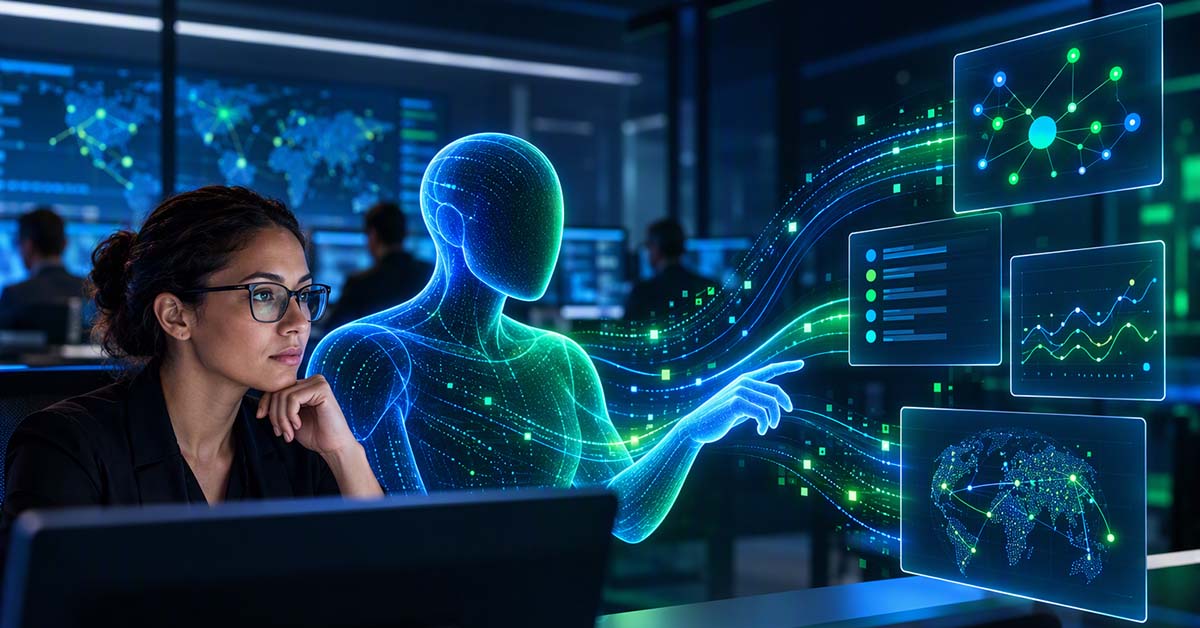
In an agentic SOC, AI acts as an investigative partner. When an alert occurs, AI can gather evidence, correlate activity, identify related entities, assemble timelines, surface patterns in large datasets, and summarize findings before an analyst reviews the case.
AI is especially effective at:
- Collecting information from multiple systems simultaneously
- Correlating activity among users, identities, devices, and applications
- Identifying patterns in large datasets
- Building investigative timelines
- Performing repetitive research
- Summarizing findings in a single incident view
- Recommending response options
These tasks benefit from speed, scale, and consistency. When analysts no longer spend hours stitching together data, they can investigate faster, prioritize more effectively, and devote more time to response and risk reduction.
What Humans Still Do Best
AI can assemble evidence. It can’t determine what that evidence means for a specific business.
Security operations depends on decisions, not information alone. Business priorities, organizational context, risk tolerance, regulatory requirements, and operational realities shape how a team handles an incident. Those decisions require human judgment.
Analysts remain responsible for:
- Evaluating risk and severity
- Applying business context
- Prioritizing incidents
- Determining escalation paths
- Assessing operational impact
- Making response decisions
- Communicating with stakeholders
- Maintaining accountability for outcomes
AI provides facts. Analysts determine their significance. Security teams are accountable for outcomes, not just investigations. AI can accelerate understanding, but it can’t assume responsibility.

How Does the Agentic SOC Work?
In practice, AI investigates an alert, surfaces related activity, correlates entities, and organizes the findings. The analyst reviews evidence, weighs business impact and risk, and determines the response.
By completing the investigative groundwork before an analyst reviews a case, AI can reduce the time required to understand what happened. Instead of switching between several tools to answer, “What else did this account touch?” the analyst can focus on the higher-value question: “What should happen next?”
AI contributes speed, scale, and investigative efficiency. Analysts contribute context, judgment, and accountability. Together, they help security teams operate at machine speed while preserving human oversight.
Mature agentic SOCs center on informed collaboration, not autonomous security operations. AI can recommend actions and estimate risk. It can’t fully understand business priorities, accept risk on behalf of an organization, or own the consequences of operational decisions. Human oversight remains essential.
Will AI Replace Security Analysts?
No.
The agentic SOC reduces investigative overhead so analysts can focus on decisions that require human judgment. It doesn’t remove the need to think. Unusual activity still requires close human review.
On well-run teams, the result is practical: Analysts spend less time chasing evidence and more time exercising judgment. Their role becomes more consequential because they can focus on decisions only people can make.
The future of security operations combines AI-driven investigation with human judgment, accountability, and response. Success will depend not on maximizing automation but on combining machine efficiency with human expertise.
What Does an Agentic SOC Mean for Different Security Roles?
For security leaders, an agentic SOC can help teams scale without relying solely on headcount growth. For architects, it provides an operating model designed for machine-speed threats. For analysts, it accelerates investigations while keeping people in control of outcomes and response decisions.
For organizations adopting AI agents, autonomous workflows, and digital workers, the agentic SOC offers a way to adapt security operations without sacrificing oversight or accountability.
Securing the Agentic Enterprise Requires a Different SOC
The rise of the agentic SOC is happening alongside another shift: the rise of the agentic enterprise.
Organizations increasingly rely on AI assistants, autonomous workflows, digital workers, and non-human identities to work alongside human employees. These entities generate activity, make decisions, and interact with business systems at machine speed.
Securing that environment takes more than additional alerts. It requires security operations that can investigate, prioritize, and respond at the same speed. The agentic SOC helps organizations adapt to that reality.
Frequently Asked Questions
What is an agentic SOC, and how does it change the role of the security analyst?
An agentic SOC combines AI-driven investigation, analysis, and automation with human oversight. AI gathers and correlates evidence. Analysts spend less time investigating and more time deciding what warrants action and how to respond.
Why do organizations need an agentic SOC now?
Environments generate activity from AI assistants, automated workflows, and non-human identities around the clock. That activity moves faster than analysts can track alert by alert. An agentic SOC helps security teams investigate and respond at machine speed.
How does an agentic SOC help security analysts work more efficiently?
AI handles repetitive investigation tasks, including gathering evidence, correlating activity among systems, building timelines, and summarizing findings. Analysts spend less time switching between tools and more time on prioritization, escalation, and response.
How does an agentic SOC accelerate threat detection, investigation, and response?
AI correlates activity among users, devices, and applications as it happens instead of waiting for an analyst to assemble the evidence manually. When an analyst opens a case, the evidence is already gathered and organized, helping detection, investigation, and response move faster.
What is a non-human identity in security?
A non-human identity is a digital identity used by an application, service, workflow, or autonomous system rather than a person. It requires dedicated monitoring, governance, and investigation.
What are machine-speed threats?
Machine-speed threats move or spread faster than people can investigate or respond through manual processes alone. Automated, AI-assisted investigation helps security teams keep pace.
Conclusion
Give analysts room, and they’ll focus on the part of the job only they can do: making the call, owning the outcome, and explaining it to the people who need to know. That’s what changes when tabs and terminals stop consuming the whole shift.
AI can gather evidence, connect activity, and accelerate investigation. Judgment, accountability, and response remain human responsibilities.
Want to see how this works in real environments? Download the white paper, Securing the Agentic Enterprise for a deeper look at the AI agents, non-human identities, and machine-speed risks reshaping security operations.

Heidi Willbanks
Heidi Willbanks | Senior Product Marketing Manager, Content | Exabeam | Heidi Willbanks leads content strategy and go-to-market execution at Exabeam, focusing on product launches, cybersecurity solutions marketing, and technical alliances. She has 20+ years of marketing experience, including over a decade in information security and data privacy, and holds a Level IV certification from Pragmatic Institute. Heidi specializes in creating clear, technically accurate content for security practitioners and decision-makers.
More posts by Heidi WillbanksLearn More About Exabeam
Learn about the Exabeam platform and expand your knowledge of information security with our collection of white papers, podcasts, webinars, and more.
-
 Blog
Blog
Access Isn’t Trust: A Behavioral Risk Framework for People, Service Accounts, and AI Agents
- Show More