


-
- Home
>
-
- Explainers
>
-
- Agentic AI
Agentic AI Frameworks: Key Components and Top 8 Options in 2026
- 9 minutes to read
Table of Contents
What Are Agentic AI Frameworks?
Agentic AI frameworks are software toolkits that simplify the creation, deployment, and management of AI agents by providing pre-built components, architectures, and workflows to enable autonomous goal-directed behavior. They allow developers to build intelligent systems that can perceive, reason, act, and coordinate actions with minimal human input, integrating with external tools and data sources to perform complex tasks.
These frameworks provide the essential components and structures needed for AI agents to function effectively:
- Deployment and monitoring: Tools and features to enable the transition from development to production, with observability to track agent performance.
- Agent orchestration: Manages the interactions and decision-making processes between single or multiple agents working towards a common goal.
- Tool integration: Enables agents to connect to external systems, APIs, and databases to gather information and perform actions beyond language processing.
- Memory management: Provides persistent or session-based memory to maintain context and remember past interactions, crucial for long-running tasks.
- Workflow definition: Supports structured patterns like chains, parallel tasks, and reflection loops, allowing for sophisticated autonomous reasoning.
Key Features and Benefits of Agentic AI Frameworks
Agentic AI frameworks offer several core features that distinguish them from traditional AI tools and make them valuable for building autonomous systems:
- Modular agent design: Allow developers to define agents with specialized roles, goals, and tools. Each agent can act independently or cooperatively, depending on task requirements.
- Autonomy and goal-directed behavior: Enable agents to operate with a high degree of independence, making decisions and adjusting strategies based on feedback or changing conditions.
- Multi-agent orchestration: Provide mechanisms for coordinating tasks across multiple agents, including message passing, task delegation, and role-based collaboration.
- Memory and state management: Support persistent memory architectures that allow agents to retain context, past actions, and learning, improving long-term reasoning and adaptability.
- Tool and API integration: Allow agents to access and invoke external tools, APIs, or databases as part of their task execution, expanding their functional capabilities.
- Human-AI interaction interfaces: Enable collaboration with human users through interfaces for feedback, oversight, and instruction, helping align agent actions with user intent.
- Scalability and extensibility: Support complex workflows and scale across distributed systems, with modular architectures that accommodate new agents, tools, or strategies easily.
- Error handling and recovery: Include features for monitoring agent behavior, detecting failures, and triggering fallback or retry mechanisms to maintain reliability in dynamic environments.
Related content: Read our guide to agentic AI architecture (coming soon)
Core Components and Functions of Agentic AI Frameworks
Agent Orchestration
Agent orchestration is central to agentic AI frameworks. It involves coordinating the actions, communication, and collaboration between various agents in a system. An orchestration engine defines when an agent should activate, what information it needs, and how it interacts with other agents.
This engine can implement logic, such as branching workflows, parallel task execution, or sequential hand-offs, adapting to runtime conditions. Proper orchestration ensures that each agent efficiently contributes to the overall goal while avoiding resource conflicts or redundant effort.
A well-designed orchestration layer automates complex environments where single agents would struggle to handle the full range of required tasks. By maintaining a clear structure for agent activation and communication, these frameworks enable rapid adaptation as requirements evolve. Developers can add, remove, or update agents with minimal disruption.
Tool Integration
Tool integration extends agent capabilities by linking them with external utilities, APIs, and services. Agentic frameworks typically offer modules for API calls, data fetching, document access, or code execution. Agents can retrieve fresh data, process information with specialized algorithms, or act on third-party platforms as part of their decision-making or task execution processes.
Well-designed frameworks prioritize easy tool integration via adapters or plugins, minimizing development effort while maximizing agent versatility. Secure, efficient tool access also enables developers to compose powerful composite workflows that unite proprietary business logic with broad internet resources.
Memory Management
Memory management in agentic AI frameworks addresses both the storage of transient conversational data and the long-term accumulation of actionable knowledge. Memory modules allow agents to store and retrieve information, such as user preferences, task histories, or encountered errors, across different sessions or workflows. This ability enables agents to maintain context, reference past actions, and continuously learn from new experiences.
Scalable memory management also supports collaborative scenarios where multiple agents need to share information or synchronize their understanding of a task. Frameworks typically provide structured memory stores, such as vector databases or document repositories, with APIs for granular read/write access.
Workflow Definition
Workflow definition refers to the specification of task sequences, dependencies, and trigger conditions within an agentic AI system. Frameworks provide tools for developers to design workflows that describe how agents interact, what steps they perform, and how decisions are routed. These definitions can be static (predefined flows) or dynamic (generated at runtime), supporting both predictable and highly adaptive processes. In code, workflows may be specified using declarative syntax, state machines, or directed acyclic graphs.
Accurate workflow definition is crucial for maximizing automation and ensuring reliable outcomes. By mapping complex processes into transparent workflows, development teams can identify bottlenecks, parallelize tasks, and enforce business logic. Updates or adjustments to workflows can be carried out without disrupting core agent behavior.
Deployment and Monitoring
Deployment tools support packaging agents and workflows for various environments, from local servers to enterprise cloud platforms. They enable configuration, scaling, and version management, ensuring that updates and bug fixes can be shipped safely and consistently. Centralized monitoring tracks agent activities, system health, and error conditions, providing real-time visibility and alerting for operational issues.
Comprehensive observability includes logs, performance metrics, and analytics; all critical for debugging, compliance, and optimization. Teams can use monitoring insights to trace the sources of errors, optimize workload distribution, and fine-tune agent performance.
Popular Agentic AI Frameworks
1. LangGraph

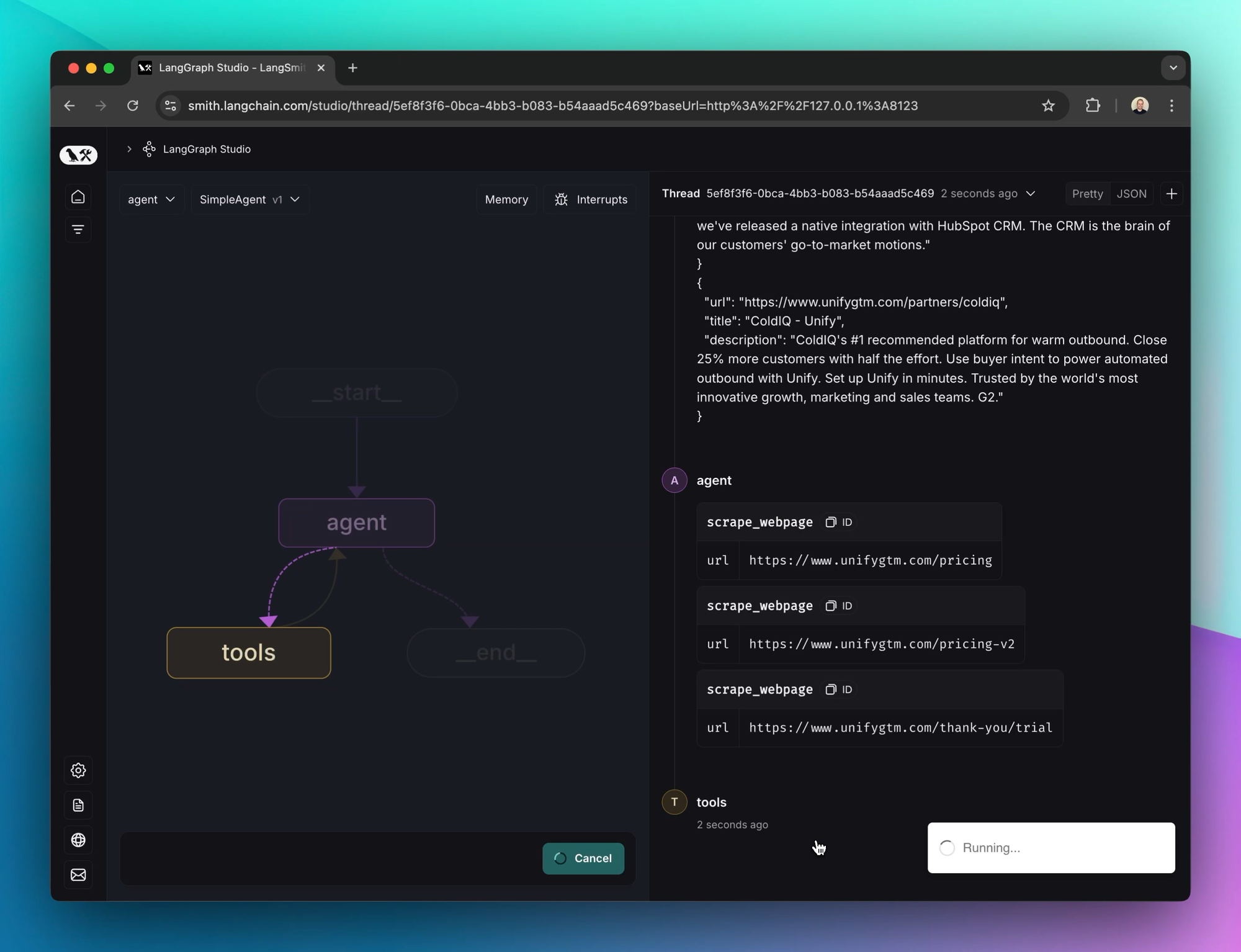
LangGraph is a versatile framework for building agentic AI applications, giving developers control over how agents behave and interact. It prioritizes stability, transparency, and adaptability, making it suitable for scenarios that demand trustworthy decision-making and clear oversight. It also supports persistent memory and human oversight at critical decision points.
Key features include:
- Live streaming: Stream tokens and reasoning steps in real time, improving visibility and user experience.
- Human-in-the-loop oversight: Insert moderation steps within workflows, allowing humans to guide or approve key actions.
- Customizable agent flows: Construct workflows with primitives that support loops, hierarchies, or collaboration between multiple agents.
- Long-term memory: Retain history and task context across sessions for continuity.

Source: LangChain
2. AutoAgent

AutoAgent is a no-code framework for rapidly creating and deploying LLM-powered agents through natural language. Users can design tools and workflows conversationally without technical expertise.
Key features include:
- Flexible reasoning modes: Supports ReAct and function-calling for agent decision-making.
- Zero-code creation: Build agents directly with natural language instructions.
- Multi-agent mode: Comes with a ready-to-use assistant similar to Deep Research but open-source.
- Self-managing vector DB: Includes optimized vector storage for context-aware pipelines.
- Broad LLM support: Works with OpenAI, Anthropic, Hugging Face, Gemini, and more.
3. AutoGen

AutoGen is a flexible framework for creating both single-agent and multi-agent AI systems, for use by both technical and non-technical users. It offers layers of abstraction, making it suitable for quick prototyping as well as enterprise-level deployments.
Key features include:
- Extensible integrations: Plugins and adapters connect to services like OpenAI Assistants, Docker, or gRPC, linking agents to real infrastructure.
- Studio for no-code prototyping: A browser-based UI to design workflows visually without coding.
- AgentChat framework: Python API for building conversational single/multi-agent setups, supporting async execution and GPT-4 integration.
- Core orchestration: Event-driven system for managing distributed, large-scale workflows.

Source: AutoGen

4. CrewAI

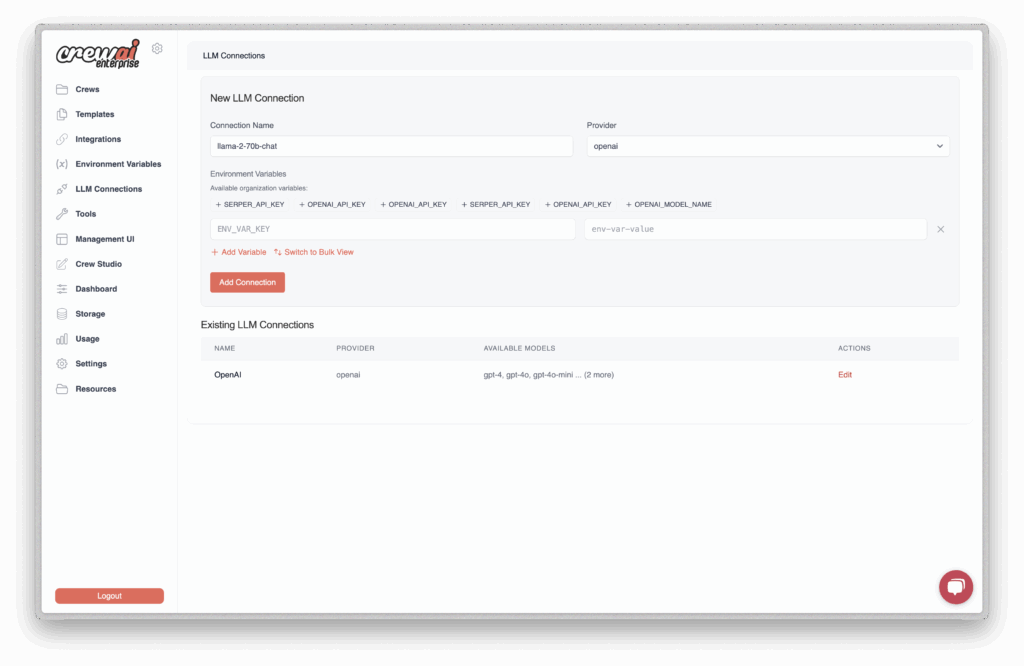
CrewAI is an open-source platform that simplifies building and coordinating teams of AI agents. It helps developers configure, assign roles, and launch agents that work together to tackle tasks.
Key features include:
- Readable configurations: Setup via clear, human-friendly configuration files.
- Role-specific agents: Define roles, objectives, and behaviors for each agent to improve teamwork.
- Task assignment engine: Clearly distribute responsibilities among agents for structured execution.
- One-command deployment: Launch entire “crews” with a single command.
- Scalability: Capable of handling millions of active agents each month.
Source: CrewAI

5. LlamaIndex

LlamaIndex is a framework designed for agentic workflows centered around document intelligence. It helps developers build agents that can interpret, synthesize, and act on enterprise data.
Key features include:
- Enterprise scalability: Built to process millions of documents reliably.
- Context-aware agents: Combine LLMs with retrieval pipelines and memory to reason over corporate documents.
- Parsing: Extracts data from tables, charts, scanned text, and over 300 document types.
- LlamaCloud services: Managed infrastructure for ingestion and context management.
- Ready-made RAG pipelines: Modular and customizable retrieval pipelines optimized for production.
6. Haystack

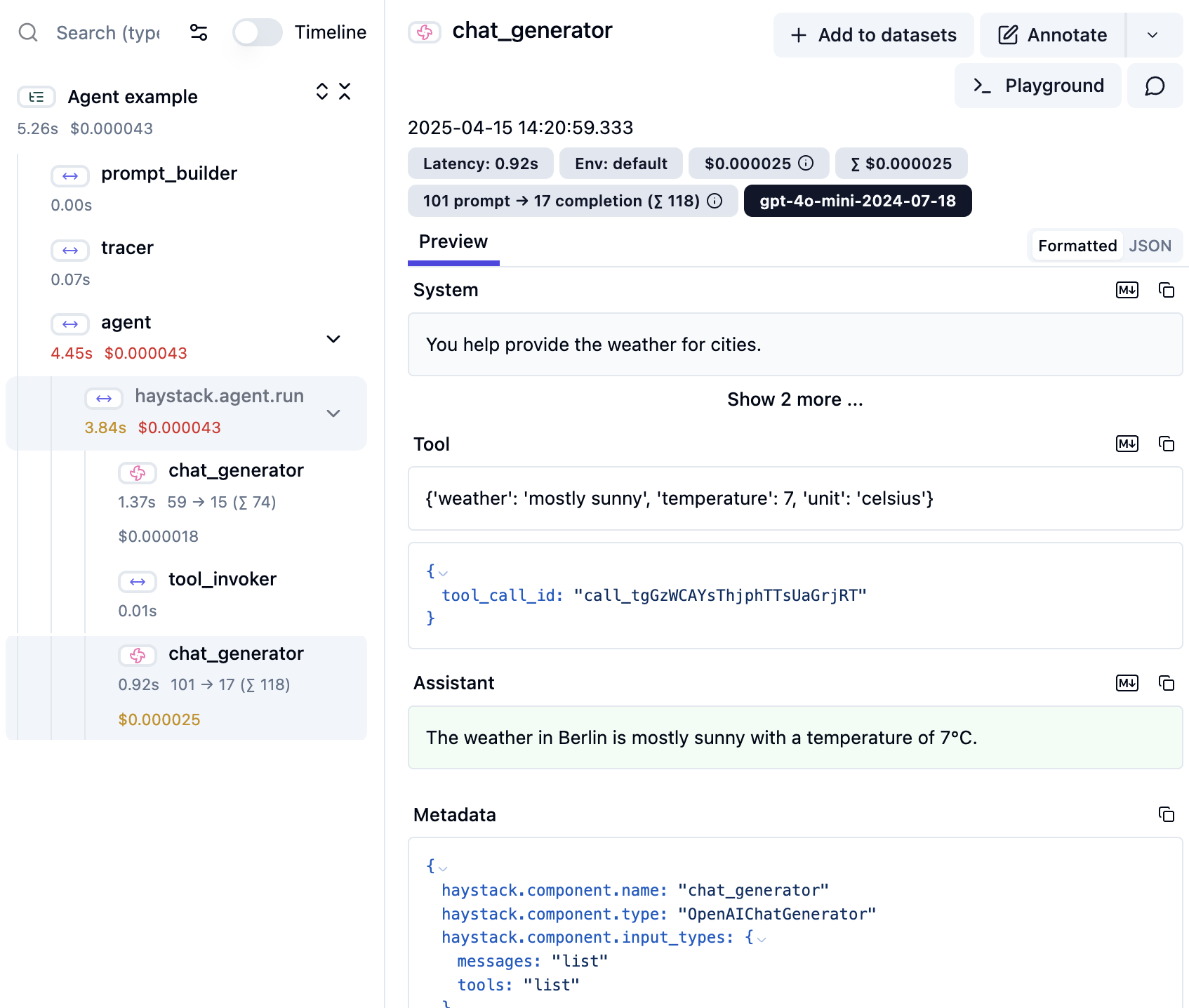
Haystack is a mature, open-source framework for building AI systems with retrieval-augmented generation and modular pipelines. It’s production-ready and supports a variety of tools and integrations.
Key features include:
- Agent workflows: Combine LLMs with external tools for dynamic, branching logic.
- Composable pipelines: Build workflows from modular components for RAG and beyond.
- Multimodal capabilities: Handle text, images, and audio in applications.
- Conversational interfaces: Standardized chat frameworks for building agents.
- Content generation engines: Use prompt templates to create flexible content pipelines.

Source: Haystack
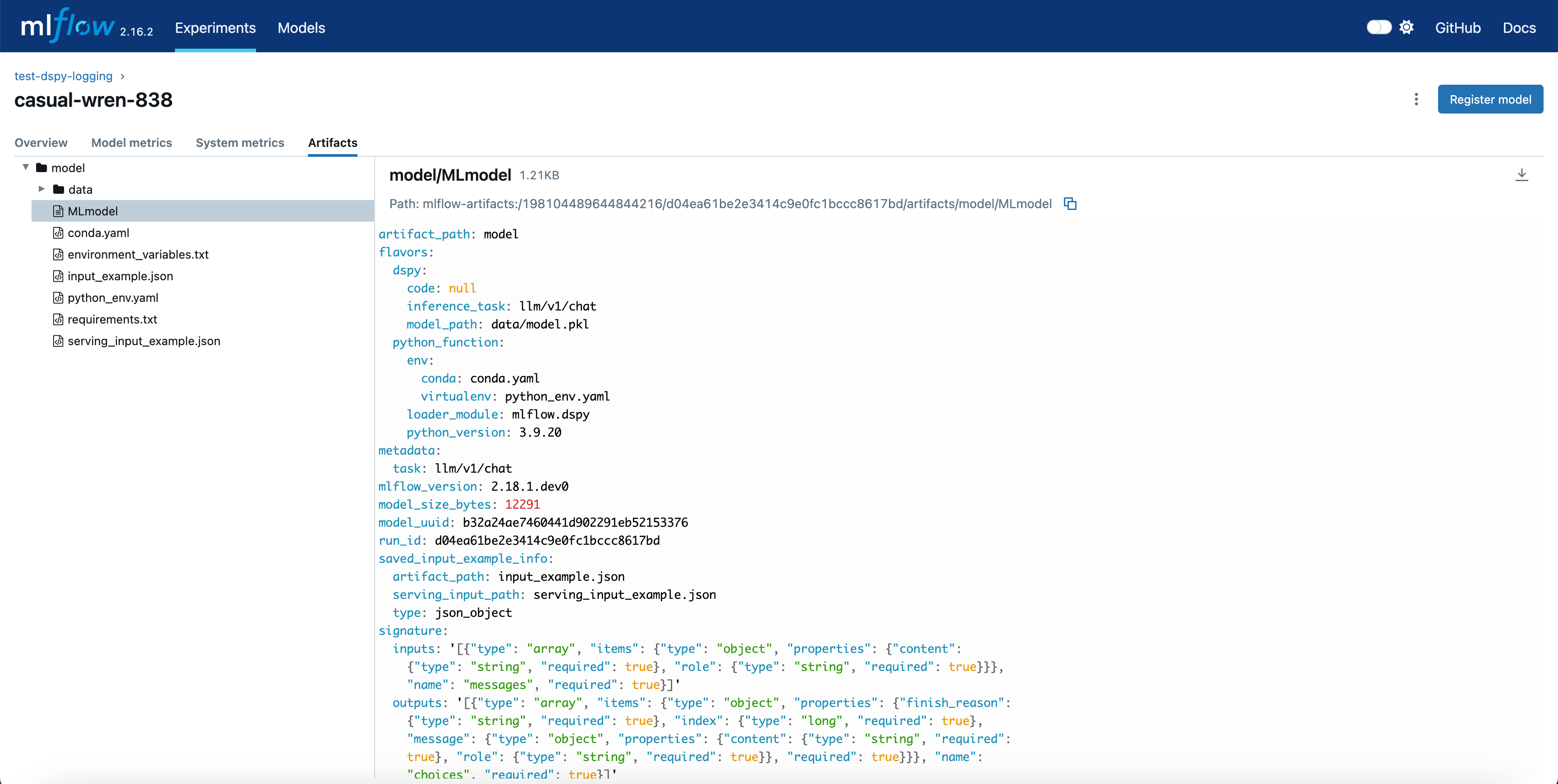
7. DSPy

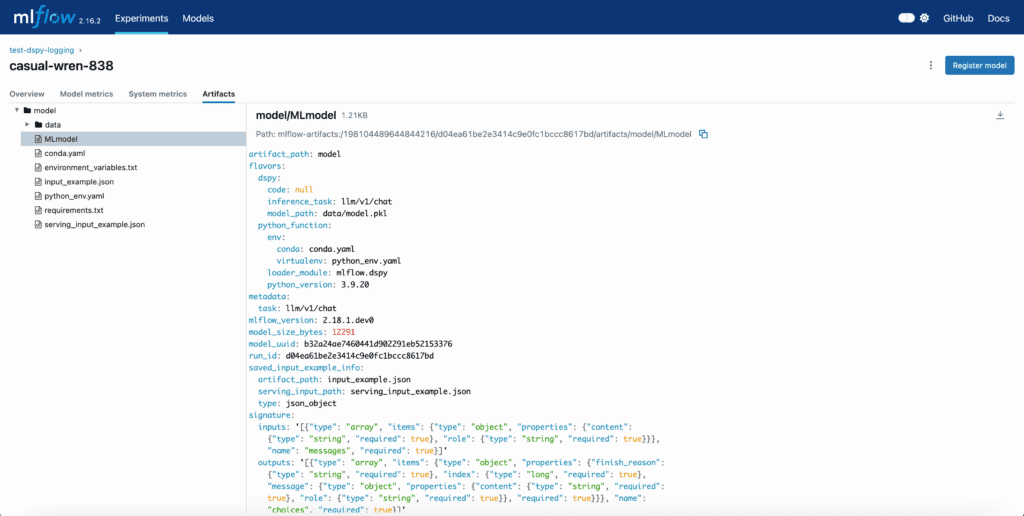
DSPy (Declarative Self-Improving Python) provides a declarative way to program AI systems, focusing on structured modules instead of ad-hoc prompts or fine-tuning.
Key features include:
- Rapid experimentation: Easily test different strategies and configurations.
- Declarative design: Define components with typed input/output signatures.
- Model-agnostic: Swap between LLMs seamlessly without altering system logic.
- Built-in optimizers: Automate prompt tuning and weight adjustments for better performance.
- Complex pipelines: Chain together multi-stage reasoning or retrieval workflows.
Source: DSPy
8. Semantic Kernel
Semantic Kernel is an open-source SDK that makes it easier to connect modern LLMs with enterprise applications in C#, Python, and Java. It acts as middleware to bridge AI capabilities with business systems.
Key features include:
- Future-proof integration: Swap in newer models without redesigning systems.
- Multi-language support: Stable APIs across C#, Python, and Java.
- Model-to-function execution: Convert AI outputs into function calls that trigger existing business logic.
- Plugin-based extensibility: Integrate services or APIs via OpenAPI-based plugins.
- Enterprise observability: Includes telemetry, monitoring, and governance features.

Source: Microsoft
Best Practices for Implementing Agentic Frameworks
Organizations should consider the following steps when implementing an agentic AI framework.
1. Start with Small-Scale Prototypes
When adopting an agentic AI framework, it is prudent to begin with limited-scope prototypes that focus on specific, measurable outcomes. Building small-scale systems enables teams to validate core architecture choices, uncover integration risks, and refine agent workflows with minimal investment. Prototyping also provides an opportunity to set benchmarks, collect user feedback, and iterate on interface designs before scaling up.
Deploying a small prototype allows teams to assess framework suitability for their unique use case and highlight any gaps in available features or documentation. By systematically expanding prototypes into more sophisticated deployments, organizations can incrementally introduce complexity, reducing the likelihood of systemic failures.
2. Incorporate Human Oversight
Effective agentic systems should always allow for human supervision at critical decision points. Incorporating human-in-the-loop (HITL) workflows ensures that automated agents remain controllable and accountable, particularly when handling ambiguous, sensitive, or high-stakes tasks. This oversight can include requiring manual approval of outputs, periodic review of agent actions, or interactive guidance during complex problem-solving steps.
Human oversight also plays a vital role in addressing system errors, outliers, or ethical considerations not captured by predefined rules. By embedding feedback mechanisms and escalation paths, developers can quickly identify and correct unintended behavior, improving both user trust and operational safety.
3. Optimize Memory Usage
Optimizing memory usage is critical for maintaining system responsiveness and controlling infrastructure costs, especially as agentic systems scale in complexity and interaction volume. Developers should adopt strategies like context window management, memory pruning, and selective retention of relevant information. Choosing the right memory backend, such as in-memory caches for speed or vector stores for semantic search, ensures that agents can balance cost, performance, and capacity according to workload requirements.
By profiling memory consumption and tuning storage parameters, teams can prevent performance bottlenecks or loss of context. Efficient memory management also enables stateful agents to maintain continuity across conversations or workflows while minimizing data redundancy. Regular audits and automated garbage collection help keep the system maintainable.
4. Ensure Robust Monitoring and Observability
Logging frameworks should track agent activities, workflow progress, error states, and performance metrics in real time. This data provides critical visibility for debugging issues, optimizing resource usage, and ensuring compliance with security policies or business rules. Observability tools should support alerting, anomaly detection, and detailed root-cause analysis, empowering teams to respond quickly to operational incidents.
By establishing a feedback loop from observability data to development workflows, organizations can continuously improve reliability, fix bugs, and uncover new opportunities for system enhancement. This discipline is essential for building trust in agentic applications as they take on increasingly complex, business-critical tasks.
5. Standardize Interfaces and APIs
Standardizing interfaces and APIs across agents and integrated tools supports maintainability, reusability, and interoperability. Clear, consistent contracts simplify agent collaboration, enabling teams to mix and match components or switch frameworks as technology advances. Standard APIs also lower onboarding barriers for new developers, accelerate feature development, and foster a vibrant ecosystem of third-party integrations.
By adhering to well-defined protocols and common data formats, teams can avoid vendor lock-in and enable future upgrades or migration projects. Open standards also encourage community contributions and best-practice sharing, strengthening the overall agentic AI landscape.
Agentic AI Security with Exabeam
Exabeam Nova applies an agentic AI framework to transform how security operations centers (SOCs) detect, investigate, and respond to threats. Acting as an intelligent analyst, Exabeam Nova uses multiple specialized agents to automate investigation, advise on security posture, and visualize key findings, reducing manual workload across the TDIR (Threat Detection, Investigation, and Response) process by up to 80%.
Key features include:
Natural language search: Exabeam Nova enables analysts to query security data conversationally using everyday language. Instead of writing complex queries, users can ask questions such as “show failed admin logins from new devices this week” and receive immediate, context-rich results supported by correlated evidence.
Advisory agent in Outcomes Navigator: Within Outcomes Navigator, Exabeam Nova acts as an advisory agent, analyzing log coverage and posture across use cases mapped to insider threat, data exfiltration, and other critical scenarios. It assesses readiness against MITRE ATT&CK techniques and tactics (TTPs), guiding teams on which log sources or controls to strengthen for complete detection coverage.
Visualization agent: Exabeam Nova includes a visualization agent that automatically generates charts, graphs, and visual summaries for reports and executive dashboards. It translates complex investigations and outcomes into clear, shareable visuals, helping SOC leaders communicate findings and trends to both technical and non-technical stakeholders.
Agentic AI reasoning: A network of AI agents replicates analyst workflows—collecting evidence, building timelines, correlating entities, and recommending next steps. Each agent contributes specialized expertise, improving accuracy and consistency across detection, investigation, and response.
Unified SOC experience: Exabeam Nova seamlessly integrates with Exabeam’s SIEM, UEBA, and SOAR capabilities, creating a connected ecosystem that automates end-to-end detection, investigation, and response.
Exabeam Nova brings agentic AI directly into the SOC, combining reasoning, natural language interaction, visualization, and advisory intelligence to deliver faster detection, clearer insights, and a measurable 80% reduction in TDIR effort.
Learn More About Exabeam
Learn about the Exabeam platform and expand your knowledge of information security with our collection of white papers, podcasts, webinars, and more.