-
- Home
>
-
- Blog
>
-
- Company News
What’s New in New-Scale April 2026: Securing the Agentic Enterprise With Behavioral Analytics
- Apr 01, 2026
- Kevin Binder
- 3 minutes to read
Table of Contents
AI agents now participate directly in daily work. They write code, summarize data, generate documents, and automate tasks at a speed and scale no human can match.
As your organization adopts more assistants and autonomous workflows, you introduce a new type of insider: an agent operating inside your systems with real identities, credentials, and privileges.
Human and machine activity now blend inside enterprise environments. The shift expands insider risk in ways many teams can’t yet see.
Exabeam developed user and entity behavior analytics (UEBA) more than a decade ago to identify insider threats traditional tools miss. Those strengths now apply to the agentic enterprise.
The New Insider: AI Agents With Real Privileges
Traditional insider threats involve people misusing access. In the agentic enterprise, AI agents take on similar responsibilities. They authenticate, retrieve documents, call APIs, and interact with internal systems on behalf of users. When they function as intended, they accelerate work. When compromised, manipulated, or misconfigured, they can misuse privileges faster than any human.
Agents can:
- Exfiltrate data at machine speed
- Trigger high-impact workflows
- Access systems they weren’t intended to use
- Blend their activity into routine traffic
This creates a modern insider threat where distinguishing human behavior from machine activity becomes difficult.
Why Traditional Detection Misses Agentic Risk
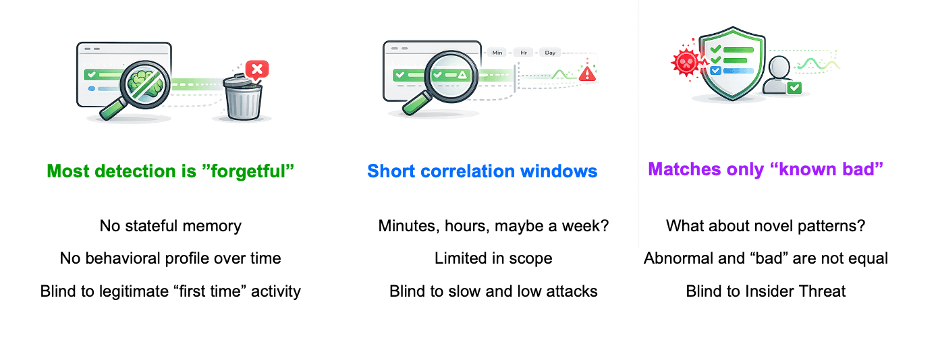
Legacy detection systems assume predictable patterns and short time windows. They rely on known behaviors, static rules, or single-event correlations. Insider threats rarely look like that, and AI agents push these limits even further.
Most tools struggle because they:
- Lack long-term behavioral memory
- Miss subtle, slow-developing changes
- Can’t connect human and agent behavior
- Don’t model new interaction patterns introduced by AI systems
The growing volume and variety of AI activity only widen those gaps.
Extending Behavioral Analytics to AI Systems
Agent Behavior Analytics (ABA) in New-Scale Analytics applies behavioral modeling to human users and the AI agents acting on their behalf. It builds unified behavior profiles that reveal unusual activity and emerging agentic risk.
This expansion introduces five times more analytical coverage, including:
- Human-agent behavioral baselining
- Identity and privilege monitoring
- Prompt and model abuse detection
- AI agent lifecycle monitoring
- Detection built around emerging risk frameworks
ABA gives your security operations team the foundation to identify risky or abnormal activity whether it originates from a person, an autonomous agent, or both acting together.
Establishing Behavioral Baselines for Humans and Agents
Dynamic baselining builds behavior profiles for users and the agents acting for them. It models signals such as:
- Request volumes
- Token usage
- API activity
- Tool invocation
- Web interactions
- Outbound communication patterns
When activity deviates from expected patterns, ABA generates risk signals that move directly into detection workflows.
Examples include:
- A user who typically sends short prompts suddenly uploads a large dataset to an AI assistant.
- An agent known for generating summaries begins issuing high numbers of external API calls.
- A development agent accesses repositories it hasn’t touched before.
Changes like these often indicate prompt manipulation, compromised credentials, or unauthorized automation.
Visibility Into Where AI Work Happens
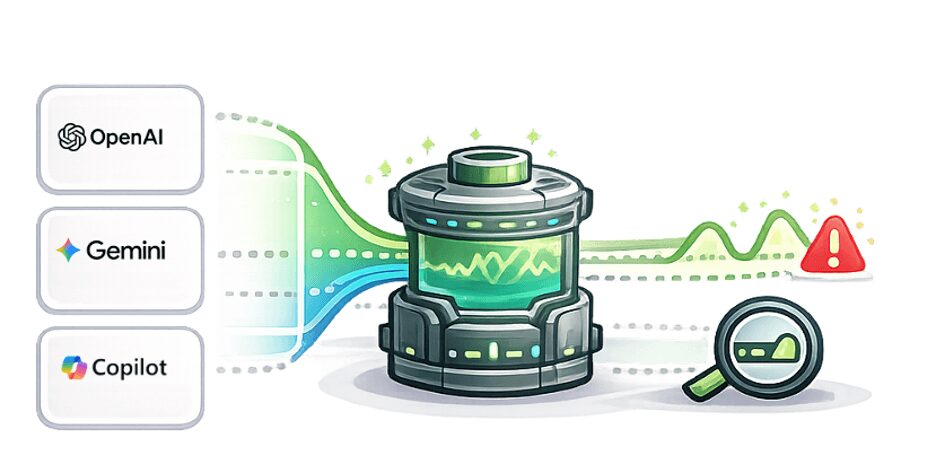
Security teams need visibility into the platforms where AI work occurs. That includes ChatGPT, Google Gemini, and Microsoft Copilot. ABA provides context for how users and agents interact with enterprise data, applications, and workflows in these environments. This creates a complete view of the human-AI collaboration layer now driving daily work.
Monitoring the AI Agent Lifecycle
Many organizations don’t know how many agents exist, who created them, or what permissions they hold. Agents are often crated quickly, updated by multiple teams, and embedded into automated workflows.
ABA brings full lifecycle awareness, including:
- Creation and registration events
- Configuration or permission changes
- Invocation patterns and usage trends
This helps teams understand not only how agents behave, but how the digital workforce evolves over time.
Detection Coverage Aligned to the OWASP Agentic Top 10
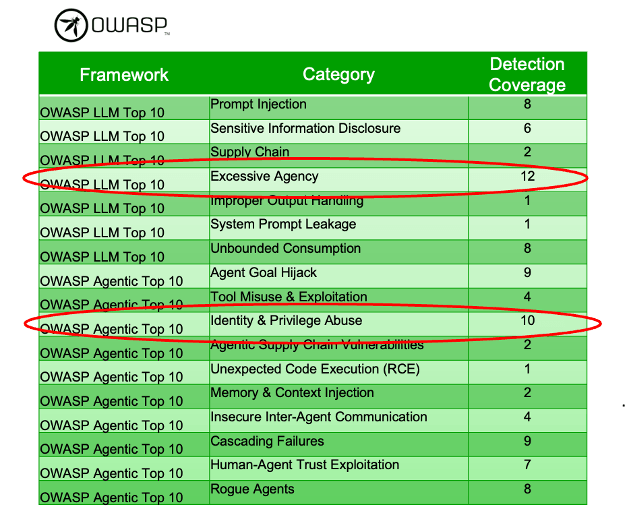
As AI adoption grows, frameworks like the OWASP Agentic Top 10 outline risks such as prompt manipulation, excessive privileges, insecure tool usage, and model misuse.
ABA provides practical, behavior-based detection for all 10 categories. It focuses on identity and privilege risks that create the most real-world exposure, including excessive agency and identity misuse.
Preparing for the Next Generation of Insider Threats
The rise of AI agents marks one of the most significant shifts in enterprise computing since cloud adoption. Humans and agents will continue collaborating in more areas of the business. While the productivity gains are substantial, the combined activity of people and autonomous systems creates new insider threat patterns your team must be ready to detect.
Exabeam has long helped organizations identify insider risk through behavioral analytics. That expertise now extends to the AI workforce, giving you visibility into both human users and the agents acting for them.
Insider threats won’t come from people alone. They’ll emerge from humans and AI agents operating together and, in some cases, being exploited together. Security operations teams must be able to see both.
See ABA in Action
If you want to strengthen security around your AI workforce, register for our New-Scale quarterly launch webinar to see these capabilities in action.

Kevin Binder
Senior Product Marketing Manager | Exabeam | Kevin Binder is a cybersecurity marketing professional based in Morgan Hill, CA. Kevin has over 20 years of experience in information security marketing with companies including Amazon Web Services, Citrix Systems, and Nortel Networks. In his previous roles, Kevin was responsible for go-to-market strategy for emerging technologies such as cloud-based security services, mobile device management, and user-behavior analytics. He received a B.S. degree in Managerial Economics from UC Davis. In his free time, Kevin enjoys spending time with family and friends, sporting events, and golf.
More posts by Kevin BinderLearn More About Exabeam
Learn about the Exabeam platform and expand your knowledge of information security with our collection of white papers, podcasts, webinars, and more.
-
 Blog
Blog
What’s New in New-Scale April 2026: Securing the Agentic Enterprise With Behavioral Analytics
- Show More